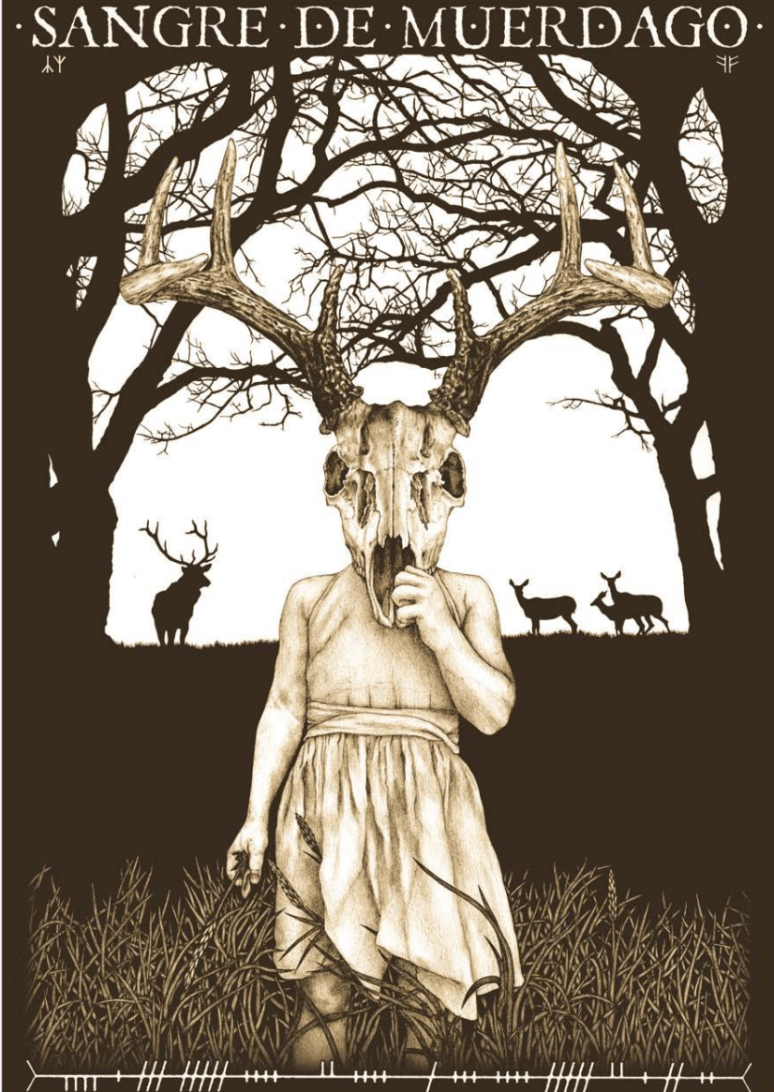
Sangre de Muerdago’s Galician Neofolk is Resistance to Spain’s Fascist History

Screen Shot 2019-04-28 at 10.37.04 PM.png

Neofolk branches out in such a multitude of sub-genres that there is no singular “scene,” but the bands are bound together by rootedness in folk tradition and its revival from the modern stage.  English speaking and Western European acts, defined by bands like Death in June, are often used as the best example of neofolk, but there is a wider musical world focused more concretely on traditional sounds and the use of folk traditions for far more than just nationalist romanticism.

Since we started A Blaze Ansuz, Sangre de Muerdago has been out most requested ban, and their reputation is so large it almost feels insulting to describe them so briefly.  A Galician Folk band from Galincia region of Spain, which borders Portugal on the northwest side, Sangre de Muerdago has become a giant of independent neofolk, touring worldwide with their soft brand of regional music that is haunting in its lyrics and acoustic persistence. As a way to counter modern technological society, Sangre de Muerdago revives traditional instruments like classical guitars, nyckelharpa, flute, celtic harp, occasional percussions, into something new and patient,  calling back a distant memory of culture based on family bonds and the centrality of the home. Anarcho-punk is where the band finds its roots, they play with those bands often and share members with that scene, and so while they resurrect a very different sound, that anarchistic spirit is on stage with them.

Sangre de Muerdago revolves around front-person Pablo Ursusson, and the band has had shifting line-ups over the years.  Each song has such a crafted feel, such quiet love and shifting instrumentation, that it has to be the collective voice of the entire band  Sangre de Muerdago, which translates to “Blood of Mistletoe,” is also known for its international appeal, traveling worldwide and collaborating with other artists.  This creates a range of venues, from black metal festivals to seated opera halls, and their appeal has gone so far that they are internationally recognized as champions of folk music.  Many of their collaborations have become legendary, such as with Tacoma, Washington neofolk band Novemthree, and their genre defining sound has made them the most dependable features of the neofolk scene since their 2007 debut demo.

Their most recent album Noite, released on April 26th of this year, is in full form, calling to a dream of your “true self.” Singing is sparse when there(so is any percussion), and they choose to avoid English in most cases to buck the trend of European neofolk bands appealing to English speaking audiences.  Part of this focus on Galician language is a form of cultural resistance to the Franco fascist dictatorship, which limited the language and narrowed its availability.
Screen Shot 2019-04-28 at 10.34.46 PM
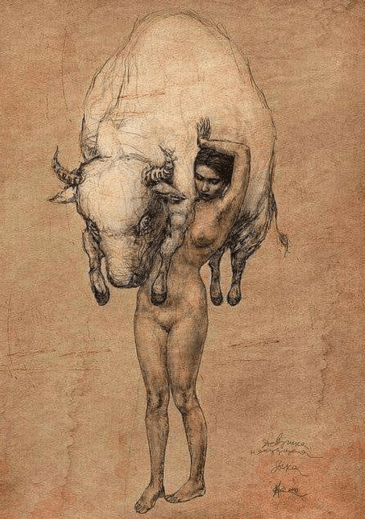
A painting that the band posted online with a message of support for women fighting oppression.

My reason to speak and sing in Galician is that to sing this music that I write from the depths of my heart, this is the deepest way I can find to feel it is singing Galician. I don’t think I would feel the same way about the songs if I were to sing them in English, or Spanish, for example…The language was very damaged during the dictatorship. Brutally damaged. All the teachers from Galicia were sent to other parts of Spain to teach in Spanish and Castellano. And then they would bring teachers from the south and other parts of the country to teach the Galician kids in Castellano. And all the smaller languages spoken in other areas like Basque, Catalan, or Galician, suffered a lot.

These Galincia poems on love, death, and history draw on that almost lost tradition, and the DIY approach of Sangre de Muerdago is meant to recapture something organic from the community.

The lyrics of Sangre are very melancholic, and they long for something, but they always intend to empower people. It’s not like a desperate cry. We all have sorrow, we all have sadness, but we have to somehow process it, and then make it our fuel. It’s something that keeps my head busy

With this Pablo Urusson acknowledges that Galician music has always been political, a way of using regional autonomy to fight off the forces of the far-right and imperialism.  This is similar to the left-wing elements in Catalonia that have resisted both nationalism and the overarching militarism of the Franco dictatorship.  They are amazingly open in their support of left-wing revolutionary movements, particularly the struggle against patriarchy, 

[F]olk music in Galicia has always been political. Galician folk music became the music of people against the empire and against oppression. For centuries—against the Roman Empire, against the Spanish State, against so many things. So somehow the punks in Galicia are very into folk music.

Galincia’s music didn’t survive without an open revolt, and Sangre de Muerdago is continuing the revival of a tradition that is usually passed between the hands of family members and is alive in the moments when the community finds itself in the relationships it builds;

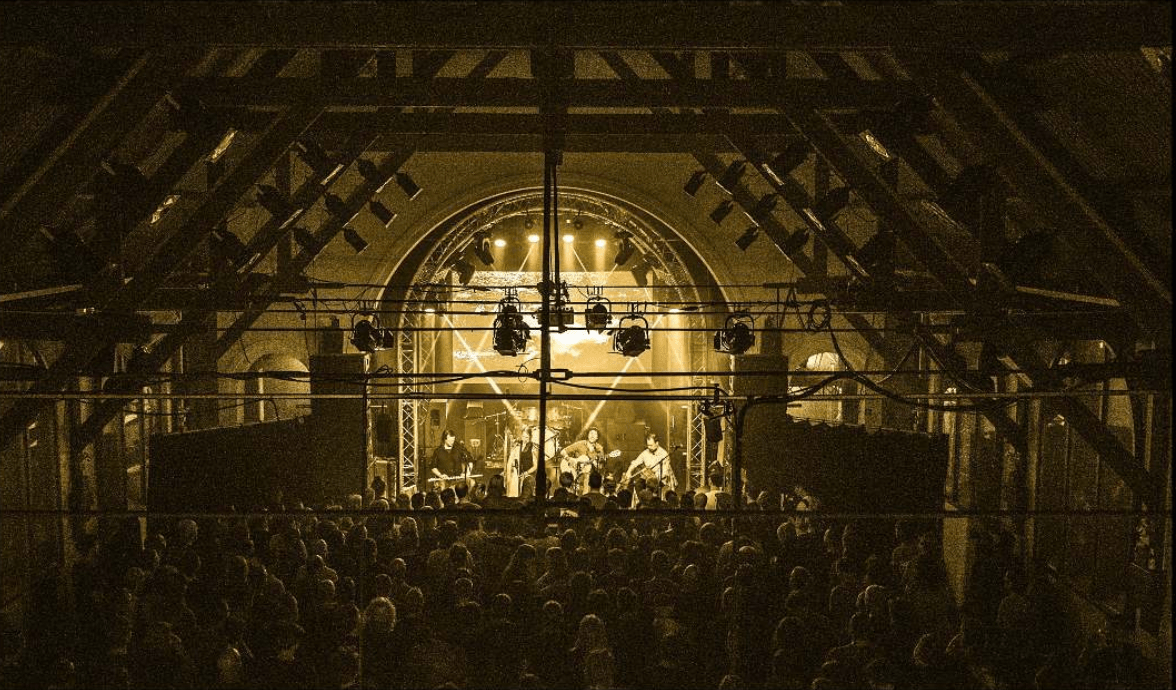
Lyrically, Sangre de Muerdago is committed to liberation from the mountains of Spain, something they have found in common with other anti-fascist bands like Panopticon and Dawn Ray’d, who they have shared the stage with at places like the Roadburn Festival.  When they take the stage the audience drops to silent attention, and a dark oasis is formed where they can finally be vulnerable.
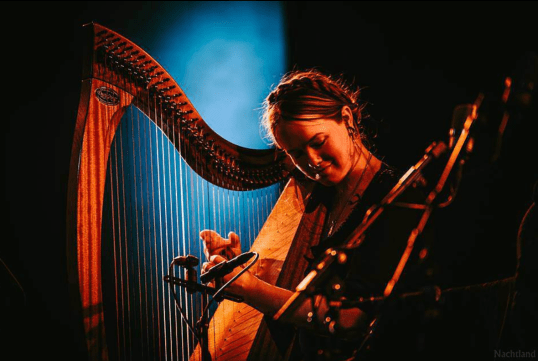
From Sangre de Muerdago’s Instagram

We are putting a few albums by Sangre de Muerdago below and we have added several tracks to our Antifascist Neofolk Spotify playlist and check out the other Bandcamp tracks here.
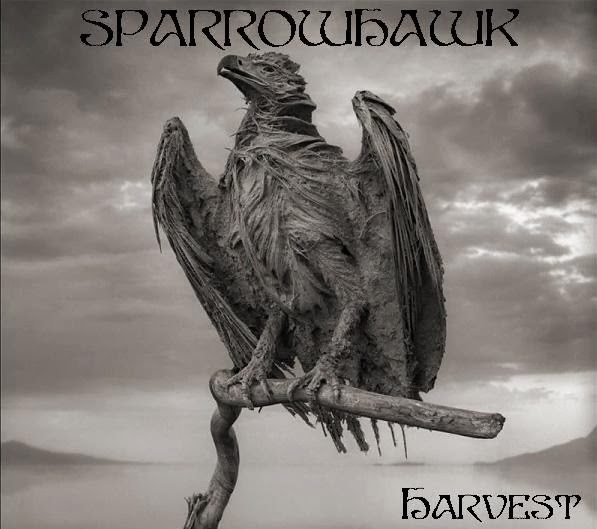
Sparrowhawk’s Brief Life Is a Milestone in Antifascist Neofolk

In this intersecting world of hidden genres, projects come and go, sometimes in only a brief instant.  We are trying to unearth some hidden gems in the world of antifascist neofolk and to bring something original, not just major bands that stand against the far-right, but also from a DIY neofolk scene that is under documented.  Sparrowhawk fits this definition perfectly, an ensemble that came together for just two legendary tracks.

We first discovered Sparrowhawk on the Red and Anarchist Black Metal blog, dissidents from the rest of the music featured.  Their two-song EP Harvest acts both as a demo and a coming out party, but the musicians involved moved on quickly after this 2013 debut and we have yet to hear anything new.  Started by members of Nuwisha and Plantrae, it is a three person collaboration that they say began “in the majestic Siskiyou Wilderness in the autumn of 2013. Rowan WalkingWolf ( Walks-With-the-Wind of Nuwisha), Zacharias AElfston (of Plantrae), and Ursula are pleased to bring you this symphonic soundscape of Cascadian folk.”  The influential (but microscopic) “cascadian” scene brought in other bands we have profiled, like Ionncaish.  vocals entirely, instead treating their instruments

The music starts with the sound of rain and sets its own pace, never rushing, relying on plucking acoustic guitar for its texture, while the violin really drives it forward.  Both tracks, “Siskyou Malaise” and “Starlit Fires, Surrender the Equinox” are both long and slow, but even though the sound is stripped down to acoustic instruments playing off of each other it stays incredibly emotive and completely blots out whatever is around you.

In Sparrowhawk’s brief moment of life they also did a split cassette with Skalunda, which you can still pick up on Bandcamp.  It is this world of small issue splits that still helps neofolk to build up a cult following, something the band planned for from the start.  The passionate complexity of Sparrowhawk’s brief collaboration makes these songs instantly classics in our canon, and they deserve to be pulled from out from the past to give it the recognition it deserves.

We are embedding the EP here, and because it was such a brief project, we were not able to add any Sparrowhawk songs to the Antifascist Neofolk playlist on Spotify.

Wardruna is Taking Back Nordic Pagan Culture and Music from the Far-Right

As a blog, we have focused on profiling some smaller and emerging neofolk bands in an effort to draw out the DIY elements of a grassroots scene.  The perception that many have of neofolk is that all the major bands are held tightly by the far-right, examples being Blood + Sun or Death in June, but there is a whole universe of major neofolk bands who have taken a public stand against white nationalism.  This is particularly true outside of the narrow English language post-punk bands that dominate much of the music press coverage.  Many of the bands who drive their inspiration directly from the folk music run against this fascist interpretation, including the heathen bands of the Northern Tradition.

Wardruna is the best known of these, with their notoriety resulting from the path they have charted in taking back Nordic heritage and history from those who have attempted to racialize that history.  Wardruna, which is primarily the project of musician and Nordic pagan historian Einar Selvik, has become a central figure in this trend for bringing a certain historical accuracy to portrayals of Viking Age art and music.  This is what led Wardruna to the soundtrack for the History Channel show Vikings, which brought Selvik a lot of attention.

The sound itself is subcategorized as Nordic folk as it focuses heavily on heathenry, the pagan tradition that honors the Aesir and Venir and the traditions of the Nordic people’s in what is now Scandinavia.  Their music drives directly from the myths and sagas, with a massive range of instrumentation that pulls from the diverse cultural span that made up the Viking Age.

When people hear terms like Nordic heritage and Viking music there is a certain unease that appears because of the way that fascists have appropriated that culture, a process that goes back almost 200 years into the early volkisch movements of 19th Century Germany.  Using pseudoscienifitic and mystical ideas, they created the idea that Germanic Gods were part of the spiritual psyche of people of Germanic ethnic heritage, and that those archetypes define them as people.  This rejects the actual history of heathenry, which was diverse, multiracial, and had influences from global cultural exchange.

This is a part of why Selvik has made Wardruna heavily indebted to historical  accuracy and openly professes the intent of the project.  White nationalism has nothing to do with the rediscovery of paganism, and uses a false modern construct to employ ancient folkways as an excuse for fascist revolution.  As Selvik says:

This project takes inspiration from our native culture but it is about creating something current and new. It is also important for me to dispel a few myths about the Runes and Norse culture that have been misinterpreted and made almost cartoonish by the media.The image of the Runes has been tarnished by some right-wing racist idiots who have no business using them and only did so for their own gain.

This reconstruction of paganism is also in opposition to Christianity, seeing it as an imperialist religion that wipes away indigenous cultures through domination.  This is, again, a fact that has often drawn in elements of the far-right that share an anti-Christian stance.  It is also what drew in the black metal element, and something that Selvik has in common with early Wardruna member Gaahl of the early Norwegian Black Metal band Gorgoroth.

The serious focus to pagan histories, so much so that Selvik gives lectures on pagan history and sells books on heathen rituals and spirituality on the Wardruna website, is also what creates the unique multicultural understanding the band brings to the music.  For Selvik, it is the diversity of pagan practice that actually unites humanity.

I’m generally interested in culture, whether it’s slavic, siberian or african. What’s fascinating, if you go back in time far enough, you’re going to see all these similarities, how we are connected. Of course, in my work, in early work with Wardruna, because the history is very fragmented, it’s only natural to look into other neighbouring cultures for inspiration and also clues.

Instead, it is allegiance to the ideas and passion for the tradition that binds a community together, not a false notion of race.

I prefer to sow seeds and let them grow, and this little weed then enters the shade of the new shoots. It is very convenient to live far from the origin of a tradition, claiming it for yourself and focusing on ethnicities rather than nature. At the same time, nature has shaped culture. I would much rather be a blót with a Spanish person who gets it than with a Norwegian who does not get it. If you are stupid, you are stupid. It does not matter if you’re descended from any Viking king.

The increased focus on Nordic history and culture, which Selvik has been a big part of, has helped to create a barrier to stop the far-right from being able to continue appropriating it without a counter-narrative.

It is a very positive effect, that increased interest does not allow the subculture on the extreme right wing to use our history in peace. We have somehow taken our own story back.

“It is difficult to take them seriously, and it testifies to great lack of knowledge when right-wing extremist groups have used our cultural heritage in their propaganda,” says Selvik, pointing out that the far-right lacks a clear understanding of Nordic paganism and instead uses it simply as an aesthetic rather than a true spiritual path.

Gaahl had been a part of the project since its founding, which many saw as problematic given that he often made up the more offensive side of black metal and was involved in far-right gangs in his youth.  He has since repudiated those politics and publicly rejected them, and spoke out about what it is like to be an open gay man in the black metal scene, but we were still not comfortable with his involvement in Wardruna. In 2015 he left the band entirely and has not had any more relationship to it, a move that we support.  We would not have included Wadruna if Gaahl was still in the band, and we think it is important to outline this history.

Going forward, Wardruna is continuing to be a massive project, one of Selvik’s many music endeavors, and will set the tone for much of how this more traditional sound comes together in neofolk.  It is his public declarations of the intention of the music that is important because it forces the community away from an apolitical stance.  While Wardruna is not political on contemporary issues, it is much more focused on songs about Thor and sailing, they use the moments they have to make it clear that they are taking a stand against the fascist creep into this cultural landscape.

We are putting a few of our favorite songs by Wardruna from their Bandcamp below, and just added a few Wardruna tracks to our Antifascist Neofolk Spotify playlist!

Panopticon’s Neofolk Side Proves They Can Do Anything

Black metal virtuoso Panopticon has a whole neofolk universe, and now we are adding it to the neofolk canon!

The eclectic nature of neofolk (and this blog) means that there is a broad spread of folk music that the genre can pull from, but there are a few common features.  Paganism, history, community, resistance, and the struggle to maintain a counter-culture all collapse together like a neutron star with Panopticon, a genre defining Americana black metal band that has become a staple of Old God playlists.  Based out of Appalachia, the uniqueness of their sound is a the methodical rhythm of storytelling, which founds their albums in a tradition of oral history that traces back past the coal mining migration to the mountains or the economic collapse and mass exodus from West Virginia.

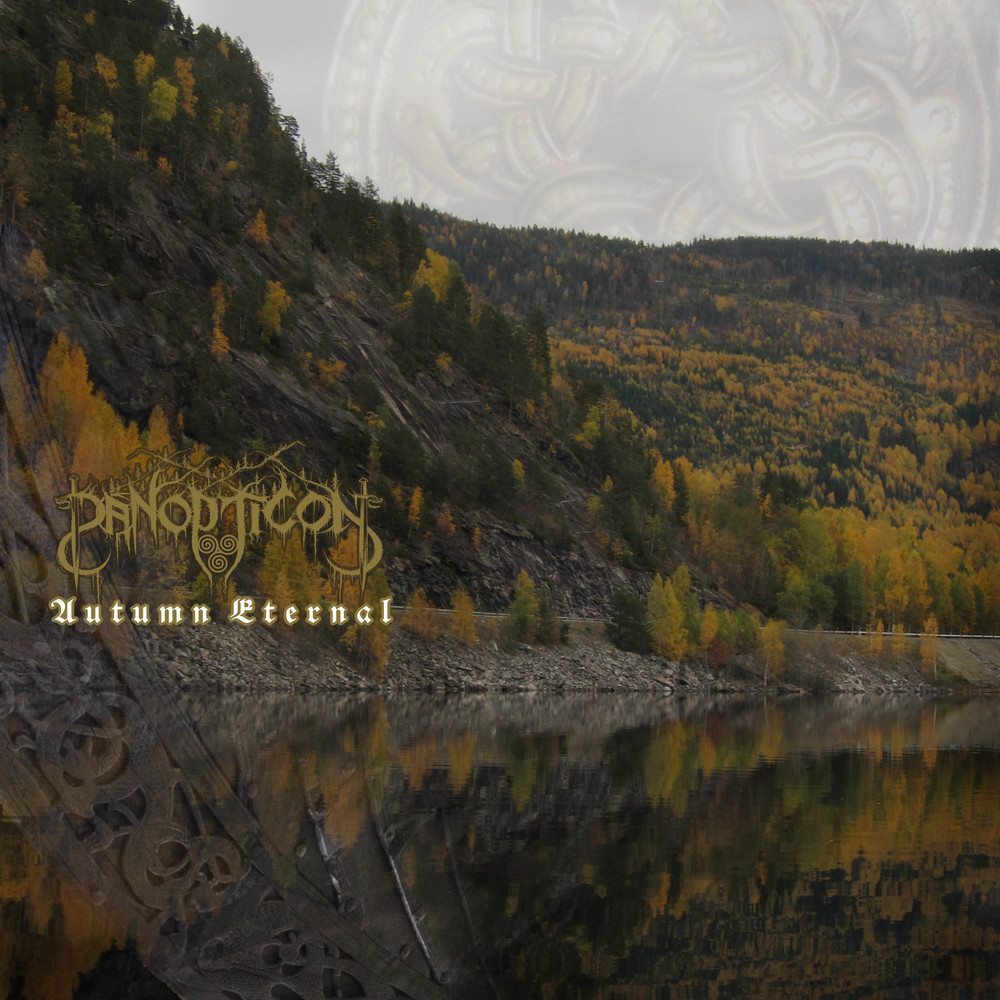
It was tough to choose a band that is primarily known for its deep screeching metal sound to feature on this site so early, but that is not the Panopticon we are going to focus on.  While they tower high in the world of epic metal, that is only one half of an incredibly diverse musical array that drives heavily into the world of european neofolk revival, Appalachian folk music, vibrant bluegrass, and tech-imbued ambience.  Albums like The Scars of Man on the Once Nameless Wilderness 2 (the twin side to a crushing metal first entry) forgoes the sound of the prior entirely to jump into a folk traditions of culture that formed up around working class coal miners who developed an internal community life that riffed on folk spiritual and survival lessons from the old country.  Autumn Eternal is mixed company, slow acoustic sets, marked particularly by slow strings, ar interspersed with the sound that we are so accustomed to hearing. The shifting sound, which has gone from full bore hillbilly country to acoustic silence of neofolk to blackgaze, is something to really marvel at when we are talking about a single person stretching over fifteen albums.

While it is clear from their lyrics, almost spoken didactically at times, that they see folk traditions and spirituality as a claim of strong community bonds against a commercializing world, this is centered deep in the class politics that are rightly the province of West Virginia.  Starting with a focus on mass incarceration and the surveillance state evolving in late capitalism, Panopticon has a strong prison abolitionist strain. Kentucky and West Virginia’s labor history, particularly the “redneck” coal strikes that charged the region with the kind of militant anger that only comes the kind of brutal exploitation that coal barons have staked their reputation on.  The album Kentucky deals with this heavily, introducing the labor folk songs of the area that many would expect from the Industrial Workers of the World’s “Little Red Songbook” or Utah Phillips last release.  There is a deeply felt sense of loss in the way the album deals with settler colonization of the Americas, but still finds heroic stories in how it recounts the trials of Sacco and Vanzeti, the Haymarket martyrs, and ground laid by anarchist figures like Emma Goldman (The final track on their self-titled debut is called Emma’s Song).

Panopticon’s main figure, Austin Lunn, is open about his anarchist politics, the way that regionalism plays into his worldview, and how it is connected to struggle.  This on the theme of identity that plays so heavily in neofolk, but takes it decisively back from the far-right, who tries to essentialize it with race and gender. Instead, it is working class community, the beauty of the mountain, and the bonds formed in rural backgrounds that formed that sense of self.  There is a bluegrass pick in it, the sound of a dripping still, an uncle’s voice of advice. Those roots are the multicultural mix of working people, those who survive only because of the skin of each other, and Lunn is proud of this. Part of Lunn’s refusal to do too much press or numerous interviews with metal magazines is the antagonistic response to open anti-racist politics, which some see as divisive or “witch hunting.”

Panopticon has made a point of playing at metal festivals that eschew apolitical fence-sitting for open politics, like the Dutch festival Roadburn.  He is continuing this trend in the upcoming Northwest Terror Fest happening in Seattle from May 29th to June 1st.  On Wednesday evening Lunn will be playing an acoustic set, perfect for anyone interested strictly in the neofolk side of Panopticon.  The festival itself (which we will be covering in the future) will be filled with anti fascist metal and grind new-standards like Dawn Ray’d, Cloud Rat, and Closet Witch.

We are adding only a few of Panopticon’s neofolk tracks to our playlist, as well as embedding their Appalachian folk and euro-neofolk albums below, but feel free to check out their entire Bandcamp library.

 https://open.spotify.com/embed/user/blackcatfilmsltd/playlist/74snxst77irk3jahKNMupq

Announcing A Blaze Ansuz, a Chronicle and Playlist of Antifascist Neofolk

Announcing a new project to project the antifascist neofolk scene, profiling bands, antifascist resistance in neofolk, and the building of an antiracist music culture.

48425717_2336544366581962_8133287630365261824_n
“Hello Darkness My Old Friend” by Freyja90 on DeviantArt


There is a story we tell about the past.  Where the mundane was imbued with the sacred, where the forest still held magic, where the world was larger while our community was small.

Neofolk is the modern revival of folk music traditions interwoven with metal, ambient, gothic, and other “fringe” music, usually focusing on pre-Christian pagan spirituality, de-sacrailization, and a look to the past.  The bands that have dominated the genre, who have the largest tours and quotes in music magazines, entered this genre because they wanted a romantic art form that told the story of Europe’s past. This was to revive a nationalist identity, just as it was in 19th Century romanticism, to imbue white people with a sense of mythology about Europe’s past and the need for a rebirth.  

This concept is largely known as “metapolitics,” the process by which thinking and philosophy is changed in a culture to make it more malleable for political change.  Since their defeat in World War II, many fascists have turned to the world of metapolitics in art, in philosophy, and music, as a way of influencing the culture so that far-right politics have a fighting chance.  This is a strange twist on Marxist revolutionary Antonio Gramsci’s theses about cultural struggle: when you change the perspective you can change the political outcomes.

Bands like Sol Invictus, Death in June, Changes, and Fire + Ice were tied to far-right nationalist movements, including parties like the National Front or skinhead gangs like the American Front, and saw the music as a way of creating a deep nostalgia and sense of longing for white Europeans.  By fetishizing a false narrative about the past they can then pair the modern world, with its liberalism and multiculturalism, as the inverse of the history they are fetishizing. The romantic qualities they are offering in their music seem only possible through the revolutionary nationalism they are peddling.  These bands grew and set the tone for the burgeoning neofolk scene, so much so that the scene’s narrow view of European heritage and nationalism became the lens through which all bands were judged. The genre was then was allowed to simmer with this ideology without intervention because the hold that fascists had on the music was so strong.

The far-right did not invent neofolk, it does not own it, and it should not be given to them.

The left is a romantic tradition that looks both forwards and backwards, dreaming of what the world could be and picking up traditions and histories that tell that story (both real and imagined).  This is why, as Margaret Killjoy has pointed out, genres like black metal and neofolk appeals so much to anarchists, whose sense of passion and prefiguration draws on a well of romanticism.  Neofolk attempts to modernize the pre-modern, the stories, music, cultural significance of societies past, and while European revival music has dominated coverage, neofolk is a worldwide phenomenon that draws from traditions from South Asia to indigenous North America to West Africa to Northern China.

There is another neofolk, one that rejects fascist stories about white identity and imperialism, one that is fueled by decolonization, a connection to the earth and Old Gods, to the spirit that fought feudalism, capitalism, industrialism, and the ravages of white supremacy.  We refuse to let fascists define our music, and instead are committing this work to start a new “scene” that is inclusive, diverse, and founded on resistance. This is openly and unabashedly antifascist neofolk, a music scene that not only refuses nationalism, but makes itself an enemy of white supremacy.

Sort of like Michael Muhammad Knight did with Taqwacore, imagining a music scene that did not exist to that people would be inspired to create it, we are humbly trying to give this a name and declare its existence.  This is, to a degree, a falsehood, since antifascist neofolk has existed as long as the genre has, especially where the music was created as a work of postcolonial cultural struggle.  But what we hope to accomplish here is to be intentional about creating an antifascist space that brings together the bands and create an clear cultural space that people can identify with. Instead of the assumptions that exist about neofolk, we are the people who we want neofolk to be in the future.  By defining antifascist neofolk as a possibility we create a standard to apply to the genre, a line to force musicians to cross, and a question to pose. When the far-right defines the genre they define the values, morals, and what is considered acceptable. Now we can define those boundaries.

Neofolk is one of the best examples of what Rose City Antifa refers to as “contested space.”  Anti-Racist Action was formed in the 1980s around contested spaces like working class neighborhoods and music venues, specifically inside the punk scene that had both left and far-right wings.  Music scenes like skinhead Oi! was a struggle for who was going to define the genre and have access to the musical spaces and the people. ARA refused to cede that ground to white power skinheads, and forced them out of their recruiting spaces.  Fascists need music as a recruitment tool since it drives at the heart before the head is ready, and we refuse to allow them that. Instead, just as people have done successfully for the past few years in black metal, we are creating a counter-culture of our own and seeing neofolk as a place to struggle against white supremacy rather than a radioactive wasteland.

This blog will remain relatively simple without a lot of frills, almost no design, and we will update the visuals slowly over time.  The point will be to highlight new bands, building an “antifascist neofolk canon,” and to speak of both the positive organizing in neofolk spaces and the ongoing problems in the scene.  The posts will be primarily focused on explicitly antifascist neofolk bands, but we will include the occasional band from adjoined genres like black metal, ambient, industrial, and anti-folk.  We will also highlight a few bands who, while not be explicitly political, have separated themselves from the far-right.  Most neofolk bands do not have primarily political lyrics, so instead we look at themes, public statements, behaviors and activism, and other things that allow them to stand out, including artists who have left neofolk bands that turned towards the far-right.  This will include a special focus on bands that derive their sounds from outside of Europe and North America, and include musicians of color who are often erased from the story of neofolk.  

This will be paired with a playlist we encourage people to follow, which will start small and will grow as blog posts are added.  We will also create a resource list for other things that are topical, such as antifascist black metal lists, information about fascist entryism into the music scene, antiracist organizing tools, great record labels, and news.  Expect a lot of album announcements, show reviews, band lists, interviews, and hopefully a lot more.

While this is a singular effort, we want your help!  Please contact us with suggestions for bands, share widely, and start a conversation.  If you are with a label that supports this, we would be happy to check out new music and prop up bands that line up with the values here.  We also would love contributions and submissions, but note that there is not money behind this and it is instead a labor of love (at least right now).  We will create a donation option, but other than that we just want to focus on the music for the time being. We want, more than anything, to be the place people go when looking for great new music, and to redefine what this scene can be.  Posts will be slow starting, but expect a lot more to come.