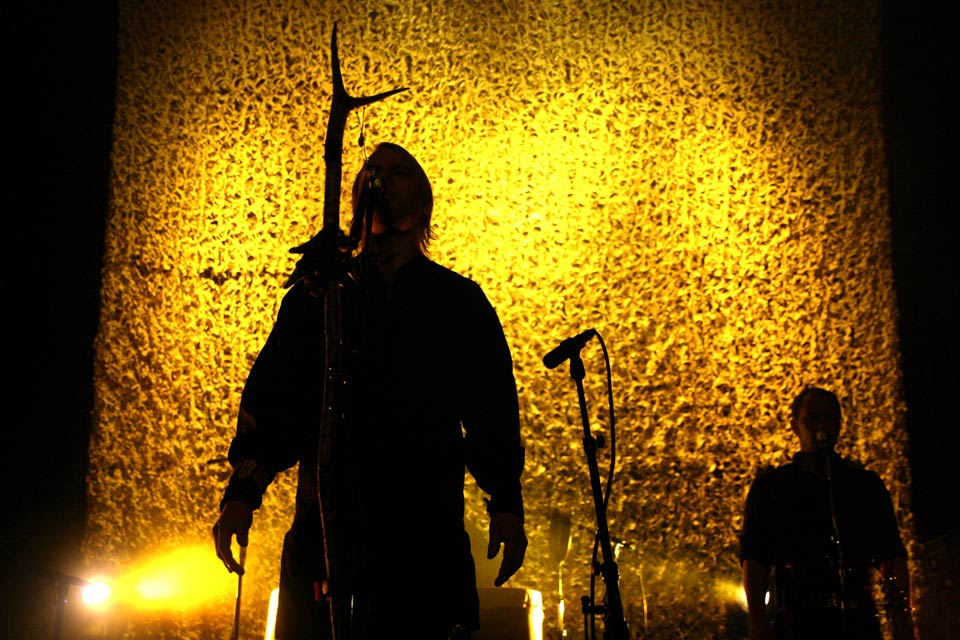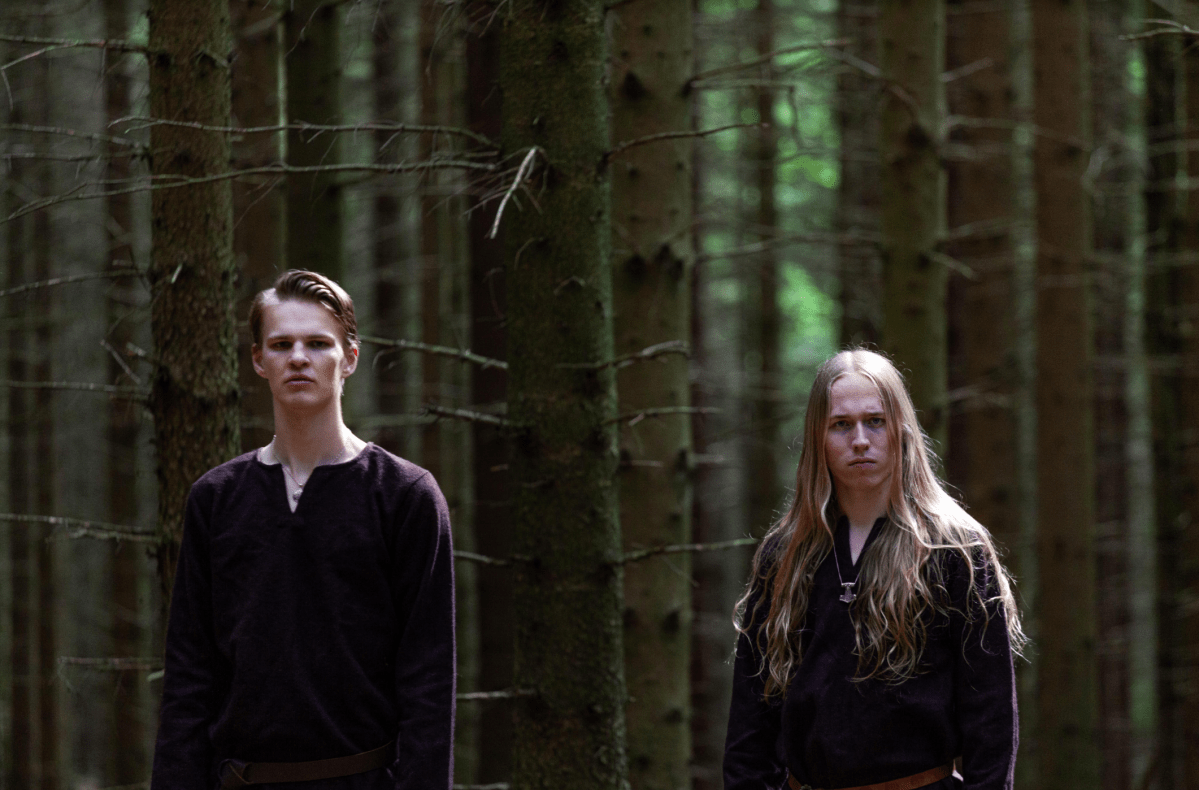
Nordic Folk Against Fascism: An Interview With Hindarfjäll

The world of Nordic folk, a subgenre of neofolk focusing on traditionalist Viking era music, has become one of the most involved and ecclectic styles in the folk revival. Part of the attraction has come from the romantic focus on Viking culture, usually ahistorical both on the left and the right. Many of these bands have found inspiration in Nordic pagan spirituality and traditions such as crafts and arts, but have had to fight to defend this culture from open white nationalists who use a “folkish” interpretation of heathenry to promote fascist tribalism.

Hindarfjäll is one of these Nordic folk bands, inspired by a huge wave of musicians out of neofolk and black metal that are drawing on these communal sounds. They have made themselves clear from the start, that they will provide no quarter to Nazis attempting to appropriate these traditions.

We interviewed Nils A. Edström from Hindarfjäll about how the project came together, why we have to stand against white nationalism, and how tradition plays into their songwriting.

How did Hindarfjäll come together? 

I started Hindarfjäll with a close friend of mine, Elias Pettifor, back in 2015. We shared the same passion for nature, music and Norse mythology. As we’re both musicians we decided to try to make something together based on our interests. We only did one song together though, and that song is called ”Så Som Träden Viskar Hans Namn” which was the first song we uploaded as soon as we created Hindarfjäll’s Facebook page. Not long after that we got contacted by a festival called the Asgardian, arranged by Asatru UK, and we were asked to come and play. At that time Hindarfjäll was still a project, so we basically needed more people. I studied music in high school so it wasn’t hard to find musicians.

When we started to rehearse the songs, things started to get quite complicated. Elias didn’t show up and it was almost like he disappeared for some time. Eventually I decided to go anyway and find a substitute.

When we came home from England Hindarfjäll suddenly felt more like a band rather than a project.

I started to write new Hindarfjäll material with help from my best friend Samuel Tibell and all of a sudden the two of us became the core of Hindarfjäll. Today I see Hindarfjäll both as a project and a band. Samuel and I create the music and we get help from the others when we enter the studio or play live.

Were you inspired by other Nordic folk bands, like Wardruna?

I’m inspired by a lot of different bands and genres. It all started when I was 13 years old and listened to a track called ”Stenristarna” by Anders Hagberg. Not long after that I discovered Wardruna and other Nordic folk bands. The band that’s influenced Hindarfjäll the most is a band called Månegarm. It’s actually a folk/black metal band from Norrtälje, Sweden. They have a lot of acoustic songs and if you listen to that you can really hear that it sounds quite similar to our music.

How does Nordic paganism and spirituality play into your music?

Nordic paganism and spirituality is basically the core of our music. Without it we wouldn’t be able to create that atmosphere we make today, and that’s basically why I wanted to do this kind of music from the start. The music definitely has its roots in nature and spirituality. I won’t say that every song we make has to have something to do with Nordic paganism though, but every song is touching deep thoughts and questions.

Are folk traditions important when creating your music? Do you feel bonded to the traditions and cycles of the past?

I feel bonded to nature and all the different traditions that are connected to nature. We definitely get inspiration from old traditions and the old ways of thinking.

What do you think of white nationalists trying to appropriate heathen music and symbols? What should we do about Nazis trying to come into this music scene?

I don’t think we can or should do anything else than just show the world what heathenism is REALLY about. I believe in freedom of speech so I think it’s better to show people that Scandinavian traditions and music doesn’t have anything to do with hatred and racism. We need to be seen and heard!

Do you think it is important to stand up against fascism in the neofolk scene?

Absolutely. It’s a real shame that we even have to explain that heathenry and Nordic symbols doesn’t have anything to do with fascism. But I think it’s really important to do that especially in these days.

How does songwriting take place? Is it collaborative? 

It varies, I wrote all the songs by myself until ”Sunnas Strålar” and ”Dolda Krafter”. That’s where Samuel came in the picture and we started to write together. You can hear that those songs are a bit different from the other songs.

What instruments do you use?

We use guitars, flutes, skin drums and mouth harp.

Who would you recommend fans of yours to listen to?

Byrdi, FehReid, Runahild and Songleikr.

What’s coming next? Any tours, new releases, or side projects?

The debut album is in the making. We’re just waiting for our drums to be finished, then we’re ready to go.


***

There is only one Hindarfjäll track available on Spotify and has been added to our Antifascist Neofolk Playlist on Spotify. Check out some more of their albums from Bandcamp below.
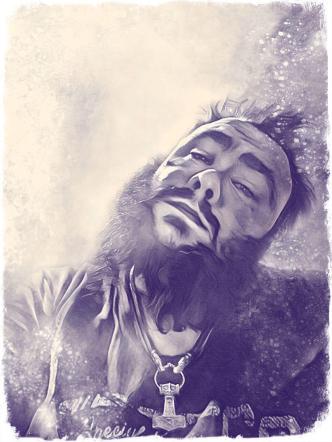
Into the Heathen Past: An Interview With Fuimadane

There is a growing scene often referred to as Nordic Folk, neofolk and neo-medieval music inspired heavily by Heathenry and the Viking history of Nordic culture.  This is a particularly volatile battleground because of the Nazi appropriation of Nordic Paganism, and this is why bands in this genre are often speaking out so openly.  This is particularly important since Nordic Folk rarely moves into contemporary politics, so we need to be able to create a scene where no tolerance for the far-right is made explicit.
When we came to Jon Krasheninnikoff Skarin, the man behind the Nordic Folk project Fuimadane, about doing an interview, he was more than excited.  Rarely is being open as an antifascist something that brings cache is neofolk circles, and he wants that to change.  Even though Fuimadane eschews any politics in the music itself, as an immigrant he knows how essential it is to take a stand.  Fuimadane’s music really comes out of Skarin’s history as an electronic musician and feels like a beautiful and evolving synthesis between a whole range of post-industrial music, from classic folk instrumentation to ambient synth-drone.
How did your band come together?
I started out making music in different genres before creating Fuimadane. Originally creating electronic/techno tracks for the entertainment of my family and friends, I later discovered my love for the medieval/folk/viking age genre. This ultimately lead to the creation of Fuimadane.
Does spirituality play into your project?
I do consider myself a very spiritual person. Ever since my teenage years, I have suffered from several mental illnesses. What I found always helped me through that difficult time in my life was being able to focus or connect to spiritual energy, finding solace in nature. It has become a big part of my life and who I am. So, yes, it really does.
What bands inspired you in doing the work?
My friend Mike Olsen, who you might know as Danheim, has always been a big influence on me, as well as my other brothers from Fimbul RecordsGealdýr, Rúnfell. Other bands that inspire me are Heilung, Corvus Corax and Wardruna. Anything that blends medieval, folk, viking age or ancient music with modern techniques and styles feels very powerful to me.
How did you start to develop your sounds, and how do you define it?
I started my music career as an Electronic music producer because of my love for 90’s Dance / Trance music. It had such an impact on me that I wanted to create a style like it myself, so I taught myself how to create music with the few means I had. It wasn’t until I discovered medieval and folk music for myself that I slowly started to blend genres together in a more serious way, specifically seeking out Instrument- and SFX Libraries that I feel would fit the genre. Neo-medieval music with a Classic-Modern style and “arrangement” is what I would call it now. Not too complex, but drawing influence from both genres.
There seems to be a strong spirit of resistance in the music, not just lyrically but in the way that folk music is made so vibrant.  Do you see this project as inherently tied to politics, or collective liberation?
I try my best not to let political views influence my work, though I acknowledge that any form of art, particularly the one targeting something as previously tainted as the Norse ideology, can never really be separated from politics. At least not in the mindset of those who consume it.
The only conscious involvements of politics I’ve ever displayed on any tracks of Fuimadane are tracks that have historical influences, for example tracks inspired by the times when Danes turned from Heathens to Christian. My latest album ”Kominn vel á sik” for example begins in a church, and from there starts reverting back to something more primal. A musical manifestation of my take on returning back to the old ways. Heathen/Pagan life is certainly part of what inspires me, but I hope my music can be enjoyed regardless of who the audience views is.
There is a huge variety, it moves from frenetic synth inspired tracks to very slow and plotting melancholy sound, do you feel like you are constantly reinventing your sound?
I am always on the hunt for new ways to convey certain feelings and emotions, but finding something that feels right always depends on my own mood. There are certain recurring themes I want to incorporate in each album – a very emotional Track, one that’s very granular, an epic orchestral one – and so on. I try to keep these ”molds” very vague and not recreate the same sound every album, but the outcome will always depend on the mood I’m in as I compose them. At the end of the day, whatever feels right to me will be what I release.
What drives your commitment to antifascism?  Have you experienced a lot of white supremacist attitudes in the pagan and neofolk scene?
Yes, I have been subject to their hate for being who I am – many telling me I am not ”dane enough” because of my Russian ancestry. I don’t tolerate racism or white supremacy around me, in any way or form, I don’t actively try to pick an unsolicited fight with them. I have a simple rule: If I open my doors for you, behave and respect my home and family.
Why do you think it is important to be a publicly antifascist band?  How does antifascism inform your music?
History is a huge influence for me, and it is very important to me to know what or where we came from. My music has focus and inspiration from the Heathen traditions and Pagan style, but I also try to be very inclusive of other ethnicities, hence drawing inspiration from many corners of the world – all over Asia, Russian, Native American and many others. Limiting oneself to just one style is like limiting oneself to one mindset, very conservative. There is a time and place for honoring one’s roots, but if that means compromising another person from honoring theirs, then that’s wrong.
Music is a universal language, and everyone should have the right to feel, experience and enjoy it.
What other social issues play into your music?  There is a strong sense of a need to a return to a cyclical, grounded way of life in communities.
Indeed, I believe that in the past we were much more connected in tight knitted communities. Until the greed of mankind altered faiths and believes for there own benefits. Now its all about money, and we teach our children at an early age already that they need a good job and education to be able to afford a good life. I don’t believe in that. What I believe in is that you are the one forging your own fate. Find what makes you happy, what feels right to you and pursue it. Don’t just live and work to pay the next bill. Enjoy life to the fullest, and have fun doing what you do. I think that’s one of the things I want to express with my music.
What other bands do you recommend for antifascist neofolk fans?
Heilung, Danheim, Corvus Corax, Rùnfell, Gealdýr and Wardruna.
We are putting several Fuimadane tracks below from their previous releases available on Bandcamp, and are also adding three Fuimadane tracks to our Antifascist Neofolk Playlist on Spotify.

Wardruna is Taking Back Nordic Pagan Culture and Music from the Far-Right

As a blog, we have focused on profiling some smaller and emerging neofolk bands in an effort to draw out the DIY elements of a grassroots scene.  The perception that many have of neofolk is that all the major bands are held tightly by the far-right, examples being Blood + Sun or Death in June, but there is a whole universe of major neofolk bands who have taken a public stand against white nationalism.  This is particularly true outside of the narrow English language post-punk bands that dominate much of the music press coverage.  Many of the bands who drive their inspiration directly from the folk music run against this fascist interpretation, including the heathen bands of the Northern Tradition.

Wardruna is the best known of these, with their notoriety resulting from the path they have charted in taking back Nordic heritage and history from those who have attempted to racialize that history.  Wardruna, which is primarily the project of musician and Nordic pagan historian Einar Selvik, has become a central figure in this trend for bringing a certain historical accuracy to portrayals of Viking Age art and music.  This is what led Wardruna to the soundtrack for the History Channel show Vikings, which brought Selvik a lot of attention.

The sound itself is subcategorized as Nordic folk as it focuses heavily on heathenry, the pagan tradition that honors the Aesir and Venir and the traditions of the Nordic people’s in what is now Scandinavia.  Their music drives directly from the myths and sagas, with a massive range of instrumentation that pulls from the diverse cultural span that made up the Viking Age.

When people hear terms like Nordic heritage and Viking music there is a certain unease that appears because of the way that fascists have appropriated that culture, a process that goes back almost 200 years into the early volkisch movements of 19th Century Germany.  Using pseudoscienifitic and mystical ideas, they created the idea that Germanic Gods were part of the spiritual psyche of people of Germanic ethnic heritage, and that those archetypes define them as people.  This rejects the actual history of heathenry, which was diverse, multiracial, and had influences from global cultural exchange.

This is a part of why Selvik has made Wardruna heavily indebted to historical  accuracy and openly professes the intent of the project.  White nationalism has nothing to do with the rediscovery of paganism, and uses a false modern construct to employ ancient folkways as an excuse for fascist revolution.  As Selvik says:

This project takes inspiration from our native culture but it is about creating something current and new. It is also important for me to dispel a few myths about the Runes and Norse culture that have been misinterpreted and made almost cartoonish by the media.The image of the Runes has been tarnished by some right-wing racist idiots who have no business using them and only did so for their own gain.

This reconstruction of paganism is also in opposition to Christianity, seeing it as an imperialist religion that wipes away indigenous cultures through domination.  This is, again, a fact that has often drawn in elements of the far-right that share an anti-Christian stance.  It is also what drew in the black metal element, and something that Selvik has in common with early Wardruna member Gaahl of the early Norwegian Black Metal band Gorgoroth.

The serious focus to pagan histories, so much so that Selvik gives lectures on pagan history and sells books on heathen rituals and spirituality on the Wardruna website, is also what creates the unique multicultural understanding the band brings to the music.  For Selvik, it is the diversity of pagan practice that actually unites humanity.

I’m generally interested in culture, whether it’s slavic, siberian or african. What’s fascinating, if you go back in time far enough, you’re going to see all these similarities, how we are connected. Of course, in my work, in early work with Wardruna, because the history is very fragmented, it’s only natural to look into other neighbouring cultures for inspiration and also clues.

Instead, it is allegiance to the ideas and passion for the tradition that binds a community together, not a false notion of race.

I prefer to sow seeds and let them grow, and this little weed then enters the shade of the new shoots. It is very convenient to live far from the origin of a tradition, claiming it for yourself and focusing on ethnicities rather than nature. At the same time, nature has shaped culture. I would much rather be a blót with a Spanish person who gets it than with a Norwegian who does not get it. If you are stupid, you are stupid. It does not matter if you’re descended from any Viking king.

The increased focus on Nordic history and culture, which Selvik has been a big part of, has helped to create a barrier to stop the far-right from being able to continue appropriating it without a counter-narrative.

It is a very positive effect, that increased interest does not allow the subculture on the extreme right wing to use our history in peace. We have somehow taken our own story back.

“It is difficult to take them seriously, and it testifies to great lack of knowledge when right-wing extremist groups have used our cultural heritage in their propaganda,” says Selvik, pointing out that the far-right lacks a clear understanding of Nordic paganism and instead uses it simply as an aesthetic rather than a true spiritual path.

Gaahl had been a part of the project since its founding, which many saw as problematic given that he often made up the more offensive side of black metal and was involved in far-right gangs in his youth.  He has since repudiated those politics and publicly rejected them, and spoke out about what it is like to be an open gay man in the black metal scene, but we were still not comfortable with his involvement in Wardruna. In 2015 he left the band entirely and has not had any more relationship to it, a move that we support.  We would not have included Wadruna if Gaahl was still in the band, and we think it is important to outline this history.

Going forward, Wardruna is continuing to be a massive project, one of Selvik’s many music endeavors, and will set the tone for much of how this more traditional sound comes together in neofolk.  It is his public declarations of the intention of the music that is important because it forces the community away from an apolitical stance.  While Wardruna is not political on contemporary issues, it is much more focused on songs about Thor and sailing, they use the moments they have to make it clear that they are taking a stand against the fascist creep into this cultural landscape.

We are putting a few of our favorite songs by Wardruna from their Bandcamp below, and just added a few Wardruna tracks to our Antifascist Neofolk Spotify playlist!