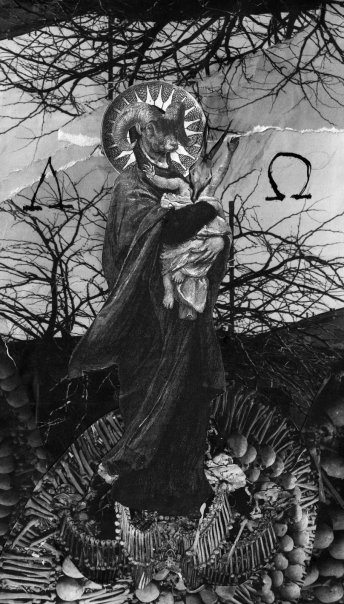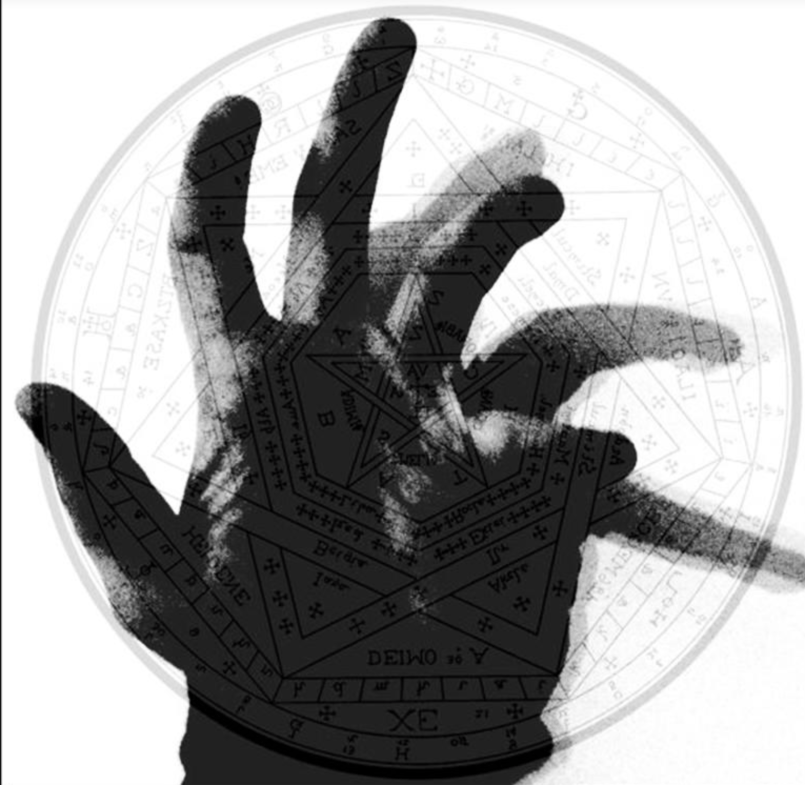
Hermetic Resistance: An Interview With Post-Industrial Artist Florian-Ayala Fauna

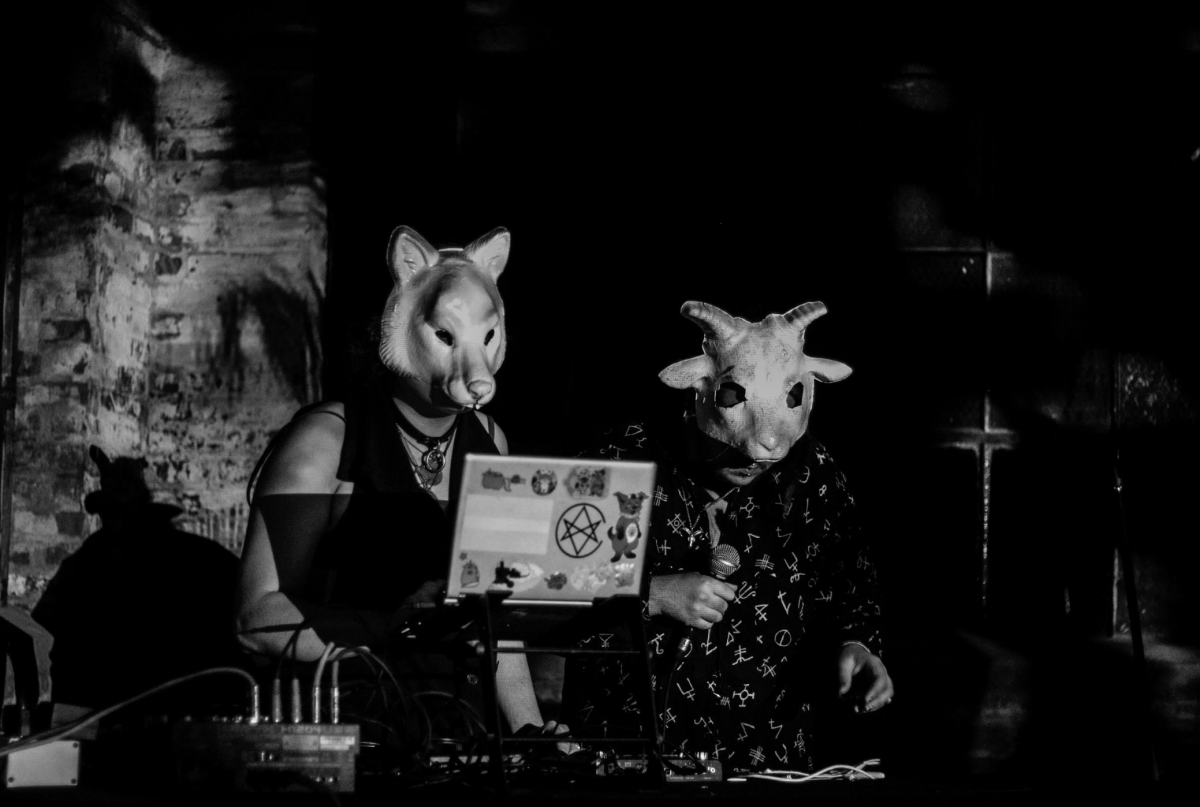
Photo by Jessica Helen Brant

The edges of neofolk are populated by the renegade avant-garde, dissidents from new wave, industrial, metal, and other progenitors of discord. That describes no one better than Florian-Ayala Fauna, an experimental post-industrial musician and visual artist who has been putting together incredible work for over fifteen years. We talked with them about what inspires them, their collaborations with Coil and . Throbbing Gristle, and how hermeticism and Thelema informs their music.

Oh, and why we need to kick out all Nazis everywhere.

Your music has an incredibly long history, how did it get started?

Well, I’ve been doing music of some sort since I was 12, experimenting with samples and rough recordings of sounds with a cheap mic. Industrial and post-industrial acts like Coil, Throbbing Gristle, and others really inspired me to start doing music, as well as avant-garde visual artists like the Surrealists being formative for me as well.

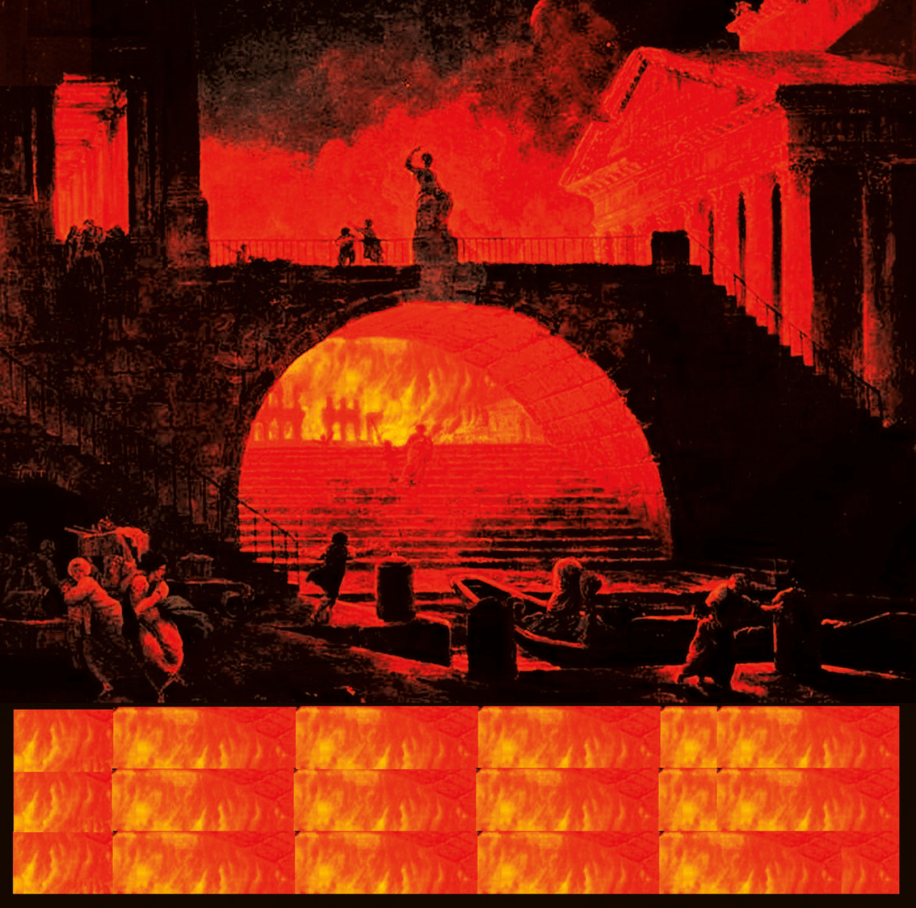
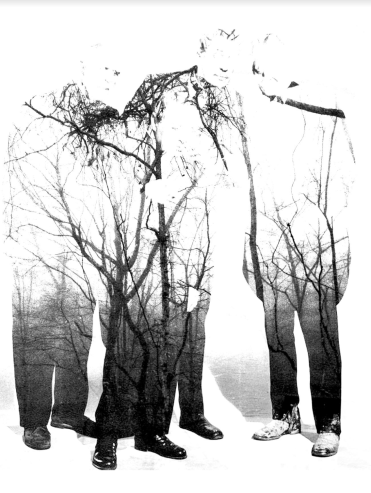
I kind of messed around with tracks on and off for a while before really wanting to establish a project around 2007. I started working with Ableton, which really changed everything as far as production and more complex elements goes. My first album was “glass fawn” in 2009, a 60 minute track with an abstract narrative of a deer getting lost in a dark forest and finding solace towards the end. I used a lot of sound manipulation and field recordings I found and morphed them into a strange organic ambient soundscape. My work evolved from there over time, eventually moving towards more complex work with neoclassical compositions including sampled piano, strings, etc. 


What is your working process like, is it mostly a solo project?  What kind of tools are you using to produce it?

It is mostly a solo project, though my boyfriend Felix Keigh does vocals for me as well at times (both live and in studio). He’s also queer and trans, so I feel like being a duo at times is a very powerful thing in that sense. As I mentioned, I use Ableton for almost everything along with plug-ins for different purposes running through it. It’s very useful for live shows as well. I use sample libraries with Kontakt to create the compositions involving things like classical instruments, percussion elements, choirs, etc. To be honest, I’m terrible with instruments aside from purposely playing strange sounds with them. 

I have a number of instruments I use live and in production work which functions more as providing material for strange sounds and the like . Things I have include a mizmar, Tibetan ritual bells, a violin, rattles, gongs, and more. They’re quite fun to improvise with, even without “properly” playing them. I’ve worked quite a bit with damaged tape recordings as well, including doing numerous loops with a reel-to-reel tape machine in the past.
 

Does spirituality play into your project?

Most definitely, really in every aspect even before I really started practicing formally. It’s hard to articulate how, because I’m an abstract thinker and part of that is why I do music the way I do. Everything has been esoteric in some way, with my narratives of animal-beings in spiritual journeys or generally wanting to create an otherworldly experience that takes the listener into a different place.

Becoming more formally acquainted with the occult after studying Hermetic magick definitely shaped things as well. It gives me a lot to work with, such as ideas from different world religions, esoteric correspondences, and numerous forms of symbolism. The experiences I’ve had with it became very formative and inspiring, working its way into my work. The occult is intrinsically tied into much of my life, so it will definitely be in my music as well one way or another.


What bands inspired you in doing the work?

As I mentioned, definitely Coil from the start. I first listened to them when I was around 13 and they simply changed the way I looked at music. I think a lot of the British post-industrial scene really played a role early on. Throbbing Gristle and others really opened my eyes to using strange sounds and noise in a confrontational manner. Cyclobe also got me interested in using strange, organic sounds in my work. Current 93 and composers like Arvo Pärt got me looking into classical elements also, those of a particularly religious and somber nature. I think a lot of experimental artists miss the opportunity of placing a great emphasis on emotions and really pushing things in that regard. I’ve become interested in more pounding electronic sounds also, listening to the work of Ben Frost, Pharmakon, and Surgeon. Being inspired by techno may seem like a giant left turn to some, but I really see it as a natural evolution as part of me wants to touch on every genre possible. Involving more electronic elements into my work has flowed in seamlessly in my opinion. We should approach every tool we can get our hands on.


How did you develop your sound, and how do you define it?

I think a slow evolution in my music tastes, art, and religious views really defined things overtime. They’re all interconnected for me, so there comes with that a lot of possibilities and inspiration.  I started doing dark ambient for a while since I was listening to that a lot as a young teen, but then I became very much interested in sacred minimalism. 

I think my passion for expressing emotional rawness through sound is really important to me in countless ways. I’ve had to deal with traumatic events and intense psychological and physical issues in the past (and present). I feel that has prompted me to make my music and art as emotionally intense as possible. I do this especially for live performances, as my music for those tends to be towards the noisy spectrum with most visceral screaming and use of extreme bass. I’d like to use infrasound, though I’d be worried about blowing out the PA system to be honest.


How did your collaboration with Throbbing Gristle come together?

I’ve seen people mention this before in writings but there’s been some misunderstanding with that. I provided some tape recordings while they briefly became X-TG, though I’m not sure how much they used them. I did casually talk about art ideas for a while with Peter Christopherson, but that sort of ended when he unfortunately passed away. I’d say it’s a matter of association more than anything else.

I did however do a piece with former Coil member Stephen Thrower, who is also in Cyclobe and UnicaZürn. What he did with it was stunning, and made for a good opener for the EP “dark night of the soul (the pile of bodies)”. It was a collection of older tracks, but I compiled it specifically for the winter solstice soon after the election of Donald Trump and during the rise of US fascism


What role does Aleister Crowley and Thelema play in your music?  How can you counter the far-right influence in Thelema?

I think it inspires a sense of transcendence that could be both dark and light, sacred and profane, etc. Some focus too heavily on one or the other in my opinion, but that’s just me. I’m heavily into Hermetic occultism, and his version of it very much strips away previous forms that adhere too strictly to orthodox, moralist conventions. Thelema also involves elements from Eastern traditions which definitely appeals to me. I feel the involvement of queer sex magick is very important, as with identifying with the sexually-liberated Babalon archetype and Baphomet.

With that said, that leads me to answer your second question on the far-right’s presence there. I truly feel that queer and trans identity along with feminism is really how we tackle it. The OTO (a Thelemic esoteric order) has had to make official statements on their site addressing this problem, making it clear that fascist views clash with the ideals of Thelemic philosophy. Despite Crowley having said some very terrible things during his time, his organizations have really made a point of addressing that bigoted views of the early century do not figure in to today’s sociopolitical climate. 

There is certainly a strong presence of women in Thelema who identify closely with deities like Babalon, Kali, and so on. They are often of an apocalyptic, war-like, and sexually-liberated nature which I really appreciate and admire. I’ve also noticed a growing number of queer and trans people involved, seeing that icons like Baphomet and principles of androgyny are important esoteric concepts. These are rightfully being highlighted in Western occult traditions now. The OTO has in fact made many policy changes and updates to offices and rituals to be more inclusive towards transgender and non-binary people. This includes gender neutral titles, notes on discrimination, and matters with gender roles in ritual. 


How does your experience of Chronic Fatigue play a role in your music, and what kind of challenges does it bring to the creative process?

I would definitely say by far the biggest drawback is being able to tour. I’ve been able to play some very well-received shows in other cities in the past (NYC, Boston, and Cincinnati), but only as a singular moment during a trip of some sort. I’m certain it’s affect the ability to get more listeners for sure, but that’s just how things are. I generally just gotta hope that more opportunities come up. 

In addition, my ability to work on music is certainly an issue with it. Struggles with it on an emotional level definitely plays a role in both my art and music. Being disabled and moving around the world in a capitalist context is miserable, and generally has great restrictions on life in general. The US system with regards to how it treats disabled is fucking vile.


There seems to be a strong spirit of resistance in the music, particularly in how shifting the sound is.  Do you see this project as inherently tied to politics, or collective liberation?

I wouldn’t say inherently so, but the personal can indeed be a reflection on the oppression of one’s life by various sociopolitical powers in play. My music is definitely a means of processing and liberation against despair of any form. This can be on a personal emotional level, in reaction to world chaos, or as a response to transphobia and other LGBTQ+ issues, etc. Becoming an anarchist and leftist in general really opened my eyes to what I can do with my work, and how extremes can translate into how I approach music. Issues with being trans and queer in the US especially have been a more prominent subject in my work now, as well as future releases I’ve been meaning to finish. I definitely feel like making visceral noise as a trans/queer person is an important thing for me to do now.


There is a huge variety, it moves from frenetic synth inspired tracks to very slow and plotting melancholy sound, do you feel like you are constantly reinventing your sound?

I think it’s extremely important to reinvent your sound at times in my personal opinion. I think a lot of projects and groups get stale over time for trying to tether themselves to one specific style. I tend to have an overall consistent sound to my music, but while it is also shifting constantly in some ways also. I enjoy having it go into different genres and styles with more minor releases like singles and EPs online. I genuinely enjoy listening to a huge variety of music genres such as techno, metal, hip-hop, noise, and so on. So, naturally I’d want to experiment with that while keeping an overall distinct nature to it.


How does mixed media art play into the music?  Do you see the visual art as being connected to your music?

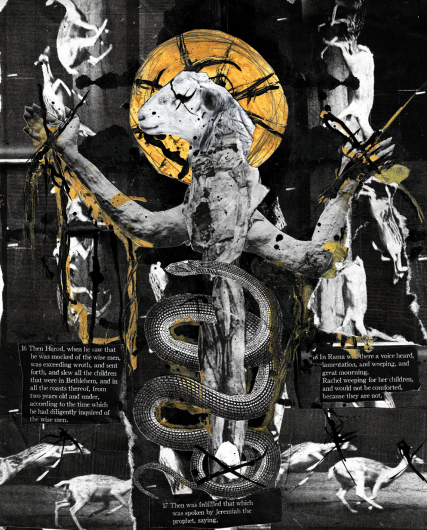
Oh most certainly, I think it plays a crucial role to it. The artwork sets out to establish the narrative and nature of my music before anything else. My art career has always been as important and parallel to my work as a musician. I think they really help with telling the story of the album. There is cross-referencing of different symbols being present in both the art and music. I often use symbolism with animals a great deal, whether as generally fitting the mood or being a character or archetype within the album. I often do my very best in creating cover art that truly encapsulates the release.

I’d like to someday do strange art editions of albums, definitely adding layers of ritual-like symbolism and strange imagery. Creating something talisman-like is most certainly a goal at some point for sure. There’s a lot of possibilities I’d love to mess with.


What drives your commitment to antifascism?  Have you experienced a lot of white supremacist attitudes in the pagan and neofolk scene?

I think that being among a number of several marginalized groups at once really gave me perspective on such matters. Facing issues of transphobia and queerness is definitely part of this drive, as well as simply wanting to combat all forms of oppression for the sake of compassion. In some ways my religious/esoteric views play a role into it as well. Seeing the rise of fascism in 2016 really radicalized me as a whole, especially as a queer trans-femme facing a great threat by this. I’ve only done a few actions, but I am absolutely committed for sure. Seeing the enemy up close is really something.

I haven’t interacted with the pagan/neofolk scene to be honest, but I’ve encountered some disgusting, fascist views while briefly involved in the noise scene in the past. The man behind Praying for Oblivion talked to me a ton, only for him to start rambling about Jews controlling everything and jokes about sending people to Nazi concentration camps like Auschwitz. Generally speaking, a lot of toxic masculinity is involved in that scene.


Why do you think it is important to be a publicly antifascist band?  How does antifascism inform your music?

I think only recently have I been more transparent about it honestly. I’ve started using art with references to guillotines and vultures in them, going into my views of revolution and occultism. I wish to fight fire with fire against fascism with visceral music as I’ve said. I want to make music that others can relate to in struggles of fighting oppression. My recent transparency with being transgender has been important with this as well.

I think being anti-fascist informs my music in the sense that my intense approach to music is a means to present a vicious, cathartic voice in the world. Even when moodier and somber, I still want something strong enough to affect someone a great deal. To present the suffering within a destructive world full on is very important and makes sure we never forget through art.
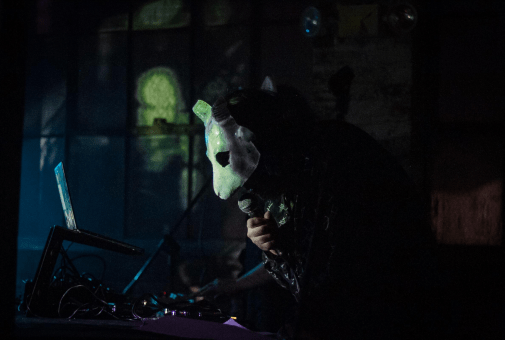
 

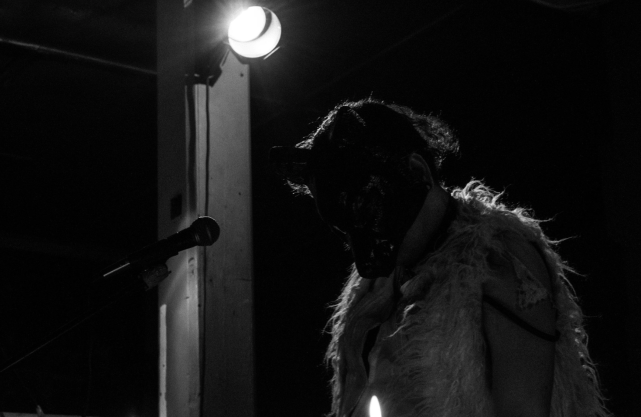
Photo by Alice Teeple

What other social issues play into your music?  There is a strong sense of a need to a return to a cyclical, grounded way of life in communities.

I think generally speaking, seeing the world and all of its different disasters plays a significant role . It feeds into me and plays a role in my emotions, either wanting to make something darker and abrasive, or some sort of somber beauty. I really enjoy pushing things and myself with my work, and seeing the world become most apocalyptic has been apart this. 

I do try to reach towards some transcendental utopia with my work as well. It goes into my beliefs of mutual-aid, solidarity, etc. I don’t think it’s an explicitly political matter, but wishing for a better world is in some ways. 

I also bring up some of topical subjects in obscure ways at times. For example, I referenced the “massacre of the innocents” and the ICE concentration camps through a backwards sample of the Coventry Carol in one song. 


What’s coming next for you?

Well, I had to take a long break from music for a bit due to health issues after an ear infection. It was a devastating time, but I’ve recovered a great deal thankfully. I still have to take breaks, but things have definitely improved. I’ve been working on the last album of the “Fox’s Funeral” cycle, which is a series of concept albums revolving around a family of foxes and their transcendence. I’ve been working with esoteric music theory, Gregorian music modes, and Qabalistic correspondences in how they relate to the story of the album. I sometimes make things needlessly complicated, but I’m like that with a lot of things. 

I’ve been meaning to soon formally release more aggressive, intense, and noisier music dealing with transgender/queer rights, current events, and anarchist belief. I expect some to drop out seeing that my music is becoming more “politicized”, but frankly I don’t care. My entire life and existence is a political matter, facing numerous challenges now is a political matter, seeing a truly apocalyptic world is a political matter.

I think fighting this through vicious noise, agitating and disturbing the comfortable is absolutely needed now. I know I keep saying this, but it’s true. Many art movements during political distress were combating the status quo by shocking works of art and music, including the early industrial movement and queer performance artists. 

I definitely think we need that sort of art now, certainly with discernment with how we approach things, but also not “safe” for conservative society. Really, something that shakes the life out of people whether through a sense of dread and grief, or by a violent outburst reflecting a destructive, bleak world. 


What other bands do you recommend for antifascist neofolk fans?

I am honestly not too familiar with things happening with the neofolk scene and the like. However, there’s definitely other things I think we should really look at and aspire to in different post-industrial genres. A lot of female artists from the noise scene are definitely recent inspirations. Pharmakon, Puce Mary, and (recently) Lingua Ignota are women who produce some of the most terrifying, vicious, and raw sounds today. I think being able to exist and rise up in a largely toxic and often misogynistic scene is a political act in of itself. Women in techno like Paula Temple are aggressively reacting to subjects like the concentration camps, the refugee crisis, and ecological disaster as with her last album also/

I played an amazing show with trans-femme POC artist TRNSGNDR/VHS who was great to meet. I definitely dig the work of Dreamcrusher as well, being another openly trans/non-binary POC artist working right now. Noise and industrial is definitely something that would be hard to be involved in as a queer person, so I really appreciate the two and the work they do. I try to fill in that blank of being a post-industrial trans/queer artist also.

I definitely think raising the voices and highlighting the work of different marginalized groups is a must now. Women, POC, and trans/queer artists have a wildly different perspective than those of a cishet white male. It’s really about time that we do, because folks like myself have a lot to say and scream during these horrifying times of fascism and despair. 

***

We are adding quite a few albums below from Florian’s Bandcamp, and we are adding some to the Antifascist Neofolk Playlist on Spotify. Make sure to also support us on Patreon if you got some pennies, we really appreciate it and you can get interview early!

The Dark Ambient Duo Outer Gods Redefining What Music Can Be [INTERVIEW]

If there was Seidr to be had on the mountaintop of an imagined future, Outer Gods would be sound that comes from inside your body after dosing.  For several years (and twelve albums and EPs) two solo musicians out of Atlanta, going by The Flail and The Wrathe, respectively, have brought together their two opposing dynamics to clash in beautiful and often violent soundscapes.  Emerging out of the world of ‘experiment'(they hate that word) dark ambient, Outer Gods exists on the sort of edges of musical genre that we hoped to capture perfectly.

Inspired by avant garde composers of the 19th and 20th century, Japanese noise music, the industrial iconoclassism of Throbbing Gristle, and a library of music that could overwhelm you, they have create a duality to their music that is simultaneously enraptured in a crushing drone and almost atonal confrontations.  What we mean is what they have come up with is something nobody could predict and constantly redefines itself, which is why we had to talk with them about what has been driving this project these years.

Screen Shot 2019-05-16 at 9.31.32 AM.png

How did Outer Gods come together?

:The Flail: We had been playing music off an on in several different projects, both together and in the same orbit. I cannot recall as to what was the initial impetus for Outer Gods to take shape, though we were not strangers to collaboration – we had begun working on soundscapes as a duo and things gradually began to take shape.

:The Wrathe: I had played in several bands that sounded nothing like Outer Gods with The Flail. Our recording collaborations had been going in a darker direction, but really it was the sessions that became our first demo (“The Mountains Den”) that crystalized a sound. The basic duality of The Flail and The Wrathe emerged during those sessions as well (strings vs electronics), though we both have played a lot of different instruments on Outer Gods recordings. The demo and the band co-created each other essentially.


There is a really overwhelming quality to your work, long songs that sort of consume the listener.  What drives this type of emotive experience for you?

:The Flail: There is, for my part, a compulsion to become lost into oblivion. It is a tightrope on creating pieces that grow and bloom organically but are tempered by the gardener’s thumb. Practitioners of Zen Buddhism know this well; to be conscious and intentional in the drive towards such a feeling is to have it remain forever on the horizon – if the vessel is already full, nothing more can be added. Conversely, John Cage made mention of his distaste for being described as “experimental” as experiments are what winds up being thrown out in the bin on the way towards a final product.

To return to the garden analogy, one must allow the roots to take hold and blossoms to sprout but not fear to take the hoe or shears where need be. Leo Shestov commented that our understanding of the world is akin to being lost in a dark forest, illumination coming only from flashes of lighting or sparks as one beats their head as they wander. In these moments one can see, albeit briefly, the landscape and shape of things. It is the experience of the blind gardener.

:The Wrathe: A lionshare of our material I see in a very “cinematic” context. The individual emotions I felt during the composition kind of felt almost ancillary to the overall cinematic mood each recording aspires to. To create something longform, you sometimes have to be willing to pack a lot of different emotions and experiences into a piece. Our live shows always aimed at bringing the listener into a collective moment, much of the time through sheer volume. But the records wanted to bring people into the sound in a different, more layered way. Our longer tracks are taxing to create, finding a balance in all the sounds is always difficult when trying to present an immersive listening experience.

Screen Shot 2019-05-16 at 9.32.02 AM.png

What bands inspired you in doing the work?

:The Flail: There is the compulsion to kill one’s idols but also to acknowledge that we do not operate in a vacuum. Even the action of moving against something or attempting to transgress is implicitly acknowledging the influence it holds. One of the worst things that an artist can do, and indeed even an individual, is to hold too much deference to inspirations otherwise they become merely a parrot or cheap imitator of something which will always maintain a form of superiority by virtue of its primacy. Though it would be churlish to say that there are not bands which heavily informed the work.

But this can be eclectic – case in point, I have always loved the low bass tones one finds in the kick drum from Southern Hip Hop or the atmospheric qualities of a band like Cocteau Twins but it would be ludicrous to say that there is an attempt to emulate these forms as such. We both have very eclectic tastes, not just in music, but all forms of art. To list a catalog of bands and artists that inspired the work would be legion. Some are apparent: SUNNO))), Boris, Lustmord, Tim Hecker, Edward Elgar, Arvo Part, Steve Reich, Belong, John Cage, Sleep, Tibetan Chanting, Merzbow, Darkthrone, John Fahey, Jack Rose, Current 93, Nurse with Wound…as you can see, the list could go on and on, each piece adding to the tapestry.

But where one thread ends and another begins would be to dismantle the entirety of the formation. Ascribing an etiological framework to the work only gets to a certain point and neglects the metaphysical dimension – as discussed in the works of Artur Schopenhauer – the pieces that go into constructing to the final work do not speak to the work as the thing in and of itself. This is not to say that the work is isolated, but rather, any great work of Art contains something which not only brings into itself all the inspirations, both conscious and unconscious but moves onto its own plateau.

:The Wrathe: At the end of 2005 I took a trip to NYC and ended up bringing home a backpack full of compact discs, the two most personally important being SUNN O)))’s album “Black One” and Hellhammer’s album  “Apocalyptic Raids.” I had already been listening to more academic drone (Tony Conrad and William Basinski) but SUNN O))) changed my mind as to just what “Drone” could be. Hellhammer is drastically important to me because I finally saw that Metal doesn’t have to be “perfect” sounding. “Apocalyptic Raids” is a raw, fuzzed-out record; it rocks just as much as the Stooges but in a defiant and ugly way.

In the early years of Outer Gods, I would play COIL’s “Time Machines” or Factrix’s “Scheintot” on one stereo and Death’s “Scream Bloody Gore” on another all simultaneously and just listen to the cacophony for hours. Throbbing Gristle and Black Sabbath were getting equal attention on the turntable, much to the dismay of my old roommates… one ended up having nightmares during my weeklong re-listen to TG’s “24 Hours of Gristle” box set. Gothic horror cinema is of course the other major element of influence. Many of our recording sessions went late into the night with images of Paul Naschy or Christopher Lee on the television behind us.

Screen Shot 2019-05-15 at 4.24.13 PM.png

How did you develop your sound, and how do you define it?

:The Flail: I would be hesitant to describe any method of development, at least one that is self-aware. As with a person, the experiences and interactions they have will invariably shape who they are at that moment. But this only ceases at the moment they become a corpse, devoid of subjectivity, an object amongst things. We do not experience our own decay as such, and likewise, we do not experience our development in real time. Only through self-reflection of our psychology are we able to come to terms with ourselves as a coherent form.

Most of our work has emerged from long-form jams, letting the music flow and taking us where it will. As whirling dervishes seek to commune with Allah, or Buddhist chants strive for enlightenment, at its core, there is an approach towards a Divine Nothingness. It is sometimes churlish for the artist to define themselves, this seems a role more appropriate for the critical eye. Whereas at the beginning of black metal there was a determined motivation to create something new and distinct the chains of post-modernity and the Hegelian-end of Art in the Western sense (i.e. the examination of the plastic arts in Arthur Danto) makes such self-definition a complicated matter.

Perhaps I am too personally averse to labels, which may be a byproduct of my own individual privilege in a certain sense. Definitions emerge out of the gaze of the Other, to determine what is of a kind and what is not of a kind. In truth, the sounds that have emerged and taken shape have done so organically, as with the garden. Seeds are planted and cared for and only when they have begun to stretch beyond the bounds of what we desire aesthetically are they tended to. Many a late night watching Hammer Horror films and manipulating sounds, not with a distinct purpose but for the sound itself, has provided us with a wealth of material to work with. To return to the idea of inspirations, perhaps it can be imagined that other bands and artists have served as vessels which are shattered against the wall – and amongst the disparate shards and pieces, we attempt to create a mosaic.

:The Wrathe: Experimenting with sound has been the one united approach amongst many in the writing of music for this project. There were countless moments where we said something like “what if this organ could sound more like a guitar?” In those moments of mutation, we found different ways to approach making songs. Genre has always been unforgiving for us, trying to label the band during releases leaves a lot to be desired. But I would say calling it “experimental drone” or even “experimental ambient industrial” are not too removed. I do think you see a defined arc of sound throughout the records. Our early recordings and first album are all harsher, more lo-fi. Anno Metuo II through Ascend Unto the Seventh Throne are all longform epic pieces.  And Inauguration of a Dying Sun, Dismal Rift and Severed Together have been more synthesizer-driven soundtrack leaning work.


Do you see this project as inherently tied to politics, or collective liberation?

:The Flail: Not inherently, no. That is to say that it is not a conscious intention to put forward a political message. But Aristotle described politics as the interaction of humans amongst humans within society. From this it must be said then that everything is political, even the espousal of an apolitical stance is a form of politics. Though the issues of politics in its most apparent and understood form, or that of liberation, may not be presently manifest or intended, I cannot say that it is not there. To speak personally it is more about being authentic to one’s self and creation and allowing the chips to fall where they might. In Oscar Wilde’s Man Under the Spirit of Socialism, he defended a socialist political stance out of the desire for the creation of art; the materiality of capitalist structures thwarts art. Firstly, that when one struggles merely for survival there is not the time for the creation of Art – we are estranged from our species-being, in the Marxist sense.

Secondly, and related to this, the creation of art becomes tied to its value as a commodity – the anathema of Art. Yet even these stances have within them a dangerous seed that can lead to elitism. Towards this, the idea of collective liberation is that which would allow art to form, exist, and thrive on its own terms, unbeholden to the market, gate-keepers, or dogmas.

:The Wrathe: I see the role of art as being about a type of liberation, namely a liberation of people’s generalized perceptions. Art can help the “other” express a point of view that might otherwise not be understood by larger cross sections of people. There are many cultures/perspectives I have gotten to know better through art, unique perspectives I would not have otherwise had any real exposure to.


Screen Shot 2019-05-15 at 4.25.30 PM.png

How did the Desolate Moon Phases project come together, and what was the thinking behind it?

:The Wrathe: DMP came together after I randomly met a couple musicians at a Minneapolis record store who had similar taste in Dungeon Synth, older Black Metal and Japanese horror comics. It is probably a little more inherently “dark ambient” than any of the Outer Gods recordings, and more tape-loop/music concrete leaning. Because of the number of different collaborators/instruments, it has an effect of walking through a large house with many different rooms. I went into DMP with the intent of making different tracks in different ways and trying to find overlap in hindsight, and the freewheeling approach yielded plenty of sonically interesting results.


What drives your commitment to antifascism in this music?  

:The Flail: I have never liked bullies, nor have I liked those who mistake their idiocy as a form of cleverness. Fascism is a reactionary movement, it is one of the herd, reaching towards some self-constructed mythic past that never existed. They are lambs who masquerade as eagles. We are fortunate to have never really encountered white supremacists personally. No one whom we have shared a stage with (at least to my knowledge), or conversed with, have held these views forward. I find the entire idea of white supremacy to be utterly laughable, especially in a pagan context.

Firstly, the idea of “whiteness” is one that emerges only in the expanse of European Colonialism under the auspices of Christendom. What does Odin have to do with Jove? What does the cultural history of the Alemani have to do with the Gaels? This process of a buffet style of paganistic thinking only occurs by virtue of the universalism that the Catholic Church brought with it by the hammer and sword of Charlemagne and Constantine. These so-called pagans who speak of an anachronistic idyll are merely reactionary phenomena whose existence is only allowed by that which they espouse to hate. Their whole reason for being is defined upon the construction of others that they can place themselves against. Whether it is anti-Semitism, anti-Christian, anti-Muslim, it is the revelation that they are too weak to have any meaning outside of an opposition. Nietzsche said that one can tell the greatness of a beast by how many parasites it can endure. If this is the case, then far from operating from a place of strength and power as they imagine themselves, they are merely admitting that their ideas are so weak, so void of any vibrancy or vitality, that they cannot stand on their own.

And to hear people who strum on the guitar, which developed in part from the Almohad Caliphate in Iberia, brought to the “New World,” and further developed by indigenous and enslaved populations to form the roots which even permit the very genres they wish to use as an ideology is a proof that far from being a threat, multiculturalism has allowed their very Existence.

The British comedian Stewart Lee has a bit about UKIP and other anti-immigration groups, and their sheer idiocy. The entirety of human civilization has been formed not in isolation but out of the interconnectedness of various peoples.

:The Wrathe: I have zero interest in entertaining doctrines based around ignorant racist or nationalist belief systems. Technology and progress can be made by cooperation. Global culture is now interconnected in a transparent open way (by the internet), but on many levels it always has been interconnected. People looking to the past for the “right way” to live are looking in the wrong direction, we need to be looking to the future.


Why do you think it is important to be a publicly antifascist band?  How does antifascism inform your music?

:The Flail: Much like the late 19th and early 20th century, fascism (or proto/crypto-fascism) emerges out of the failure of the dominant political system. It is an attempt to give meaning to the senseless. But it is a regression, one which can never be wholly actualized. It is the hallmark of individuals who cannot bear their own weakness, and rather than traverse and overcome the frailty, fallibility, and insecurity that all people feel – for we cannot be everything and we must die – seeks to make ruins of the world so that they may become kings of the ashes.

:The Wrathe: Our music exists as a vehicle to explore something outside one’s self. There is a great emptiness in that void, a space for the mind to offer a different type of perspective. Fascism as a personal philosophy offers one limited world-view. But art asks a viewer to perceive in another way, and in so is inherently dangerous to dogma like fascism. The obvious examples of how Fascism approaches art can be seen in the ways the Nazis and Italian fascists destroyed progressive art. You cannot be in favor of progressive art and a fascist at the same time, it is dissonant.

Screen Shot 2019-05-16 at 9.32.40 AM.png

What other social issues play into your music?  There is a strong sense of a need to a return to a cyclical, grounded way of life in communities.

:The Flail: As mentioned above, any social issues manifest more from the virtue of existing rather than conscious espousal of ideology. The great debate amongst philosophers of history has always been whether human civilization traverses through time in a linear or cyclical fashion. To this, I cannot answer one way or the other. We are but ghosts, condemned to bodies. To assume that one can fight against the great deluge of entropy, which will consume all in due course by clinging towards a false sense of superior identity is to either be ignorant of that which truly binds all peoples together – that we must die.

:The Wrathe: I do think people have (in sometimes wildly different ways) struck out looking for the idea of “community” in new definitions. How music plays into that is of course something that is very hard to have perspective on, but perhaps the search itself is part of humanity’s permanent identity. In our generations we have used culture like music to forge communities (at shows, in online forums, talking at record stores), even if those communities are based around a collective alienation. Drone does offer a certain collective and immersive experience, but it is very hard to define beyond that because of the ephemeral nature of listening.


What’s coming next for you?

:The Wrathe: The Desolate Moon Phases album Heathenstones is coming out on Atlanta’s Stickfigure Recordings in May. In the coming months, I am producing an album or EP for my friend Sole Servant’s dungeon synth/dark ambient project MELOK TYR (he plays synths on the DMP album). This summer I have a couple mixing/mastering projects for Minneapolis experimental metal bands Past Dawn and Azael, which I am definitely looking forward to. My long running solo project Sareth Den has a full length that’s been slowly gestating this past year, hopefully it will finally see the light of day.


What other bands do you recommend for antifascist neofolk fans?

:The Wrathe: If you have not stumbled across Popol Vuh in your musical travels, I can highly recommend their 1970s work. The discography spans all manner of sounds, from pastoral folk to cosmic synthesizers, mantra chanting to psychedelic jams. If you are unsure where to begin, try “Hosianna Mantra” from 1972 (or their debut if synthesizers are more your interest). Some people probably primarily know them for their impressive soundtrack work for Werner Herzog, but the album work is just as important and just as good. For something newer(ish), I would suggest the first Entrance album, “The Kingdom of Heaven Must be Taken By Storm.” Not all folk albums are created equally… this album offers a kind of raw, borderline anti-folk-in-moments sound, but taken together it is a supremely beautiful and oddly cosmic experience.

***

We are putting several Outer Gods tracks below from their large discography, and we encourage you to check out their Bandcamp and really dive into their work.  We put a track from the side project Desolate Moon Phases about (we will cover their album when it is released), and check out Sarath Den (we will also cover that new album when it is released).  We have also added to Outer Gods tracks to our Antifascist Neofolk Playlist on Spotify!