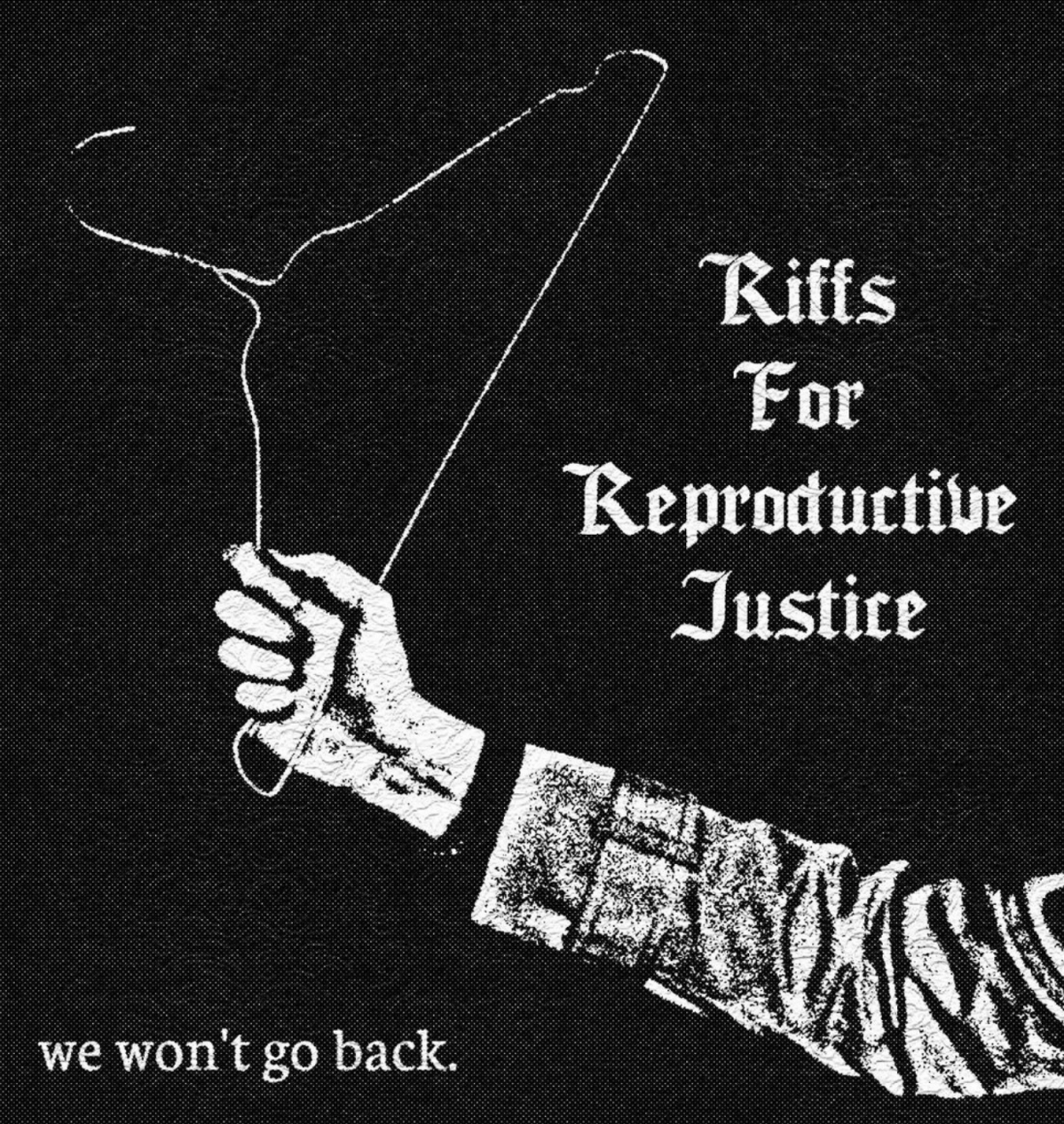
Metal Raises Money for Abortion Access with ‘Riffs for Reproductive Justice’

After the recent attacks on women’s reproductive rights in several red states, and the potential for a full-scale SCOTUS assault on Roe vs. Wade, fundraising for abortion access has become a key priority and bands across the country are standing up in support. On a recent tour with Dawn Ray’d and Dead to a Dying World, they gave free t-shirts to people who gave monthly donations to reproductive access.

Now a new compilation has come together, organized by former Noisey resident metal-head Kim Kelly, and is intent on raising money for the National Network of Abortion Funds and the Yellow Fund, which fund abortions and do organizing in Alabama. The “Riffs for Reproductive Justice” compilation is for sale at Bandcamp and brings together a massive list of metal and hardcore bands who are putting themselves out there to raise money to ensure that low-income people in the most affected states still have access to healthcare.

Abortion clinics across the country are being forced to close, robbing people of the ability to access crucial healthcare services. A theocratic fascist regime is working overtime to control the bodies of those who have uteruses, to force us into unwanted pregnancies, to wrest away our human rights. We cannot stand by and let this happen. All of us—people of every gender, with every kind of body—need to fight back against this horrifying attack on bodily autonomy, by any means necessary. This compilation is just one small effort made by a few dozen people who care, who are intimately affected by this, and who love other people who are afraid of what the future will bring.

The compilation has thirty-three tracks, including songs by Ancst, Axebreaker, Dawn Ray’d, Deafest, Tbou, Jucifer, Twilight Fauna, and others.

“So it’s our honor to be part of this effort in the pivotal fight we again face to defend reproductive freedoms which politicians and religious extremists in our home country seek to demolish,” said Gazelle Amber, of Jucifer. “If legislators won’t do their job and represent the overwhelming public demand to keep abortion and birth control legal and accessible, we have to take care of each other. Never forget that we are more numerous than those who aim to control us. The object of power is power.”

You can get your compilation here, and they are asking for at least $5 to purchase the album, but you are welcome to donate more since 100% of the proceeds will go to the organizations supporting safe abortion access.

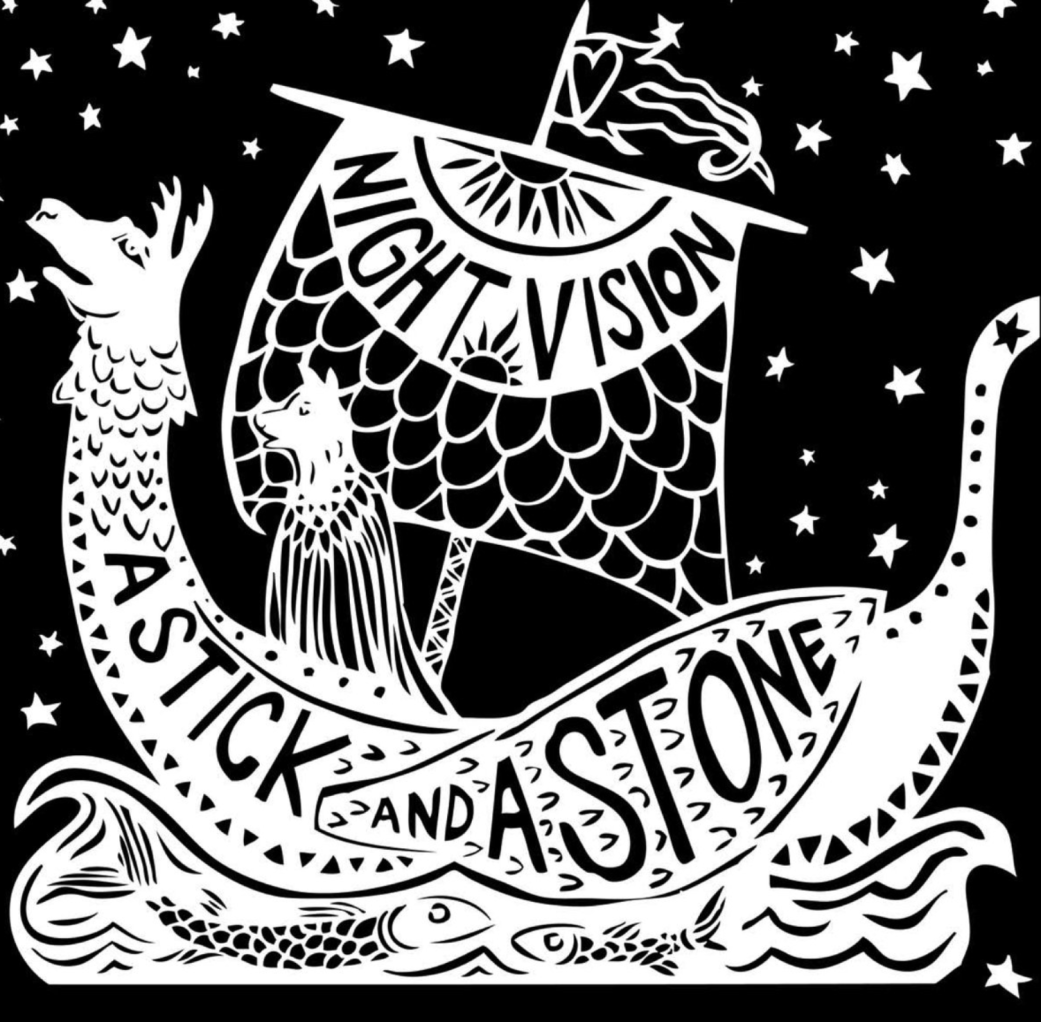
Against the Witch Hunts: An Interview With A Stick and A Stone


Screen Shot 2019-06-28 at 9.29.15 AM.png

A defining feature of the neofolk scene and the genres surrounding it is the revolving door of musicians, based in the shifting sands of collaboration. This has been the power of the scene of experimental neofolk, dark folk, ambient, and otherwise bands we have been covering recently, working out new musical terrain together. A Stick and A Stone has been one of these projects that we have been watching for a long time, and with their upcoming release we thought it was a perfect moment to sit down with them and talk about how this incredible project came together, how folk music draws inspiration, and how they are existing in the new antifascist world.


How did this project come together, and how did the relationship form with your collaborators?

Elliott: I formed A Stick And A Stone in 2007 as a solo project, though frequently collaborating with a wide range of guest musicians. When I started playing with drummers in 2013, and first with Dani in Philly, I got a taste of what it was like to have more participatory collaborators, because writing rhythmically was foreign to me, and I couldn’t play those songs solo.  

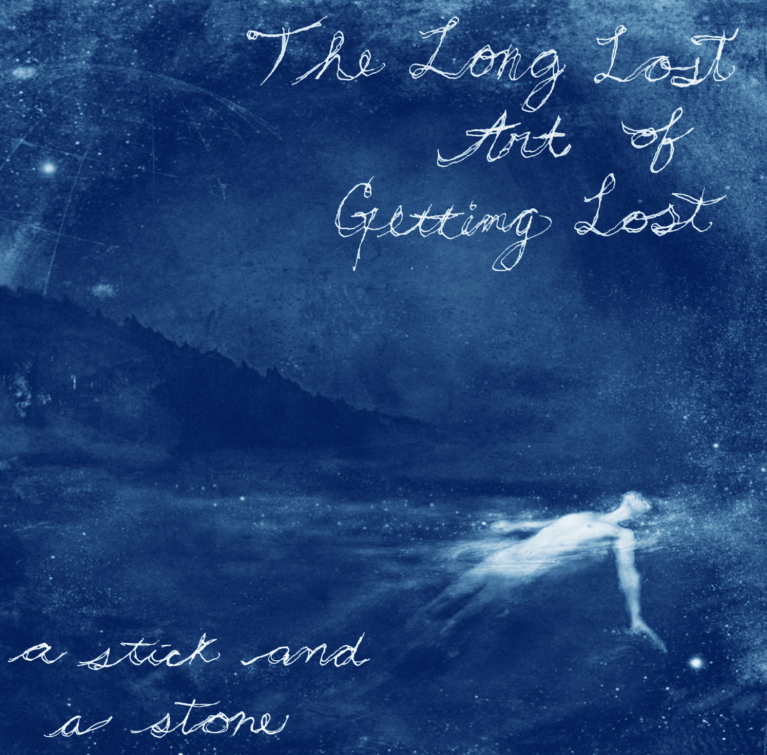
I met Myles in Portland through playing shows together, and in 2015, I started working with him on recording viola for The Long Lost Art of Getting Lost. (Oddly enough, after a year of playing together, we found out that both of our estranged dads also coincidentally play in a jazz band together back in Philly!)

Soon after, I met violist/vocalist Maria through working on the Black Lives Matter-inspired recording project of our mutual friend Sina. Then, we met violinist/cellist Stelleaux through a queer classifieds post that Myles made. Suddenly this magical string trio was formed, and when we all started practicing and performing together, something clicked. Four years later, they’re all somehow still putting up with me (mostly, hahah).

I also still love playing with guest musicians, and hope to find more drummers to work with soon.  


How does your music and lyrical writing process work?  Does it come together in collaboration, or is it very solitary?

Elliott: Mostly pretty solitary, though I always welcome input in fleshing things out. I write best when I am alone and in motion, with very little distraction. These days, this often looks like walking in the woods and belting at the top of my lungs when I think no one is around, then hiding behind a tree when I see other humans approaching, hahah. Back in Philly, I didn’t have any nearby woods to walk in, so I wrote by singing while I rode my bike through the streets late at night.

Unless I’m playing piano or bass when lyrics come through, I usually start with the vocals. The lyrics unfold simultaneously with the vocal melodies, the same way that the cadence of speech comes through naturally when you’re in a conversation. Most of my songs are some sort of conversation, even if just a conversation I’m having with myself.  

The instrumental arrangements I write often start off as vocal harmonies, then later get transferred to whichever instruments fit the part. I used to notate my ideas on sheet music, but I’ve been spoiled with collaborators who can mostly learn everything by ear.  
Screen Shot 2019-06-28 at 9.30.01 AM.png

What folk traditions do you draw on for inspiration?  

Elliott: Melodically, I’m definitely influenced by the Jewish traditional music I grew up immersed in, and still listen to. Some of my first experiences on stage as a child involved singing Hebrew songs at religious gatherings. (My religious upbringing is really complicated, though, so I’m not going to unpack that can-of-worms here!)  

I’m also largely inspired by the droning harmonies of traditional Balkan choral music, which I was first introduced to while singing in a protest choir, then got to know more deeply when I later formed an acapella Balkan trio. I was fascinated by the ways the lower harmonies seem to move up and down throughout the scale, but when you look at the sheet music, it’s all just one note.   

Myles: Interesting — I’m part Lithuanian, and something that struck me recently was learning about the Lithuanian dainos vocal tradition of Sutartinės, which are these very layered old cannon melodies chanted on top of each other in groups. The vocal intervals are alternately dissonant and harmonic, depending on where they intersect. Anyone who has ever had the misfortune of recording my viola parts knows how much I love creating a similar wall of sound.

I also crawled out of a major depression once by impulsively joining a Georgian polyphonic choir that rehearsed in a friend’s house who had been singing the music since she was a child. In Baltimore, I  played in a Gamelan group that raised money for tsunami relief performing inside the embassy of Indonesia in Washington DC. 

A current bandmate of mine who’s involved in radical Jewish music preservation in Philly was nice enough to teach me some Klezmer music this year. I’m really grateful for all these experiences.


Paganism, particularly heathenry, immediately jumps out in the music, largely from the art and the instrumentation.  How present is that in the music for you?

Elliott: This depends on how you define Paganism. I don’t worship any gods or goddesses, and I actually don’t know much about Heathenry. I do know that the word pagan originally came from the Latin word ‘paganus’ which meant rural, rustic, or ‘of the countryside.’ To me, this speaks to the relationship of pagans with plant and animal spirits, the animist nature of paganism. I’m an animist in the sense that I experience everything as alive in some way. Not just plants and animals, but all material existence,  everything.

I used to do rituals with some activist pagan communities (of the Reclaiming tradition, mostly). I was originally drawn to paganism because it is a Mystery tradition. After leaving the fundamentalist religion I was raised in, I became a devoted agnostic, as a path of striving to embrace the unknown and let go of the urge to explain or define everything. Over time, though, I have started to feel weird about the religious conviction and Eurocentrism I’ve encountered in many pagan spaces.

These days, I feel most at home in “Jewitch” circles, and still practice what some might refer to as witchcraft, though the increasing commodification of  “witchy-ness” has left me seeking other language for my practices.

Myles: I am not a pagan, or religious at all for that matter. I feel no void of faith there, personally. I do have distant relatives on the Lithuanian side who practiced elements of Romuva. I’m wary of a lot of elements of paganism and heathenry for the same reasons Elliott described. 


There is a mention of witch hunting in your tracks, is that a theme that plays in the music?

Elliott: I wrote Witch Hunter when I was thinking about the commonalities between witch burnings and modern-day police repression. Though that’s the only song that directly alludes to what we think of as witch hunting, a lot of the issues confronted in my music have roots in the same imperialist ideologies that fueled witch hunting. (Silvia Federici’s work, particularly Caliban and the Witch, probably makes these connections better than I can explain here.)


How does antifascism inform the project? How does the climate crisis play into your work?

Elliott:  Well, we currently live under a fascist regime. There is a very small oligarchy of the mega-rich who own and control everything, including armies of cops and military forces to keep it that way. We live in a post-apocalyptic era; the ongoing genocide of indigenous peoples and cultures was, and is, an apocalypse. Climate crisis, already underway, is inextricably linked to fascist colonization, and so much knowledge on how to live with the land has been burned and destroyed.

These are crushingly devastating times to be alive in.  

I write music as a means to get through these dark times. Not just to survive them, but to grieve them, to heal through them, to keep building the strength to protect what is left of land and culture. Grieving all that has been lost to fascist colonization is necessary to move forward and keep fighting it, and there is very little room for grief in a capitalist system that profits off of every form of distraction possible.

One of the radical potentials I see of dark, emotionally heavy music is that it can make space for such mourning. It can de-stigmatize openness around death, or the emotions we’re supposed to hide in order to uphold the status quo. It can be a rebellion against the pressure to put on a happy face and pretend this is all ok, just business as usual.

That said, I’m not trying to get stuck being bogged down by this shit, either. I also write music to honor and uplift what I hold sacred, what I love fiercely, what I am fighting to hold together and defend. This is especially apparent in our upcoming album, Versatile, which we’re releasing this summer.

Click here to pre-order on the Kickstarter


Why is it important to be publicly an antifascist band?

Elliott: In this white supremacist culture, it’s important for all white people, whether in a band or not, to be publicly and outspokenly anti-racist. Put simply, silence is compliance.

In the context of the music scene, this is particularly important because there are unfortunately a lot of crypto-fascist bands who are very discreet and covert about it, and we want to do everything we can to separate ourselves from them. Our violist Maria’s other band, Aradia, whose art and merch is now adorned with anti-fascist symbols, were inspired to make their values more explicitly identifiable after cancelling a performance when they discovered that another band on the bill were crypto-fascists.   

Aside from visibly representing ourselves as anti-fascists, it is also important for us to actively engage in anti-racist organizing and resistance. Many of us who play in A Stick And A Stone also work with various grassroots activist groups, such as Critical Resistance, an organization working to dismantle the prison industrial complex, which is one of the main tools that the current fascist regime uses to control us.  

I’m going to include viola collaborator Myles for the rest of these questions because he’s had more encounters with the neofolk scene than I have.

Myles: We’re culturally nearing a boiling point where being apathetic and not having some solid position against fascism is becoming less and less of an option for anyone sharing this planet, given the extremity of some people’s increasingly “proud” negative racist misogynist politics.


Have you experienced any far-right or racist attitudes in the neofolk scene?

Elliott: This is an interesting question because we actually have never referred to our music as neofolk or considered ourselves to be a part of the neofolk scene. To me, ‘neo-folk’ has always been primarily  associated with neo-nazism. That said, some people have classified our music as neofolk because bands in that genre tend to use somewhat similar instrumentation and minor-key tonalities as us, though often hold vastly different values.

I do want to note that we are a band of mostly white people, usually performing to audiences of mostly white people, and wherever you have a group of white people, you’re inevitably going to confront racist attitudes. Whether they’re outright bigots or well-meaning liberals, no white person is completely immune to racial ignorance. We all have ongoing work to do to unlearn colonialist mentalities, and it’s our responsibility as white people to educate and challenge each other.  

Myles: While trying to find a home for the previous A Stick And A Stone release, Elliott and I dropped an offer from a European record label when we found out they were also pressing Death in June recordings. More specifically, although I don’t consider any bands I’ve played in to be neofolk, I have had the misfortune of problematic people from the neofolk subculture lampreying onto some my bands, mainly my old chamber group Disemballerina.

Like A Stick And A Stone, we were made up of all queer people, but at one point magnetized this fringe population of embarassing Nordic-pagan folk-music enthusiasts with closeted racist politics.

On more than one occasion, a band I was in got asked to play private events, only to later learn, with great disgust, that we had inadvertently shared the room with random attendees who wrote for alt-right publications and hosted holocaust-denier author events. We got the fuck out of that whole scene pretty fast, burned some bridges with sketchy people and eventually, after some friends reported alt-right book tabling at the neofolk festival Stella Natura, reached a point where we wouldn’t play with any band under the “neo folk” banner whatsoever, just to be safe.  

As a disclaimer, I have plenty of friends who are involved in that subculture who aren’t alt-right racist garbage bags, I know they exist. We just weren’t taking our chances. The patriarchy and homophobia we encountered being a part of metal scene is bad enough.  


What is next for you?  

Elliott: After we finish releasing our next album Versatile, I have enough songs written for two new E.P.’s that I’m looking forward to record. One will be an acapella album akin to Björk’s Medulla. The other will be louder, with doom-inspired bass riffs, drum collaborations, and of course, more string arrangements.]

Myles: I’m about to move to New York for my boyfriend. I’m excited for A Stick And A Stone’s new record! I built a glass harp for this one and really love the lyrics on this new album.

Elliott: Thanks, Myles!


Are there any bands, or antifascist neofolk bands, we should be checking out?

Elliott: I don’t know of any neofolk, but I can recommend some anti-fascist folk music.

(Of course, since it is Euro-centeric to use the term ‘folk’ only in reference to European folk music, I’m using ‘Folk’ in its true definition here, to mean any traditional cultural music that is played by the common people, that is accessible and speaks from the people’s experience.)

Some folk-inspired musicians at the top of my list include the Turkish revolutionary psych-folk-rock of Selda Bağcan (especially Selda 1976), who was imprisoned three times due to the radical political nature of her music. Or Miriam Makeba, who used her music to raise awareness about apartheid and, after being exiled from South Africa, became active in the US civil rights and Black Power movements. Both of these singers have really powerful vocals. As a vocalist primarily, I’m always seeking out vocal inspirations of any genre.

Other examples include Syrian protest singer Samih Choukeir, or the anti-colonial music collective  Tinariwen, whose cassette tapes were used to pass tactical communications between scattered Tuareg independence fighters. The list goes on…  Our cellist on the new record, Sei Harris, runs a show of non-European music on Freeform Radio under the moniker DJ Mock Duck, which could be another resource for finding other anti-fascist folk musicians from across the globe.

I also want to highlight the music of a couple of our fellow anti-fascist transgender musician friends who died this year: Nia of Displaced who was sent frequent death threats from alt-right bigots, and Dani SummersI actually met Dani on the street at a counter-demonstration to a march organized by an alt-right group. We were both walking with canes that day, and he came up to me, saying, “Hey! Us anti-fascist cripples gotta stick together!”

Myles:  I play viola now in a two piece band called Forgotten Bottom. We’re named after a Philadelphia neighborhood and are inspired by working in the city shelter system here, the extremely depressing level of gentrification happening in my home city, and the opiod crisis that has killed many people I  love. We have a tape coming out this summer

I’m also in an A/V improv project called Ominous Cloud Ensemble, which has a rotating lineup of musicians, currently and perhaps most proudly including members of Sun Ra Arkestra.

Apart from that, some current bands I like a lot: Jupiter Blue, Leya, Ala Muerte, Ooloi, Spires That In The Sunset Rise, Persephone (dc), Show me the body, Las Sucias, Elizabeth Colour Wheel, Eartheater, Du.0, Darsombra, Lurch and Holler, Rectrix, Moodie Black, The Dreebs, Like A Villain, Ariadne, Solarized, Blew Velvet, Dolphin Midwives, Madam Data, Human Beast, Irreversible Entanglements, Dream Crusher, Burning Axis, Møllehøj, Mal Devisa, Caspar Sonnett, Daes, B.L.A.C.K.I.E, Hermit High Priestess… I’ll stop.
 

Falls of Rauros Fuses Neofolk and Black Metal into a Apocalyptic Cry for a New World

It might not seem obvious, but the world of neofolk flows perfectly into the harsh noise of black metal. This largely comes from the deep well of inspiration they find in the power of nature, in the use of environmental sounds and traditional folk music, and some of the lyrical content. Both genres have been plagued by the far right, which is why a band like Falls of Rauros, who fuses both genres, can be such a beacon of hope.

We did an interview with Falls of Rauros about their music style, why they are antifascist in murky musical waters, and how climate collapse fuels their rage.

How did the band come together, and what was the concept when it first started?

Falls of Rauros began in late 2005 when the bands that Ray and I were previously in dissolved. We were still in high school at the time. The two of us wanted a creative outlet and decided to start recording raw demos, thrown together quickly with little thought or strict adherence to traditional song composition. It was a mixture of improvised, off-the-cuff decision making, and loosely composed ideas. Generally, each song would come together extremely fluidly, often within one afternoon. There were no plans to play shows or take it any further, but eventually we sought out the help of some close friends and became a proper “band” by the time we recorded our first full-length record, Hail Wind and Hewn Oak. Stylistically, the concept behind the early demos was to combine raw black metal in the vein of Judas Iscariot, Ildjarn, etc. with neofolk and experimental and psychedelic folk/rock. The result was something incredibly raw but much less aggressive or “evil” than anything released by the aforementioned artists. We were simply trying to exercise our creativity and get some wild and disparate ideas down on tape. We’ve since refined our sound greatly, but the building blocks remain intact since day one.


What is your own history?  Was this the first metal band for its members?

There is no history worth digging up before this group, as we were still in high school when we formed. We were in bands before Falls of Rauros, but absolutely nothing notable. Everybody has high school bands; it’s how you figure out how to work as a collective, write songs, perform, record, etc. Ray was in a metal band before Falls of Rauros, and the other three of us were in a metal-influenced post-hardcore/rock type of band. These are nothing worth hearing but the experience we gained was invaluable.


Your music really straddles lines of genre.  How do you think of it?  Still black metal, or something else entirely?

I’m comfortable describing Falls of Rauros as a black metal band, but only because it simplifies things and dodges the necessity for an overly convoluted description. In recent years the definition of black metal has been stretched so far that I think we fit the bill without too much worry. I would never try to pass us off as a pure black metal band, as that would be an abject falsehood; there are undeniable influences from rock, folk, classical, and other styles injected into our music. Adam at Gilead Media described us as “melodic metal” and I think that’s a fair description; our compositions hinge overwhelmingly on melody. Melody really drives this band and our records. So perhaps “melodic black metal” or “black metal influenced melodic metal” could work. You see how quickly this becomes ridiculous so I’m in favor of simply calling us black metal.


How do you think Falls of Rauros relates to the rest of the neofolk scene?  Much of your music seems to fall into the genre.

None of us in the band listen to much neofolk despite it being an initial influence when we formed the band. We certainly enjoy some but, truthfully, just a few of the bigger names. Tenhi is wonderful. As the years go by I would say that there is less and less neofolk to be heard in our music, and something more akin to folk rock / classic rock has replaced it. We still use acoustic guitars frequently, but the mood and style of those acoustic parts aren’t necessarily neofolk inspired. But perhaps I’m not the one to say what it sounds like, and I’ll leave that up to the listener to decide. A lot of people say they hear post-rock in our music but I can say definitively that we are not substantially influenced by post-rock, nor do any of us listen to much post-rock whatsoever. Anyhow, to answer your question; I don’t think we really relate to the neofolk scene in any meaningful way, but we certainly run in adjacent circles and cross paths on occasion.


There is a definite critique of the existing culture, capitalism, and broader society in your music.  Where does that come from?  What kind of vision for a society do you have?

As the lyric writer for the band, most of those topics you mention are filtered through my personal worldview and outlook. However, all of us in the band are more-or-less on the same page when it comes to such matters. None of us are materialistic; we try to remain humble, take nothing for granted, and live our lives with less-than-typical excess. It would be hard to say that anybody living in a modern civilized society can avoid producing and consuming in excess, but trying to remain cognizant of these issues, and curtailing as much excess as possible, is something of a noble exercise. The major critiques found in my lyrics fall close to the side of environmentalism; most present-day cultures are entirely anthropocentric, and capitalism is potentially the most egregious example of anthropocentric tendencies. My lyrics are often personal, but when they broach political topics they unflaggingly push back against capitalist ideation. But they also venture well beyond that safe and simplistic “CAPITALISM BAD” punk rock approach into exploring the shortcomings of human civilization as a whole, the dismantling of hierarchies among humans and non-human animals, distrusting and disarming mythologies both secular and religious, etc. I don’t really want to go in depth regarding what sort of vision for society I have because it’s not comprehensive or even realistic necessarily, but here’s a start: healthy, egalitarian, honest, communicative, and artful.


Why is it so important to combat fascism and racism in the black metal and neofolk scene?

I’ll be the first to admit that I have listened to a handful of politically questionable bands both past and present. It was something I paid little attention to as a teenager; in my youthful ignorance it didn’t seem all that important and my vision of black metal was as something inaccessible and threatening to humankind, so without much thought it just sort of made sense to me that fascism and racism existed in black metal (and neo-folk). As the years have gone by things have changed; I have become much less complacent and tolerant of these ideas in music as they truly represent the antithesis of counter-culture and rebellion. There is absolutely nothing brave or heroic about adhering to state-mandated dogmas and championing police and military might. It’s pure cowardice. It’s the easy way out. It’s an embarrassing and basic ethos for misogynistic knuckle draggers who fetishize efficiency, conformity, and history. So, ultimately, these ideas don’t belong in black metal, or neo-folk, or any other counter-cultural music or art. I can hang with misanthropy, cultural subversion, religious blasphemy, and whatever else in black metal. But fascism and racism simply have no seat at the table.   


Why are you public about being an antifascist band?

Well, for the reasons mentioned above primarily. I also think we are public about being an antifascist band because so many bands try to ride the political line in order to maximize their potential fanbase. They don’t want to alienate people on the left or right, so they attempt to play neutral. Or they take the crypto-fascist angle and thinly veil their fascist sympathies with obscure aesthetics. We don’t want to be one of those bands.

Furthermore, perhaps being vocally and overtly antifascist helps in some way absolve me for listening to some sketchy artists in the past (though I don’t support them financially). There are just some really classic, canonical black metal and neofolk artists with frankly repulsive ideologies. When it comes to black metal I just try to remain fully aware of what I’m listening to and why. The same goes for other styles of music, as well as writers. And there are countless other examples. I just love music too much and I want to hear it all. So by writing and playing music that takes an active stance against being a piece of shit, maybe we’re doing our part and making a small positive contribution to the world?


What’s next for you?

We don’t have a lot of plans at the moment. Our new record, Patterns in Mythology, will be out on July 19th, and we’re going on a brief 7 date tour of Canada and the East Coast with Denver’s Wayfarer immediately after its release. After that nothing is in the works. We’ll book and play more shows over the next year or so, but likely not a lot of them. We’ll start slowly working on a new record eventually, but it’s hard to say when. We tend not to book ourselves up too heavily; everybody has jobs, other bands, and whatnot.


What other bands should people be checking out?

For like-minded bands comprised of good people, everyone should be listening to Panopticon of course (though most are probably familiar already). Anything on the Bindrune / Nordvis / Gilead Media rosters such as Alda, Obsidian Tongue, Eneferens, False, Yellow Eyes, Mizmor, Thou, Saiva, Waldgeflüster, Stilla, Bhleg, and Murg. Woman is the Earth is an amazing band worth checking out. For new music that I’ve been enjoying personally (whether or not they have any relation to Falls of Rauros) I’d say it’s worth listening to the Gaahls WYRD album, Nusquama’s Horizon ontheemt, and Autumn Heart’s The Deaths of Summer. Everything by Heiinghund is really enjoyable for those with a tolerance for ultra-rawness. Anything Ildjarn-adjacent fascinates me so loving Heiinghund was an inevitability for me. For non-metal stuff, it’s 2019 so everybody should be well acquainted with the alt-folk of Songs: Ohia (and all Jason Molina releases), Palace Brothers (and most Will Oldham releases), Smog / Bill Callahan, as well as the guitar cult of John Fahey, Robbie Basho, Sandy Bull, and those who went on to bear their lonesome burden such as Jack Rose, William Tyler, and Daniel Bachman. I’ll give it a rest, but I could talk about music nearly forever.

We are putting Bandcamp links to their albums here and then will be adding them to the Antifascist Neofolk Playlist on Spotify.

Kageraw is Redefining NeoClassical Music

Screen Shot 2019-06-11 at 4.32.04 PM.png

One of incredible things about the world of neofolk, just like black metal, is that it can draw in so many influences and histories that two bands within the genre can be lightyears apart. Many draw on Nordic folk music, Basque ballads, Brazilian traditional music, and, increasingly, classical, chamber, or orchestral music. The goal of this neo-classical subgenre is to take the conventions of classical music and rediscover them in the contemporary world of music performance, sometimes bringing them into neofolk ensembles or as solo projects with an electronic production focus.

This is the direction that Russian neo-classical artist Kageraw went in, focusing primarily on classical and romantic piano work that would appeal heavily to fans of ambient music like Outer Gods. This is a particularly singular vision, often centered on the piano, but reshaped after the fact to create an audible painting that can wash over you in the same emotionally provocative way that neofolk does.

At other times, such in her first album, this is actually a tactile and low-res guitar sound mixed with the wind and rain, a sensation that brings you right into a sense of physical geography. Even as a solo project, there is so much here, a testament to the power of layering, both instruments and sounds of life, which often are intermixed in the world of neofolk. Her voice is an iconic part of this tapestry, the sound of which is often just as important as the words she chooses to sing (or not sing).

Kageraw has four albums, In the hands of Esse, I Fision, слезы шамана. глава вторая, and слезы шамана, each building on the cold wilderness of the Russian Federation, the winter isolation and frigid deep Siberian woods. The music is really only part of her entire artistic vision, she is an incredible visual artist and painter as well, and her Flickr is incredibly active with her wood-cut inspired work and photography.

We first became aware of Kageraw after she was included on the Red and Anarchist Black Metal blog, she is also a member of AxidanceRepression Attack, and The Toverheks. She has also appeared as a musician in the illustrious warona project.

Screen Shot 2019-06-11 at 4.32.42 PM

We are embedding three of her albums from Bandcamp below, but she unfortunately not on Spotify yet so we can not add her to our Antifascist Neofolk Playlist on Spotify.

Byssus is Creating the Mournful Soundtrack for the Battle Against the Empire

What does it mean to build an anti-colonial dark folk sound in the heart of a colonial empire?

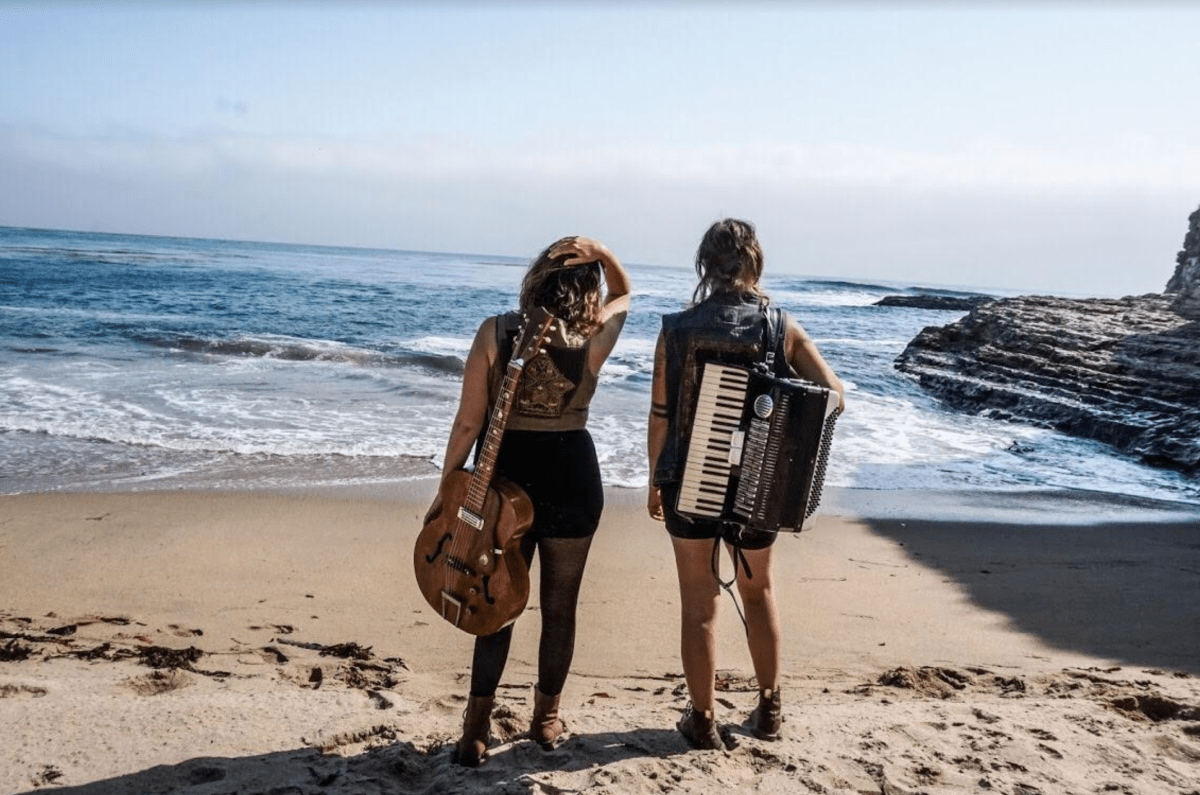
Byssus is a two piece, Burl Wood and Taylore, using their guitar and accordion to paint a dark melody that is equally sun drenched and spiked from the cold of the woods. There is an incredible simplicity to Byssus that also hails to the synthesis that their music provides, equal parts folk melody, singer-songwriter storytelling, and the dark hum of an accordion.

We interviewed Byssus about their history, how anti-colonialism drives their music, and what antifascism means to this ghost of a neofolk genre (which they may or may not really be a part of).

How did Byssus come together? Was this your first project?

Prior to the formation of Byssus, we played in a similar project called Inle Elni. We picked up some of the most resonant threads and wove them into a new incarnation, with similar themes of grief, celebration, and resilience.  We have been members of many different music projects and musical communities throughout the years across genres and subgenres: folk (traditional, dark folk, and folk punk) hardcore, crust, etc…


What does the name Byssus mean?

Byssus is the name of a type of traditional weaving that uses gold threads from the mussel species Pinna nobilis, which involves maintaining a relationship with the mussel sea beds and diving hundreds of times to collect sea silk for a single woven piece. There is only one known remaining byssus weaver in the Mediterranean that continues this art. In a recent interview she spoke to the impossibility of this practice being commodified. It is not scalable and it is not practical. The art of byssus weaving is a beautiful example of devotion to deep connections with other species, and with the sea, which involves slow, painstaking care, and a refusal to be alienated from ones creations.

How do you write songs?  Where do the lyrics come from?

Most often, we will independently bring ideas to one another, stories with melody in an almost complete song-form, and then invite new layers and directions from one another, resulting in an ultimately co-created song.

Taylore: The lyrics to many of the songs I’ve brought to the project emerge from states of grief and wonder, and often involve some kind of invocation or invitation. They are songs for healing, courage, defiance, and steadfastness in a simultaneously horrifying and beautiful world. I’ve used song-writing to bolster my own discouraged spirit, to collect fragmented parts of myself and tie them back into the natural world, and to share the strength I found in that deeply personal process.

Burl: I start most songs on the piano or guitar, and often write words later that layer over the main melody. For this album, a lot of the lyrics were inspired by anthropological works about mutualistic species networks of survival and the possibilities revealed by acknowledging that the earth is not made up of individualist competing species, but made possible only through the ingenious relationships between living beings. Our forgetfulness of these intrinsic ties (often obfuscated by imperial propaganda) is something that has been termed as our “amnesia”, whereby the cultural memory of these sacred and vital relations to one another is either immediately lost because of our forced severance from the land, or systematically written out of history through what we are taught. I guess a lot of the words in these songs were informed through a deep listening to the landscape and what has happened here, and how life finds a way in the midst of disaster.

What instruments are you working with?  There is a strong guitar core, but you seem to layer sounds, how does that usually come together?

Resonator guitar is present in all songs, accordion most. Songs begin with and are either led by guitar or by accordion, and we very much center our voices. We’ve both been involved with very vocally driven projects in the past including choirs. The most ecstatic part of crafting and playing the songs is harmony. The droning and bass is held in most of our songs by the accordion, played in a fashion unlike the jaunty or bouncing stylings of accordion, more like an organ. We usually bring a series of parts (often without a clear chorus-verse song structure) to one another and then accompany and support the core with harmony and complimentary melodies.


There is a strong sense of anti-colonialism in your work, how does that inform the music?

Our songs are written from the relentless grief and terror that results from disconnection and also from the desire to be woven into deeper relationship with the natural world. It all starts with a recognition of the story of the land, and the ongoing effort to displace people from it. We write from occupied Ohlone territory, where many waves of colonization have brought dramatic and horrific assaults to the Indigenous communities that have been living here since time immemorial. Despite this, there are incredible and resilient efforts on the part of native peoples to protect and restore their cultures, traditions, and the land. We believe that knowing this ever-unfolding story, what has happened and is happening, and how that shapes everything around and inside us, as well as  contributing to a culture of solidarity and responsibility is integral to our work as musicians, story-tellers, inhabitants of this place. Empire is insidious, the experience of dispossession, disconnection, and disenchantment is what we are trying to undo.

There is also a persistence to survive in the face of ecological collapse, how does this spirit inspire the music?

We turn toward the wisdom and creativity of other species and the bonds between them (both obvious and subtle) that are enduring this time of ecological devastation and loss. We also believe that through turning toward grief, rage, and wonder we find hidden reserves of strength and the motivation to keep moving.

Our album is dedicated to the resilient interspecies entanglements that defy the logic of empire by their very existence. This is where we draw strength and inspiration. We learn about interdependence, mutual aid, solidarity, seasons, cycles, and larger time and it helps us understand what is needed to outlast and dispel the global industrial society of alienation, extraction, and domination.

Why is it important to be an openly antifascist band?

Colonialism, nationalism, fascism, racism and the industrial growth societies that requires them to keep growing, effect everything, all of us, all species, restricting migration patterns, destroying habitat, while disrupting traditional ties between people and their ancestral land and driving police violence and murder on the border and in the cities. We live in a country that was built through genocide, slavery, and ecocide. The white supremacist and neo-fascist ideologies that have always festered below the surface or behind the smoke mirrors of politics, have been emboldened as of late, and to outwardly express opposition to them, to refuse them at every turn and in every form, shouldn’t even be a question, when their creeping tentacles are searching for whatever population, whatever subculture will let them take hold and strangle any life worth living out of existence.

How does antifascism inform your music?

We need beacons of strength and solidarity. We need art and music made in defiance of fascism and empire. We need art in celebration of life and the legacy of resistance the precedes us and will live after us. These sentiments imbue everything we do. What feels important is telling the stories that have brought us here and what realities are possible when we are connected to each other, dreaming something else into existence.

Have you experienced white supremacy in the neofolk music scene?

Taylore: I wouldn’t necessarily call our project “neofolk.” But in terms of the overlapping dark folk, neofolk, black metal, doom, and punk scenes, I have witnessed at times a disturbing tendency to reject any sense of social responsibility. Beyond complacency, people sometimes adopt an attitude of hipster anti-morality, which is fucking dumb, and very obviously stems from both benefiting through and having distance from the very real and violent consequences of racism and white supremacy. I think when people begin to flirt with ideologies of a crypto-fascist sort or anything with racist over or undertones, or are producing nothing other than masturbatory shock-value experiences, then it is undeniable that white supremacy is at play. I’m unimpressed with and uninspired by the edgelords out there, which isn’t to say that music and art can’t be brutally provocative and interesting but it’s pretty obvious when people aren’t being sincere and performances are not connected to anything real or meaningful.

I think people can create music that is inspiring and moves people to lead deeper lives and they don’t always have to have the same political identity, subcultural references, or alignment with a particular scene. We don’t have to deliver identical tropes but I do want to know what people are about. I haven’t felt the need in general to pigeon hole this music project with a genre. My music has personally been influenced by punk (and the ethos that comes with it,) crust, metal, Eastern European polyphonic music, Americana, and heavily by the experimental/chamber/post-rock bands like A Silver Mount Zion and Godspeed You! Black Emperor. Not to mention all the misfits and freaks with their lovely spirits that I have played with throughout the years.

Ao to sum it all up, I just want to know what drives people and if a part of that isn’t liberation for all peoples and the earth then, well…that’s pretty pathetic and uninspiring.


What can fans and musicians do to stand up to fascism in the scene?

Don’t be a hipster edgelord. Give a shit about the people and land around you and participate in the struggles for liberation that exist everywhere. Live a big, beautiful, engaged, and defiant life, and don’t settle for anything else…don’t be seduced by false power or cling to statuses, don’t buy into the illusion of hollow belonging offered by insular scenes. To participate in the old and ever-unfolding story of resistance to empire, civilization (whatever you call this thing we are undoing) will inevitably involve acting in solidarity with those who suffer the most at the hands of it. Make being a part of this story your everyday goal and you will see where things need to be rooted out, inside and outside yourself, then root them out, however slow, and painstaking that process is. Write and share music that inspires resistance and fierce love and make your whole life about bringing something better into being, you’ll have to fight for it, so find the people who are down for that.

What’s coming up for the band? Any tours or releases in the works?

Another album in the works. A West Coast tour (this summer.) A Violin (we hope, we are looking.)

What bands do you recommend for antifascist neofolk fans?

There are too many dear, sweet people out there to name…really.

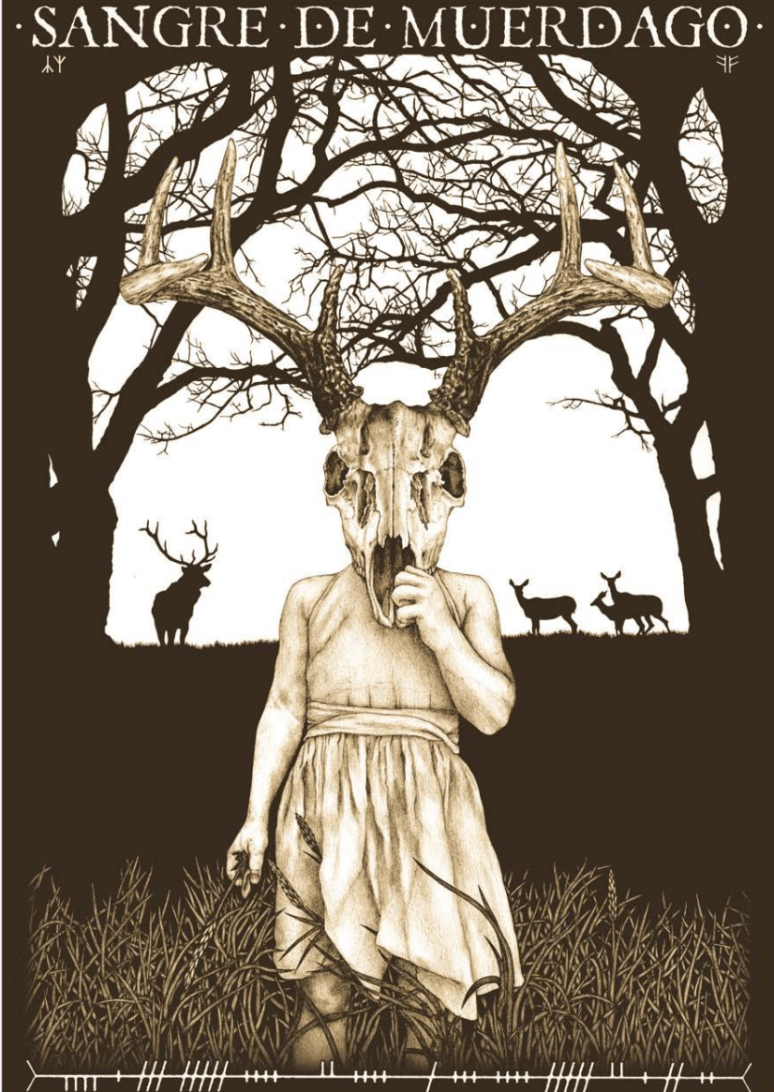
Along the lines of dark folk projects, we really appreciate Sangre de Muerdago, Latona Odola, Organelle, and Vradiazei.

Ragana (Oakland, sludge/punk) and Divide and Dissolve (Melbourne doom/drone) aren’t folk at all but are excellent and not shy about their ideas. And so is Thou (Baton Rouge, doom).

Taylore: I’m pretty excited about Vouna, a black metal/doom band from Olympia with members of some of the bands listed above.

I also gotta say. I got records by Ludicra (Another Great Love Song) and A Silver Mount Zion (This is Our Punk Rock) when I was 17 and it changed my world forever. So I recommend them, just cause.

Burl: Lankum (anarchic-folk/traditional) out of Dublin, Ireland, the Warsaw Village Band (traditional choir-esque) from Poland, and the Cranberries (obviously).

***

We are embedding Byssus’ latest album below from Bandcamp, but they are unfortunately not on Spotify yet so we cannot add them to the Antifascist Neofolk Playlist on Spotify. Stay tuned because we are going to be adding a huge number of tracks to the list in the next few days!

Aradia’s Dark Folk Is the Spirit of Resistance [INTERVIEW]

Screen Shot 2019-05-21 at 3.49.50 PM

“We live in capitalism. It’s power seems inescapable. So did the divine right of kings.”

-Ursula Le Guin

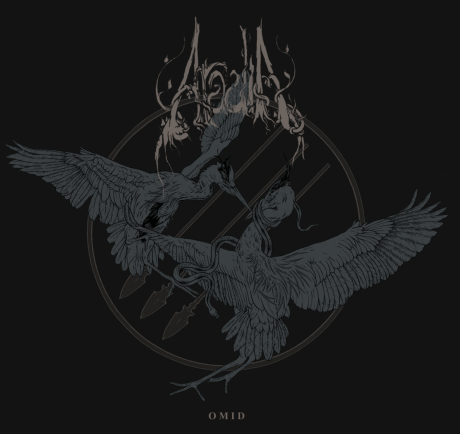
It is quote from anarchist sci-fi writer (and Portland resident) Ursula Le Guin that the neofolk/dark folk/genre bending band Aradia starts their epic album Omid.  Carried by a driving tension built by strings and backed by prominent drums, Aradia drops you right into a sound that feels much more lyrically and conceptually present than a lot of the neofolk bands that do their best to stay in the background.  The cello plays its own character in Aradia, one of the defining features of neofolk’s drive to bring back orchestral instruments into a rock formation (maybe this is what post-rock was always about).

The intensity of the strings almost lends itself to metal, but the acoustics of its draw more on contemporary strings with a meloncholy edge that has to be seen live.  We were able to interview Brenna from Aradia’s current line-up and talk about the band’s history, where its influences come from, and its commitment to militant anti-fascism.

How did your band come together?

Wretched of the Earth and Strangeweather played a show together to benefit the Law and Disorder conference…I believe. At the last Red and Black cafe on SE Oak (A former anarchist co-op coffee shop that is no longer around). At least from Strangeweather’s perspective, we were really pumped to meet WOTE and hear what they were up to. I remember telling Sean, the bassist, they sounded like Warscroll, a band I love. Shortly thereafter Angel and Sina got in touch with me about trying out some cello on their new “ambient metal” project. We’ve played in lots of different configurations over the years. Right now there’s only two of us, there’s been a total of seven people involved through the life of the band.

Does spirituality play into your project?

For me music is spiritual, it engages a part of our beings that is really ancient and complex. It’s an old way of being with other people in a spiritual way, singing together and making sounds together. A lot of the political content of what we write is definitely spiritual. We sampled Audre Lorde talking about her death and about what we leave behind, who we have been in the world as artifacts. To me this is all tied into a spiritual way of looking at struggle.

What bands inspired you in doing the work?

Submission Hold, Warscroll, Godspeed You! Black Emperor and A Silver Mt. Zion, Esmerine, Emel Mathlouthi, Correspondences, New Bloods, Des Ark, Buried Inside, and Fall of Efrafa,

How did you develop your sound, and how do you define it?

It’s always been really collaborative. We’ve sounded pretty different depending on who has been playing with us. At this point I think it’s basically experimental arrangements for guitar and cello. Our last album had some dark folk moments, some anarcho-punk moments, some minimalist metal moments…our first album was a little more d-beat leaning I feel. I think that had to do with our line up at that time. We’ve always been influenced by various traditions of music such as Balkan, Persian, Middle-Eastern, Armenian, Celtic, etc.There was a time I thought our string arrangements could be classified as “romantic” in the musical sense, but our very musically educated viola player Maria informed me that they were more accurately described as “contemporary.”

How did the region you were in (the Pacific Northwest) play into your music?

There’s a long history of grunge, riot grrl, punk, and other DIY music in this region, and that’s a big part of why many of live here or what brought us here years ago. One thing about being in the NW nowadays is we get paired with with metal, “apolitical” neofolk, and/or post rock bands. This has been challenging as our political grounding is more in the punk community, and we’ve gotten a lot of feedback that when we play these kinds of shows they don’t feel accessible to everyone.

Anticapitalism is right up front in your tracks, including in the samples used, why is that so present?

Well, it’s a force of crushing oppression in our lives, in the struggle of the planet and the human soul,  and art arguable should shine a light on what’s keeping us down. There’s a lot of apologism for capitalism in our culture and I like normalizing the open acknowledgment of it as a major problem. That being said, we know it can come off as a trope. I think most of us who have been in the band came from an anarcho-activist background of some kind so it comes naturally to frame things from a place of anti-capitalism.

There seems to be a strong spirit of resistance in the music, not just lyrically but in the way that folk music is made so vibrant.  Do you see this project as inherently tied to politics, or collective liberation?

We hope so. I recognize the tendency to conflate being in a political band with actual activism, and I think it’s important to see that they are different. BUT the way you move through communities, the types of shows and benefits you play, the kind of spaces your music creates, the projects you lend your sounds to, that all factors into being part of a musical and political community. For me, at the end of the day, Aradia is a music project and we hope to inspire folks who are in struggle. Knowing the role music has played for me personally in developing political consciousness makes me believe that it can have an impact.

There is a huge variety, it moves from frenetic synth inspired tracks to very slow and plotting melancholy sound, do you feel like you are constantly reinventing your sound?

We write really slowly so it follows that over time, as our line up changes and what we are listening to at the time, our sound changes.

What drives your commitment to antifascism?  Have you experienced a lot of white supremacist attitudes in the pagan and neofolk scene?

I think realizing how flirtatious the white metal-centric music scene in the PNW can be with fascism made us want to be more out about our politics, especially when we were put on bills with people who we felt were sketchy. We don’t really roll in the neo-folk/pagan scenes, but because of the cross over with my other band Strangeweather that was more present in that scene, we have ended up playing some shows with bands who are more in this scene. Sometimes it just seems like heavy music with strings in the PNW gets put into the neo-folk category, even when that’s really just not what we’re doing.

Our commitment to anti-fascism comes from our values and the historical significance of anti-fascist movements.

Why do you think it is important to be a publicly antifascist band?  How does antifascism inform your music?

In today’s world I’m not sure how anyone could justify not being antifascist. To me it seems like lots of people thought antifascists were self-important hyperbolic social justice warriors, and then events such as August 2017 Charlottesville, VA started happening and suddenly folks knew what the fuss was about. And it is connected to a long history of struggle against real threats that still exist…in terms of music I guess I hope we inspire the parts of people that defy that authoritarian, coercive, xenophobic current that leads to fascism….


a2559314379_10

What other social issues play into your music?  There is a strong sense that rebuilding community, something more bonded, in your music.

It’s cool to hear how much meaning you’ve gathered from our music. As political as we are as people I think a lot of what we do is very aesthetic too, not in a shallow way but in a nerdy, emo-artsy way. We have written material about the micro/macro cycles of despair and hope, as well as solidarity with displaced peoples.

What’s coming next for you?

We are doing a short tour in UK, Netherlands, and Belgium in June. We are hoping to release a recording as a two-piece in the next couple months.

What other bands do you recommend for antifascist neofolk fans?

All the bands I listed above. Disclaimer that I was never that into neo-folk: A Stick and A Stone, especially their album The Long Lost Art of Getting Lost. Cinder Well‘s latest album The Unconscious Echo had some heavier moments. Byssus, a new project out of Santa Cruz, CA.  Anna Vo. Also Crone, a short-lived crust-metal band from Minneapolis circa 2015.

***

Aradia currently has two albums on Bandcamp, 2018’s Omid and their 2015 4-track demo.  Unfortunately, Aradia is not yet on Spotify so we can’t add them to our Antifascist Neofolk Spotify playlist.  We are putting both Aradia albums below and are looking forward to the new release coming this year!

59391456_2237301476599918_2126454710729703424_n

The Dark Ambient Duo Outer Gods Redefining What Music Can Be [INTERVIEW]

If there was Seidr to be had on the mountaintop of an imagined future, Outer Gods would be sound that comes from inside your body after dosing.  For several years (and twelve albums and EPs) two solo musicians out of Atlanta, going by The Flail and The Wrathe, respectively, have brought together their two opposing dynamics to clash in beautiful and often violent soundscapes.  Emerging out of the world of ‘experiment'(they hate that word) dark ambient, Outer Gods exists on the sort of edges of musical genre that we hoped to capture perfectly.

Inspired by avant garde composers of the 19th and 20th century, Japanese noise music, the industrial iconoclassism of Throbbing Gristle, and a library of music that could overwhelm you, they have create a duality to their music that is simultaneously enraptured in a crushing drone and almost atonal confrontations.  What we mean is what they have come up with is something nobody could predict and constantly redefines itself, which is why we had to talk with them about what has been driving this project these years.

Screen Shot 2019-05-16 at 9.31.32 AM.png

How did Outer Gods come together?

:The Flail: We had been playing music off an on in several different projects, both together and in the same orbit. I cannot recall as to what was the initial impetus for Outer Gods to take shape, though we were not strangers to collaboration – we had begun working on soundscapes as a duo and things gradually began to take shape.

:The Wrathe: I had played in several bands that sounded nothing like Outer Gods with The Flail. Our recording collaborations had been going in a darker direction, but really it was the sessions that became our first demo (“The Mountains Den”) that crystalized a sound. The basic duality of The Flail and The Wrathe emerged during those sessions as well (strings vs electronics), though we both have played a lot of different instruments on Outer Gods recordings. The demo and the band co-created each other essentially.


There is a really overwhelming quality to your work, long songs that sort of consume the listener.  What drives this type of emotive experience for you?

:The Flail: There is, for my part, a compulsion to become lost into oblivion. It is a tightrope on creating pieces that grow and bloom organically but are tempered by the gardener’s thumb. Practitioners of Zen Buddhism know this well; to be conscious and intentional in the drive towards such a feeling is to have it remain forever on the horizon – if the vessel is already full, nothing more can be added. Conversely, John Cage made mention of his distaste for being described as “experimental” as experiments are what winds up being thrown out in the bin on the way towards a final product.

To return to the garden analogy, one must allow the roots to take hold and blossoms to sprout but not fear to take the hoe or shears where need be. Leo Shestov commented that our understanding of the world is akin to being lost in a dark forest, illumination coming only from flashes of lighting or sparks as one beats their head as they wander. In these moments one can see, albeit briefly, the landscape and shape of things. It is the experience of the blind gardener.

:The Wrathe: A lionshare of our material I see in a very “cinematic” context. The individual emotions I felt during the composition kind of felt almost ancillary to the overall cinematic mood each recording aspires to. To create something longform, you sometimes have to be willing to pack a lot of different emotions and experiences into a piece. Our live shows always aimed at bringing the listener into a collective moment, much of the time through sheer volume. But the records wanted to bring people into the sound in a different, more layered way. Our longer tracks are taxing to create, finding a balance in all the sounds is always difficult when trying to present an immersive listening experience.

Screen Shot 2019-05-16 at 9.32.02 AM.png

What bands inspired you in doing the work?

:The Flail: There is the compulsion to kill one’s idols but also to acknowledge that we do not operate in a vacuum. Even the action of moving against something or attempting to transgress is implicitly acknowledging the influence it holds. One of the worst things that an artist can do, and indeed even an individual, is to hold too much deference to inspirations otherwise they become merely a parrot or cheap imitator of something which will always maintain a form of superiority by virtue of its primacy. Though it would be churlish to say that there are not bands which heavily informed the work.

But this can be eclectic – case in point, I have always loved the low bass tones one finds in the kick drum from Southern Hip Hop or the atmospheric qualities of a band like Cocteau Twins but it would be ludicrous to say that there is an attempt to emulate these forms as such. We both have very eclectic tastes, not just in music, but all forms of art. To list a catalog of bands and artists that inspired the work would be legion. Some are apparent: SUNNO))), Boris, Lustmord, Tim Hecker, Edward Elgar, Arvo Part, Steve Reich, Belong, John Cage, Sleep, Tibetan Chanting, Merzbow, Darkthrone, John Fahey, Jack Rose, Current 93, Nurse with Wound…as you can see, the list could go on and on, each piece adding to the tapestry.

But where one thread ends and another begins would be to dismantle the entirety of the formation. Ascribing an etiological framework to the work only gets to a certain point and neglects the metaphysical dimension – as discussed in the works of Artur Schopenhauer – the pieces that go into constructing to the final work do not speak to the work as the thing in and of itself. This is not to say that the work is isolated, but rather, any great work of Art contains something which not only brings into itself all the inspirations, both conscious and unconscious but moves onto its own plateau.

:The Wrathe: At the end of 2005 I took a trip to NYC and ended up bringing home a backpack full of compact discs, the two most personally important being SUNN O)))’s album “Black One” and Hellhammer’s album  “Apocalyptic Raids.” I had already been listening to more academic drone (Tony Conrad and William Basinski) but SUNN O))) changed my mind as to just what “Drone” could be. Hellhammer is drastically important to me because I finally saw that Metal doesn’t have to be “perfect” sounding. “Apocalyptic Raids” is a raw, fuzzed-out record; it rocks just as much as the Stooges but in a defiant and ugly way.

In the early years of Outer Gods, I would play COIL’s “Time Machines” or Factrix’s “Scheintot” on one stereo and Death’s “Scream Bloody Gore” on another all simultaneously and just listen to the cacophony for hours. Throbbing Gristle and Black Sabbath were getting equal attention on the turntable, much to the dismay of my old roommates… one ended up having nightmares during my weeklong re-listen to TG’s “24 Hours of Gristle” box set. Gothic horror cinema is of course the other major element of influence. Many of our recording sessions went late into the night with images of Paul Naschy or Christopher Lee on the television behind us.

Screen Shot 2019-05-15 at 4.24.13 PM.png

How did you develop your sound, and how do you define it?

:The Flail: I would be hesitant to describe any method of development, at least one that is self-aware. As with a person, the experiences and interactions they have will invariably shape who they are at that moment. But this only ceases at the moment they become a corpse, devoid of subjectivity, an object amongst things. We do not experience our own decay as such, and likewise, we do not experience our development in real time. Only through self-reflection of our psychology are we able to come to terms with ourselves as a coherent form.

Most of our work has emerged from long-form jams, letting the music flow and taking us where it will. As whirling dervishes seek to commune with Allah, or Buddhist chants strive for enlightenment, at its core, there is an approach towards a Divine Nothingness. It is sometimes churlish for the artist to define themselves, this seems a role more appropriate for the critical eye. Whereas at the beginning of black metal there was a determined motivation to create something new and distinct the chains of post-modernity and the Hegelian-end of Art in the Western sense (i.e. the examination of the plastic arts in Arthur Danto) makes such self-definition a complicated matter.

Perhaps I am too personally averse to labels, which may be a byproduct of my own individual privilege in a certain sense. Definitions emerge out of the gaze of the Other, to determine what is of a kind and what is not of a kind. In truth, the sounds that have emerged and taken shape have done so organically, as with the garden. Seeds are planted and cared for and only when they have begun to stretch beyond the bounds of what we desire aesthetically are they tended to. Many a late night watching Hammer Horror films and manipulating sounds, not with a distinct purpose but for the sound itself, has provided us with a wealth of material to work with. To return to the idea of inspirations, perhaps it can be imagined that other bands and artists have served as vessels which are shattered against the wall – and amongst the disparate shards and pieces, we attempt to create a mosaic.

:The Wrathe: Experimenting with sound has been the one united approach amongst many in the writing of music for this project. There were countless moments where we said something like “what if this organ could sound more like a guitar?” In those moments of mutation, we found different ways to approach making songs. Genre has always been unforgiving for us, trying to label the band during releases leaves a lot to be desired. But I would say calling it “experimental drone” or even “experimental ambient industrial” are not too removed. I do think you see a defined arc of sound throughout the records. Our early recordings and first album are all harsher, more lo-fi. Anno Metuo II through Ascend Unto the Seventh Throne are all longform epic pieces.  And Inauguration of a Dying Sun, Dismal Rift and Severed Together have been more synthesizer-driven soundtrack leaning work.


Do you see this project as inherently tied to politics, or collective liberation?

:The Flail: Not inherently, no. That is to say that it is not a conscious intention to put forward a political message. But Aristotle described politics as the interaction of humans amongst humans within society. From this it must be said then that everything is political, even the espousal of an apolitical stance is a form of politics. Though the issues of politics in its most apparent and understood form, or that of liberation, may not be presently manifest or intended, I cannot say that it is not there. To speak personally it is more about being authentic to one’s self and creation and allowing the chips to fall where they might. In Oscar Wilde’s Man Under the Spirit of Socialism, he defended a socialist political stance out of the desire for the creation of art; the materiality of capitalist structures thwarts art. Firstly, that when one struggles merely for survival there is not the time for the creation of Art – we are estranged from our species-being, in the Marxist sense.

Secondly, and related to this, the creation of art becomes tied to its value as a commodity – the anathema of Art. Yet even these stances have within them a dangerous seed that can lead to elitism. Towards this, the idea of collective liberation is that which would allow art to form, exist, and thrive on its own terms, unbeholden to the market, gate-keepers, or dogmas.

:The Wrathe: I see the role of art as being about a type of liberation, namely a liberation of people’s generalized perceptions. Art can help the “other” express a point of view that might otherwise not be understood by larger cross sections of people. There are many cultures/perspectives I have gotten to know better through art, unique perspectives I would not have otherwise had any real exposure to.


Screen Shot 2019-05-15 at 4.25.30 PM.png

How did the Desolate Moon Phases project come together, and what was the thinking behind it?

:The Wrathe: DMP came together after I randomly met a couple musicians at a Minneapolis record store who had similar taste in Dungeon Synth, older Black Metal and Japanese horror comics. It is probably a little more inherently “dark ambient” than any of the Outer Gods recordings, and more tape-loop/music concrete leaning. Because of the number of different collaborators/instruments, it has an effect of walking through a large house with many different rooms. I went into DMP with the intent of making different tracks in different ways and trying to find overlap in hindsight, and the freewheeling approach yielded plenty of sonically interesting results.


What drives your commitment to antifascism in this music?  

:The Flail: I have never liked bullies, nor have I liked those who mistake their idiocy as a form of cleverness. Fascism is a reactionary movement, it is one of the herd, reaching towards some self-constructed mythic past that never existed. They are lambs who masquerade as eagles. We are fortunate to have never really encountered white supremacists personally. No one whom we have shared a stage with (at least to my knowledge), or conversed with, have held these views forward. I find the entire idea of white supremacy to be utterly laughable, especially in a pagan context.

Firstly, the idea of “whiteness” is one that emerges only in the expanse of European Colonialism under the auspices of Christendom. What does Odin have to do with Jove? What does the cultural history of the Alemani have to do with the Gaels? This process of a buffet style of paganistic thinking only occurs by virtue of the universalism that the Catholic Church brought with it by the hammer and sword of Charlemagne and Constantine. These so-called pagans who speak of an anachronistic idyll are merely reactionary phenomena whose existence is only allowed by that which they espouse to hate. Their whole reason for being is defined upon the construction of others that they can place themselves against. Whether it is anti-Semitism, anti-Christian, anti-Muslim, it is the revelation that they are too weak to have any meaning outside of an opposition. Nietzsche said that one can tell the greatness of a beast by how many parasites it can endure. If this is the case, then far from operating from a place of strength and power as they imagine themselves, they are merely admitting that their ideas are so weak, so void of any vibrancy or vitality, that they cannot stand on their own.

And to hear people who strum on the guitar, which developed in part from the Almohad Caliphate in Iberia, brought to the “New World,” and further developed by indigenous and enslaved populations to form the roots which even permit the very genres they wish to use as an ideology is a proof that far from being a threat, multiculturalism has allowed their very Existence.

The British comedian Stewart Lee has a bit about UKIP and other anti-immigration groups, and their sheer idiocy. The entirety of human civilization has been formed not in isolation but out of the interconnectedness of various peoples.

:The Wrathe: I have zero interest in entertaining doctrines based around ignorant racist or nationalist belief systems. Technology and progress can be made by cooperation. Global culture is now interconnected in a transparent open way (by the internet), but on many levels it always has been interconnected. People looking to the past for the “right way” to live are looking in the wrong direction, we need to be looking to the future.


Why do you think it is important to be a publicly antifascist band?  How does antifascism inform your music?

:The Flail: Much like the late 19th and early 20th century, fascism (or proto/crypto-fascism) emerges out of the failure of the dominant political system. It is an attempt to give meaning to the senseless. But it is a regression, one which can never be wholly actualized. It is the hallmark of individuals who cannot bear their own weakness, and rather than traverse and overcome the frailty, fallibility, and insecurity that all people feel – for we cannot be everything and we must die – seeks to make ruins of the world so that they may become kings of the ashes.

:The Wrathe: Our music exists as a vehicle to explore something outside one’s self. There is a great emptiness in that void, a space for the mind to offer a different type of perspective. Fascism as a personal philosophy offers one limited world-view. But art asks a viewer to perceive in another way, and in so is inherently dangerous to dogma like fascism. The obvious examples of how Fascism approaches art can be seen in the ways the Nazis and Italian fascists destroyed progressive art. You cannot be in favor of progressive art and a fascist at the same time, it is dissonant.

Screen Shot 2019-05-16 at 9.32.40 AM.png

What other social issues play into your music?  There is a strong sense of a need to a return to a cyclical, grounded way of life in communities.

:The Flail: As mentioned above, any social issues manifest more from the virtue of existing rather than conscious espousal of ideology. The great debate amongst philosophers of history has always been whether human civilization traverses through time in a linear or cyclical fashion. To this, I cannot answer one way or the other. We are but ghosts, condemned to bodies. To assume that one can fight against the great deluge of entropy, which will consume all in due course by clinging towards a false sense of superior identity is to either be ignorant of that which truly binds all peoples together – that we must die.

:The Wrathe: I do think people have (in sometimes wildly different ways) struck out looking for the idea of “community” in new definitions. How music plays into that is of course something that is very hard to have perspective on, but perhaps the search itself is part of humanity’s permanent identity. In our generations we have used culture like music to forge communities (at shows, in online forums, talking at record stores), even if those communities are based around a collective alienation. Drone does offer a certain collective and immersive experience, but it is very hard to define beyond that because of the ephemeral nature of listening.


What’s coming next for you?

:The Wrathe: The Desolate Moon Phases album Heathenstones is coming out on Atlanta’s Stickfigure Recordings in May. In the coming months, I am producing an album or EP for my friend Sole Servant’s dungeon synth/dark ambient project MELOK TYR (he plays synths on the DMP album). This summer I have a couple mixing/mastering projects for Minneapolis experimental metal bands Past Dawn and Azael, which I am definitely looking forward to. My long running solo project Sareth Den has a full length that’s been slowly gestating this past year, hopefully it will finally see the light of day.


What other bands do you recommend for antifascist neofolk fans?

:The Wrathe: If you have not stumbled across Popol Vuh in your musical travels, I can highly recommend their 1970s work. The discography spans all manner of sounds, from pastoral folk to cosmic synthesizers, mantra chanting to psychedelic jams. If you are unsure where to begin, try “Hosianna Mantra” from 1972 (or their debut if synthesizers are more your interest). Some people probably primarily know them for their impressive soundtrack work for Werner Herzog, but the album work is just as important and just as good. For something newer(ish), I would suggest the first Entrance album, “The Kingdom of Heaven Must be Taken By Storm.” Not all folk albums are created equally… this album offers a kind of raw, borderline anti-folk-in-moments sound, but taken together it is a supremely beautiful and oddly cosmic experience.

***

We are putting several Outer Gods tracks below from their large discography, and we encourage you to check out their Bandcamp and really dive into their work.  We put a track from the side project Desolate Moon Phases about (we will cover their album when it is released), and check out Sarath Den (we will also cover that new album when it is released).  We have also added to Outer Gods tracks to our Antifascist Neofolk Playlist on Spotify!

Kimi Kärki Is Creating Acoustic Simplicity in the Face of Authoritarianism [INTERVIEW]

Kimi Kärki is a giant in the shifting world of post-industrial music, but his real name is coming forward now with the new solo project.  His influence inside the world of doom music extends internationally from its Finnish roots, and though he has been in so many different projects (many of which you will see in later features here), Lord Vicar is what comes to most people’s mind.

Now he is looking inward with his solo project, breaking away from the layered sounds he is regularly known for and sides with minimalism.  The depth of lyrics make sense given his academic background, but his focus on confronting rising authoritarianism is what really put him on our radar to begin with.  He sets his sites on religious fundamentalism, political totalitarianism, the collapsing climate, and the far-right shift that has happened across the West.

In our interview with Kimi Kärki we dive directly into his new album, how he developed his solo sound, and what it means to be an antifascist in this contentious music world.

Screen Shot 2019-05-12 at 11.26.11 PM.png

***

You have been incredibly prolific over the years, and your music has been equally diverse.  How did you first encounter music?

When I was a kid I would like the more epic intro tunes of television programmes, and record them for myself with a tape machine… kind of taking them out of their audiovisual context. I simply loved the epic quality that combines layers and melodies. I would listen to Vivaldi’s Four Seasons when I went to sleep, every night. I guess my interest in narratives and cinematic feel in music, even conceptual thinking, started already there and then, around the age of seven. A classmate played me rock music, and there was no turning back. Now these things, and I should also mention a certain melancholy, runs through all music I have made, with bands like Reverend Bizarre, Lord Vicar, Orne, Uhrijuhla, E-Musikgruppe Lux Ohr, and the acoustic solo albums. Diverse genres from doom metal to prog and pop psychedelia, but with similar heart.


How did this most recent solo album come together?

I have now done two, The Bone of My Bones (2013) and Eye for an Eye (2017), both with the Finnish independent label Svart Records. I recorded both in my hometown Turku, in Finland, with producer Joona Lukala at Noise for Fiction studio. I used to incorporate a lot of acoustic passages in my earlier more band driven music, and Svart suggested I should do something more with that. At the same time, I had already written some original songs. I was playing some of that stuff in studio while making the second Orne album Tree of Life (Black Widow Records, 2011), and the drummer offered me a solo gig at the local info shop/activist book café. Then a promoter in Dublin heard about that, and I played my second solo gig there at a basement of a record store. Good start. In 2012 I was invited to do a few shows in Italy, and closed a doom metal festival in Parma with an acoustic gig around 4 am. Doing this kind of singer-songwriter material felt natural for me, I had always written music with an acoustic guitar, and loved the acoustic albums of Leonard Cohen, Neil Young and Nick Drake, to mention three. Music driven by strong and simple melodies, but as much the quality lyrics. Lyrics have always been an important part of music for me.


These last two albums feel much more stripped down than your projects before, why did you decide to go so minimalist with these albums?  How do you define your music now?

That was the idea, to strip it down and explore that side of the music where you cannot hide behind a wall of sound. I loved what Rick Rubin was doing with the production of Johnny Cash for the American Recordings, going to the very core of the songs, pure minimalism with the arrangements. I felt a strong need to do this kind of ”naked” encounter also live, to put myself in a test — could I touch the feeling of the listeners in this very primitive way of musical storytelling? My music is still the same, but the songs get directed to different bands and genres very naturally, their context change. I have sometimes also ”covered” some of my more mellow band driven material in my solo gigs.


There is a strong sense of narrative in your music, a kind of songwriting storytelling.  How do you consider your lyrics, where do they come from and what themes draw you?

I am really interested in myths as a form of intuitive form of transmission. Symbols, words and stories have power that open us to the world, and this was especially true in prehistorical world, but also now. This power can be used for good and bad purposes. My writing is based partly on dreams, subconscious flow, my own experiences that I felt had a more universal resonance, and the history. I am interested in the things that shape us as people: love, hate, longing, the pursuit of happiness, loss, violence, cruelty, kindness, spiritual growth, the nocturnal world.


What bands inspired you in doing the work?

The already mentioned storytellers mostly. Also the more subtle moments of bands like Led Zeppelin, The Who, Black Sabbath, early Genesis with Peter Gabriel, Pink Floyd… Musically my acoustic  material floats also within the long tail of storytelling, between American folk and outlaw country, but also Celtic folk heritage, and perhaps a touch of Finnish melancholy. I do listen to a great variety of genres, and it’s sometimes difficult to pin down where an idea comes from.


There is a strong spiritual center to your work, but feels like a walk along a path rather than driving from a spiritual home.  Do you identify with paganism, like a lot of people in the genre?  What has that meant to you?


I would define myself as an agnostic who has an endless interest in religions from the research perspective. I am a pagan only in two senses: I am not a Christian, and I tend to get spiritual experiences in the nature. But I also consider my martial arts training in Aikido to be a form of strong mind-body spirituality. Some claim it’s a form of meditation, moving Zen. To be historically accurate, it comes from Omoto-kyo neo-Shinto.


Why do you think it is important to be a publicly antifascist band?  How does antifascism inform your music?

I have two children, and the future looks bleak… In this era of rising populism it’s extremely important to remember what happened in the 1930s and 1940s. The last thing we need now is egomaniacs, dictators, walls and violence. We should be thinking globally, as we would have means to solve the problems with education, more equal distribution of wealth and rapid advancement of green technologies. But I don’t see it happening fast enough… Melting polar permafrost will release more methane and speed up the global warming. Next there will be lack of food and drinkable water in many areas inhabited by millions of people. Rising sea levels, mass migration…


What other social issues play into your music?  There is a strong sense of countering extremist religious oppression.

Well, it all comes back to the future of this planet. We either find ways to fix our problems, coexist, or leave everything to cockroaches. The right to exist, right for education, obligation to learn empathy. Otherwise it’ll be a slow decline into the night. I really don’t see religious extremism as an answer yo anything at all…


What’s coming next for you?

Just finishing a tour with Lord Vicar, typing this between the cities. We just released our fourth album and will be playing more live shows for it… slowly writing new material for my different musical outfits. I work as a researcher at University of Turku. My current professional project is funded by the Kone Foundation, and I am studying the cultural history of Artificial Intelligence, how it has been portrayed in popular culture, and how speech works as an interface. Talking Machines…


What other bands do you recommend for antifascist neofolk fans?

In Gowan Ring/Birch Book… if there ever was a loving hippie in that scene, it must be Bobin ”B’ee” Eirth!!!

We are putting a few tracks below from his Bandcamp, and will be adding several tracks to the Antifascist Neofolk Playlist, so make sure to follow it!

Sangre de Muerdago’s Galician Neofolk is Resistance to Spain’s Fascist History

Screen Shot 2019-04-28 at 10.37.04 PM.png

Neofolk branches out in such a multitude of sub-genres that there is no singular “scene,” but the bands are bound together by rootedness in folk tradition and its revival from the modern stage.  English speaking and Western European acts, defined by bands like Death in June, are often used as the best example of neofolk, but there is a wider musical world focused more concretely on traditional sounds and the use of folk traditions for far more than just nationalist romanticism.

Since we started A Blaze Ansuz, Sangre de Muerdago has been out most requested ban, and their reputation is so large it almost feels insulting to describe them so briefly.  A Galician Folk band from Galincia region of Spain, which borders Portugal on the northwest side, Sangre de Muerdago has become a giant of independent neofolk, touring worldwide with their soft brand of regional music that is haunting in its lyrics and acoustic persistence. As a way to counter modern technological society, Sangre de Muerdago revives traditional instruments like classical guitars, nyckelharpa, flute, celtic harp, occasional percussions, into something new and patient,  calling back a distant memory of culture based on family bonds and the centrality of the home. Anarcho-punk is where the band finds its roots, they play with those bands often and share members with that scene, and so while they resurrect a very different sound, that anarchistic spirit is on stage with them.

Sangre de Muerdago revolves around front-person Pablo Ursusson, and the band has had shifting line-ups over the years.  Each song has such a crafted feel, such quiet love and shifting instrumentation, that it has to be the collective voice of the entire band  Sangre de Muerdago, which translates to “Blood of Mistletoe,” is also known for its international appeal, traveling worldwide and collaborating with other artists.  This creates a range of venues, from black metal festivals to seated opera halls, and their appeal has gone so far that they are internationally recognized as champions of folk music.  Many of their collaborations have become legendary, such as with Tacoma, Washington neofolk band Novemthree, and their genre defining sound has made them the most dependable features of the neofolk scene since their 2007 debut demo.

Their most recent album Noite, released on April 26th of this year, is in full form, calling to a dream of your “true self.” Singing is sparse when there(so is any percussion), and they choose to avoid English in most cases to buck the trend of European neofolk bands appealing to English speaking audiences.  Part of this focus on Galician language is a form of cultural resistance to the Franco fascist dictatorship, which limited the language and narrowed its availability.

Screen Shot 2019-04-28 at 10.34.46 PM
A painting that the band posted online with a message of support for women fighting oppression.

My reason to speak and sing in Galician is that to sing this music that I write from the depths of my heart, this is the deepest way I can find to feel it is singing Galician. I don’t think I would feel the same way about the songs if I were to sing them in English, or Spanish, for example…The language was very damaged during the dictatorship. Brutally damaged. All the teachers from Galicia were sent to other parts of Spain to teach in Spanish and Castellano. And then they would bring teachers from the south and other parts of the country to teach the Galician kids in Castellano. And all the smaller languages spoken in other areas like Basque, Catalan, or Galician, suffered a lot.

These Galincia poems on love, death, and history draw on that almost lost tradition, and the DIY approach of Sangre de Muerdago is meant to recapture something organic from the community.

The lyrics of Sangre are very melancholic, and they long for something, but they always intend to empower people. It’s not like a desperate cry. We all have sorrow, we all have sadness, but we have to somehow process it, and then make it our fuel. It’s something that keeps my head busy

With this Pablo Urusson acknowledges that Galician music has always been political, a way of using regional autonomy to fight off the forces of the far-right and imperialism.  This is similar to the left-wing elements in Catalonia that have resisted both nationalism and the overarching militarism of the Franco dictatorship.  They are amazingly open in their support of left-wing revolutionary movements, particularly the struggle against patriarchy, 

[F]olk music in Galicia has always been political. Galician folk music became the music of people against the empire and against oppression. For centuries—against the Roman Empire, against the Spanish State, against so many things. So somehow the punks in Galicia are very into folk music.

Galincia’s music didn’t survive without an open revolt, and Sangre de Muerdago is continuing the revival of a tradition that is usually passed between the hands of family members and is alive in the moments when the community finds itself in the relationships it builds;

Lyrically, Sangre de Muerdago is committed to liberation from the mountains of Spain, something they have found in common with other anti-fascist bands like Panopticon and Dawn Ray’d, who they have shared the stage with at places like the Roadburn Festival.  When they take the stage the audience drops to silent attention, and a dark oasis is formed where they can finally be vulnerable.

From Sangre de Muerdago’s Instagram

We are putting a few albums by Sangre de Muerdago below and we have added several tracks to our Antifascist Neofolk Spotify playlist and check out the other Bandcamp tracks here.

Neofolk Against Fascism (CTRL+D Podcast)

Check out this episode of the CTL + D, which does a lot of episodes regarding technology, gaming, history, and a range of other topics.  They wanted to jump right into the story of neofolk and black metal, and their status as a “contested space.”  This gets to the heart of what A Blaze Ansuz is, building our own space both to create a home for ourselves musically and to effectively combat the “cultural struggle” of the far-right.

A conversation with Shane Burley, author of Fascism Today and founder of antifascist neofolk blog A Blaze Ansuz, about the present day effort of antifascists to break neofolk and black metal’s ties to the far right.

If you want to know more about the initiative, you can visit A Blaze Ansuz, and follow the blog, as well as Shane himself, on Twitter.

Also, don’t forget to give The Antifascist Neofolk Playlist a spin. 🙂

+ TIME (2019-04-12): White Supremacists Have Weaponized an Imaginary Viking Past. It’s Time to Reclaim the Real History

P.S. Apologies for the light audio glitching.