DEAES makes up a piece of their own development, and created a unique spot that, while on hiatus at this point, continues to be incredibly influential among neofolk bands pushing the edges of genres like martial industrial.
What is your personal history as a musician? Was DEAES your first project?
I hardly consider myself a musician, I can only really play my own music as I don’t know how to read music or anything like that. I am self-trained, and in fact DEAES was the first time I ever picked up a regular guitar. I used to play bass in a punk band in high school and have a long history of producing music using software. I have had multiple projects in the past, ranging from perverted electronic dance music to experimental avant-garde pop music. DEAES was my first foray into doing something I had wanted to for a long time, folk music. My general attitude towards music and playing music is to just try it, regardless of your skill level. Something will come together.
How did DEAES come together and where did it’s style and themes come from?
DEAES started as a solo project, I acquired bandmates as time went on and I found a need to enhance the way the music sounded live. My early influences were varied and in many ways contradictory. I was really into all the most known neofolk bands like Current 93, but was also simultaneously really into political folk like Phil Ochs and Buffy St Marie. I musically took these influences and combined them with my interest in industrial and post-punk to give my first recordings a very experimental and almost pop vibe. Thematically, my music has always been driven by both personal experiences in sorrow and delirium as well as visions of a dying world.
How do you define the genre of DEAES? What influence does Apocalyptic Folk have on it (and what does that term mean to you)?
I refer to DEAES as hexfolk, it is neofolk music constructed with a particular spiritual and magickal intention. The music is meant as a spell of sorts, to detach the audience from reality and everything in this world. Other ways of looking at it could absolutely be apocalyptic folk, as I see it, music to listen to as the world is dying. Music that compounds and evokes these feelings of a certain kind of madness that propels all apocalypses forward. DEAES is in many ways music to bring the apocalypse to life, but it is mostly music to drift into the void to.
Do you define it as antifascist neofolk? I know you had a plurality of opinions inside the band.
Though we try not to attach any overtly political tone to the songs, many of our songs were written with political observations peppered throughout, as politics are unavoidable. The ability to avoid politics is a political act and a form of privilege, so we really can’t avoid them regardless. Our music has always dealt with a rejection of consensus reality, the world as it is, in striving for the possibility of a different world altogether. A dissolution of power structures, a neutering of ideological constructs, and an attack on presumed hierarchical structures. We will always be against kings, countries, authority, gods, time, all of it. Our music is void music. Though it may unfortunately leave space for some reactionary interpretations, I think it is instrumental for the project to focus itself on the spiritual anarchic components of our music in order to maximize the effect of our craft.
In short, however, I think it would be fair to consider our music as antifascist, as it is antifascist in spirit, and it is made by people who are against fascism, though we may not be a vehicle for specific political projects as our themes deal primarily with otherworldly concepts as opposed to the mundane.
What was the song writing process like?
My song writing process varies. I often tap into an inner narrative, detaching myself from conscious direction as much as possible (sometimes chemically, probably) in order to create concepts in as raw of a format as possible. Words spilling on the page, going with the flow, automatic. Some songs are a bit more structured, as they are descriptions of experiences I’ve had. I often write in an altered state, or at the very least a state of instability, whether it is my own mind pushing against me or something I put under my tongue.
The lyrics have this ephemeral quality, sort of like a folk tradition of poetry. How did lyric writing come from and what were the dominant ideas you were trying to circle in with DEAES?
I have always had a creative streak, I am always interpreting and reinterpreting events and moments in my life, maybe out of mental instability or something else. I write from a place of heartbreak, depression, trauma, frustration. I gather these emotions and thoughts and compress them into stone which I whittle away until I’m left with a very sharp and dangerous object. For me, a lot of the things I reference in my songs put me in a dissociative state, they make me feel scattered and sometimes numb. I wanted to write lyrics that can feel very vague yet eerily specific at the same time. Relatable and unrelatable, contradictory and confusing, threatening. For my songs to possibly affect everyone in the same way, in some way, and bring folks into a state of timeless delirious emotional paralysis.
There is a sense of doom and apocalypse in the albums, what was driving that feeling in the band?
We are all very cynical people. We see a planet that is dying. We live in a sick society, that crawls and climbs over itself to maintain the wealth and power of a tiny handful of rich fucks who use their power to manipulate policies that affects all of us. Our comforts are perpetually the suffering of others, the exploitation of others. We, frankly, have always wanted to destroy it, burn it all down, these systems of oppression. Sometimes the world as it is, simply must collapse in order to build it back up. At times, we feel this will and must happen, whether we want it to or not. It is inevitable. We are simply observing. We are here to sing about the end, the end of what is kind of open to interpretation.
You had a multitude of albums at this point (is it three, or five full ones?), what was the concept behind each one?
We actually have more albums than that, they are just scattered across different platforms. Our first album on Bandcamp called “LoveSINGLES” is actually a collection of songs found within my first three releases which I refer to as the LOVELOVELOVE trilogy which dealt with different forms of love. Agape, Pragma, and Mania. They were an exploration of how these variations of love affected me at the time, and how they affect the trajectory of every individual life.
Following that were various small recordings which were explorations of magickal concepts, like Heretic Hymns and SAARL (Some And All Reality Lost) which dealt with rejecting consensus reality. Somber Sessions was made in a state of deep depression and loss, I wanted to bring a sense of urgency to the music so it was recorded in a way that sounds raw and almost like live music, but it is full of subtle background textures and atmosphere. CLOSE EYES OPEN was my first release with my violinist, June, and was a joint effort in bringing the void to the listener, and a culmination of everything her and I were working on up until that point.
Why did the band go on hiatus?
There are numerous factors. For some time, most of us lived in a single household or at least within walking distance of one another. As things go, we parted ways and moved to different locations for reasons unrelated to the band. I also I began developing carpal tunnel while working at my day job, which has made it increasingly difficult to play guitar. I can maybe play for a few minutes at a time before being lost to severe pain and numbness. So, we set our instruments aside in a formal sense. Though we still get together to practice or perform at very small private functions on rare occasion.
In the growth of radical neofolk music, the band Alsarath has been a key staple in combing genre elements with its own revolutionary energy. Alsarath member Margaret Killjoy is a jack of all trades: musician (particularly of instruments she herself makes), writer, and survivalist. Her earlier black metal project Feminazgul, which had itself been on the frontlines of the antifascist black metal scene, has a new b-sides release called Mallacht, a 2020 album named No Future for Men , and a split with Awenden, where her and co-musicians Meredith Yayanos (Mer) and singer Laura Beach have created some disturbingly beautiful and atmospheric black metal that draws as much from neofolk as it does from other traditions. The album also has beautiful art by Trez Laforge, and their newest t-shirt design, which is shared below as well, is by the Portland based graffiti artist N.o. Bonzo.
We interviewed Killjoy, Laura and Mer about the history of this influential band, what drove this particular release, how regional folk music and traditions influence them, and how the experience of being an iconoclastic force inside of edge music has been for them.
How did Feminazgul first come together? Where does the name come from?
Margaret: The name is a play on the phrase “feminazi,” which gets levied against us women who actually desire to be free and equal and are vocal about it. There was an old joke, “I’m not a feminazi, I’m a feminazgul” (referencing the wraiths from The Lord of the Rings). Feminazgul started as a one-woman bedroom black metal project in early 2018. I recorded a three-song EP, The Age of Men is Over-–
Mer: –I’m a lifelong Tolkien nerd / sworn enemy of Limbaugh filth. When Margaret told me about that first EP, I immediately got the portmanteau. I was punching the air, cackling “YESSS, THE TIME OF THE ORC HAS COME.”
Margaret: I put it out into the world expecting nothing much to happen from it. It resonated, though. An explicitly feminist black metal band with a clever name and earnest music found an audience faster than I could have hoped. From there, well…
Laura: …in late spring of 2018, I met Margaret following a horrific breakup and I had just been abandoned in a city where I didn’t really know much of anyone. We met on Tinder of all silly places. We got to talking a lot about music and after a few months of knowing each other, I offered up my vocals. She took me on and it’s been a whirlwind of all sorts of excitement. And then in March of 2020, we added Mer…
Mer: …and I went covid-lockdown apeshit all over “The Rot In The Field Is Holy” and recorded some other fun stuff on No Dawn For Men. It was so satisfying to work with you both. I didn’t want it to end!
Was this an antifascist project from the get go? Why was it important to have that front and center?
Margaret: It was antifascist from the start, but really just by virtue of, well, I have a lot more experience with antifascist organizing than I do with metal. I’ve been into both for a long time, and the two have overlapped on more than one occasion, but I didn’t position myself or Feminazgul vdv as antifascist so much as consciously feminist–which of course includes antifascism.
Mer: Flavia Dzodan forever: “My feminism will be intersectional, or it will be bullshit.”
Laura: I’ve always been hard left in my politics. So it makes sense for me.
Tell me a bit about the songwriting. How do you work on lyrics and music (what’s your process, what instruments do you use, how does the recording work)? What was different about the lyrics on this new release?
Laura: How I work with lyrics? Well if it’s me writing lyrics, after being given the subject matter, I will spend a lot of time researching said matter. After I feel like I’ve done enough research, I often just write down a bunch of sentences that sound really cool when spoken out loud. Essentially I literally just throw things at the metaphorical wall until one of them sticks. By then, Margaret has generally written a first draft of what she wants the song to sound like. I’ll probably listen to the song and its various incarnations of development, at minimum, 100 times or so to see what sounds best and just sort of mouth the words to myself and out loud during the writing process. Just you know, mouthfeel. But nothing’s ever truly set in stone until we get close to the song being finally done. As sometimes I’m scrambling for word order and/or word choice often until the very bitter end.
With the split, I didn’t do very much to be honest. At the time that we were writing it and recording it, I was basically working way too much in trying to make sure that my household was covered fiscally due to the pandemic. So on the split, Margaret wrote nearly all those lyrics. (I slipped in a few extra filler words though. Hehe.) And just did my thing about giving my harsh vocals where needed. How this relates to the new release? Before writing/recording, I made a promise to myself and everyone else that I would do more this time around. So when I was tasked to write lyrics about the Dearg-Due and Irish curses, I had lines and lines and lines written of what I thought sounded neat. I brought these lyrics to Margaret and we hashed out what fit and what didn’t. Feminazgul so far tends to work best with lots of long drawn-out words and syllables. So in the end and what you all see now is probably about half of what I wrote. Ahahaha. I think the first set of lines is the only thing that really survived the culling. But yeah. This time around I tried to jam a lot more words and phrases in and I think it worked out okay. I am definitely way more out in front in the mix for the new single and I have to show everyone what I can do with this voice.
When it comes to recording, I’m kind of a codependent little bitch in the sense that I like to have critical feedback during recording and also for someone to hit record for me as I’m screaming my guts out. Ahahahaha. Not to say that I haven’t recorded by myself but I just tend to work better when someone is with me. My deepest apologies to all those that have been subjected to this from me. Haha.
Margaret: For the music itself, most of the time it starts on piano. Piano is my favorite instrument to just fuck around on. I’ll find some chords that make me happy, then maybe a melody but not always. Bring that into a DAW and throw synth guitars over it, see how it sounds. If that works, start building out from there, with other parts, bridges, etc…black metal isn’t big on verse/chorus arrangement, which is very freeing, so it’s more like a bunch of different parts that come together in different ways. But I really like building everything off of solid, simple bones. Some of the songs are just two chords. Once I’ve put in the guitars and drums, sometimes I add more pieces, all the different weird folk instruments I’ve been building, then I pass it to Mer and Laura. Laura does amazing shit with the vocals and often the lyrics, and Mer, I don’t know, does weird alchemy to it.
Mer: [whispering] I am Chaos Grandpa.
There are some neofolk influences on the new album, what’s inspiring the new direction? Does your experience in Alsarath have any effect on that?
Margaret: I have another band, called Alsarath, that is more consciously a neofolk band. And yeah, that’s definitely been an influence… sometimes when I write things I struggle to figure out which band would do it better. But a lot of that folk direction, for my own part, is because I’ve been building instruments. I spent the last year alone, like so many people, and I just… started building folk instruments. And now I get to play them. And frankly a lot of the new direction is from bringing Mer on full time as a band member. She plays a million instruments, and it gives it all a beautiful feeling.
Mer: Thanks! I dig the organic textures of all your handcrafted witchyfae woodland instruments. I’m glad everyone’s down with tugging our sound in unexpected directions. I’ve been learning and making different kinds of music for forty solid years now. Hella middle-aged at this point and getting comfy with it, and I’ve realized that I don’t suffer from impostor syndrome anymore half as much as outsider fatigue. So I relish being a part of a project with folks who actively encourage me to lean into my Chaos Grandpa tendencies regarding genre.
Laura: Harsh vocals are pretty much all I have. Ahaha.
Mer: NUH UH. You’re not just a pretty face-melter!
Laura: I am trying to learn guitar and drums when time allows me but often with my busy schedule (the rent is too damn high, hence a two-job life. TT_TT ), it doesn’t occur as much as I’d like. But I do my best to try to not let myself piggyback off these two amazing musicians. So I am trying to do more and be more vocal so that I can feel that I am doing my best that I can with the tools that I’m given.
What does Mallacht mean? What about the Irish folk tradition felt alive for you in this album? What was some of the process that went into researching this?
Mer: “Mallacht” means “curse” in Old Irish. We drew inspiration from a Celtic mourning tradition known as keening. Deep, old roots. Margaret shared her desire to craft a cursing, keening song, and I immediately thought of my bestie, Kristine Barrett. K’s a transmedia artist who lives on a cozy houseboat in Sausalito, CA. Incredible singer, choral director, finds a lot of inspiration in feminine folk-art traditions. She’s currently working on her second Master’s degree in Folklore at UC Berkeley, and she’s a big ol’ Tolkien nerd as well. Her dog, who I’m besotted with, is named Gandalf. I gushed about her to the rest of the band, and they invited Kristine to come aboard as a guest vocalist and co-researcher/arranger on “A Mallacht”. When we sent K what the band had already put together (which was plenty hair-raising by that point!) the only direction was “contribute in whatever way feels best”. Kristine ended up recording something like 20 wailing, shrieking, full-on banshee vocal tracks down in the barge of her houseboat while Gandalf huddled on the bed disapprovingly. Those vocals, combined with Laura’s, make the song feel very brightly alive, but spectral, too. It’s a modern approach that pays direct homage to an ancestral deathing ritual.
Laura: I just went on the internet and searched for this Irish vampire story that Margaret had told me about. And thus, I found the Dearg-Due and her story. And also a few articles about the art of Irish cursing. And boy, the Irish are great at cursing.
Margaret: I’m descended from the Irish diaspora, from a few different places.
Mer: Same! Ireland and Scotland. Kristine as well.
Margaret: Some of my family came over during the famine, some of my family fled right before the civil war. As best as I can tell, a lot of my family fought in the Easter Rising… I met my great great uncle on his 100th birthday, and he’d been wounded in the fighting, and the records put an awful lot of people with my family name in jail for awhile as a result of trying to throw off British rule. I fell into a really deep rabbit hole this past year, thinking about what it means to be the descendant of people who fled colonization in order to come be colonizers, like I’m a colonizer myself. About what it means to reconnect to traditions, some of which were stolen from us by colonizers when they drove us from our lands, and some of which we abandoned to sign the devil’s deal to be accepted into whiteness. There’s nothing I can do individually to dismantle whiteness, and I don’t get to opt out or deny my position and privilege, but I’m excited to work to undermine that erasure by reconnecting with the traditions I come from. This song doesn’t owe much to what is traditionally understood as Irish music… maybe one day I’ll fuck with that, I don’t know. Instead it’s trying to tie into, yeah, the cursing, the mourning, the rage and sorrow, using the musical tools that I know.
How do folk traditions help and empower a feeling of resistance? What from Mallacht feels really relevant right at the moment?
Margaret: All music builds culture, right? And what those cultures stand for, and what those enmeshed in them do, is something that we all co-create. There’s some danger here… I was raised Irish Catholic, right? And Catholicism, when contrasted with the Protestant invaders, became something of a culture of resistance. Maintaining our own religion, which lets be honest is closer to paganism than most of the rest of Christianity, was important. Yet when Ireland had that half-revolution, I’ve heard people describe it as a theocracy after that. The Catholic church leveraged all that good will it had garnered by being the resistance religion in order to do all kinds of fucked up shit. And of course, Catholicism itself was a cultural import, really a sort of religious colonization, that had happened a thousand years earlier.
It’s never a good thing to look at folk traditions as if they are static. They are of course changing. That’s the beauty of them. The druids didn’t write shit down. They could have; we had writing. They chose not to. Mostly people say they did it to keep their shit secret, but I think they did it so that the traditions evolved, that each teacher and each student interpreted the lessons to their own context. And that’s the beauty of folk traditions. It’s not about learning anything by heart, music or poetry or any of that. It’s about interpreting your traditions and applying them to your own context. That’s part of why I fucking hate rightwing sentimental bullshit that tries to hearken back to some mythical past. We gotta do shit now, the way we want to. The folk tradition isn’t a script to be memorized, it’s a practice, a means of developing and continuing culture.
Mer: Kristine told us about how the mná chaointe of ancient Ireland were often described as disheveled and wild in appearance (barefoot, tangled hair), both feared and honored. She explained that “keening women were not simply responsible for guiding the living through grief, but for ‘sewing’ social fabric—stitching the broken body of the dead, family, and community back together again via encoded laments and performative deathing rituals. Lament was also a space for women to rebuke, curse, and express injustices, often towards those involved in the conditions that brought about death.” 2021 has been ripe for exploring collective grief, rage, resistance, transformation, release, etc, through songcraft.
What role does Appalachia play in the music?
Margaret: We call ourselves an Appalachian black metal band, because ⅔ of us live in Appalachia, and because the environment we’re in can’t help but influence our music. The summer storms, the humidity, the ancient mountains, old and worn… they’re where we live and where we songwrite. I suspect that more consciously Appalachian music is to come… I just finished building a mountain dulcimer a couple months ago, and songwriting on an instrument invented in these mountains feels good.
Mer: Whenever it’s time to make the next full-length record, I can’t wait to come out there and finally start co-creating in person! It’ll be helpful for me to get to know the land a bit better. Margaret, I’m especially looking forward to hanging out on the porch of your black triangle house in the middle of nowhere. Which, if memory serves, you built yourself?
Margaret: I did, yeah. Had help from my friends, of course, but it’s all built by hand.
There’s something sinister about finding my own Appalachian roots (I’m more Irish than Scots-Irish, but I’m ¼ Scots-Irish and part of my family has been colonizers throughout the south for hundreds of years). It’s sinister because it’s a folk tradition that’s born from colonization. It’s a complicated one, for sure, and that tradition is remarkably multiracial and there’s an awful lot of history of resistance in these hills… there was a whole civil war within the civil war fought in Appalachia to stop the racist fucks in the confederacy. Still, when the land speaks to me, I listen, as aware as I can be of my own position here, on stolen land.
Who does all the art on the merch and album cover?
Mer: So much badassery: Trez LaForge drew the harpies for No Dawn For Men, N.o. Bonzo created an abolitionist nymph for our side of the Awenden split, and there’s spooky bilateral symmetry courtesy of Satangirah for this release. Manfish did the wraith shirt. Melissa C. Kelly from Tridroid comes up with all the lovely cassette and LP designs for us.
Feminazgul feels kind of like a textured painting, and there is almost a feeling of isolation in it. What kind of feelings are you trying to evoke?
Mer: The woods, the fire, the wind, the water, the rutting earthly rot! Isolation, yes. A sense of exile. But also of communion, let’s hope? A rekindling of awareness of more atavistic ways of being. How to come back to the body. How to breathe. How to scream. Personally, I’m putting a lot of love into this project, blending it into the textures right alongside wrath and grief, because it’s impossible for me not to feel and express joy, working with these women, even though we’re exploring super dark stuff together.
Laura: For the most part, metal is primal and emotive. Feminazgûl has definitely been a place where I’ve channeled my depression, my rage, my frustrations, my losses, and various other feelings into. For me, it’s part therapy, it’s part art.
I’ve seen you get some harassment from some reactionary types in the metal scene.
Laura: I’m not going to lie, I do lurk a little bit in black metal groups on Facebook and boy, do I find some gems in those places. Some of our dumbest merch has been born out of people trying to dunk on us, but due to all of us being basically unflappable, and also with the support of our amazing fans, we usually end up turning it on those trolls.
Mer: Laura had a run of “BLACK METAL CHUD TEARS” mugs made. Sold like hotcakes.
Margaret: Yeah, I know this is arrogant, but I find it funny when people try to take us down. Like, some metalheads on another continent “declared war” on us. What the fuck does that even mean? How detached from reality do you have to be? I’ve got actual armed neo-confederates who live near me and publicize my address… sorry, random black metal nerds, you’ve got to get in line.
How has your reaction to your work been? Have you found strong musical allies?
Margaret: Honestly the outpouring of support from within metal, even outside the RABM community, has meant so much to all of us and is a huge part about why the project continues to both exist and expand. For every random asshole who is like “nooooo, girls stay out of metal” or whatever, there are 20 or more people of all genders who are just so glad to see more women involved in extreme music.
Laura: I’m amazed at how far Feminazgûl has come from being a one-person bedroom black metal project to topping various charts and getting recognition from prestigious publications like NPR and Esquire. It’s wild to me and at times, it doesn’t feel real. But I’m thankful for every goddamn second of it.
What comes next? Are you playing live?
Margaret: Building out a live band is challenging, but we’re working on it. We’re a three-piece metal band without a guitarist or a drummer. So we’re recruiting a guitarist, bassist, and drummer, figuring out how to take such layered music and break it out to be playable by only six people. As if six people was a small band!
Laura: Margaret and I did play live a few times before No Dawn, but with lack of live instruments and a ton of backing tracks, it could be a bit underwhelming. But I feel we can make something out of the hired guns we have now.
Mer: We were supposed to play a handful of live shows as a six-piece, end of the summer. We were SO pumped for Shadow Woods Metal Fest, held deep in the woods, in Maryland. I bought bug pants and tied a thousand tiny bells to a ghillie suit for my stage costume. But I’m immunocompromised at the moment, and the big Delta surge meant there wasn’t any way for all of us to travel and perform safely, so we dropped off the bill. As of September, 2021, our focus as a band is figuring out the logistics of recording Feminazgûl’s first full-length album as an official trio, and more generally getting our feral asses better organized with help from our new manager, Mallory, who rules. A good band manager can make all the difference in the world, to be honest.
What about your other projects, Margaret with Alsarath and Nomadic War Machine, Meredith with Parlour Trick, Laura appearing in a new music video?
Margaret: I am in Alsarath with Jack, who lives in Canada across a border that has been closed for… 20 months or something? We’ve released one single during that time, and we’re both proud of it, but it doesn’t come close to what I think we’ll be capable of when we’re in the same room as each other. We wrote our first EP in a week, because we were offered a show. We write well together. And both of us have matured as musicians quite a bit in the intervening two years since we wrote Come to Daggers. So… my hope is we wind up with a full-length that’s like nothing either of us have ever made before, that’s like nothing people have heard before. Nomadic War Machine… the future is murky there. I’ve been moving in a synthpop and indiepop direction with that band, and I’m happy with it, but frankly the new stuff might not be Nomadic War Machine anymore. We’ll see, we’ll see. Feminazgul has been keeping me quite busy!
Meredith: Me too! Happily. (Harpily?) Also, Margaret, I really enjoyed recording violin and theremin on that Alsarath EP for you and Jack. Such a stark, beautiful thing. Other projects: John Fryer recently put out a Black Needle Noise single called “Machine” with Atta Salina– I contributed some strings. Right now I’m slowly cobbling together Jaws of Light– a compilation of disparate commissions and compositions and oddities created over the past ten years using The Parlour Trick moniker. It’ll be the first full-length album I’ve personally whelped since A Blessed Unrest. But the work I’m most eager to get back to is Cassandra, a double LP-length collaboration with co-composer Scott Gendel that’s been in the works since 2016. In early 2020, we were making plans for me to fly out to Madison, where Scott lives with his family, and finally record some of the songs he and I have been Dropboxing back and forth for years. Full, live chorus. Big chamber orchestra. Pipe organ. All gorgeously arranged and directed by Scott. Then the plague hit. We soon realized we couldn’t do Cassandra justice without bringing a whole bunch of bodies together in one place, breathing the same air, so I had to put the project on hold indefinitely. Fingers crossed, we’ll get back to her soon. I’m also finishing up a twangy folkish indie rock album with Last Valley, my duo with the luthier Sean Crawford, who I fell ass-over-tea-kettle for while we were remotely co-writing songs last year. We live together now. Life-in-concentrate and love-in-quarantine in the time of COVID-19.
Laura: I don’t really have any other projects… I mostly just hang around and do things. I constantly have ideas though. I’ve also got some things that I’ve done some guest vocals for that are still in the works. Not sure on their release dates and/or if I have permission to talk about them. I did some spoken word for Parasiticide. However… (old creaky voice) in the before times… a long while ago in 2019, I did shoot with the band, Summoner’s Circle, for their music video for “Chaos Vector”. I’m basically just having an existential meltdown following violent demonic possession whilst rolling around in mud and blood. Just really fun and wholesome stuff. I’ve known most of those people for well over a decade from my time growing up in Knoxville’s metal scene. I’m really thrilled to see how far they have gone/are going and I’m really just glad for the opportunity to appear in their video. As for anything else, I’m always generally down to talk about maybe doing guest vocals for other people’s projects. In the past, I haven’t exactly had the space for recording but now I do, so if people are interested, I’m here for it!
You can get Feminazgul’s new releases on their Bandcamp and can also listen to them on Spotify. We have added some new tracks to the Antifascist Neofolk Spotify Playlist, so make sure to follow that, and check out their release below!
There is a narrative quality to the plucking strings of the Canadian neofolk band Ulvesang, something that binds it to its European folk musical roots and the echoes of a pagan past. Like many of the central European neofolk bands from labels like Prophecy Records, typified by influential projects like Empyrium, Vali, and Neun Welten, Ulvesang brings a more traditionally melodic tone to their music than the industrial influenced neofolk bands so typical of the genre. Vocals echo rather than sit on top of the instrumentation, making it feel like an avalanche of sound, taking you into a memory of a music that feels eerily familiar. Like much of the nature infused neofolk we have covered, Ulvesang is best heard outdoors, with rain tracing an ambient track as an uncredited collaborator.
There is a deep well of power to Ulvesang, which is more heart than historic exercise, which makes it a piece of the vital resurgence of revolutionary neofolk taking place right now. Along with bands like Nevelung and Aradia, they prove there is no contradiction in terms when traditionalist folk revivals meet a liberatory vision: we are here to create a synthesis between pieces of the past and a well crafted future. In that Ulvesang is more than a soundtrack, the cresting guitars beg your attention on each track. This is especially true of their 2018 album The Hunt, which takes up the tradition of forest ritual and let’s the sound rather than lyrics set the tone.
Ulvesang has become a key part of the antifascist neofolk movement, and is working on a split with Ashera. We interviewed Alex from Ulvesang about their musical vision, how folk traditions can be a part of the struggle against oppression, and how they are helping to lead a revolutionary sea change in neofolk.
How did Ulvesang come together? Who were your influences?
We had been part of the same group of friends for a number of years and realized we shared some common musical interests. We ended up talking about starting to jam and write neofolk/darkfolk music together.
Our influences are harder to pin down as we both have similar, but also diverging influences. Overall though, Ulvesang is influenced by SWANS (although it’s arguable that there isn’t much reflection of that in the music), Michael Cashmore’s work with Current 93 and Nature and Organisation, Agalloch, Ulver, Nebelung, and Empyrium (among other bands and genres).
There is almost a cold in the music, a sense of solitary meditation. How does the region you’re in influence your music?
Nova Scotia is a province of extremes in some senses. Outside of Halifax it is quite rural, economically deprived, and encompasses a variety of naturalistic conditions within a fairly small area. There are highlands in Cape Breton, farming valleys approximately an hour outside of where we are, many areas of undeveloped woodland and we’re almost entirely surrounded by ocean. These elements certainly help drive the sense of atmosphere. Some of the more “cold/meditation” vibes you mention are more internal for both of us and probably gets reflected in the music that way.
Melancholy is a full character in your music. How do these emotions play a role in your songwriting?
We both have our struggles with mental illness and are fairly open about that in an effort to reduce stigma. Depression, anxiety, among other issues play a substantial role in our day to day lives and consequently impacts the type of music we write and play. There is not a lot of genuinely “upbeat” music either one of us turns to, particularly if we are not feeling fantastic. Both of us are people who, while easy to get along with, don’t tend to have a lot in common with most other people and we have few genuinely close friends who are from overlapping groups. That sense of isolation is often present when you struggle with mental illness, often just as a symptom of the illness itself really. Late stage capitalism and social media (and COVID-19) also have many ways of isolating people, but that’s a lot to get into here.
What is your writing process like? How do you pull together the layers that end up on the final track? What instruments are involved?
The instruments involved are mostly guitars, bass, synth, samples, and vocals. Then there are some other random instruments we put on the tracks depending on what we want to go for. The writing process usually involves trying to put into music an idea we have in mind, and if that sounds good we try and build upon it. Usually you start off with the foundational riffs and tones and then from there you can move onto some accent notes, harmonization, and additional layers of guitars or vocals, etc.
What role do ancestral traditions and spirituality play in the music?
Difficult to say. When we started Ulvesang I (Alex) was active in a number of occult/spiritual communities. Among them was a lot of work with Northern mystic traditions. I am fond of the iconography of my Celtic background and Ana’s Slavic and Central Asian history.
However, I feel some of those elements have been irreparably damaged by their co-option by right-wing elements and consequently they play very little role in anything we do any longer. I specifically walked away from any open involvement with Norse mysticism because far too many of its adherents are exactly what their critics claim they are, which is a shame because it is a fascinating and functional spiritual tradition and it should never have been poisoned in that way. I lost interest in associating with the broader occult scene for the most part as well. People can strangle life from just about anything, so I’ve since chosen not to associate with any of it.
What was the concept behind your album The Hunt? There is almost a prose sensibility to the music, as if it’s taking the listener into a painfully intimate struggle.
The Hunt was written during a process of personal struggles and hardships. We don’t want to get into too many of the details as they are private to some extent, but we hope listeners can get their own meaning from it or even possibly relate.
How does antifascism drive your music?
Ana and I have always been politically progressive people, but I think when we began as a band, there was less of a direct intention to be involved with formal political affiliation at the time. Our politics over the last handful of years have intensified and become more outwardly and aggressively left. That aside, there was a change in the fringe music scenes we grew up loving a few years back that saw an immense increase in right-wing and fascist aesthetic and intentions (or at least it was more easily detected). It became cool to be a fascist, rather than just flirt with the “edginess” of it (granted, that’s still highly problematic for a lot of reasons). It felt like everything at all times became about rejecting any sense of progressive change and equality and instead was an attempt to use music as a recruitment tool for hate and regression. Not a vague hate like in the sense of rage against religious institutions, or against systems of oppression, but a hate that was manifested on an individual level. People hating each other in a way that was just oppressive in and of itself, and the scene is/was fucking proud of it. Antifascism became a much larger piece of our band identity in the wake of this because we were revolted by these people and the scene’s embrace of right-wing political posturing, or at least refrainment from denouncing it.
What does it mean to take an antifascist stance from within the neofolk scene?
Neofolk, all “post-industrial” music really has always had a touch of traditionalist/fashy aesthetic. There were always bands who were outright fascists or hardcore right-wingers and there were a lot of artists who liked to flirt with the aesthetics for shock value. Or to be transgressive. But transgression has a shelf life. Throbbing Gristle in the 70’s using fascist aesthetics while satirizing the government and religious institutions of the time was transgressive. Some asshole in his basement branding his albums with “cleverly placed” Tiwaz runes and claiming he’s been “mislabeled by the left” in the late 2010s is not transgressive. These people know what they are doing and know what they are affiliated with. Most of the rest of the scene became dominated by the “apolitical” who only ever seemed to have an opinion when “muh speech” seemed to be threatened, generally mocked progressive goals and seemed to have no problem associating with the genuine fascists.
Establishing ourselves as openly, actively Antifascist in this climate lets new listeners, or listeners who are frustrated by the ever present right-wing element, know that there are left-wing bands who oppose fascism while still writing objectively good music. We need more artists involved in these sorts of fringe communities to take that stance. We’re roundly mocked by nazi chuds anytime we openly discuss progressive ideals on our social media, but we just laugh and bully them off. And the more we’ve done that, the more we’re finding our audience is filling up with people who are thrilled to see us doing it and want to be a part of it.
Tell us about the split you are doing with Ashera. How did you come together? What’s the concept behind the collaboration?
We are friends with Ashera and met through antifascist networks among neofolk/darkfolk bands. Due to this shared genre style and values, we thought it might be cool to do a split together. On top of that we have other commonalities as well. It seemed like a good fit.
What’s next for Ulvesang? What other bands would you recommend to antifascist neofolk fans?
We’ve got a couple of small collabs (the split above being one of them) on the go and we are finally in the process of working to record our third album. Executive dysfunction largely erased our capacity to do much of anything outside of work for most of the last couple of years. Some other antifascist neofolk bands are the ones we have actually met online through A Blaze Ansuz and LEFT/FOLK. We can recommend Ashera, Nokken + the Grim, The Serpent and the Light, Autumn Brigade, Sieben, Alsarath, and more.
How can we build an antifascist neofolk scene?
More bands making more music under the banner while not being afraid to hold left wing and antifascist ideals. Our music is largely instrumental and is more emotional than it is anything else… so it’s hard to call our music itself an “obvious” antifascist statement, especially where we don’t usually have lyrics at all. We do that by how we project our personas online and how we interact with our environment and our daily lives, and networking with other like-minded individuals. Complain to your labels if they’re printing fascist or cryptofash material, message bands and hold them accountable or ask them point-blank questions about some iffy content they might be putting out or associating with. Avoid working with fascist artists, research bands and labels, and build up the voices of marginalized people while doing so, especially those who are part of the scene. Promote things that are obviously against right wing ideals, etc. In short, there are a lot of ways to be an antifascist artist without feeling like you have to write covers of “Nazi Punks, Fuck Off!” or something very direct like that. We applaud all of the folks who are not afraid to stand up to Nazis and challenge them, whether it’s something big or small.
Rost und Knochen from Cologne, Germany hit our radar with their inclusion on the last Left/Folk compilation project, which was raising money for the Kurdish Red Crescent in Rojava. Rost und Knochen is a brilliant mix of a nature-centric folk, combining natural tones with a minimalist combination of strings. The most recent EP, Virus, has a red spiral of violent far-right figures who propagate lies about supposed “white genocide,” setting the tone for what the real virus is and bringing them into the growing canon of antifascist neofolk.
We joined with Rost und Knochen members Chris and Marco to talk about how this project, which is still pretty new, evolved, where the inspirations came from, and how they became a clear voice of antifascism for the genre.
How did your project first come together?
Chris: I used to play in a postmetal band for 8, 9 years or so where I got more and more unhappy. Everything seemed to be complicated and full of childish arguments. In the last year of the band i had a breakdown for different reasons. I started writing songs on my acoustic guitar, using my voice for the first time. The band broke up and Marco, who had joined that band two years earlier took part in the project with his viola. It felt great to play just with our instruments in a small room, with less effects and amps and being able to drive by bus to our concerts. That`s Rost und Knochen.
What really inspired your project?
Lo Fi depressions and high end humour.
What kind of bands, or traditional music, influenced you?
Marco: Classical music like Beethoven, Brahms and Hindemith. Oh, and John Cale as well as Holger Czukay.
Chris: My parents used to listen to Leonard Cohen, Bob Dylan and Cat Stevens. That certainly influenced me. Then came German punk like Razzia, Aufbruch and Slime. Subsequently electronic music, noise, experimental hip hop and Doom. Especially the repetitive stuff had an influence on my songwriting. But I also like rock stuff like Rio Reiser’s music (Ton, Steine, Scherben). He wrote some of the finest lyrics in German language in my opinion.
What about non-musical art?
Marco: I`m really into painting. I love post-impressionism like Van Gogh and expressionistic art.
Chris: I love poetry, i. e. Bertolt Brecht, Mascha Kaléko, Christian Morgenstern and Sarah Kirsch. Right now I am reading the poems of Semra Ertan.
Could you walk us through your songwriting process?
Chris usually writes the lyrics and harmonies and takes them to our rehearsal room. Then we work on it together, changing this and that, writing melodies, etc. Sometimes we break with our routine and just jam, or Marco brings some ideas into the band from where we start a song.
How does the recording take place?
Bedroom style. There we recorded the instruments. The vocals were recorded in our friend Andi`s studio, called Pulsar Studio in Brühl. Virus was the first thing we did during the (first) lockdown in Germany.
Where do your lyrics come from?
Chris: Most of them are very personal, I think they come straight out of my life. They come from my inward gaze. The political songs are a look at the world and how I see it. But from time to time, we talk about the lyrics, and sometimes some lines change because of this exchange.
Marco: I agree.
What’s the concept behind Virus?
The concept of the lyrics and the thoughts behind VIRUS are visualized on the front cover. You can see a virus built from the heads of right-wing “philosophers,” politicians and mass murderers. They have a glue which binds them together, i.e. the myth of the “great replacement,” an antisemitic conspiracy myth which is about “Christian Europe people” getting replaced by muslims. This replacement is funded and planned by Jewish “big money players” like George Soros. This myth was invented by Renaud Camus, who is also shown on the cover. The fear of “getting replaced” was spread by the people of the Identitarian movement for example, but by politicians as well who are sitting in the German Bundestag right now. They are in the picture, too – just like the assassinators of Christchurch, Utøya, Halle and Hanau. Together they build this Virus.
How do you think ancestral traditions can influence music today?
Well, people do what people do… Hopefully they are not just stealing culture and know where their stuff comes from, when they are doing it. The way we make our music is in the tradition of black music as it was invented by Robert Johnson.
One thing we tried was to use 432 Hz for our tuning. This frequency is described as a frequency for a “healthier world.” Just playing acoustically it worked out very well, but since we started using some electronic elements, from which some could not be tuned from 440 Hz to 432 Hz, this “healthier world” sucked a little in our work routine.
How does spirituality influence you project?
We would not do what we do, if we weren`t looking for a meaning in it.
How do you consider yourself politically?
We try to live our lives socially, ecologically, anti-racist, standing against antisemitism and sexism . That`s our aim in short, but to be honest, we are failing sometimes. We are white men in a white world which gives us privileges that other people do not have. But it`s easy to drop beautiful-sounding words like these, when you are not directly threatened by racism, for example. So, we try to listen and learn to grow over this discrepancy.
Why is antifascism important?
Because many places in this world are turning to a far right-wing side. For example, here in Germany we have a fascist party and its leader argued in 2016 that it was okay to shoot illegal migrants on Germany`s borders. Today there are shooting, and brutal, illegal pushbacks against migrants. The party leader`s words came true within just four years. What will happen in another four years? And don`t forget the EU-Turkey refugee agreement with the Turkish president Erdogan… Germany is also full of Nazism and the legacy of colonialism continues. Why should it not be important to fight against this fucked up „normal condition“?
How do you bring antifascism into your music?
We have a limited range, but we try to support antifascist projects and other anti-fascist artists. Last year we made a small sampler to raise some money for Médecins Sans Frontières. And of course, our lyrics and the way we interact with our audience are ways of incorporating anti-fascism into our music.
What’s next for you?
Hopefully a live concert, somewhere, sometime. Oh, and we are about to make a hardcopy of “Virus” on a tape together with Tito Bazilla. It will come out in the next few months via Zustandsaufnahmen a micro label for tapes and digital prints.
What other bands would you recommend for antifascist neofolk fans?
Chris:
It is more Folkpunk but I highly appreciate TITO BAZILLAs music. Great lyrics, fantastic guy!
Marco:
And BEETHOVEN. This dude was a rebel, against the establishment.
Chris:
And if your are into neoclassical, experimental stuff – check out Marco`s old project DIE TOTEN MÄUSE
Marco: (smiles)
Rost und Knochen: Thank you for the interview.
Check out Virus by Rost und Knochen on Bandcamp, where you can listen to the album and purchase it. We will add Rost und Knochen to the Antifascist Neofolk Playlist on Spotify when they join Spotify, until then check out the playlist with new tracks by Sea Wolves of the Atlantic.
Two of our favorite new antifascist neofolk projects of the past few years, ol fòrester and Peace Through Decay have put together a new two-track that drives to the heart of the post-industrial sound that really emerged in neofolk’s nineties. This new offering is perfect for the cultural malaise has extended as Trump was replaced by a near perpetual state of fake news, climate apocalypse, and Tik Tok videos.
Musically what inspired my song on the split was my first attempt at recording it years ago in the first incarnation of this project. It wasn’t very good, but I felt I could achieve the mix of martial-neofolk sound much better now, and the song always felt important to me. I wanted to stay true to the idea I was originally exploring, while also adding and re-arranging the song to fit my current vision.
There is a really classic neofolk sound in Masters of Decay, what musical history inspired this? Where are the lyrics coming from?
Lyrically, this song has about three different meanings. One is to serve as a personal anthem to taking control of your own life. Two is a call to end the monotony of Capitalism and it’s greed driven ways. Three is an homage to those who fought against fascism, both in the past and the present. I also think ol fòrester’s rendition “Belle Ciao” compliments this song greatly and we really arrived to this theme independently but together!
How did 2020 influence the track? How are you coping as a musician during the off/on/off quarantine?
Honestly, 2020 did and didn’t influence this track. It wasn’t a driving force in creating it because it was, as I mentioned, a new version of a much older song. However, I think the themes in it are perhaps more poignant due to the last year we all experienced.
I’m coping by grinding away and recording more than ever, giving more thought to practicing for the possibility of taking the stage to perform these songs, whenever this plague has finally ceased. I hope that will be soon.
LEFT/FOLK II: Resilience As Praxis is an international effort towards building Left/Folk (antifascist neofolk) as an aesthetic movement and a means of collective action. Exploring themes of liberation, spirituality, struggle and resilience, this compilation comes from a multitude of ultra-personal experiences and features songs of vulnerability and indignation.
The collection ranges from a more traditional neofolk sound to the farthest reaches of post-industrial experimentation, encompassing the harmonious and the dissonant at simultaneously. The album is a show of evolution and growth for the music and the artistic possibilities within the trajectory of Left/Folk music, and draws upon the tradition of post-industrial music.
As we collectively face harsher and harsher worldly conditions, a result of climate change, weaponized mismanagement and endless capitalist greed, we must uplift one another and celebrate the resilience found in our experiences and the experiences of our communities. Resilience, to predators and the state of the world, is praxis and serves as a source of strength for all who are wrapped up in the daily struggle of life. Whether we face individual or wider societal hardships, we can draw upon the longevity of our passion and desire for existence as a means of strength and inspiration. Another world is possible, another world must be possible, never give up on that.
Proceeds of this compilation will be donated to The Kurdish Red Crescent (Heyva Sor A Kurd) to assist in their efforts against the global pandemic (give them access to the damn vaccine!) and those who are caught in the whirlwind of violence being propagated by the surrounding State powers like Turkey and their surrogate militias. We stand in solidarity with the Kurdish people in their struggle for autonomy and recognition, and believe in the Rojava project as a beacon of hope and possibility for a better world.
LEFT/FOLK II: Resilience As Praxis becomes available at midnight, officially, March 5th via leftfolk.bandcamp.com for #bandcampfriday.
In advance of Left/Folk’s upcoming antifascist compilation, which will be released on March 5th, we wanted to highlight one of our favorite tracks from the last compilation, IN SOLIDARITY: Songs of Struggle and Liberation. Our friends at Autumn Brigade wrote this track for their last release, but keep an eye out for their upcoming album The Gates of Heaven. Autumn Brigade brings in some classic neofolk style into an evolving synthesis that we are coming to expect from antifascist neofolk bands, and they are helping to bridge the musical communities together.
As the antifascist neofolk community continues to grow, we are seeing an intersecting web of artists and projects form, the hallmark of artistic subculture. With this we have been chasing new projects from what are now old friends. That is true of the neofolk project I Sing to Barbelo, the new endeavor from Abigail Maven Goren who we have interviewed before for their bands Poppet and Lodge of Research. Goren dove more fully into the world of neofolk for I Sing to Barbelo, and developed a hauntingly beautiful collage with her first album Cathartic Rebirth, which meditates on the subjective experiences of gender and the totality of love.
We talked with Goren about what experiences drove this album, how present the idea of love is in the work, and how this amazing step forward plays into the larger world of revolutionary neofolk.
How did this project first come together?
I Sing to Barbelo was thought of in the summer of 2020, when I fell back in love with neofolk as a genre. I really wanted to create more in that style, especially neofolk that captures progressve themes. Around the same time I was grappling with the COVID pandemic, and moved to Western Washington from NYC for a change of scenery after college. During all of this I was dealing with a lot of gender dysphoria and confusion with my identity. I Sing to Barbelo was made to reconcile the queer side of myself with the side of myself that loves extreme and uncompromising music. A cover of the at-the-time recent Dorian Electra song “Give Great Thanks” (about BDSM as a metaphor for social inequities) was the first track I worked on knowing it was for a neofolk project, right before I moved to Tacoma.
How does gender experiences influence this project?
I don’t think any trans person truly experiences transness in the same way, although there are often similarities. A major part of my experience was reconciling the me who loves bizarre metal, occultism, asceticism and gothic imagery with the me who is a bisexual trans woman. Back in 2016, I became incredibly hyperfixated on the concept of asceticism and being a monk. When I realized that I wasn’t male in 2019, I realized that these dreams of wanting to do and consume everything I had to give up. Ironically I had to renunciate being a monk. This is the meaning of “so too must I give up being a monk as I continue on the road to gnosis.” Barbelo, the “Triple Androgynous Name” and an explicitly gender non-conforming female principle in gnosticism was a major figure embodying this sort of grand contradiction. Building a deeply mystical and mythical transness instead of assimilating into the LGBTQ community was important for me.
How does the concept of romance play into this album? What is the love in the work?
The love is in two parts:love for one’s self and embracing yourself as a total person, as well as love and support between trans people. 2020 was a good year to no one, and I was not the same. The ways of getting myself through this pandemic often focused on me connecting with other trans people online and sharing, agreeing, and disagreeing with our experiences. Compassion is a virtue we all need to learn, not only for others going through struggles of identity, faith, and gender; but also for ourselves, even if we think we’re doing fine. How do you understand the concept of romanticism in your music?
Romanticism was a major selling point for getting into neofolk – In I Sing To Barbelo, I’m trying to create a deeply loving, emotional and romantic aesthetic, continued in projects such as Jouissance. It is not only a 19th century aesthetic and cultural movement, but at the time was an important gathering place for anarchists. Percy Blythe Shelly and his poem “The Masque of Anarchy” shows how this imagery can be used for liberation rather than continuing hegemonic oppression. I see a lot of aspects of wild and free Romanticism in the art of Osamu Tezuka, whose art I loved as a child. Anime iconography is an important part of the trans milleu online, and I think Tezuka’s art helps bridge the gap.
Talk a bit about your production process, what does it look like? How does it work on the technical side? How do you plan on doing live performances?
The acoustic sections (and some martial segments) were made from me sampling acoustic guitar loops on Logic Pro X. Every sound you hear besides my heavily reverbed vocals were created on Logic without any external instruments. All of the vocals were done in one shot, as well as the performance of synths and strings, giving it a raw and unpolished flavor. I can’t play acoustic guitar well at all, so as such I decided to sample and loop presets and reinterpret them in a way that is uniquely me. Likewise all of the covers were done in one take. If I did live performances I would rely heavily on loops of guitar riffs while I play synth lines and sing.
How does this stray from your earlier work?
I’d like to think that I Sing To Barbelo is an important marker in my development as a musician. My early dungeon synth as Poppet was made without a knowledge of dungeon synth (or even black metal) as genres. With this project I am trying to come in as a music enthusiast, not only for neofolk and martial industrial, but also hyperpop, which I was listening to a lot of at the time.
How did you select the covers you did? What themes were significant to you?
During the summer of 2020, I got heavily back into the experimental maximalist pop of 100 Gecs and Dorian Electra. It felt almost utopian in the time of a vast and deadly global pandemic, as well as it having a very tight-knit community who loved and held experimental, genre-blending music in high regard. While I have seen a lot of lo-fi indie folk covers of these songs, it was hard to find covers and reinterpretations in genres that truly mattered to me, so I decided to take my own irreverent spin.
How did the shared experience of 2020 affect your process?
As referenced before, no one had a good time in 2020, and even though it was an incredibly significant year for almost every aspect of me, it’s important to recognize that even though we may be going through intensely deep and personal struggles, we are not alone, we have each others backs. In the word of Martin Prince from the Simpsons “Individually, we are small twigs, but together, we form a mighty faggot.” If queer people work together against oppression, we are unstoppable.
What track is going to be in the new Left Folk compilation? How did you select it?
“Our True Love is Revolutionary,” which is a love song made for my girlfriend Jenny. This spoken word track is focused around the sheer power of trans relationships, If we learn to love each other and ourselves, we shall prevail. A trans lesbian relationship, at least in my experience holds no dynamic you see in a traditional straight relationships, rather it is rhizomatic, as opposed to being arborescent .It’s always fun to do stuff for people you love, especially in your own unique way.
What do you think the impact of building this explicitly antifascist neofolk community has been?
I have been much more involved in the antifascist dungeon synth community, but these circles have major overlap. I hope eventually we can see a project prolific enough it can properly replace harmful yet admittedly stirring works. As of now antifascist neofolk seems to be more rooted in dark and nordic aesthetics rather than the strange lysergic industrial of Current 93 I so love. Neofolk, like any genre, can be used to express any emotion and through any lens. We shouldn’t let nazis have a genre so rich in imagery and emotion.
What’s coming next?
I have some dark, atmospheric tracks with Poppet I am working on putting out, but my computers are in a state of disrepair, and as such it may take a while for the new Barbelo. Expect something soon for certain though! Creating unique music is my life.
When one thinks of devotional music there are specific images that come to mind. For me the full immersion Baptism scene from O Brother Where Art Thou comes to mind instantly – the music beckoning the listener to join the prayer. Finnish artist Joonatan Aaltonen has a different vision, as he looks inside himself and to the world of nature towards the future. There is a sacredness to his work superseding creed and tradition and engaging with cosmopolitan influences. A multifaceted artist, his evolving discography from Aura Shining Green to Kiiltomatolyhty at present captures the changes in outlook from youth to adult, a longing to communicate universal themes, and evolution from the personal introspection of singer-songwriter to a multidisciplinary performance engaging the audience.
———————————————————————————————————————————-
When did you start playing music and how did you decide to become a musician?
I believe my first influence in the world of music was my elder brother, who educated me in the world of good music at the ripe age of 5 or so. I remember listening to some of the more ambient sections of early Pink Floyd albums on c-cassettes, rewinding back to the parts with interesting synthesizer parts and effects, completely transfixed by the hypnotic quality. My uncle is also a well-known and loved musician in Finland, and I remember that in my early days I was intrigued by this, too, that one can actually make a living by playing music, although my own story seems to be quite a different one. I also remember the old songs I heard in my youth. Due to family reasons, I spent a lot of time in Yorkshire when growing up, and I believe it was during those extended stays that I became completely infatuated with some of the songs my mother played to me – I believe there was a lot of war-time music, light and easy listening, jazz, Shirley Collins singing rural ballads etcetera. Leonard Cohen came soon after, and he was probably the biggest influence on the songs I would write decades later.
These would not immediately make me pick up an instrument, but later would have a lasting impact. The instrument, however, was picked up for me by my parents, I started learning piano at the age of 6, I believe – and stuck with it for many years. I think it was around age 9 or 10, so that would be around the fall of the Soviet Union, after listening to music obsessively for some years already, when I started to discover interesting music on my own – Commodore Amiga tracker music, and I remember loving the “80s sound” – 80s movie soundtracks, Tangerine Dream soundtracks, Pet Shop Boys etc, anything with big reverbs and pompous production. It was also around this time I realized that I enjoyed playing the guitar more…so out went the piano.
At around age 15, I was listening and collecting mostly “darker music” – at this time the second wave of black metal had hit Finland, and of course I loved that stuff back then. However, that was a brief dalliance, which soon was replaced by love of krautrock and 60s and 70s music, and a lot of goth and post-punk bands too, which were easily available by using the brilliant library system in Finland (remember, I was mainly brought up in a culturally limiting rural environment in the north of Finland). Around this time, I also played in some local bands which shall remain unnamed. I went through a really intense Goa Trance phase at the same time, and spent more time having fun than sulking around. I am a total hippy at heart, and always will be.
Personally, I consider that my path as a “musician” started when I was 17. Through my library explorations and early internet, I had discovered music such as The Incredible String Band, Clive Palmer, Hamza El Din, John Dowland, Bill Fay, Pekka Streng, Haikara, Wigwam, Cluster, Amon Düül II, Ash Ra Tempel, The Wicker Man OST, Exuma, William Lawes, Red House Painters, Donovan, Vashti Bunyan, Nick Drake, Sandy Denny, Pearls Before Swine, The Zombies, Love, Popol Vuh, Klaus Schulze, Harold Budd, The Moody Blues, Gene Clark, Townes Van Zandt, The Green Pajamas, Trees, Fairport Convention, Mahavishnu Orchestra, John Renbourn, Roy Harper, John Martyn, Bert Jansch, The Pentangle, and so many more… At around this time I started writing some songs, which I still have on tapes somewhere.
It was not until 2002, when I had the first tape & cd-r releases of Aura Shining Green ready – these have probably been lost to time, since there were only tens of copies handed out to the audience wherever I played a set. I was deep in the lo-fi rabbit hole by that time, and was mostly interested in creating these impromptu session recordings, some of which are documented on the “East of the Sun & West of the Moon” 2cd compilation released by Anima Arctica years later.
During 2003-2008 I was working on my master’s thesis in the university in Finland and Scotland, and I had no time to actually work on recorded music, other than live sessions and busking. During these years I was mostly interested in ethnic music of different regions – and playing live. It was around 2005 I think when the “free folk” scene in Finland happened – I wasn’t living in Finland at the time, I was in Glasgow, studying philosophy for my degree. Later on, I can really appreciate Paavoharju’s “Yhä Hämärää” – but did not listen to it back then. I also met some like-minded musicians during these years, some of which I still consider friends. I was never active in any “scene” or genre, it’s just not who I am.
I was traveling a lot between 2007-2010, and during an extended stay in India – and when eventually settling down in Portugal, I wrote most of the material which turned up on the first 3 proper albums of songs I made under my own name – although rather unpolished, the songs were carefully written. It was also during these years that we played the first “proper shows” with Mossycoat (who was also my life partner during most of the early years). I think it was around this time I realized that I might be able to call myself a “musician” – yet I feel a bit uneasy with the label even nowadays. I never had the ambition to become one, but some people think that I am one. Personally, I’m still on the fence.
And in terms of exposure as a musician, I think the audience for my own projects has always been smaller than for example, Oulu Space Jam Collective – the krautrock cosmic-improv band I’m a founding member of – I actually prefer to just have my own music as a sort of “hobby” which I am funding through participating in society in more concrete ways. Not sure if I ever wanted to be a musician, rather an artist in the wider sense of the word. I love painting, poetry, photography, film, theatre and dance, perhaps more than music.
You currently record as a member Kiiltomatolyhty, but I first became aware of your music through the Aura Shining Green project which concluded in 2018. How did these projects come to be?
Aura Shining Green probably started as a loose collective of sorts in 2002, recording half-improvised songs with a circle of friends who had similar interests. Most of the early recordings of ASG were never intended as “albums”, but just something which can be handed out to the audience. I consider “Mushroom Heart” to be the first proper album I made, and that came out in 2008 (it was ready by 2006, but we had some label issues) and even that is heavily improvised on spot, as is the rest of the ASG catalogue. Although there have been many people involved in ASG, the writing has primarily been my work – and slowly the writing became more and more personal, shifting from the naive imagery of the early years into this extremely personal project. I think I was mostly influenced by Christina Rossetti’s poetry, Leonard Cohen’s first four albums, Red House Painters, and The Green Pajamas’ Jeff Kelly’s solo albums by then, but, to be honest, ASG has always been influenced more by everyday encounters than anything else. I have no interest in making music which has been done before.
By 2013, I had moved to Amsterdam & was working on “The Tower & The Hanged Man” while my personal life was gradually unraveling due to various reasons – and this was to be reflected in the music. The collections of songs which are also available in Bandcamp from years 2013-2016 document the unraveling. The biggest shift in my musical output probably after I met my future wife in Amsterdam, spring of 2014. I was living in a commune of artists, and had over time developed a taste in contemporary dance and performance art.
Matilda, whom I later married, is an academy-trained dancer and choreographer, and through her influence I realized that the audience-artist relationship I had been searching for can probably not be found in the “music scene” format alone. To be brutally honest, I have never liked the image building and cheap mystical qualities of bands and the scene in general – it was probably cool when you’re 14, but not so later. In the end it all boils down to the audience-artist relationship.
The live recordings as Aura Shining Green after 2014 were combined with performance art & contemporary dance, and I don’t think I’ve ever enjoyed making music more than during those sets. I moved back to Finland and decided to pull the plug on Aura Shining Green for good after two carefully constructed albums, sung mostly in Finnish. At the same time, a Russian label put out “The Green Man & The White Witch” (which is probably the reason why the music of ASG has been thought to be “Neofolk”, which it is not, and never has been). The Green Man was based around a long poem, “Refuge in the Triple Gem”, which I wrote when I became a student in Buddhism under a Tibetan teacher a couple of years back, and rest of the songs were old texts recited around a campfire long time ago. I think that album is undercooked and was supposed to be a mere addendum to the more fleshed-out The White Witch, but the label turned the order around. The White Witch was a drill for the two final albums, and a good album in its own right too, I think.
Suomenlahden Aarteet & Kuumusiikkia (and the accompanying EP, Keväänsäde) are the final works as ASG, and to me, they represent all the romantic and spiritual qualities which were present in the music during all the formative and later years.
The path that I had been on with ASG had led to the formation of Kiiltomatolyhty. The name translates as “a glow-worm lantern”, and for me it represents a guiding beacon of light in Maya, the darkness of pretense and deceit. The project started with 4 album-length recitations collated from my dream journals, which were not intended for any sort of release, just personal trinkets. At the same time, I had gone completely synthesizer-mad – I have slowly built a mostly-analogue synth arsenal which I have been using in my artistic work as a sound worker and in contemporary dance.
The first release as Kiiltomatolyhty is Kalastajakuningas (The Fisher King) which we performed live at an animal rights conference. The first “album” is Kultasarvi (Gold-antler).
So, what is the difference between ASG and Kiiltomatolyhty? ASG was a project which was mostly concerned in delving deep into the personal, while Kiiltomatolyhty exists as a polar opposite: the journey into the universal. Also, Kiiltomatolyhty will probably never perform live in a purely musical context. ASG was probably also the playful and youthful romantic-idealist project, and Kiiltomatolyhty is the more thoughtful. I’m 40 now, so I really can’t be fucking about anymore. The time is running out!
You have an album of covers from busking in Amsterdam and clearly have been influenced by a variety of songwriters. Are there any that you feel particularly influenced your work?
Yes, definitely. I need to check who I covered there…yeah, there’s a Cohen song there, his 4 first albums are definitely an inspiration for much of the later work as ASG. And it seems I also covered Tom Rapp of Pearls Before Swine – one of my all-time favourite groups. There’s also a Jeff Kelly tune there, he’s one of my big influences – a criminally underrated artist. To me, he is bigger than all of the Beatles combined. There’s also “Jerusalem” by Simon Finn, a song which I hold very dear. That first Finn album has a magical quality – I really love how rough it is yet filled with vision and fire. There’s some bluesy stuff there too, I think around that time I was really into Lightning Hopkins.
But most of all, I think Townes Van Zandt’s ghost hovers over that era…as I mentioned earlier, I was in a downward spiral sound-tracked by Townes’ songs. I am unable to listen to those recordings nowadays, except A Secret History, which is a great album – I wish some label would put that out. Thinking back now, those years in The Netherlands seem like a youthful golden dream. It didn’t seem like it at the time.
Another big influence has always been Pekka Streng, a Finnish artist who died young – shortly after releasing one of my favourite albums, “Kesämaa”. I’ve never had the guts to try to touch any of his songs. I need to add that I have always loved the 60s-70s Finnish bands, progressive rock and folk mostly – not namedropping that bunch here – but if anyone wants to go digging around, it is a treasure trove. Try Wigwam’s “Being” for starters, or Haikara’s first album. The first two Hector albums, “Nostalgia” and “Herra Mirandos” have always been a huge influence. He is kind of the Finnish Donovan.
I first encountered Aura Shining Green on an acid folk sampler, but on Bandcamp the one tag that is consistent for your breadth of work is devotional. How would you describe your music? Is there a spiritualism that informs your work?
Yes, definitely. I think it is impossible to separate what we are from the art which we create, so there’s always parts of you seeping into the work even though you do not intend the work to be spiritual per se. However, I have no intention of creating art which requires a spiritual outlook from the listener – and my personal spirituality is not of the religious kind, as I don’t follow any specific creed.
When describing my music, I need to draw a line between ASG and Kiiltomatolyhty, as the initial spark for creating music for the two projects is fundamentally different. ASG was highly personal music which was distilled from my diary entries and life experiences, sometimes veiled behind clever use of images and language – but in the end it was very down-to-earth and reality-based. So, I would perhaps describe ASG as highly personal songwriting-based project. A reality show of sorts, haha.
Kiiltomatolyhty on the other hand operates on a highly symbolic level, and is much more composition-based music, which has a meditative quality. The lyrics are more evocative and universal – the lines on Kultasarvi touch animal rights, ecological and eschatological themes, space travel, and animistic, almost Shinto-like reincarnation and regeneration as a part of the cycle of life.
The composition process for both projects relies heavily on meditative improvisation and “first take is the best take”-philosophy. The process for me is a 50% improvisatory thing. I might have an idea what the track should sound like, but then as I’m adding elements, the goal tends to shift away from the original idea. I might have an idea imprinted in my mind, and throughout the creation process I’m just picking up the pieces and “channelings” in order to come up with the finished song. During my years working as ASG, I never had the gear or the room to actually polish the recordings in any way, so they are very barebones and lo-fi in parts – but that was the intention all along, to keep things spontaneous. Kiiltomatolyhty is a much more curated and controlled affair, but there’s way less songwriting involved. It is more evocative and spacious, with less focus on the songs. This kind of approach makes it even more important for me as an artist to just add elements which manifest spontaneously.
So…excuse me for rambling…what I tried to describe is the fact that the creation process is in a way informed by a “spiritual” approach – the spontaneous channeling of music has a quality to it which can be experienced as something resembling spiritual practises, such as meditation, where initially you let the ideas flow – if they need to, in order to clear the mind. Only now you are recording the ideas on tape, and afterwards you deem whether the idea was good enough to form the basis of a song.
To me, devotional music is the purest form of music – I have an unending passion for field recordings of communal devotional music and such, and as an artist I can respect the power one can tap into by just opening yourself up for improvisation and acting as a conduit for all your material which exists in your head, yet to be recorded.
There bits in some of your English songs that feel like echoes of traditional ballads, but you’re also not afraid to add synthetic and natural sounds or delve into the electronic. What role does folk tradition, Finnish or other, play in your songwriting and what inspired you to incorporate these diverse elements?
Musically speaking, I think I have always been intrigued by traditional ballads – and as I stated earlier, the English ballad form is probably one of my earliest musical influences. I can also appreciate the cultural aspect of Finnish traditional song. I have Roma blood, and at some point, I was really into Romani music, but have no idea about the traditions. However, I don’t consider the music of ASG or Kiiltomatolyhty to be “folk” in any sense – it is music composed and performed mostly by people who have little connection to any tradition. Myself, I’m a thoroughly urban IT professional from a non-working-class background with an university degree, born with a silver spoon in my mouth – never had to even endure manual labour – completely out of touch with any kind of authentic folk tradition. Also, I don’t really have any interest in reviving any traditions – or to claim to be a representative of one. I tend to prefer the future, not the past. The disconnect from any sort of tradition is a natural process for someone with a background like my own – I have no interest of trying to reclaim something which was not there in the first place.
Hence, I find it interesting to mix up a lot of the elements I love in the world of music – the electronic and the acoustic, the compositional and lyrical, the traditional and the avant-garde, the melodic and droning, the popular and the experimental.
With Kiiltomatolyhty, the intent to incorporate the more droning, experimental elements was there in the beginning. I have learned from working within the performative arts scene that the subdued and non-defining elements usually are the elements which are more easy to work with, for they do not define the mood so strongly – yet they can “tie” an album or an performance together more effectively. There was a time when I could listen to or play a show with only guitar + vocals, but gradually I fell out of love with such a straightforward approach. I don’t mean I disown the music I did in the past, but I really can’t see myself playing a “singer-songwriter” show in the near future.
Kiiltomatolyhty also performed live in support of the Finnish Animal Rights Party (EOP), how did this come to be?
I have been an animal rights advocate/activist since the 90s, and a proponent of a vegan way of life from an early age. We were invited to perform at the event because when representing the Kiiltomatolyhty project, I have been openly discussing and promoting these values in public – and also promoted the new political party which we certainly need in this country. We are one of the last countries to allow the exploitation of animals in the fur trade, and a country where the meat-industry corporations have a firm grip on public propaganda channels. The public image of Finnish factory farming has been effectively whitewashed to appeal to the masses as more “ethical” than factory farming abroad. This is the greatest lie, which has been echoed for decades, and people are still buying it.
As an art project, Kiiltomatolyhty is unapologetically in opposition of the murder and exploitation of sentient beings and will not stay silent about this stance. Matilda, who is also a member of Kiiltomatolyhty, now serves as the vice-chairperson of EOP. Since then, I have also composed background music for the party’s campaign video.
How does antifascism inform you politically and as a musician?
I think it is absurd that in the modern world one needs to specify that they are antifascist – fascism reared its ugly head not so long ago, and where did it lead to? It is a failed ideology. A thing of the past – and if you feel the need to dig it up from its grave, something has gone wrong at some point – not with the world, but with you. If there is anything good in it, it is poisoned by the inherent rot at the heart of it. I think we should learn from the past and discard the things which did not work. I don’t want to go about declaring that I am an antifascist, but the sad state of affairs leads to situations where I actually have to do that – and that is really fucked up. I don’t want to use my music as a vessel to state this – however, I am unable to separate the music from my person, so the stance is there in music, stealthily.
Politically, I think that animal rights and antifascism go hand in hand. Add equal rights and intersectional feminism on top of that, and zoooom, you have just become enlightened, a real thinking human being. From there on, you are able to concentrate on the ultimate goal – to end speciesism for good, and usher in an eco-conscious golden age of rationalism, re-vitalized ambition and purpose.
rpt
Kiiltomatolyhty just released an album, Kultasarvi, in November. Would you like to say something about the album and what’s coming up next for you?
Kultasarvi the idea and Kultasarvi the album had a very different sorts of genesis. The idea was to record the album at Viitala, our cabin in the woods of southern Finland – where I also wrote the lyrics for the album. However, it was originally coined as a sparse, acoustic album, but I just wasn’t happy with the recordings. There are hours and hours of the acoustic versions of the songs stashed away on tapes somewhere. Once I started adding in more and more of the electronics, and Iina joined the project (on this album I was mostly working alone before that), the proper end result was starting to materialize. I also didn’t want the first release as Kiiltomatolyhty to sound like ASG, so I had to be careful about that.
Personally, I think it is my favourite album, and since I was so harsh with the cutting of the final tracks, there is absolutely no filler on the album. I don’t think it has any songs which pop out of the context, but as a whole it is the best I’ve done so far. Of course, compared to Suomenlahden Aarteet, which has some of the best songs I have written, the competition is unfair.
The album itself is a sort of prayer or meditation on the preciousness of the ecosphere, the life of sentient beings, guided by our totem animal, the badger, and the hundreds of birds who sing in the orchard of Viitala. It is a spiritual album, completely devoid of any sort of religion, a scientific-pantheist devotional album for the new age.
Kultasarvi was ready in early spring 2020. Then COVID-19 hit. It was supposed to come out on vinyl this year, but the plans fell through. It is currently available from kiiltomatolyhty.bandcamp.com, and from the UK label Reverb Worship as a limited physical edition. I am now slowly working on Valonkajo (“a faint shimmer of light”, hard to translate…) exploring and expanding the sound of Kultasarvi further.
COVID-19 has pretty much decimated my creative output – and as an artist I am “out of work” right now. I am able to work on my own music, but I have been paralyzed creatively of late, since I draw a lot of inspiration from being out there. And I can’t really be out there. Also, my work with synthesizers in performance arts is on hold, as is the work with the krautrock collective. Let’s hope 2021 will be slightly better.
Are there any metal, folk, or other bands you could recommend to Antifascist Neofolk fans and fans of your work?
At the moment I’m thoroughly in love with Alice Coltrane and Pharoah Sanders, but I could also recommend something like Ali Farka Toure’s “Niafunké”, Harold Budd’s “Avalon Sutra”, Georges Moustaki, Mark Fry’s “Dreaming with Alice”, Perry Leopold’s “Christian Lucifer”, Fela Kuti, Fall of Efrafa’s trilogy of albums (Owsla, Elil, Inle), Luzmila Carpio’s “The Song of the Earth and Stars”, anything by Popol Vuh, Pearls Before Swine, United Bible Studies, David Colohan’s solo work, Bob Theil’s first LP, Clive Palmer’s COB (Moyshe McStiff & The Tartan Lancers of the Sacred Heart + Spirit of Love), Hamza El Din, Jackson C. Frank, Pekka Streng, Renaissance’s “Scheherazade and Other Stories”, first four Red House Painters albums, Jeff Kelly’s “Coffee in Nepal” and “Portugal”, Hildegard von Bingen, Yndi Halda’s “Enjoy Eternal Bliss”, Marja Mattlar, Townes van Zandt, John Dowland, Vashti Bunyan’s first album, William Lawes, Henry Purcell’s “Music for a While”, Roxy Music’s “Avalon”, and of course The Incredible String Band, Coil’s lunar phase albums, Bill Fay, and Gene Clark’s “No Other”.
It’s perfectly fitting for us to announce Nøkken + The Grim’s new album “Black Sparrow Sessions” on Yule, the Winter Solstice, where the light is at it’s shortest and the desparate cold of the arctic forest feels more relatable than ever. Nøkken + The Grim’s has been one of the defining bands of antifasicst neofolk, bringing together a romantic anti-modernism and pagan sensibility with a biting anti-racist, anti-capitalist, and liberatory energy. Don’t let the slow pace of the tracks on “Black Sparrow Sessions” full you: this is a full scale ecstatic revolt.
We are happy to bring a quick interview with Nøkken + The Grim and share both the new album and the video for the incredible leading track, “The Legend of Coyote, First Angry.” The aggressively unsettling strings draw you into a fable, the caustic metaphor that drives all of Nøkken + The Grim’s releases. We have embedded both their music video and the album on Spotify, and have added new tracks to the Antifascist Neofolk Playlist on Spotify.
What’s the concept behind the new album? A lot of our previous albums dealt with themes of desecration of Life, Peoples and Land, both the violence and exploitation and the apocalyptic consequences of such actions. With this album, I feel it is a lot more personal and introspective, focused on the healing that needs to happen in each of us and the fact that healing is painful. It is also more of a celebration of more-than-human life. We had been recording live concerts at Black Sparrow which have been deeply meaningful experiences for us. And the last concert we had there was days before the Covid-19 lockdown. A lot of tracks came from that concert.
What role does the Coyote play in this? I don’t want to say too much about the meaning, and it is really not my place to speak much about Coyote, but I really wanted to honor them with this. They are important in many Native American spiritualities. The act of honoring Coyote is honoring coyotes who are treated horribly as pests by colonizers. It is also respecting the relationship that Native Peoples of this Land have with the spirits and life of it and how they too are subjugated. Coyotes only live in North America and nowhere else, and no matter what violence people do, they keep surviving and refuse to be tamed or erased. They deserve respect in and of themselves, while colonialism only offers them disrespect.
There is a sort of mystery and anxiety in the record. What is the tension that underlies the tracks? I think part of the anxiousness at least comes from who my partner Stephen and I are. We deal with a lot of anxiety ourselves, and there’s also the intensity of these being all live performances. Stephen expressed to me that he thinks that art is a way we process emotions and experiences, and there is a tremendous collective experience of anxiety right now which we might be unconsciously touching upon. For me, the mysteriousness is part of the spiritual subjects at hand. These are other-than-human beings and life, ways of life beyond ourselves who refuse to be tamed by our understanding, just as I feel we can’t and shouldn’t reduce any person in this way.
Where does the horse come from?
That would be telling, haha. I will, however, say that I might be the horse, or rather, I am a horse.
How did 2020 act as an inspiration to the music? What role did organizing and resistance play? Most of this music was written prior to 2020, and we’ve had a number of live recordings we’ve been sitting on already from years ago. But it just felt like it needed to happen now. In any case, all of this didn’t just start in 2020. It was a long time coming. We had stopped making music throughout the beginning of the protests and the pandemic, focusing instead upon what needed to be done. There has been great pain throughout this, and my friends in the BIPOC communities have been suffering. I maybe can’t know the relations that all of this has as we are all a part of it happening still right now. But I think there’s a sense that resistance is part of the process of healing, or at least the first steps towards being able to heal. I have the deepest respect for the movement Black and Indigenous communities have created. It is so much to be able to stand up against brutality after suffering so much of it. I think that a part of resistance is actions towards removing the disease of brutality and subjugation and then healing the wounds it leaves.
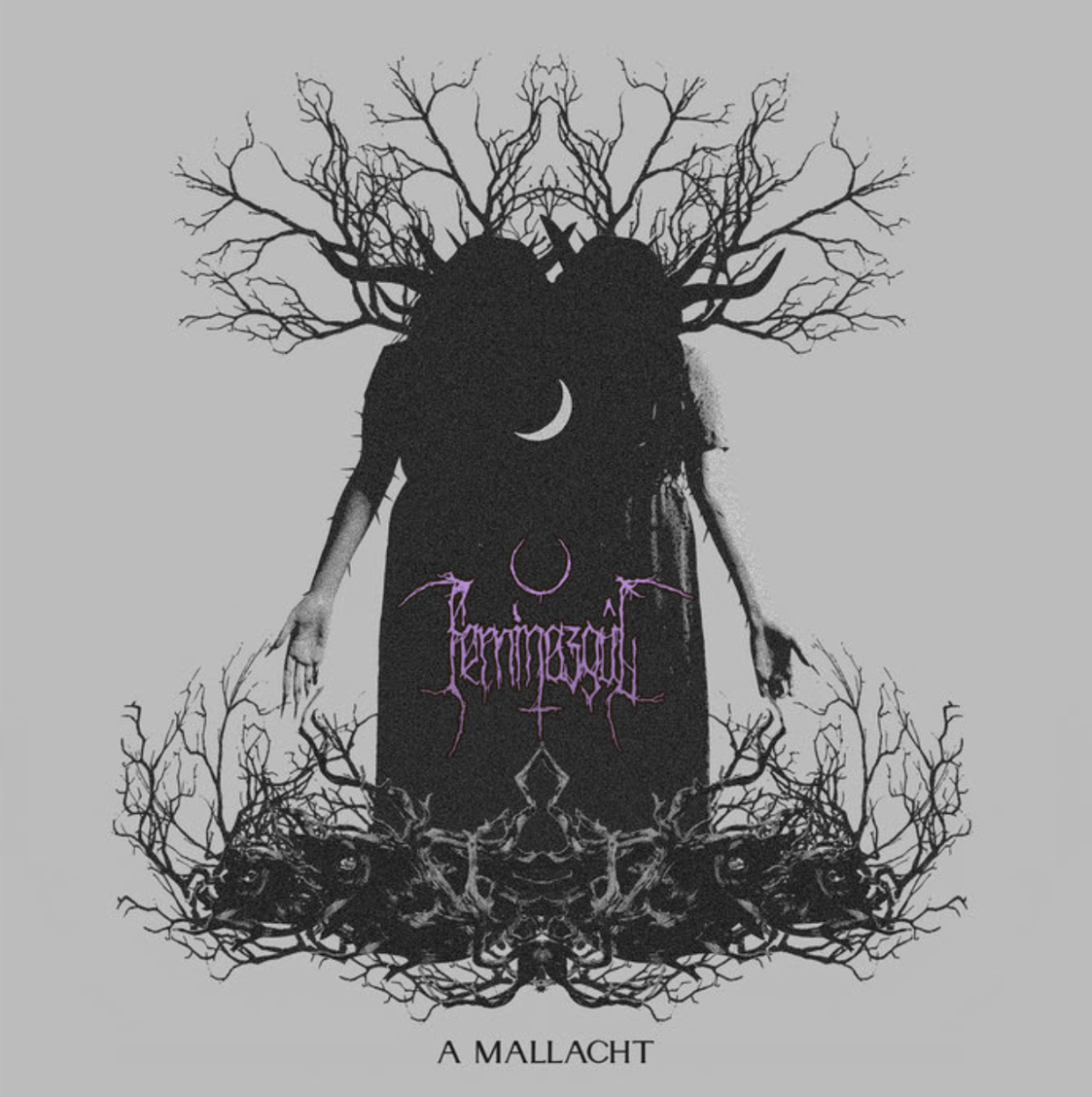

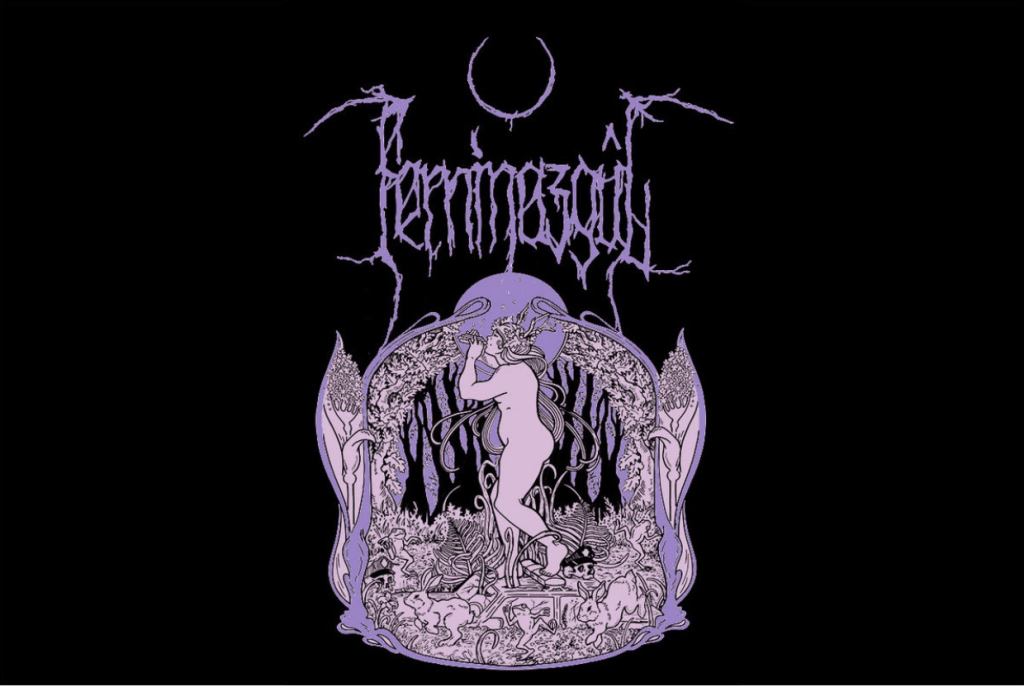
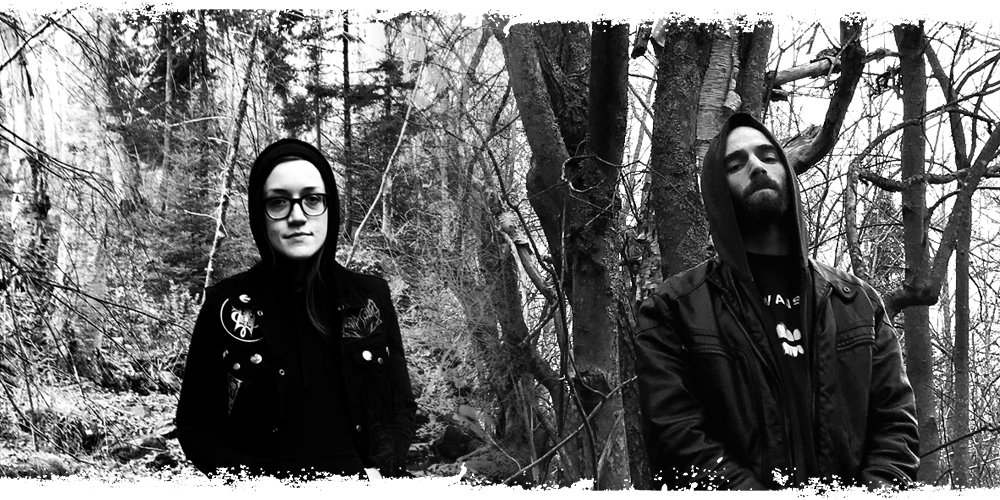
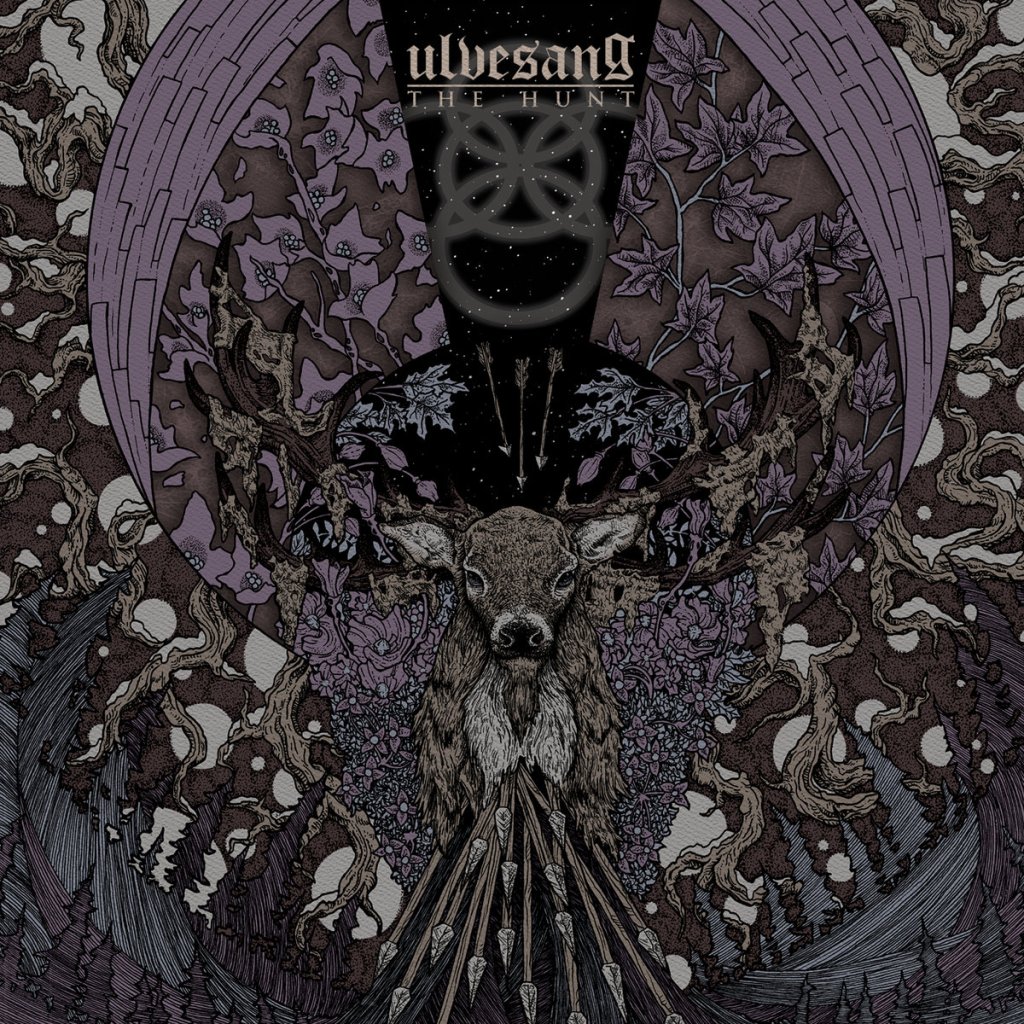
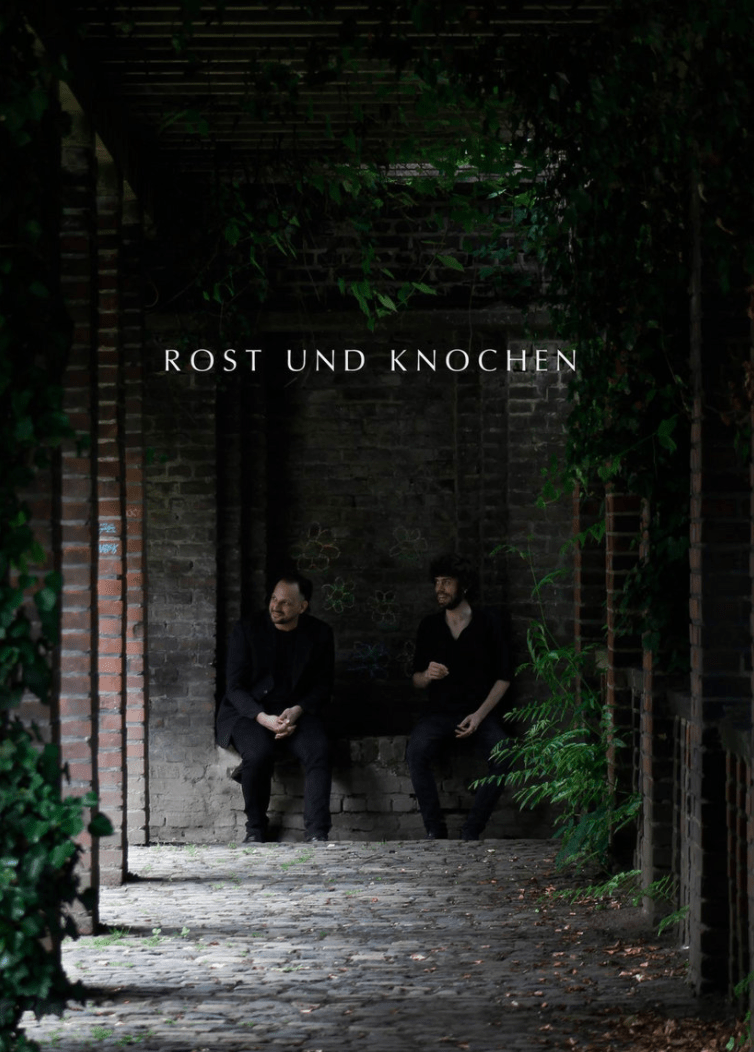
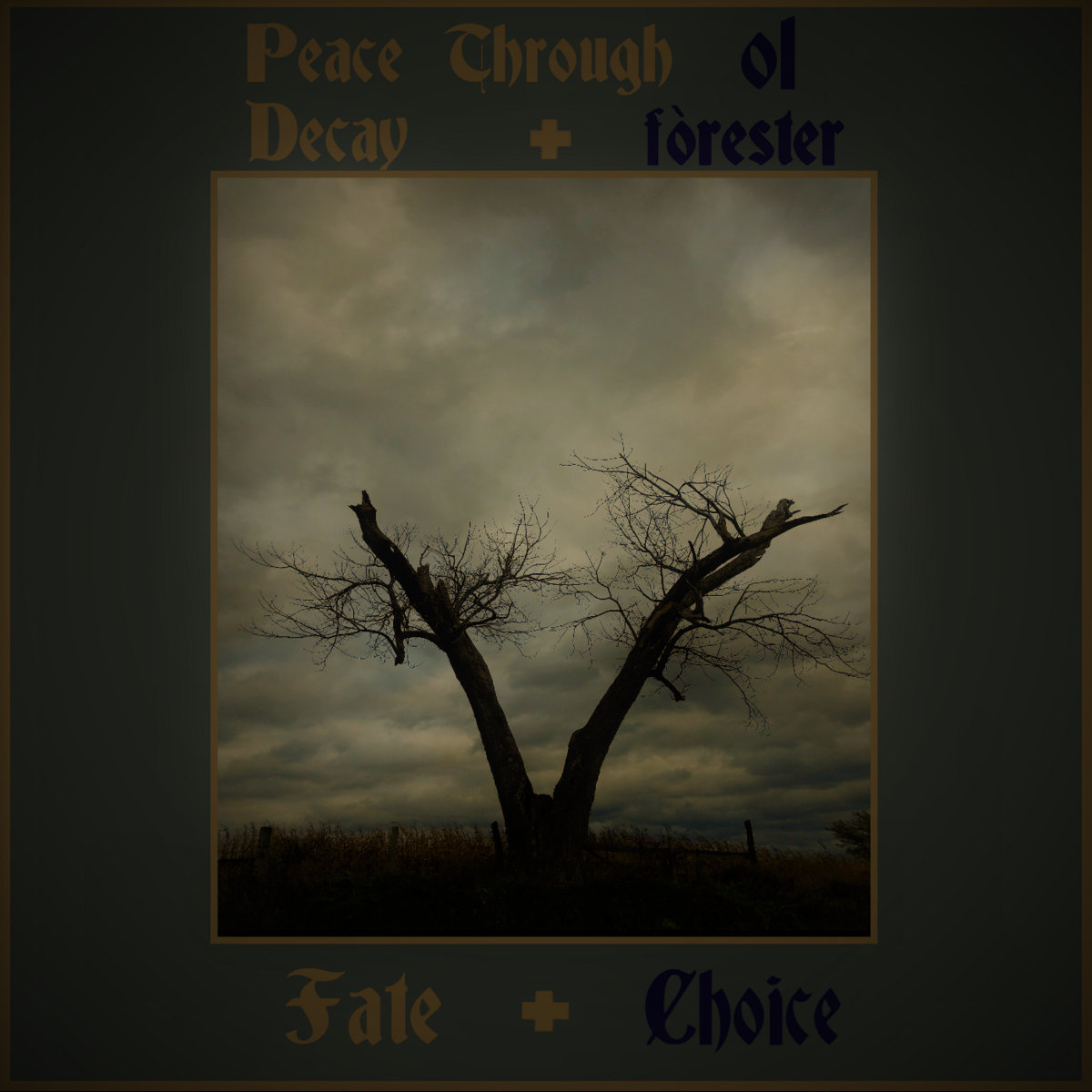
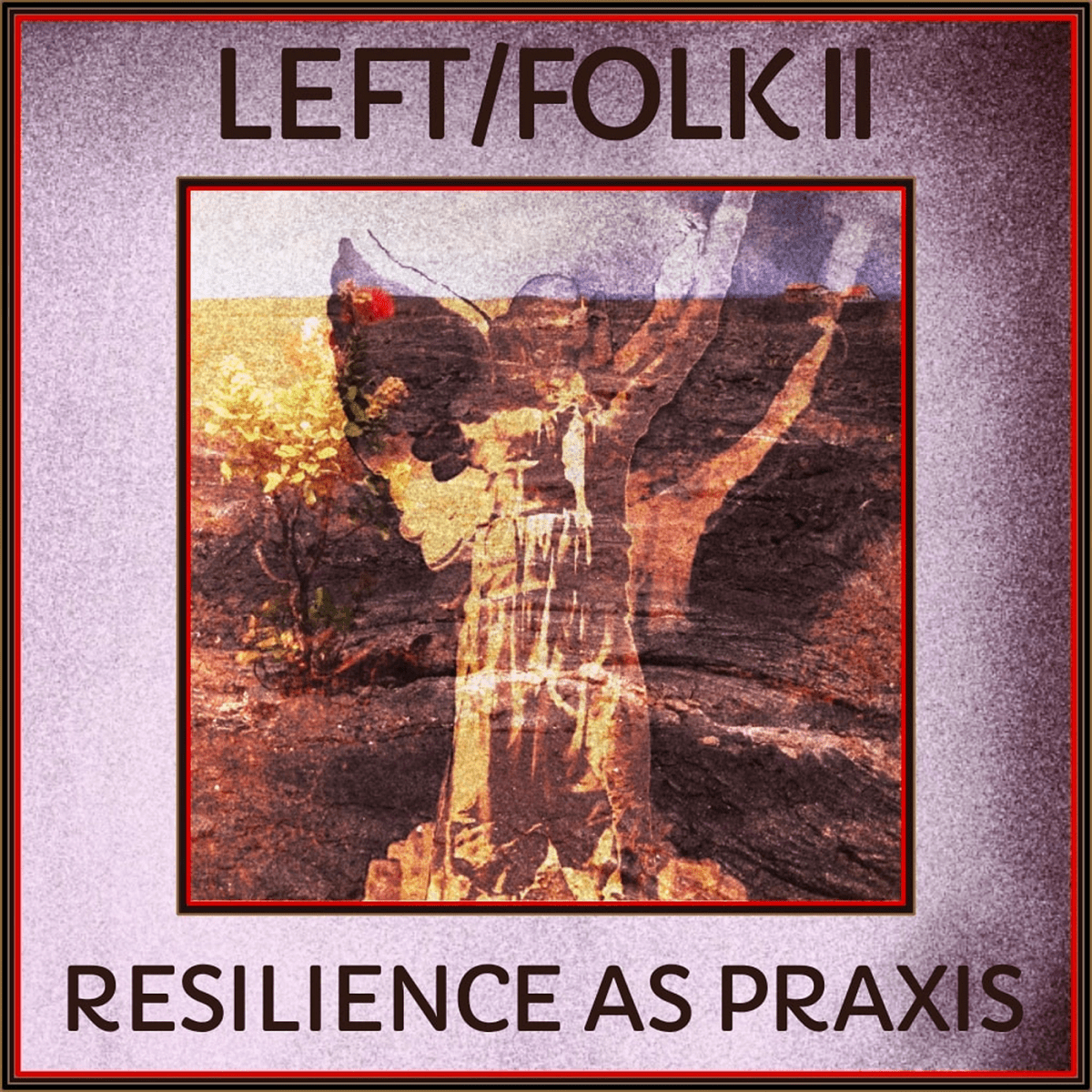
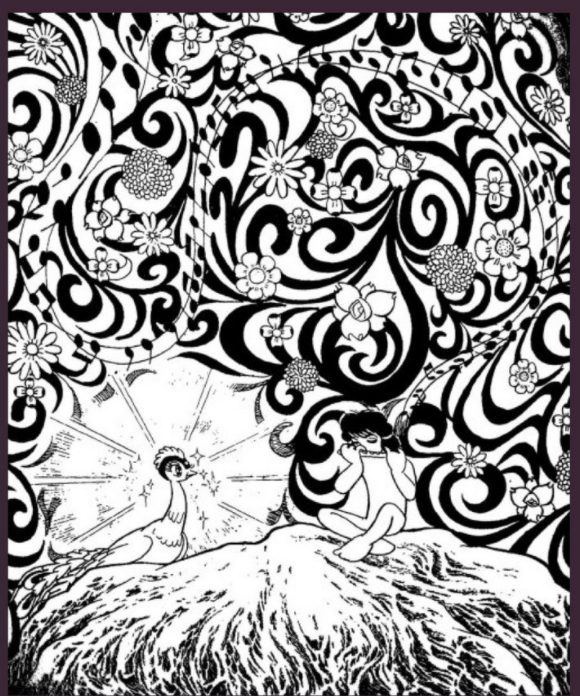
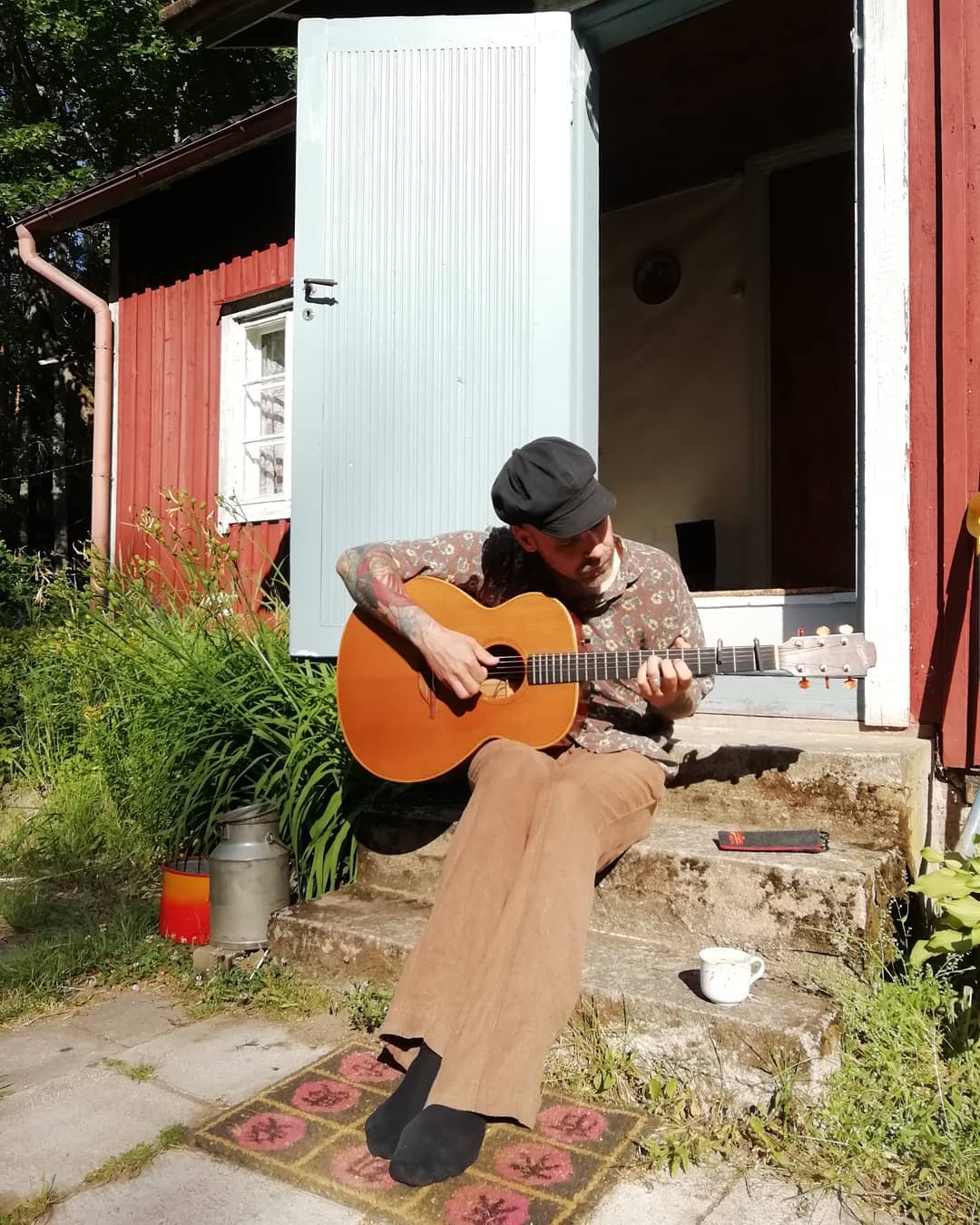
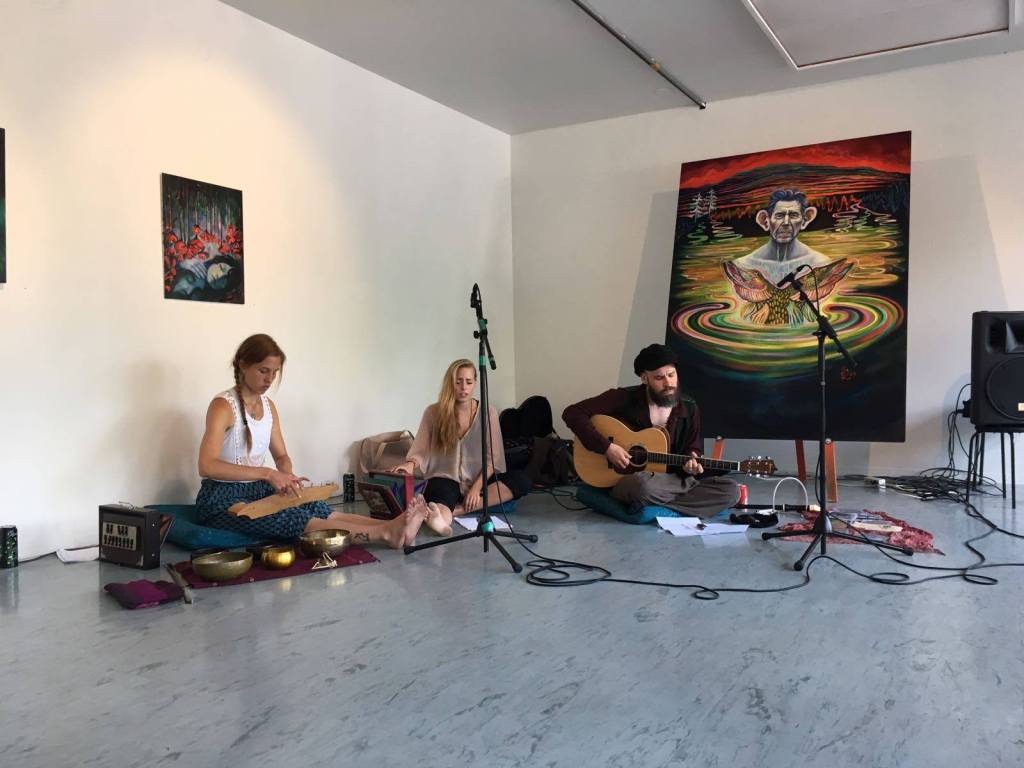
 A Blaze Ansuz: Antifascist Neofolk