Talking with Autumn Brigade About Neofolk, Marxism, and Independent Producing [INTERVIEW]

How did Autumn Brigade first come together? Was this your first project?
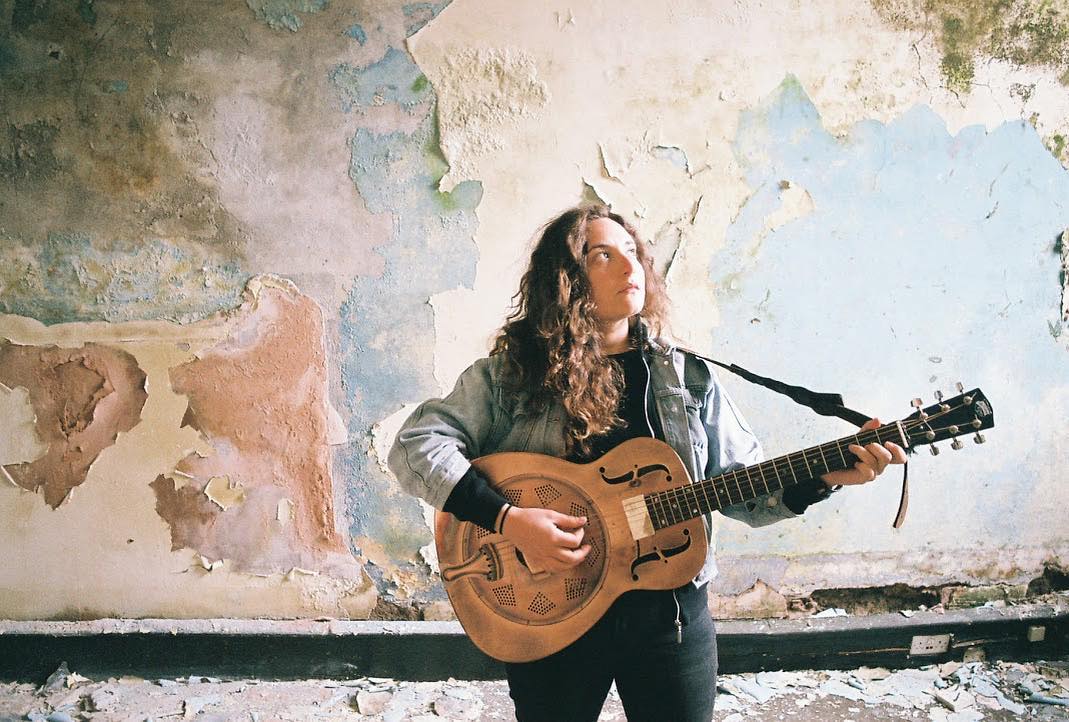
Well, I guess Autumn Brigade came from a lot of different things. Primarily it was from the music I was listening to around that time. Stuff like Current 93 and King Dude mostly. I guess the other factor that led me to forming Autumn Brigade was a response to what was going on around me at the time, politically speaking. The world is in a state of struggle and change, and I hope Autumn Brigade can have a positive impact on that change in order to help it be for the better!
In terms of Autumn Brigade? No, It was not my first project. Before starting Autumn Brigade I had a project called “STAGGH,” which combined elements of harsh noise, black metal, and drone. STAGGH was the first official named release I had on the Self Loathing Records label. Autumn Brigade came shortly after that, but it certainly won’t be the last project I ever work on!
What is the songwriting process like? What instruments do you use?
Most of the time songs usually come to me gradually over a period of time, gradually being shaped, improved and hammered out. Other songs come more quickly than that, but usually I take my time and make sure I’ve completely mastered a song before I sit down and record them. Everything that has been recorded by me has always been DIY, although when I was recording STAGGH, I did get help from some friends of mine in order to record it. With Autumn Brigade however, it’s just me recording my guitar into a music program and going from there, cleaning up the audio, adding samples and whatnot!
Does your music have a Marxist influence? How does that inform your work?
In general terms yes, but there are certainly other influences on the aesthetic and subject matter of Autumn Brigade as well. Marxism, as well as other different “isms” on the left have certainly influenced me, although primarily the works of Leon Trotsky and Edward Said. In terms of Trotskyism, The Russian Revolution is possibly one of the most important events in human history, we live in a world shaped by what happened during 1917. However, the bureaucracy came and decades of tyranny followed. Autumn Brigade; just like Trotsky, comes from that tradition of “neither Moscow nor Washington.” Several songs that are going to appear on the upcoming album are influenced by a number of struggles. That’s where Edward Said comes in, particularly his idea of Orientalism, and how Western civilization tends to pin the Orient as a place of barbarism and savagery. Songs on the upcoming album deal with a number of struggles, including the anticolonial movements in Northern Ireland and Palestine, and the failed Hungarian Revolution in the 50’s.
Of course, I would be lying if I said my Marxism is the only influence on Autumn Brigade. There is of course, the military aesthetic, which comes from more of a fetish standpoint than anything. In my eyes, there’s something sexy and seductive about people in uniform. Going off of that there’s also influences of the LGBTQIA+ and Kink communities which have influenced some of the lyrical content of my songs. Autumn Brigade is an expression of those things, as well as a way of flaunting my sexuality in a tasteful and interesting manner in front of others. The profits from the Split EP Lodge of Research and I did recently, go towards both the Baltimore Sex Worker Outreach Project, and the Trevor Project, since those are both causes Lodge of Research and I are deeply passionate about. The last influence on Autumn Brigade would of course be nature, I mean just look at the name of it! Autumn is the prettiest season nature has given us. I grew up going on hikes and camping in the woods and in mountains. Nature’s majesty has always blessed me in the most beautiful way possible. Even now when I’m bored I tend to go for long walks out in her domain!
What is Self Loathing Records?
Self Loathing Records is my own independent label. All of my solo work is uploaded there (except for of course the song Lodge of Research contributed for the split EP). It’s mostly because I want to have the rights and profits to my own music. If I venture off and start a traditional band, maybe demos and rarities would be uploaded to SLR, but other albums I did as part of another group would be either uploaded independently or on a different label.
How do you define your sound?
That’s an interesting question. I really haven’t put much thought into how I define the Autumn Brigade sound. I guess it comes from whatever I think sounds right. Hopefully in the future I’ll have access to more instruments beyond a guitar, which could compliment my skills nicely.
Why do you think its important to stand up to fascists in the neofolk scene?
Trotsky once said it better than I ever could, “If you cannot convince a fascist, acquaint his head with the pavement.” In all seriousness though, underground music scenes of all sorts have been seen as a refuge for fascists of all stripes. You cannot negotiate with people who want to see you dead based something as arbitrary as your religion, race, ethnicity, sexual orientation and preference. The underground offers them a place where they can market their ideas to alienated youth and apolitical people. It’s our duty as members of an open society to prevent jingoistic bigots from being able to have a platform of any kind! Especially when people like our president are empowering them.
What Artists Had the Biggest Influence On You?
Autumn Brigade has been influenced by King Dude, Chelsea Wolfe, Zola Jesus, , Current 93,, and labor songs from around the world. A lot of the symbolism and aesthetics of Autumn Brigade are sort of a parody of Douglas P’s whole getup, the logo being something I fooled with and made into something Antifascist.
What’s coming up for you?
Like I said previously, there’s an album that’s coming soon! I had to take a hiatus from working on it for a bit since I was sick for a period of time, and that was affecting the recording of vocals since I sounded like I was dying of the plague. I’ve since gotten better, and I’m hard at work on the album!
***
Check out these tracks from Autumn Brigade Below, and the split they recently did with our friend at Lodge of Research. Unfortunately they are not on Spotify yet, but check out our Antifascist Neofolk Playlist on Spotify for other great bands.


Traditional Simplicity: An Interview With Quercus Alba

In the intersecting worlds of post-punk, post-industrial music, of which neofolk is our flagship, there is an interesting melding of the ultra-modern and the class, folk, or traditional. This can feel as though it is a futuristic memory of the past, electronic music with influences from the oldest forms of generational music. Or it could be a touch of one genre with something established, such as Appalachian folk songs blackened around the corners. With Quercus Alba it is actually simply light, finger-plucked guitar work that is expanded on with a temperamental ambience or meditative sound. We first came across Quercus Alba with a split they did with Foret Endormie, and were excited to finally catch up with them for a full interview.
Now we have been able to corner them for an interview and discussed American folk influences, how the project came together, and what their recording process is like.
So how did your project come together? Was it your first musical project?
Sort of a long story, however I’ll keep it brief. It starts with my study of classical guitar and music in my early 20’s during college.  My education and teachers introduced me to many artists, genres, and compositional styles that kind of opened my mind about what music can be. After I graduated I started listening to many folk and neo-classical type ensembles and bands.  I particularly enjoyed nylon-string guitars mixed with other instrumentation in a modern chamber ensemble setting.  Unfortunately, its not as common as one might think. I also dove quite heavily into soundscape and ambient type sounds.  Most recently, I picked up clawhammer banjo.  So, I decided to put something together with instruments I was familiar with while combining some of these influences into a sort of solo ensemble. I tried to create something that is both instrumentally and sonically unique.
This is my first project composing anything in this genre. I have been an active member of the metal world for quite some time.  Until recently I was a live member of Panopticon.  I also play in a doom/sludge metal project called Circadian Ritual, and did a project called Inaeris with my friend Jori Apedaile (Eneferens).
How did you settle on the name?
Quercus Alba is the scientific/latin name for a White Oak tree.  I was raised and grew up in an old grove of white oak trees in northern Minnesota.  It seemed fitting due to this project’s main idea of portraying the Minnesota landscape through musical means.
What folk musical traditions do you draw on? I feel like there is an Appalachian influence.
I guess most of my folk influence comes from singer/songwriters and some American primitive players.  Also, there is a definite Appalachian influence. I play clawhammer banjo on my recordings and will on future releases.  I have wanted to play banjo since I was young but just never had the extra money or time.  Through playing in Panopticon and the influence of my friend Austin I was able to get my feet wet with both the banjo and mandolin.  This led to my current absolute obsession with clawhammer and open back banjos.  I enjoy playing, jamming, and listening to much olde time / folk type music in my free time.
What instruments are you using? What is your writing/recording process like?
So far my instrumentation has been guitar, banjo, mandolin, piano/synth, and accordion.  I record and write everything from my home while learning as I go and slowly improving that process (I hope). Most of my compositions are modeled after emotions or settings I’ve experienced in the wilderness of Minnesota. I attempt to interpret what i see, hear, or feel into musical ideas.
 
Why do you think it is important to stand up against fascism in music scenes?
I believe it can be a very destructive path of thought for our modern society.  We need to move passed this ill-founded ideology to continue social progress.  The more its allowed to leak back into conversation without being challenged the worse the problem will become.
 
What’s coming next for you?
Another full length coming out either Fall 2020 or Spring 2021 which I’ve almost finished writing. Also, I hope to work on anther split with a good friend of mine shortly thereafter.
 
What bands do you recommend for antifascist neofolk fans?
***
We are putting both of their albums here, includin the Foret Endormie split, so check out their Bancampe. Also we added three of their tracks to the Antifascist Neofolk Playlist on Spotify, so make sure to add and share that as well.


A Community-Centered Folk Revival: An Interview With Vael

The Spanish neofolk scene is producing some of the most engaging bands of the last decades, creating massive ensembles with an orchestral feel that is constantly looking to reinvent their sounds. This is how we found the band Vael, a collection of seven musicians who create a rich sound that alternates between ecstatic frenzy and quiet meditation, all while drawing on a range of traditional instruments and international inspirations.

We interviewed Vael about the band’s history, how they draw on folk traditions, and how they took a stand in the neofolk scene.

How did Vael come together? Were you involved in any other projects before?

We were just a group of friends that wanted to play together and have fun. The band was born that way, and over the months we recruited some more friends to complete the formation. In the beginning we just wanted to have a good time and play covers from our favourite bands. We decided to make our first song together, “The Hunt”, which we started being five people but finished as seven. That was the moment when Vael was born as it is today. Most of us had been previously involved in other bands from the folk or folk metal scene, such as Ocelon or Cuélebre. Some of us are involved in other projects from different scenes, like our guitarist José, who plays in Abÿfs and some other Spanish metal bands, and Teresa, who collaborates with the project Bear, the Storyteller.

What bands were an inspiration to you in Vael?

Each member of Vael has very different influences and inspirations, which come together in our creative process. Some bands that we have in common and we really love are, for example, Sangre de Muérdago, Percival or Faun, but we think that we are more inspired by sounds, rhythms and cadences from folk music all around the world in general than by bands in particular. We listen to a lot of world music, ethnic and neofolk, but we also like to listen to rock, metal, electronic, punk, soundtracks, classical and much more. Putting it in that way, we can say that Vael is a mix of everything we like, to honour everything we respect and value as humans. We really have some very actual references in terms of music, instead of tying us too much to the past (which is very normal with folk music), making our music also for today’s ears.

How do natural rhythms and cycles inform your music? How has Vael channeled this natural energy?

We are not very aware of those things in our daily lives, to be honest. We live mostly in the big city and so we are affected by very prosaic things like workdays or public transport and that kind of “urban” things. But we are affected by seasons, for example. We get more productive at certain seasons, sad songs born usually in autumn and winter mostly. Also we believe in natural cycles, which play an important part in human life so we talk about those movements inherent in nature, its forces and how humanity is part of it in our songs. For doing that, we use rhythms that imitate waves like in our song “Nana” or “Nimue,”  percussion that reminds us of heartbeats and things like that. 

The concept of cycles is deeply rooted in our album “Kairós” since its very conception, and we have manifested it with the first and last song in the album. Those pieces are built upon the same harmony, but phrygian dominant in “Caravanserai”, which is about beginnings and travels, and minor at the end in “Vesna,” which talks about farewells. 

So, maybe yes, we are more influenced by those rhythms than we think, hahaha.

There is a strong mythic sense in your work, what myths and folk traditions inform Vael’s creative vision?

One of the aims of the project is to find topics present in different cultures and try to bring them together. We create music inspired by myths from western and Mediterranean Europe to Nordic and Slavic culture, but we also look for inspiration in cultures from other parts of the world, such as the Middle East or East Asia. We are also starting to explore American sounds. This, all together with our own tradition as the crossroad of cultures that is the Iberian Peninsula, tries to address certain topics from a “human” point of view focusing on the beauty that lies in diversity. After all, we are all human beings with our own myths and our own cultural memory, which in many cases share much in common.

Specifically, we have explored several myths in our songs: the myth of Prometheus, the legend of the Wild Hunt and also the abstract image of those old deities from nature (which are still present but forgotten) in our song “Mil ecos” (Thousand echoes). In our future work we’d like to explore myths from other parts of the world. Regarding traditions, the essential folk tradition behind Vael is the primitive and universal act of joining all together and making music for feeling good and being connected. That’s the “folkiest” thing that you can find in our music and in music in general.

How does the songwriting and recording process work? What instruments are you using?

Actually, we don’t have a regular pattern for composing. Sometimes one of us brings a melody or a chord progression and we start adding and changing things, but we also like to songwrite when we are all together in our rehearsals. We start jamming and music flows from us. Both methods work for us.

We try to use every instrument that falls in our hands. Sometimes that’s a problem because we are seven members plus our instruments. We look like the philharmonic orchestra of an anthropological museum, so we need big stages to play (and also big cars to travel). In summary, the instruments that we use most are davul, cajón, darbuka, bodhran, some small percussion, spanish guitars, baglama, hurdy gurdy, nyckelharpa, guzheng, violin, different flutes, bagpipes… and also our voices. 

You aren’t afraid of the quiet moments, or moving slowly, how does this space of simplicity play into your vision?

Being seven people in the project, sometimes is complicated to achieve balance and things get a little bit messy, because we all want to contribute to the creative process. We like to get intense and powerful in some of our songs, but we like introspection too and some of the themes we address such as death, melancholy or loss are particularly delicate. So there are these moments when we become more careful, or conscious maybe, and we try to slow down and just make something that simply works well and is not as full of melodies and rhythms, kind of more quiet. Silence is an important part in music too and in this kind of songs we try to give more space for simple melodies and silences also. 

Why do you think it’s important to stand up against racism in the music scene?

Entering the music scene is very much like giving someone a speaker. It could be a bigger or smaller one, but is up to us choosing what we say through it. So if we have that responsibility, we should use it to try to make the world a better place.

Starting from our statement and the concept of our band, Vael stands for the defense of every cultural manifestation from every part of the world and every culture, no matter the skin colour, gender or age. We want to break the barriers that separates us and search for what brings us together. So, according to this, we don’t tolerate racism, fascism, or whatever demonstration of discrimination based on the ethnicity, nationality, religion or identity. 

Sadly, in the neofolk scene there’s a bunch of examples of overt racism and white supremacism. We believe that bands like us have to create a scene where everyone is welcomed and united by music, not for other irrelevant reasons which excludes the others.

How do you define “community” and how does that play into your creative vision

We think of community as a gathering of people that supports each other and works together. Each member has his/her own weaknesses and strengths that shape the way the community faces day-to-day challenges. We are, indeed, a little community and what we do is a reflection of how we care for each other and how we have held on together when we have been through difficult situations. This is why our music talks about caring for the others and the world we live in, and the global community we are as living beings experiencing the same things even if those experiences appear in different forms, colours or cultural concepts for each one of us.

There is also another important dimension of community, and it’s the one that we form with the other fellow artists, fans and folks who share our passion for music. The European folk scene is very rich and full of endearing people. Friendly mates willing to give everything to help, collaborative artists and a very supportive public. We had experiences in other musical scenes, and when we met the beautiful people who make up this community we felt very happy and surprised. We cannot conceive our work and our context today without thinking about all of them.

What’s coming next for Vael?

Our plans are to continue exploring the musical possibilities that can be developed, mixing new harmonies and sounds, researching other musical traditions from across the world… just let flow the way we feel and think through the music and keep open minded. We are forced to have a “gap year” due to the unfortunate events of the Covid-19 pandemic that has also changed some of our plans, but we are looking forward to playing in Portugal this fall, and maybe recording a EP with songs that we have recently composed. 

What other bands would you recommend to antifascist neofolk bands?

Here in Spain we have some bands such as Ignitia, an emerging pagan folk band with influences from Wardruna, and Aegri Somnia who mixes traditional work songs and chants from iberian villages —and spanish Civil War songs too— with some metal. Not from Spain but in Spanish we have Emerson Dracon, an Argentinian artist who creates industrial martial neofolk with an antifascist background.

In the global scene, we recommend Rome, since some of us are very fond of Jerome Reuter’s work. Matt Howden with his project Sieben is a very interesting artist too, very talented and full of great ideas and very provocative. We had the opportunity to be part of a Q&A at Castlefest with Waldkauz, Rastaban and La Horde, three bands that one shouldn’t miss, and we were talking about some of the inclusive values that folk music should carry. SeeD is another project formed by very lovely people with a great spirit of union and friendship through nature and tales. We also have Cinder Well, a dark folk band which you have already interviewed, and some other projects where Amelia Baker has been involved, such as Gembrokers and Blackbird Raum, and similar to those ones, we have Mama’s Broke, two women from Canada making “dark” americana music. Lankum is another interesting project, making their own doomy version of irish music.

Finally, we will always recommend Sangre de Muérdago, ‘cause we love their music and all the magic that they create. We had the chance of being together at La Noche de los Candiles in 2018, a really cool festival in southern Spain. They are such wonderful people and one of our most important references in the scene.

***

We are putting their two albums below from their Bandcamp. We have also added several of their tracks to the Antifascist Neofolk Playlist on Spotify, so make sure to follow that as well.

From an Imagined Past: An Interview With April of Her Prime

The quiet simplicity of April of Her Prime is what first stood out to me, a dark folk act born out of the solitary world of solo ambient music. Their distinct sound is born out of complex and conflicting philosophies, the instinct to destroy and to build up anew, and is always created from the instinct to experiment and challenge. Their four albums should be on every neofolk fan list, even if it pushes at the bounds of where dense, melodic ambient music hits the neofolk canon.

We interviewed Italian musician Michele Catapano of April of Her Prime about his musical process, where the inspiration comes from, and what drives the spirit of artistic rebellion.


How did April of Her Prime come together? How did you first conceive of the project.

Well, about 3 years ago some profound changes had a certain impact on my, so to speak, “self consciousness,” and this is how one day I ran into classic neofolk. I was truly captivated by the simplicity and yet the depth and intimacy that few acoustic guitar chords could express. Shortly after I realized that I couldn’t have found a more direct, genuine and at the same time “not – easy listening” way to express myself through a song. This is how April of Her Prime was born, picking the name of the project from a verse of Shakespeare’s Sonnet III, which says much more than anything else…


Is it an entirely solo project? How do you record it? What instruments are you using?

April of Her Prime is and always will be a solo project. In fact, it is born essentially because of my solo artistic experience, I didn’t find any musician to share the project with. Maybe it is way too personal and if someone else had come across, I would have been tyrannical, ahahah. 

There’s still place for a band, but not under the “April…” name. Plus, the project is almost no cost. I only use a handheld recorder, some (light) pc editing and just the right (or wrong, it depends on the point of view) mood. 

As April of Her Prime, I go entirely acoustic: guitar, drum, sometimes a flute and the singing of the birds, the music of the streams flowing under a dome of dancing leaves. 

My ambient works are a bit different, and though they are part of the same “Weltanschauung,” they still have a different nature, so I prefer to distinguish them from April of Her Prime, using simply the line “from April of Her Prime’s Michele Catapano.” On this, I go mostly with electric guitar (as in “Radio Hiraeth”) and heavily distorted and edited sounds and samples (as you can hear in “De Inferis”, for example), but I also made an entirely acoustic short play named “Haikustic.” Besides the instrumental and technical aspects, the real difference is “ontological”, in a way.  


The songs feel almost like an ambient collage. What is the inspiration behind it

The main inspiration for my music in general comes from a deeply, cosmic pessimistic view, very keen to the one expressed by poet Giacomo Leopardi, a man who has been truly significative to my life on many levels (despite the fact that he’s actually dead… or maybe exactly because of it). The entire life and work of Carmelo Bene have been really decisive, too. 

The point is: man is not the great thing he always thinks he is – or I’d better say “he had always thought,” because the COVID emergency seems, at least, to teach him a lesson. Of course this is a tragedy – lots of people are dying or even left to die in America because someone decided they’re no more useful than others or because they don’t have the money, and I myself cannot reach my beloved ones because of the quarantine, but what I say is: once for all, let man learn from his mistakes and misconceptions…

On a more personal level, I think nostalgia for a different time and a different life, one that may have never actually existed anyway, plays the most important part. And solitude surely does a lot, too… haha. 

Speaking of the style, I just love ambient music. I think Basinski, Hecker, and the whole work of David Tibet at first, just to name a few, or the more industrial Nocturnal Emissions and Coil, Cabaret Voltaire, Ulver, but also Boards of Canada and black metal acts, especially Agalloch, or the solo works of Steven Von Till and Scott Kelly, or even the Italian psychedelic and prog scene… It is a really wide wing of artists that I tend to define “ambient”, across the genres, that have an influence on me at any level. It’s hard to give you a more precise answer, haha. 


Why do you choose to mostly not do vocals?

First, I don’t like my voice very much, and second, I usually don’t have anything to say that’s not already been said by others before me – in movies, documentaries, poems and so on – or that you can’t reach just by listening to the music, in which case if you can’t, well, it’s just how the things go and it’s exactly what my music is about, after all.


Why is it important to be an antifascist artist?

The answer here is very simple (yet the implications are not): art can be too personal to be explicitly political, but it’s never entirely apolitical. 

But this doesn’t mean, as much as I can say, that a right wing person is also a right wing artist, I mean someone that produces right wing art or propaganda: it all depends on the social and cultural context in which the work of art is born. Art is made by the artist, but it always expresses the nuances of the “system” or “the actual state of things”, that can be left or right. 

In times like these, I think it’s better to avoid a great number of wannabe-rebels dressed in military code, fucking around with drumsticks and trumpets…

Anyway, generally speaking, as philosopher Antonio Gramsci understood and Carmelo Bene expressed, all art is always the art of the bourgeoisie, so it’s good to “fly away” from it, in a certain sense. 

That’s why, along with other reasons, I don’t see myself as an artist and, for what concerns me, that’s exactly where my antifascism takes place: a refusal of the state of things (or the State, with capital S), of violence even in its “soft” and “intellectual” form, from social life to political philosophy or theory (and so a refusal of, let’s say, the Anthropocene). I’m an anarchist. The triumph of weakness, that’s it. 


Why do you think it’s important to stand up to fascism in the music scene?

Fascism grows where ignorance lies, and pop culture is just the fertile soil for ignorance to put its seeds. Think about the right wing meme culture on the Internet… And the effect it had on elections, even here in Italy, where fake news ruled the country for a couple of years, recently. It’s important to fight fascism because it spreads so easily, and art is always the strongest (and… sneaky!) way to do so. But, speaking in the terms of antifascist philosopher Benedetto Croce, there’s no ideology in art and, if so, there’s no art at all, it’s just propaganda. And this is even more true in the case of fascist “art”. In my personal experience, I noticed that, luckly, fascist “art” often boycotts itself: it’s so kitch and ridiculous (like some modern “futurists” i saw around) that no one takes it seriously – not even right wing voters, most of the times…

Anyway, it is a good thing to express clearly one’s distance and repulsion from fascism or racism in art, especially in the neofolk scene (which we all know is problematic) like Einar Selvik from Wardruna, a very successful band, did.  Music in general, that is so easily and largely fruited by anyone, has the weakest skill of defense against fascism and yet grants it the strongest spread – all who have something to do with music, on any level, should defend it.


How do folk traditions play into your project?
I’m not a traditionalist, it’s a bunch of bullshit. Most of the so called “traditions” shouted out loud by the right are usually totally made up and fake: from the magical meaning of the runes in nazism, to the supposed “oratores – bellatores -laboratores” historical social system according to Dumézil. And anyway, that’s not true that what once was shall ever be or it is right for it to be (I mean… slavery or antisemitism should be pretty explicative). 

But folk culture, in particular the magic culture of the countryside in Lucania (my homeland), are, I would say, essential to my project. Speaking of which, the work of anthropologists like Ernesto De Martino or the film maker documentarist Luigi Di Gianni are almost vital, in that sense (if you’re interested in such pictures, I recommend you my YouTube channel Oktober Equus Industries where I put some of my songs’ music videos).

A long, forgotten story of deep respect for Mother Nature, that can evolve almost in a Lovecraftian sense of sublime reverence to Her in some cases, and of absence. Yes, I would summarize the whole Lucanian existence as an aesthetic of Absence. My work as a tribute to Absence. 


What’s Coming Next for You?

Something’s coming. I’m collecting some ideas and things I already recorded but that need something additional to them, I’m waiting for the right time to come… Anyway, stay tuned!


What other artists/bands would you recommend for antifascist neofolk bands?

Well, let’s start from a great classic, first of all: ROME, of course. Then I’d suggest DEAES, great band, and Nathan Gray for sure (“Nthn Gry” in particular, in my opinion, is pure gold, everybody should have it). A great post-punk band of the past, sadly almost unknown for what I can see, is And Also The Trees, which I think can fit pretty well the taste of neofolk fans in general. 

Last but not least, especially for the Italian readers, I strongly recommend the whole “Folk” series edited by the label Fonit Cetra in the 70s, a collection of traditional and rural Italian folk tunes (re)discovered and re-arranged by Italian folk musicians like Canzoniere Internazionale, Rosa Balistreri and expecially the singer and ethnomusicologist Caterina Bueno, a real heroine. 

The work of Matteo Salvatore is also a real treasure anyone interested in pure, sensitive music should discover, especially the fans of acoustic strums. His music was our own “blues”, in a certain way. Beautiful. 


Invoking Your True Self: An Interview With Poppet

Abe Goren is one of the most prolific artists we have ever covered. In just a few years they have released a couple of dozen albums and EPs under a number of different projects and genres. We first came into contact when writing about their masonic Dungeon Synth project Lodge of Research, our first endeavor into the growing world of Dungeon Synth that borders on the edges of much of the post-industrial that is our bread and butter. Now their syncretic style is back here with Poppet, a project that shifts between neofolk, Dungeon Synth, metal, and just strange eclectic weirdness, and so we wanted to jump back into it and talk with Abe about some of the concepts behind this project, which ranges from nordic mythology to the personal search for gender identity. Abe’s own journey is especially informative for us since it talks about the process many people have gone through in the edge genres where political consciousness clashes right up against the presence of far-right bands in the scene, and maybe even our playlists.
How did this project Poppet form?  What was the thinking behind it?
I started getting heavily into black metal around late 2015. Interest in projects such as Mütiilation, Aniroe, Summoning, I Shalt Become, Bal-Sagoth and sadly, some sketchier bands like Inquisition and Burzum were primary influences for making ambient black metal. I was using GarageBand at the time, and I had no access to drums or guitar sounds, so I used a monosynth VST called “festival lead” to create black metal noises, and then did vocals and synth pads over it. A Poppet is a doll used in British folk magic, essentially the Western equivalent to a so-called “voodoo doll,” I was very into occultism in high school, and as I started college, I got heavily back into occultism. I wanted a venue of music to discuss religions such as Tibetan Buddhism, Ethiopian Orthodoxy, Santeria, Rastafari, Sufism and Left-Hand Path Satanism, and started the product as such. I had released several songs from this project on Soundcloud before, but 2017 was the real watershed moment. I was friends at the time with a fairly right-wing friend, and I was in a black metal band themed around the civil war with him, called Quantrill. I was the resident keyboardist, but it was a full band, suprisingly multi-ethnic for such a sketch band too. It was probably the sketchiest project I was in, and it wasn’t that good either, essentially sounding like a worse produced Peste Noire. This project was posted on Atmospheric Black Metal albums and got terrible reviews. This inspired me to seek feedback for my music as Poppet, and in early 2018, I posted my Enter the Numinous Realm album on Bandcamp. A couple of weeks later, I got feedback from the dungeon synth community, saying that they really enjoyed my project and how weird it was. This inspired me to hang out with the dungeon synth crowd, and release more dungeon synth inspired music on a regular basis, I continued to use it as a basis for discussing Sufism, Eastern and Oriental Orthodoxy, Kabbalah and Tibetan Buddhism, and made several friends I am still in correspondence with these days. I keep Poppet as a form of discipline, where I will constantly try to better myself and write more engaging and challenging works.
What challenged you to stand up against the right wing bands? What motivated you to stop supporting far-right musicians?
Back in 2015 and 2016, my politics could be understood as provocative. I had a very neoliberal attitude, thinking that whatever riled people up was the way to go. That said, I never dipped fully into reactionary territory due to me being Jewish, and having a close friend in high school who transitioned her gender. I had my first romantic partner in 2017, and being around that person allowed me to see how reactionary and provocatory politics were exactly that, and that in order to understand people you have to listen to them. In 2018, being around dungeon synth people actually exposed me to a wide gamut of more left wing ideas, and since I had such a plethora of amazing and non-sketchy bands in black metal, neofolk and dungeon synth to check out from that community I didn’t need to support sketchy bands. Whenever I listened to a far-right band and enjoy the music, it’s always tainted by the fact they’d kill me if they got the chance. Listening to non-sketchy bands I get the same pleasure with none of the guilt. This is why it’s important to build spaces with innovative music inspired by those bands but with none of those messages.
How did your own politics evolve in this time?
In 2015 I lived on my own for the first time, as I started college. Living in an independent space without my parents, I was exposed ot a lot of ideas on the left and on the right, and I was annoyed by a lot of the “radical ideologies” on the left. I had close friends with right wing beliefs, and the friends I had who were left-wing I grew distant from at this time from seeing them post on Facebook about bad shit all the time. My shift to the right was also motivated by me being a frequent user of the KiwiFarms from 2014 until mid-2017, a trolling website, which I maintain when it started wasn’t a hotbed of transphobia, islamobhobia, racism and ableism but rather an outgrowth of the same people who obsess over Chris-Chan. The site while intially funny, wore off quick and became a heavy obsession of mine. I posted bad deviantart pictures there constantly as a sort of discipline. Whenever I tried to correctly gender someone there, I was bombarded by many transphobes saying “don’t feed into their delusions.” I am glad I left that shithole. Even if it wasn’t as bad when it started, it was still really bad, and it just got worse as it continued. Around this time I started picking up on more and more esoteric far-right ideologies, which I liked because they were mystical and magical, and as a religion major, I didn’t like how communism as I knew it was “atheistic.” Around 2017, my politics matured after finding a partner, I read less about traditionalism and the esoteric far-right and cared more about being a good person than wanting to pick an ideology to shock. In 2018, when I was exposed to the dungeon synth community, I began reading about various kinds of leftism, and at the same time I was exposed to Marxist theories in my criminology class (despite the teacher having a lot of criticisms of Marx), which made me more motivated to read about Marxism. From there I’ve moved more to the left, which I find is a funny coincidence because it had to do with me becoming part of the DS scene at the same time.
Why do you think its important for other artists to do the same and speak out against sketchy bands?
I believe that everyone who isn’t a nazi (which is most people) into extreme music should be able to have their voices heard. If we support “free speech” the widest variety of opinions will be heard if nazis don’t get a platform. This is why I support bands that carve out a unique space in music, leftist or not, as long as they’re not nazis. We need to create a space where nazis aren’t the only people making creative and innovative music. I love this blog for this very reason, neofolk is an amazingly beautiful genre, ruined by some of the most backwards simpletons and yahoos into extreme music. If we want all ideas to be heard, we must remove people who will censor all other opinions if they got a chance to.
Why did you turn towards neofolk? How do you define this project?

Neofolk was something I was always aware of, even before I was aware of DS. I was a fan of Agalloch’s neofolk output, as well as Wolves in the Throne Room. Neofolk to me occupies a similar role to dungeon synth in how interludes of both sorts are often used in black metal songs. My album Infernally, I Wander, which we will discuss in more depth eventually, was created not out of a love for neofolk (that came more in 2019 when I dug deep into the works of David Tibet and Ulver) but out of me playing around with guitar sounds on Garageband, to create a sort of medieval vibe. My album Chapter I was a more conscious effort to recreate the sounds of neofolk at large, to capture a more singer/songwriter vibe of my music, rather than simple improvisation.

What relationship does dungeon synth have to neofolk?
Neofolk is unique as a genre in that it started out of the industrial scene, but got revived thanks to black metal fans listening to old neofolk records. Dungeon Synth grew out of black metal fans (sometimes the same ones) listening to industrial and ambient records and creating fantasy soundscapes out of it. Both genres attempt to paint classical and artistic music in the context of extreme music. There’s a reason why Wongraven’s Fjelltronen is both dungeon synth and neofolk, the dark folk scene grew out of Norway at the same time DS artists like Mortiis were making some rounds. I think both genres excel at capturing a haunting ambience, but both generes are flexible enough to also become agressive, intense and extreme in an occult context. They certainly both love their forests. Both genres are also similar because Dungeon Synth is largely distinct from the rest of synth and electronic music, you don’t hear as many drops, acid bass or drum patterns. Likewise, neofolk is distinct from folk music because it’s less “homey” and “rugged” and more decidedly “ethereal” and “ominous” in its sound. To compare Sangre de Muerdago to The Lumineers is like comparing Aphex Twin to Fogweaver.
How does the Norse tradition inform Þrymskviða? 
Þrymskviða was created when I was in Ireland, and getting heavily into the Norse Tradition. At around the same time, I was begining to question my gender and transition, which lead me to reading about certain kinds of runes such as Peord, Berkano and Gebo which weren’t as commonly touched by Heathens due to their feminine nature. I was especially drawn to the story of Odin living his (her?) last years as a woman, because of their Seidr practice, and as such was considered “unmanly” by Loki. I had always been drawn to Odin, and this more feminine aspect of Odin, was far more engaging than anything NSBM cultivated. I sought to tell a story of Norse and Germanic people defying roles of toxic masculinity rather than falling within those traps. Gender divergence has always existed, and I’d like to think that I captured an aspect of the mythos most metal bands either ignore or don’t know about.
How did your own personal journey inform Þrymskviða?
As mentioned before, when I was living in Ireland, I began to heavily question my gender, and identify less as a man and more as what I believe to be myself, to live authentically. The choral parts of this album were informed by a sketchy (and shitty) DS tape, that I thought I could improve on heavily. In one track, I started with male voices chanting but eventually changed them to female voices through my DAW. This is a not-so-subtle hint at the early stages of my transition at the time. These interests and new found interest in shifting my identity led me to learning about aspects of the Norse traditions that appeal more towards LGBTQ peoples than your average Brodinist.
What speaks to you from the Norse traditions?

I’m not too sure where to define my religion today, but its a fluid part of my identity. Like with most mythologies, I appreciate the nature of gender divergence within the Norse deities. They’re not fixed in one aspect. Many people hate Loki, but I find how he lived his life as a mare and got pregnant to bare Slepnir a fascinating case of how even in ancient tales, gender isn’t fixed. The runes are also endlessly fascinating, being very similar to my native Hebrew, in how each character serves a spritiual meaning and signifcance. Reading about them when first coming to a realization of my gender identity made me resonate with the far more obscure runes Nazis didn’t use. I did a split with a project called Peord, and Peord is inherently connected to women’s issues.

Your music really developed with Infernally, I wander? Why did you go in this direction? What was the thinking behind it?
That album was started while I was writing another album called Future Tense. I was messing around with guitar presets and ended up creating a beautiful medieval piece. That piece is the last on that album. For Infernally, I Wander I limited myself to two sounds on Garageband, a guitar and a flute. This limitation ended up making some bizarre music, and for this album, I leaned into my project’s outsider nature, of which I skirted around before. This embrace of weirdness, coupled with free flowing and creative song structures made an album I’m truly proud of. Afterwards I started to listen to more neofolk in order to bolster more creativity out of myself.
Walk me thorough how you are producing the music? What does the production process entail? Is it purely a solo project?
I initially started producing music through Garageband, using a midi controller, although often I use the Musical Typing setting. I will typically record an improvisation and then record another improvisation over that improvisation, but as I have learned more skills of how to edit sounds, I’ve been pushing myself to make more challenging and competent works of synthery. I will often include my vocals, and increasingly include drums. It is a solo project, but I actually have some group projects and remixes in store, not just with Poppet but with other projects. Now, I use Logic, which has multi-tracking, a stronger editing system and more VSTs, most of which are easily editable. This has greatly expanded my array of sounds.
How does your antifascist politics inform May the Braying of the Horn Smite Those of Hatred Great?
This album was created for three reasons, the first being how I felt there was a deficit in my music that wasn’t tackling political issues, around this time Dungeon Synth: No Fash Edition was created as a group, which I appreciate, but was also controversial as the group was mostly drama. Created on a bus ride to Belfast, I thought I wanted to make a tough and industrial album from my project. There was a micro scene called “tuff synth” embodied by bands like Xuthal of the Dusk, that revolve around distorted horns. The third reason I created the album was the most important. I was sick and tired of seeing antisemitic memes and sentiment across the internet. I am Jewish ethnically, and it should come as no surprise that I stand against Nazism and white supremacy as a result. As such, this album acted as a “diss track” towards people thinking dungeon synth needs to have more Pro-European themes, whatever that means. May the Braying of the Horn Smite Those of Hatred Great is a call to destroy those who destroy marginalized peoples and communities, using Biblical themes as an epic, sword-and-sandal backdrop from which to juxtapose conflicts against trans people, people of color, queer people, Jews, Muslims and politcal radicals against hegemonic powers-that-be.
What’s coming next for you?
Under one of my many other projects, Wagemage, I have a remix album of gabber versions of black metal tracks coming out soon. Under Poppet, I’m working on drum heavy dungeon synth, inspired by an irl friend’s Witch House project, wwithout. As long as I’m here, I’m gonna be pumping out more albums, and who knows what might greet you in the future!

We are embedding the albums that were mentioned here and we encourage you to check out all of Poppet’s library. We have also added Poppet tracks to the Antifascist Neofolk Playlist on Spotify, so remember to add that as well.


Azure Down Releases New Single, “Syncretism”

While a little different than our normal fair, the band Azure Down, a project from the folks behind Ashera, have released a new track. “Syncretism,” is a psych-jam track from their upcoming debut album We Search for Neptune. Check out the track, and add it on Spotify here. We are including the lyrics for the song below so you can sing along.

High in the sky and I’m shining down on you
High in the sky and I’m falling down on you
High in the sky and I’m whispering your name
High in the sky and you’ll never be the sameHere on the ground and you’re trying not to fall
Here on the ground and you start to hear my call
Here on the ground and you feel their disdain
Here on the ground playing in the falling rain

And I want to fly keep my feet up off the ground
And I want to fly, and I’ll fly

Deep down below and you’re swimming in my tears
Deep down below and you’re bathing in my fears
Deep down below and you fight for every breath
Deep down below and I’ll save you from yourself

And I want to dive, sink into the depths below
And I want to dive, and I’ll dive

And you feel like you’re alone
Even though you have grown
All the seeds that you have sewn

In the darkness of your mind
Is the darkness of my mind
You can feel yourself unwind

And I want to fly, get my feet up off the ground
And I want to fly, and I’ll fly

And I want to dive, sink into the depths below
And I want to dive, and I’ll dive

credits

released February 20, 2020
Music by Azure Down
Lyrics by Deborah Norton-Kertson
Track Art by Justin Norton-Kertson

Reporting from Armageddon: An Interview With Thou

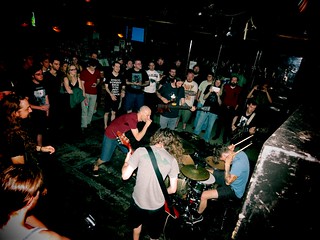
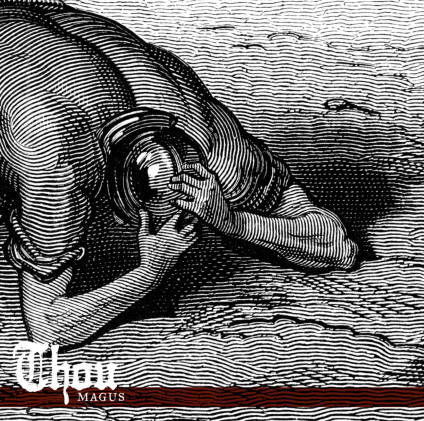
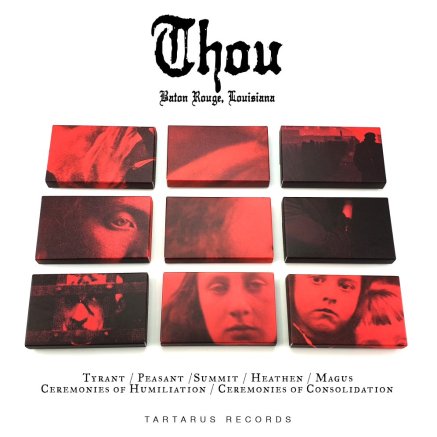
In our hunt to pull together antifascist bands from the circles around neofolk and black metal, no band is more cited than the New Orleans based Thou. This DIY doom metal band have become giants for their aggressive basement sludge, apocalyptic atmosphere, and black-and-white approach to rooting out the far-right. Along with bands like Dawn Ray’d and Ragana, they have helped to create a new space in heavy music for a principled antiracist stance and amazing tracks.
We interviewed Andy and Mitch from Thou about what drives the band, how they write their music, and why they have chosen to speak out.
How did Thou first come together? Were you a part of other bands before this?
Andy: Thou formed in 2004 after a couple of our other bands were falling apart. I’d been playing music with Matthew since we were kids. None of our other bands had done much except for play local shows.
Mitch: Matthew (guitar), Andy (other guitar) and Mitch (bass) were playing in bands together in high school and eventually formed Thou. Around 2 years later Bryan caught wind of us and forced his way into the band. He said he wouldn’t let us play anymore shows in New Orleans if he wasn’t the singer.
We sure were [In other bands]! Eat A Bag Of Dicks, Spring Break Shark Attack, Torn Apart By Horses, Effigy, Translation, IDKFA, Groundview, The Sugar Cookies, Rhinosaur, Man Plus Building, Baby Boy, and probably a handful of others I can’t remember. Andy is currently doing a solo project called Supplicate, and Bryan is in The World is a Vampyre with our newest guitar player KC.
How do you define your sound? Do you consider yourself a part of the Doom scene?
Andy: Loosely, yeah I suppose we are part of the “Doom scene” but we don’t really consider ourselves part of any kind of scene outside of the bands that were are friends with and who are doing like-minded things with a like-minded approach. Bands like The Body, False, Cloud Rat, Lingua Ignota, etc etc
Mitch: Hipster Doom. LoL. Of course! We definitely fit into the genre in a lot of ways, but also try not to JUST do the typical “Doom Thing.” We get bored easily which forces us to switch things up every so often. We can’t do just slow and heavy all the time, nah’mean?
Why do you think there is a growing antifascist black and doom metal scene?
Andy: I think it’s because there is a growing antifascist scene in general, which is a reaction to fascism being on the rise in a global sense. Though there are still no shortage of self-described “apolitical” bands in metal. I’d still venture to say most metal bands in 2019 consider their music to be apolitical.
Mitch: Because there has been a fascist black and doom scene for too long and people are sick of it. Its about time!
Have you experienced a lot of far-right attitudes in the metal scene?
Mitch: Mostly just online, where people can hide behind their keyboards and say awful shit with no consequences. If someone is even a little familiar with our band then they probably know the basics of what we stand for and wouldn’t bother coming to one of our shows. There is one funny story of being surprised by someone we thought was cool, but turned out to be a straight up nazi in hiding. That was a wild night.
Andy: Not too many blatant far-right attitudes, but certainly a few. I think it’s more common for bands to hide those views under the aforementioned “apolitical” banner. If anyone took half a second to read our lyrics or liner notes, or even look at our t-shirt designs, you’d think they’d quickly realize that our music is the exact opposite of those views, but unfortunately it isn’t always the case.
How does songwriting take place? Is it a collaborative effort?
Andy: It’s gotten more and more collaborative over the years, but most of it still stems from a skeleton of a song that either Matthew or I will write, then all of us will work on an arrangement.
Mitch: Usually Matthew or Andy will have a few riffs, or maybe a full song written, and bring it to everyone. We’ll listen to it a few times, learn it, and then possibly start rearranging or adding parts (maybe take some away if they stink) and just go from there. Lately other members have been contributing more often and it’s really been fun to see how that shapes the new directions we go in.
Heathen was how I first came across Thou, was this a big stylistic turn for the band? What was the concept behind it when you were producing it?
Mitch: I wouldn’t say it was a huge departure for us necessarily. When we’re writing a full length album we tend to look at the last one, see where it went wrong, and try to improve on those mistakes. There’s more of a focus to the full lengths than say the splits or EPs. We have a clear idea of what we want it to sound like and put everything into shaping that sound.
Andy: It didn’t feel like a big stylistic turn at the time; more of a natural evolution. Musically, the idea was to introduce more dynamics to the music, broadly speaking. I want to play more with melody and be able to use some pretty chords and really let them breathe. We wanted to take the focus off of just “riffs” for some of the songs, and also leave room for more pseudo-experimental stuff like clean vocals or weird synth overdubs, stuff like that.
What bands inspire your music? You seem to draw from a huge range of musical styles and artforms.
Andy: Most of the time I’m sitting down to write a song, I’m just trying to channel the mysterious melancholic vibe from Portishead’s “Hunter” and marry that to something heavy. Not an exaggeration.
I don’t listen to almost any current heavy bands and am usually listening to the Cocteau Twins or emotionless techno. Not sure if it really inspires the music necessarily, but that’s where I’m at.
Mitch: That’s almost impossible to answer because not only do all of us listen to drastically different types of music, the bands that influence us are constantly changing. The one constant, though, throughout our tenure as a band, has been to sound better than The Body. It’s not easy.
 
We have jokingly called Thou the true “punk rock” of sludge, why is the DIY approach so important?
Mitch: Well first off thank you for saying that. That’s very nice of you. The DIY thing just makes sense in a lot of ways. Having complete control over your music, merch, the way it’s heard and discovered, and even being able to give it away for free just seems like a no-brainer. There are definitely aspects of it that are exhausting and frustrating, but that also makes it more fulfilling when things come together. All that being said, if Atlantic records wants to pay us a million dollars to record and tour then we’ve got a deal!
Andy: We’ve just tried to cut away as much of the nonsense of the “music industry” as makes sense for us, though it’s evolving. If there’s something that we’re willing to put the time and energy into doing ourselves, we’re always gonna do it that way. It’s a good way to ensure that your exact vision comes across to someone outside the band.
Obviously there is a sense of apocalypse and death in the music, but it comes across revolutionary rather than nihilistic. How does your view of social change play into this? Is it the end of the world, or just the time for massive social upheaval?
Andy: I live in a city that’ll probably be wiped out by climate change within 50 years, but that doesn’t mean I don’t want to fight for a better life for me and others. So, I’d say it’s both. The end of the world should inspire the massive social upheaval.
Mitch: The end of the world is definitely coming, but it doesn’t have to suck. Why not try to make things better while you have the chance? Of course all of us struggle with the things we can’t really control; politics, global warming, bad movies coming out, but just because it’s a struggle doesn’t mean there’s NOTHING you can do.
What’s coming next? Any major tours or releases coming up?

Mitch: We recently wrote an album with our very good friend Emma Ruth Rundle! It’s being mixed right now and we’re still deciding on how it’s going to come out. There will probably be a tour or 2 once it’s released. Other than that I think it’s time to start writing the next full length. And again, if anyone from Atlantic records, or any other major label is reading this, holler at us. We’re tired of rolling our own t-shirts!


We will have to wait for our current apocalypse to be finished to see Thou on the next tour. We have added several tracks below from Thou’s Bandcamp, and we have added a track to our Antifasicst Neofolk Playlist on Spotify. Stay tuned for our doom playlist, which we are slowly, slowly working on and looking forward to kicking over to all of you.


Unconscious Dreams: An Interview With Cinder Well

Cinder Well is one of the most well centered projects in the emerging world of left and antiracist neofolk/dark folks/traditional folk, being made up of musicians from a range of projects coming together to riff on regional folk music. Emerging from the songwriting of Amelia Baker, now based in Ireland and studying/teaching Irish fiddle, the music is a haunting blend of styles that feels draw from the stories of communities often forgotten.

In this interview with Amelia Baker, we talk about how Cinder Well came together, how its instrumentation developed, and why they have made it a priority to speak up against white supremacy.

Also check out this story on Cinder Well and several other West Coast antifascist neofolk musicians.

How did your project come together? Is it the first musical project you have done?

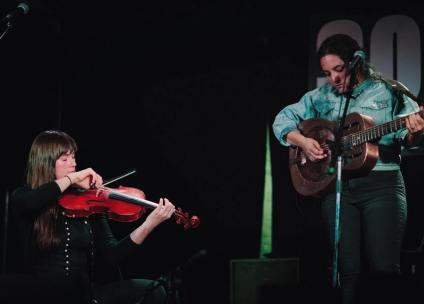
I started writing music under the name Cinder Well to have a solo project that could evolve over time. I wanted to be able to perform solo, but also collaborate, perform and record with other musicians. The first Cinder Well EP and early shows were mostly solo – but tours have happened in many configurations. The Unconscious Echo was a collaboration with a full band – several members of Blackbird Raum, and members of Vradiazei were in the mix.

I’ve been writing music since I was a teenager – at first for no one, then for myself, and then for various projects in Santa Cruz. There was a really active, creative and supportive music scene when I lived there around 2008-2013. Playing and touring with Gembrokers and Blackbird Raum was hugely formative for me, and Cinder Well definitely grew out of that same vein of music, ideology, and community.

Cinder Well feels like a story that’s unfolding and being told from many angles and I’m there to kind of guide it along.

How do you go about songwriting? What instruments are involved?

A song usually starts with a melody in my head that is so gloriously satisfying that it needs to have something built around it. I start singing the melody, or playing it on something, and then words fill in. Sometimes I have a really clear image or story that I’m trying to portray, but other times the words just come out and create images and concepts that may end up making more sense to me later on.

I use lots of different instruments while I’m writing music. Often I’ll switch between them to get ideas for chords, harmony, and melody, and to find the right groove. Many of the songs that I play live on my resonator guitar were written on other instruments (banjo, piano, bouzouki) that I don’t bring around on tour.

I wrote a lot of the string parts on The Unconscious Echo, but more recently, I bring the bones of a song to my bandmates, we all talk about the concept, and we collaborate on where it goes. On this recent tour, Marit and I rearranged some of the songs to play as a duo that we had recorded as a full band, which was really interesting and exciting to see how the songs could continue to evolve and feel new to us again.

Strangely, when I try to remember where and when I wrote a particular song, I often find that I have no memory of it. I have found that the best songs come out almost all at once. When I find myself meddling, overthinking, theorizing with a piece of music, its usually not going to make it out of the mill.

What genre do you consider your music? Do you see yourself as a part of the larger neofolk scene?

I guess I consider it original folk music because I am so completely immersed in folk and traditional music, but the majority of the material we record and perform live is original.

I live in Ireland, where I study and play traditional music and ballads, and Mae and Marit play Klezmer and Scandinavian music (check out their string duo, Varda). But myself and everyone who plays/ has played in Cinder Well started playing music not really in folk scenes but rather in DIY, punk, anarchist crossover communities that was Santa Cruz and the West Coast in the first, say, 15 years of the 2000s.

I don’t at all consider Cinder Well to be a neofolk band or as part of the neofolk community (other than, by some fluke, Cinder Well being tagged as neofolk on Google, and I don’t think this interview will change that algorithm!). I’ve never entirely understood what neofolk music is, but I do know that many of the pioneers of the genre (i.e. Death in June) experimented with fascist aesthetics. Therefore I’ve had zero interest in personally trying to identify with the genre and redefine it as antifascist. I suppose the genre of neofolk was born out of punk and folk elements from a certain era, and so was Cinder Well, but a different era altogether.

Why is it important to be an antifascist band?

It’s important to be an antifascist band because it’s important to be antifascist – and for that to be 100% clear. I used to be somewhat “benefit of the doubt” when it came to bands that “seemed cool” but used maybe kind of sketchy imagery. But I had some experiences in the past few years with people and bands who use mysteriously fascist imagery, that as a Jewish person, I found to be terrifying and invoking of generational/historical trauma that I didn’t know I even had. The Unconscious Echo really came out of that process; the album as a whole and especially the title track. The experience of the irrational fear that arose in me in the presence of that symbolism, while being told it isn’t fascist, made me realize that NO ONE should have to be made to feel unsafe like that.

I am a white, Jewish, cis-gendered woman. And as white people we are all complicit, consciously and subconsciously, in white supremacy in the way that it benefits us. It is only with white supremacist privilege that a white person can use a symbol that looks like a swastika and redefine that meaning for those it was used against. For Jewish people. People of color. Queer and trans people.

When a swastika is used by a white person “not in a Nazi way” it can provoke a huge amount of fear and panic in people who have a deeply engrained story of what a swastika means. So if you’re antifascist just fucking say it and BE antifascist, to provide solace and clarity for everyone who is seeking that in art.

Music creates vulnerable spaces for both musicians and listeners. All I can ever hope to do with my music is to provide an environment where people can safely feel all the things they need to feel, and have a moment of reflection from the world we live in. Safely, without question.

What is coming next for you?

We have a tour coming up in October on the West Coast, and there’s an album in the works. In the meantime I’ll be playing some solo gigs around Ireland and the UK.

We recently had two amazing tours in Europe and the UK that have left us feeling excited and encouraged about what we’re doing. We’re just going to keep writing, playing, and recording, because we love it, and see what comes our way.


Check out some of the Cinder Well tracks below from their Bandcamp, and they have been added to our Antifascist Neofolk Playlist on Spotify!


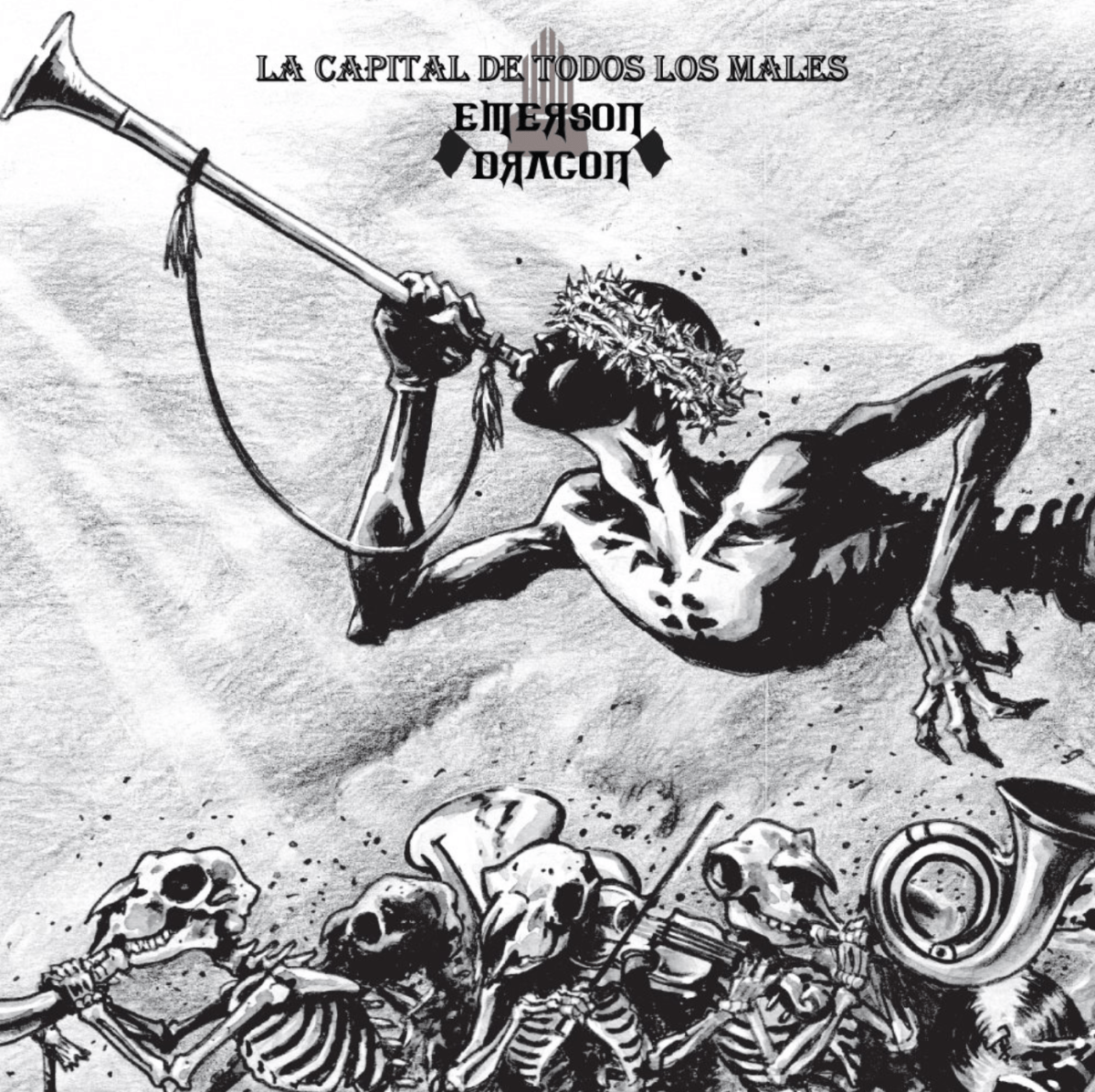
Apocalyptic Militancy: An Interview With Emerson Dracon

Amid the murky world of neofolk there is a sort of counter-romanticism emerging of radical artists trying to buck the far-right trends and create something drawing from its own militant tradition, a world of resistance and folk practices and future utopianism. Martial Industrial, a neofolk sub-genre marked by pounding rythms and a militaristic vibe, may be even more overrun by fascist fetishism in many circles, but there is a counter-trend there as well that is looking towards anarchist history of revolution for inspiration. This is the tradition that Emerson Dracon comes from, the martial industrial solo-project from Argentina.

I interviewed Emerson about this project, where he gets his inspiration from, and how he sees his music as a counter-balance to the kind of media he was he was raised on.

How did your band come together?

Emerson Dracon, it’s me. It is a martial industrial / darkwave solo project from Buenos Aires, Argentina. I recorded 2 EPs. By the time I am doing this interview, the project is on a pause. And I really don’t know if it will go on yet. I moved from Buenos Aires to Bariloche, (same country but 1600km away) – looking for peace of mind, and better job opportunities. Changing metropolis office hours for lakes and woods and freelancings.

What bands inspired you in doing the work? 

Quite a few. Since my childhood, I’ve been into all doom metal bands; then deathrock, gothic metal and darkwave bands. Particularly in this project, I’ve been influenced by Dernière Volonté, Der Blutharsch, Der Feuerkreiner and more martial / apocalyptic / dark ambient bands like Atomtrakt, Arditi, Orplid some more industrial like In Slaugther Natives or Militia and maybe some more orchestral like Chaostar, Der Blaue Reiter, Puissance and Gae Bolg.

How did you develop your sound, and how do you define it? 

For me it is martial industrial / darkwave. I’ve been into gothic scene in Buenos Aires since 2003, as a DJ, and also organizing live shows. That process provided me an insight to understand the local underground scene. But it was not enough. I’ve played in some bands, as bass player, and also keyboards, but always had problems with members, because we could never match our ideas, and end up compromising the kind of sound we expected. In the mid-2000s I started to listen to some bands like In Slaughter Natives, TMLBAC, Krepulec, Toroid, Ordo Rosarois Equilibrio. Laibach of course. And a lot more. That was when I realized I could do something similar. A solo project, with revolutionary ideas, drums, synths and no pressure of time commitments. So, I started to write my ideas down. Normally, I use a laptop to compose, plus a midi controller. I program drums, and play VSTs and RTOs plugins to emulate musical instruments like bass or trumpets. I add to this the keyboards, and synths. And magic appears.

The 1st EP I did alone, at home, with Reason and Pro Tools, mixing and mastering. The second one, I prepared the model at home, and hired a friend’s studio (Hernán Conidi – 5 Elementos Estudio, also in Buenos Aires) that helped me to produce the second EP, record guitars, and develop mixing and mastering. I have a couple of reviews in different blogs, Heathen Harvest, for example; and an antifa one: Red And Anarchist Black Metal. But mostly poor feedback. Obviously, I do not have much resources to build a platform that a mainstream artist would need. But keeping it in the “cult” underground for me is enough.

There is a huge variety, it moves from an orchestral sound to almost black metal, do you feel like you are constantly reinventing your sound? 

Yes, it is very eclectic, but has a common dark “synth” sound going through all tracks. I won’t tag it completely as “neofolk,” because social the imagination tends to think about neofolk as having an acoustic sound, strong eurocentric lyrics and… drummmms (lol). So, if you think about “neofolk” and “martial industrial” in particular, you will have to also think about darkwave. For me, it is the first step. I have a huge background with different types of sound from my music interests (from doom to punk, synthy pop to blackmetal, classical to local rock), and I try to blend them in the whole project. It is difficult to create an atmosphere and a political concept in a dark song. But being a kid with a lot of years in catholic scholarship, swallowing middleages paraphernalia and Roman liturgy, those influences were bound to end up anything creative I did. So, early moral Christendom influenced my musical ideas; but there was a main problem I had when working with those ideas, how to develop that?

Well, I can say that psychoanalysis helped so much to bring that mixture of ideas, feelings and layers of sounds together that allowed myself to regard each item and find a way to put together the final composition into a clean format. God bless Freud.

The music has a lot of romantic dramatism to it, do you see it as a form of theater or storytelling? 

That’s the idea. Underground martial industrial is not very popular with left-wing militants, regular musician experts, record collectors, or even darkwave fans! So, I was always thinking about theatrical and visual elements to enrich the experience. It could be Russian Revolution (Reign Forever?), Buenos Aires being bombed (Fusiladora) or even a local film (Dirtnap Stories); trying always to mix greyscale with a song topic. As I said before, each song is composed to be a complete sensory experience, from intellectual compromise, historical revisionism, black and white and image composition, and a dramatic or bombastic chill… ufff, I consider this to be pretty ambitious.

What drives your commitment to antifascism? Have you experienced a lot of white supremacist attitudes in the pagan and neofolk scene? 

Since I was a kid I felt like all modern / moral / institutions like family, school, government, religion have enthusiastic stories and fancy rules that’ve been assimilated as “true.” This includes the TV and the Radio, media that influences your sense of what is true. They tell you “the news,” but there is also other types of news that highlights regular people. The newspapers did not contain the answers I was looking for. Radio played tunes that I didn’t like. Commercial pop and latin love songs. Bleh.

Argentina was launched into the economic stratosphere at this time: that was the tale in mid-1990s. So, as a teenager I started to look to new types of media to consume: independent radioswas the very first, underground rock magazines after that, and, finally, record shops. Then Nietzsche and Marx, Fromm and Heidegger (yes, him), Osvaldo Bayer and Lenin, Eduardo Galeano and Franz Fanon. And a bunch of cassettes, CDs, books, fanzines and territorial militancy.

You have to understand that in my neighborhood there was no metal, no post-punk; only rock or cumbia. And drugs and a lot of alcohol. And poverty mixed with violence. Harsh. Police. Suburbs stories and concerts everywhere. And the first wave of local hardcore and extreme bands during the nineties at the same time as the the middle class liberalism set in. All that does not match with the ideas of a conservative way of life that was set in our society’s institutions. We were poor, we were not white, we dressed poorly (or “different”), we only had a few bucks to have a beer on the sidewalks. We walked on dirt roads. And we found stories of inequality.

When you read about antifascism on social media, some people think it is just some punks getting into trouble. Hehe. So far so good. We are, more less, old punks that want a revolt and the system to fall. But now we should redefine that. You do it every day, in your job, with your friends, with your family, in the street, any place you go you have to populate ideas of liberation! To read books and alternative websites to fight against fake news, to find better options to consume every day: for example, to buy a local producer and not a multinational trade. And also why not vote for your own hangman.

Luckily I did not find white supremacy attitudes in the music scene. I know they are there: both in digital spaces and in real life. There are these kids that started listening to Burzum and think that Varg is their new idol. And there are neo-euro spiritual Thulean ones that believe that if you are not white, you cannot have any spirituality (no rights saying quietly). Is it even worth it talking to these people? I guess it is a waste of time. Discussions are dead, at least digital ones. All the haters only copy/paste bullshit to criticize your job.

Why do you think it is important to be a publicly antifascist band? How does anti fascism inform your music? 

I think underground journalists, musicians, alternative radio stations, blogs and independent labels have to work together. Spotify, YouTube and other streaming channels seem to be devouring both profits and will of the audience. They suggest what to consume. And create trends around genres and artists: the same old story. So, it is very important to boost, share and support the other side of neofolk. We already know about the side of neofolk that is not antifascist: it is white supremacist, “meta political” or “nihilist.” You cannot support a band that has Miguel Serrano quotes in its lyrics or wears National Socialist iconography just “to make controversy.”Because they think it is cool, or whatever. We have to fight against that. Smash fascism. We have to form a new kind of audience, give support to those alternative communication and media channels, and spread revolutionary content in all the ways we can. You cannot tolerate segregation, classism, or racism once. We have to bury that shit once and for all.

What’s coming next for you? 

That’s tough to say. The last things I did were remixes, maybe that presages what comes next: a remix for for Morvge (Argentina) and another for Ash Code (Italia). In this moment Emerson Dracon project I consider finished. That does not mean that the project cannot be resurrected. Obviously it will need time, will and hope. Nevertheless, I am working on another project that concerns dark electronic music and,I’d dare to say witch house. In this case, it is looking into psychological backgrounds, mixing medication with synths. I don’t have a name for it yet.

What other bands do you recommend for antifascist neofolk fans?

Militia, The Lust Syndicate (not neofolk, but good industrial darkwave), Rosa Apatrida (not neofolk, but nice antifascist darkwave) and of course Jerome Reuter’s Rome, and any book or post of Anton Shekhovtsov.

While I am answering these questions, in Argentina, and in most of South America, life has become difficult to live. This is comes from a lot of places, not the least of which is the neoliberal policies of the state. They have a perfect combination to attack the working class: import devaluation, remarkable falling salaries, massive layoffs, increased cost of services, closing stores, following International Monetary Fund recommendations to attack things like pensions. And those political decisions pushed by  a“firm hand,” using security forces that create new political prisoners and trigger-happy cops are reigning brutality on our communities. This is all covered up by the mass media.

All this implies that a new mass of unemployed workers are rising. We are battling as we fight for jobs, salaries, and just to survive.

A lot of people are working more that 10 hours a day, also with no days-off, to pay the rent, taxes and eat. The “middle class” also has cut off of cultural activities like going on vacations, out to the cinema, theater, recitals or just to have a few beers. They can’t afford any of it anymore. Only living-the-day at home, waiting for a change to happen. They are not planning a revolt. They are waiting to vote another government in with supposedly different politics and more popular economic decisions.

The Internet is not helping this fact, and is obscuring responsibility with fake stories. People are not preparing to do something.

We have come to a point where we need to discuss what kind of work we want: a neoliberal, denialist, ‘male chauvinist,’ lying, unscrupulous, racist, classist,  society run by financial market fundamentalists; or a different one. Some anarchists could argue that we cannot change a society or any rule voting. But in Argentina in 2019 you can decide if some of the people can afford to have health insurance or even afford to have lunch. Surely we can discuss whether or not a program or party is revolutionary or not later, once we get our basic needs.

So, vote? Yes. And the most important opposition party could not be such a big deal nowadays: it is populism but, with class conscience, with freedom of speech, with free health and education (yes, here both are free), and with human rights above all.

And this last option has nothing to do with socialism; it is not Leninism, it is not revolutionary. Maybe we can call it a “popular progressivist wave.” And at the same line you have to face a Manichaean political situation that’s called a “crack” in the status quo. The elite vs. the popular masses. And the elite has always owned the means of production and can stop revolts from the people, or convince them to vote for their own executioner.

And beyond just the neoliberal economics, what we thought we had defeated is rising again: hate speech is everywhere. Hate against the poor, against immigrants, against popular field workers. Puissance post- modern lyrics says “Two hundred years ago it was common sense to have slaves, we don’t believe in that now. Fifty years ago or so it was illegal to be gay, and it was legal to rape .” So what is big business doing in Argentina other than giving the voice back to hate speech and violence? They use “big data” to appeal to racists to win elections.

And it is not only a local situation: all over the world this seems to be happening, because the rules of politics have changed. In Brazil with Bolsonaro, in Europe with the rise of the extreme right, and in the USA with the biggest clown show of all until 2021( if he does not get re-elected). All the right-wing bigotry, plus the media and the social networks where consumers just copy/paste ideas and re-send fake news. It is also a fancy cocktail of tools that opiates the masses: Google, Netflix and Spotify that “suggest” people what to consume 24/7. The rules are different, and we have to face that. For example, another issue we can mention is what we call “green wave”: the feminist power is here to stay. We are not stepping back. And we will reach for more rights: the decriminalization of abortion, same-sex marriage and legalization of marijuana; that kind of “progressivist” issues that were very difficult to think about 10 years ago.

***

Check out some of Emerson Dracon’s Bandcamp releases here, and we have added several older tracks to our Antifascist Neofolk Playlist on Spotify.


Sagas of the North: An Interview With Amanda Aalto

Seidr is the Nordic tradition of shamanism, to draw wisdom from the Gods through ecstatic rites, maybe meditation, maybe enhanced consciousness, walking the line between madness and clarity. The revival of Nordic Folk bands like Wardruna and Heilung has hailed a whole subgenre of neofolk that tries to revive the emotive music of the Vikings, and Finish neofolk artist Amanda Aalto’s solo work is one of the most surprising breakout examples of the year. Drawing on the traditional folk styles of the North, she moves towards ecstacy rather than archeological fidelity, and each track feels like it could either prefix warfare or celebration.

We interviewed Amanda Aalto about how this project came together, how the Northern Tradition informs her music, and how her music is a visionary process trying to break free.


How did you start making music? 

That’s a good question yet, I am not sure if I know the answer. I have been writing songs as long as I can remember, ever since I was a child I would come up with some silly songs by myself. I think writing songs and making music is such a big part of who I am that it’s impossible to tell exactly how it started, it probably just happened one day.


Is this your first project?

No, not really. I started by playing in bands when I was about 14 years old, mostly heavy metal and rock. I still wrote some stuff for myself but started my solo project only about 7 years ago. 


How does song writing work? Do you have a set process or does inspiration strike a number of ways? What’s the step by step?

It varies. Usually I sit in front of my piano and come up with a melody, which I start to work on more. Then I continue to vocals and lyrics, usually this happens quite fast, from like 15 minutes to an hour. Then, when I have the whole structure of the song, I record a demo and start adding more stuff to it, more instruments and such. This is how it usually works, but I like to try things differently as well. On ‘Ríkr‘, which is my latest solo album, there are a couple of songs which I wrote in the wilderness in Norway when I was camping last summer. That was something I’ve never tried before!


Do you have a number of collaborators even though this is your solo work?

I always like to collaborate with other musicians, so yes I have. Some have evolved to projects, some have been for one or two songs and so on. I feel it’s always a privilege to work with other musicians and artists because that’s when you usually learn the most about songwriting and producing.


Your music draws heavily from the well of traditional folk music and Norse traditions, where did you learn about these traditions? 

Oh yes, well this whole folk thing is a bit new for me as a musician but I have been into folk and neofolk for a quite a long time now. I’m a bit drawn to darker side of things so finding bands like Wardruna and Heilung really opened my eyes as an artist and a songwriter. When I listened to their (and other similar great artists’) songs it felt like home and something that I’ve always wanted to do but haven’t really known how to do it. After that it’s been a really inspiring journey learning about old traditions and old instruments and I know there is still a lot to learn. I have always been interested in shamanism as well, so that plays a big part in my songs as well.


What role does tradition play into your songwriting process?

It has a role, yes. Sometimes more and sometimes less. Not sure if I understood the question the right way, but if tradition here means respecting the old ways yes, I like to write this kind of music sometimes even outdoors or lighting candles and such. It is a ritual for me, for sure. 


How does Nordic paganism inform your music?

It has quite a big role in my lyrics, I have to say. I was raised as a Christian but always felt more drawn to paganism, not meaning that I worship the Old Gods but I do have a respect in the old beliefs and they interest me a lot. Still I like to leave things open and let the listener to decide what goes on in the stories of my songs. 


What bands have been most influential? 

Well, mostly Wardruna, Heilung, Dead Can Dance and Danheim. At the moment.


Have you faced any white supremacist attitudes in the neofolk scene?

Personally I haven’t. I have heard that this kind of stuff happens though which is very unfortunate.


Why do you think it is important to stand up to racism and fascism in the music and pagan world?

It is always important to stand up against racism and fascism, I think. It’s sad to hear that these things are involved with this genre and with my music I wish to send a message of equality and respect between all people.


What drives your music most? 

Feeling. Being free. Or wanting to be free. 


What instruments are you using? 

For songwriting I use piano (or sometimes guitar), then for recording I have bowed lyre, shaman drum, other drums & percussions, flutes and I am planning to rent a harp for next album, but we’ll see.


How does recording take place?

Well I have a very small and humble home studio where I like to play around. I like to be free with the recording schedules and doing things my own way so it works for me quite well at the moment. 


What role does your native Finland and its natural landscape play in the music?

It definitely has a role alongside with other Nordic mythologies and traditions. On ‘Ríkr’ there are two songs with lyrics from Finnish folklore tales ‘Kalevala’ and ‘Kanteletar’, both really old poems and they were fun to work with, I have to say. In Finland we have always been very close with the nature and forests so that theme can be seen in my lyrics quite often as well. I hope in the future I can learn more about these traditions and bring them more into my music as well.


What is coming next for you? Any new releases, collaborations, or tours?

A lot of things! I am working with my next solo album which should be out some time next spring. Before that I am releasing two singles, ‘Mustan Parantaja’ (hopefully coming out in January) and ‘Pohjola’. I have also got a band together around this project and we have gigs coming up next spring and summer, so looking forward to that as well! I have also a new neofolk collaboration project ‘Járnviðr’ and we are releasing our first EP ‘Manatar’ shortly. 


What other bands would you recommend for antifascist neofolk fans?

Vetten Runotar (my other band), Crown Of Asteria, Uumenet, Lovi. For starters!


We are embedding Amanda Aalto’s new album Ríkr as well as tracks from her last two albums, and we added several of her songs to the Antifascist Neofolk Playlist on Spotify.