Aradia’s Dark Folk Is the Spirit of Resistance [INTERVIEW]

Screen Shot 2019-05-21 at 3.49.50 PM

“We live in capitalism. It’s power seems inescapable. So did the divine right of kings.”

-Ursula Le Guin

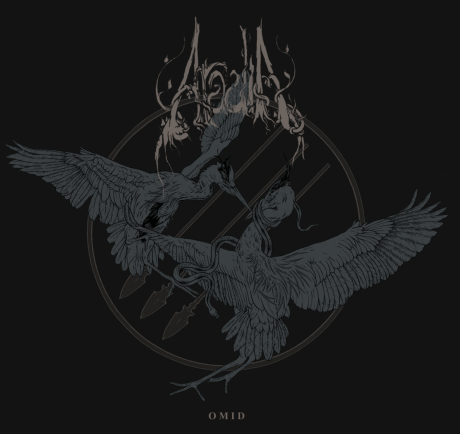
It is quote from anarchist sci-fi writer (and Portland resident) Ursula Le Guin that the neofolk/dark folk/genre bending band Aradia starts their epic album Omid.  Carried by a driving tension built by strings and backed by prominent drums, Aradia drops you right into a sound that feels much more lyrically and conceptually present than a lot of the neofolk bands that do their best to stay in the background.  The cello plays its own character in Aradia, one of the defining features of neofolk’s drive to bring back orchestral instruments into a rock formation (maybe this is what post-rock was always about).

The intensity of the strings almost lends itself to metal, but the acoustics of its draw more on contemporary strings with a meloncholy edge that has to be seen live.  We were able to interview Brenna from Aradia’s current line-up and talk about the band’s history, where its influences come from, and its commitment to militant anti-fascism.

How did your band come together?

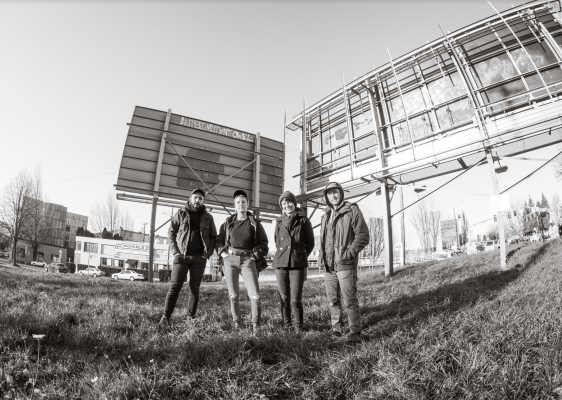
Wretched of the Earth and Strangeweather played a show together to benefit the Law and Disorder conference…I believe. At the last Red and Black cafe on SE Oak (A former anarchist co-op coffee shop that is no longer around). At least from Strangeweather’s perspective, we were really pumped to meet WOTE and hear what they were up to. I remember telling Sean, the bassist, they sounded like Warscroll, a band I love. Shortly thereafter Angel and Sina got in touch with me about trying out some cello on their new “ambient metal” project. We’ve played in lots of different configurations over the years. Right now there’s only two of us, there’s been a total of seven people involved through the life of the band.

Does spirituality play into your project?

For me music is spiritual, it engages a part of our beings that is really ancient and complex. It’s an old way of being with other people in a spiritual way, singing together and making sounds together. A lot of the political content of what we write is definitely spiritual. We sampled Audre Lorde talking about her death and about what we leave behind, who we have been in the world as artifacts. To me this is all tied into a spiritual way of looking at struggle.
What bands inspired you in doing the work?

Submission Hold, Warscroll, Godspeed You! Black Emperor and A Silver Mt. Zion, Esmerine, Emel Mathlouthi, Correspondences, New Bloods, Des Ark, Buried Inside, and Fall of Efrafa,

How did you develop your sound, and how do you define it?

It’s always been really collaborative. We’ve sounded pretty different depending on who has been playing with us. At this point I think it’s basically experimental arrangements for guitar and cello. Our last album had some dark folk moments, some anarcho-punk moments, some minimalist metal moments…our first album was a little more d-beat leaning I feel. I think that had to do with our line up at that time. We’ve always been influenced by various traditions of music such as Balkan, Persian, Middle-Eastern, Armenian, Celtic, etc.There was a time I thought our string arrangements could be classified as “romantic” in the musical sense, but our very musically educated viola player Maria informed me that they were more accurately described as “contemporary.”

How did the region you were in (the Pacific Northwest) play into your music?

There’s a long history of grunge, riot grrl, punk, and other DIY music in this region, and that’s a big part of why many of live here or what brought us here years ago. One thing about being in the NW nowadays is we get paired with with metal, “apolitical” neofolk, and/or post rock bands. This has been challenging as our political grounding is more in the punk community, and we’ve gotten a lot of feedback that when we play these kinds of shows they don’t feel accessible to everyone.

Anticapitalism is right up front in your tracks, including in the samples used, why is that so present?

Well, it’s a force of crushing oppression in our lives, in the struggle of the planet and the human soul,  and art arguable should shine a light on what’s keeping us down. There’s a lot of apologism for capitalism in our culture and I like normalizing the open acknowledgment of it as a major problem. That being said, we know it can come off as a trope. I think most of us who have been in the band came from an anarcho-activist background of some kind so it comes naturally to frame things from a place of anti-capitalism.

There seems to be a strong spirit of resistance in the music, not just lyrically but in the way that folk music is made so vibrant.  Do you see this project as inherently tied to politics, or collective liberation?

We hope so. I recognize the tendency to conflate being in a political band with actual activism, and I think it’s important to see that they are different. BUT the way you move through communities, the types of shows and benefits you play, the kind of spaces your music creates, the projects you lend your sounds to, that all factors into being part of a musical and political community. For me, at the end of the day, Aradia is a music project and we hope to inspire folks who are in struggle. Knowing the role music has played for me personally in developing political consciousness makes me believe that it can have an impact.

There is a huge variety, it moves from frenetic synth inspired tracks to very slow and plotting melancholy sound, do you feel like you are constantly reinventing your sound?

We write really slowly so it follows that over time, as our line up changes and what we are listening to at the time, our sound changes.

What drives your commitment to antifascism?  Have you experienced a lot of white supremacist attitudes in the pagan and neofolk scene?

I think realizing how flirtatious the white metal-centric music scene in the PNW can be with fascism made us want to be more out about our politics, especially when we were put on bills with people who we felt were sketchy. We don’t really roll in the neo-folk/pagan scenes, but because of the cross over with my other band Strangeweather that was more present in that scene, we have ended up playing some shows with bands who are more in this scene. Sometimes it just seems like heavy music with strings in the PNW gets put into the neo-folk category, even when that’s really just not what we’re doing.

Our commitment to anti-fascism comes from our values and the historical significance of anti-fascist movements.

Why do you think it is important to be a publicly antifascist band?  How does antifascism inform your music?

In today’s world I’m not sure how anyone could justify not being antifascist. To me it seems like lots of people thought antifascists were self-important hyperbolic social justice warriors, and then events such as August 2017 Charlottesville, VA started happening and suddenly folks knew what the fuss was about. And it is connected to a long history of struggle against real threats that still exist…in terms of music I guess I hope we inspire the parts of people that defy that authoritarian, coercive, xenophobic current that leads to fascism….
 

a2559314379_10

What other social issues play into your music?  There is a strong sense that rebuilding community, something more bonded, in your music.

It’s cool to hear how much meaning you’ve gathered from our music. As political as we are as people I think a lot of what we do is very aesthetic too, not in a shallow way but in a nerdy, emo-artsy way. We have written material about the micro/macro cycles of despair and hope, as well as solidarity with displaced peoples.

What’s coming next for you?

We are doing a short tour in UK, Netherlands, and Belgium in June. We are hoping to release a recording as a two-piece in the next couple months.

What other bands do you recommend for antifascist neofolk fans?

All the bands I listed above. Disclaimer that I was never that into neo-folk: A Stick and A Stone, especially their album The Long Lost Art of Getting Lost. Cinder Well‘s latest album The Unconscious Echo had some heavier moments. Byssus, a new project out of Santa Cruz, CA.  Anna Vo. Also Crone, a short-lived crust-metal band from Minneapolis circa 2015.

***

Aradia currently has two albums on Bandcamp, 2018’s Omid and their 2015 4-track demo.  Unfortunately, Aradia is not yet on Spotify so we can’t add them to our Antifascist Neofolk Spotify playlist.  We are putting both Aradia albums below and are looking forward to the new release coming this year!

59391456_2237301476599918_2126454710729703424_n

Kimi Kärki Is Creating Acoustic Simplicity in the Face of Authoritarianism [INTERVIEW]

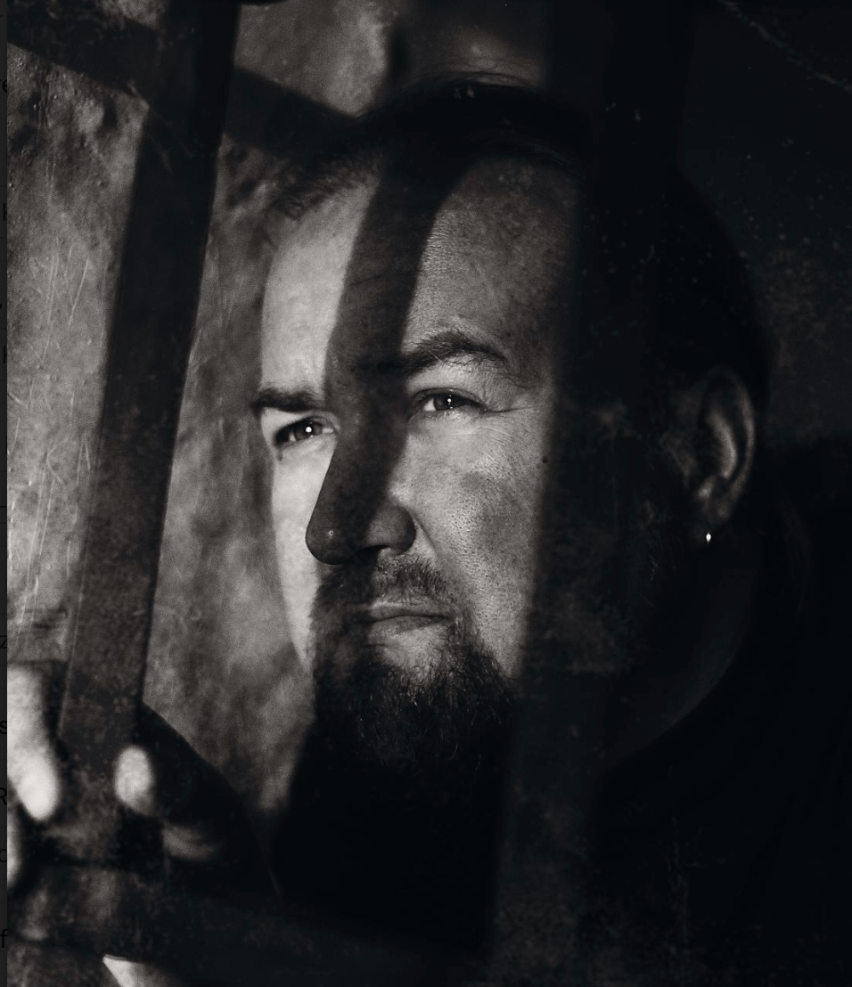
Kimi Kärki is a giant in the shifting world of post-industrial music, but his real name is coming forward now with the new solo project.  His influence inside the world of doom music extends internationally from its Finnish roots, and though he has been in so many different projects (many of which you will see in later features here), Lord Vicar is what comes to most people’s mind.

Now he is looking inward with his solo project, breaking away from the layered sounds he is regularly known for and sides with minimalism.  The depth of lyrics make sense given his academic background, but his focus on confronting rising authoritarianism is what really put him on our radar to begin with.  He sets his sites on religious fundamentalism, political totalitarianism, the collapsing climate, and the far-right shift that has happened across the West.

In our interview with Kimi Kärki we dive directly into his new album, how he developed his solo sound, and what it means to be an antifascist in this contentious music world.

Screen Shot 2019-05-12 at 11.26.11 PM.png

***

You have been incredibly prolific over the years, and your music has been equally diverse.  How did you first encounter music?

When I was a kid I would like the more epic intro tunes of television programmes, and record them for myself with a tape machine… kind of taking them out of their audiovisual context. I simply loved the epic quality that combines layers and melodies. I would listen to Vivaldi’s Four Seasons when I went to sleep, every night. I guess my interest in narratives and cinematic feel in music, even conceptual thinking, started already there and then, around the age of seven. A classmate played me rock music, and there was no turning back. Now these things, and I should also mention a certain melancholy, runs through all music I have made, with bands like Reverend Bizarre, Lord Vicar, Orne, Uhrijuhla, E-Musikgruppe Lux Ohr, and the acoustic solo albums. Diverse genres from doom metal to prog and pop psychedelia, but with similar heart.


How did this most recent solo album come together?

I have now done two, The Bone of My Bones (2013) and Eye for an Eye (2017), both with the Finnish independent label Svart Records. I recorded both in my hometown Turku, in Finland, with producer Joona Lukala at Noise for Fiction studio. I used to incorporate a lot of acoustic passages in my earlier more band driven music, and Svart suggested I should do something more with that. At the same time, I had already written some original songs. I was playing some of that stuff in studio while making the second Orne album Tree of Life (Black Widow Records, 2011), and the drummer offered me a solo gig at the local info shop/activist book café. Then a promoter in Dublin heard about that, and I played my second solo gig there at a basement of a record store. Good start. In 2012 I was invited to do a few shows in Italy, and closed a doom metal festival in Parma with an acoustic gig around 4 am. Doing this kind of singer-songwriter material felt natural for me, I had always written music with an acoustic guitar, and loved the acoustic albums of Leonard Cohen, Neil Young and Nick Drake, to mention three. Music driven by strong and simple melodies, but as much the quality lyrics. Lyrics have always been an important part of music for me.


These last two albums feel much more stripped down than your projects before, why did you decide to go so minimalist with these albums?  How do you define your music now?

That was the idea, to strip it down and explore that side of the music where you cannot hide behind a wall of sound. I loved what Rick Rubin was doing with the production of Johnny Cash for the American Recordings, going to the very core of the songs, pure minimalism with the arrangements. I felt a strong need to do this kind of ”naked” encounter also live, to put myself in a test — could I touch the feeling of the listeners in this very primitive way of musical storytelling? My music is still the same, but the songs get directed to different bands and genres very naturally, their context change. I have sometimes also ”covered” some of my more mellow band driven material in my solo gigs.


There is a strong sense of narrative in your music, a kind of songwriting storytelling.  How do you consider your lyrics, where do they come from and what themes draw you?

I am really interested in myths as a form of intuitive form of transmission. Symbols, words and stories have power that open us to the world, and this was especially true in prehistorical world, but also now. This power can be used for good and bad purposes. My writing is based partly on dreams, subconscious flow, my own experiences that I felt had a more universal resonance, and the history. I am interested in the things that shape us as people: love, hate, longing, the pursuit of happiness, loss, violence, cruelty, kindness, spiritual growth, the nocturnal world.


What bands inspired you in doing the work?

The already mentioned storytellers mostly. Also the more subtle moments of bands like Led Zeppelin, The Who, Black Sabbath, early Genesis with Peter Gabriel, Pink Floyd… Musically my acoustic  material floats also within the long tail of storytelling, between American folk and outlaw country, but also Celtic folk heritage, and perhaps a touch of Finnish melancholy. I do listen to a great variety of genres, and it’s sometimes difficult to pin down where an idea comes from.


There is a strong spiritual center to your work, but feels like a walk along a path rather than driving from a spiritual home.  Do you identify with paganism, like a lot of people in the genre?  What has that meant to you?


I would define myself as an agnostic who has an endless interest in religions from the research perspective. I am a pagan only in two senses: I am not a Christian, and I tend to get spiritual experiences in the nature. But I also consider my martial arts training in Aikido to be a form of strong mind-body spirituality. Some claim it’s a form of meditation, moving Zen. To be historically accurate, it comes from Omoto-kyo neo-Shinto.


Why do you think it is important to be a publicly antifascist band?  How does antifascism inform your music?

I have two children, and the future looks bleak… In this era of rising populism it’s extremely important to remember what happened in the 1930s and 1940s. The last thing we need now is egomaniacs, dictators, walls and violence. We should be thinking globally, as we would have means to solve the problems with education, more equal distribution of wealth and rapid advancement of green technologies. But I don’t see it happening fast enough… Melting polar permafrost will release more methane and speed up the global warming. Next there will be lack of food and drinkable water in many areas inhabited by millions of people. Rising sea levels, mass migration…


What other social issues play into your music?  There is a strong sense of countering extremist religious oppression.

Well, it all comes back to the future of this planet. We either find ways to fix our problems, coexist, or leave everything to cockroaches. The right to exist, right for education, obligation to learn empathy. Otherwise it’ll be a slow decline into the night. I really don’t see religious extremism as an answer yo anything at all…


What’s coming next for you?

Just finishing a tour with Lord Vicar, typing this between the cities. We just released our fourth album and will be playing more live shows for it… slowly writing new material for my different musical outfits. I work as a researcher at University of Turku. My current professional project is funded by the Kone Foundation, and I am studying the cultural history of Artificial Intelligence, how it has been portrayed in popular culture, and how speech works as an interface. Talking Machines…


What other bands do you recommend for antifascist neofolk fans?

In Gowan Ring/Birch Book… if there ever was a loving hippie in that scene, it must be Bobin ”B’ee” Eirth!!!

We are putting a few tracks below from his Bandcamp, and will be adding several tracks to the Antifascist Neofolk Playlist, so make sure to follow it!

Sangre de Muerdago’s Galician Neofolk is Resistance to Spain’s Fascist History

Screen Shot 2019-04-28 at 10.37.04 PM.png

Neofolk branches out in such a multitude of sub-genres that there is no singular “scene,” but the bands are bound together by rootedness in folk tradition and its revival from the modern stage.  English speaking and Western European acts, defined by bands like Death in June, are often used as the best example of neofolk, but there is a wider musical world focused more concretely on traditional sounds and the use of folk traditions for far more than just nationalist romanticism.

Since we started A Blaze Ansuz, Sangre de Muerdago has been out most requested ban, and their reputation is so large it almost feels insulting to describe them so briefly.  A Galician Folk band from Galincia region of Spain, which borders Portugal on the northwest side, Sangre de Muerdago has become a giant of independent neofolk, touring worldwide with their soft brand of regional music that is haunting in its lyrics and acoustic persistence. As a way to counter modern technological society, Sangre de Muerdago revives traditional instruments like classical guitars, nyckelharpa, flute, celtic harp, occasional percussions, into something new and patient,  calling back a distant memory of culture based on family bonds and the centrality of the home. Anarcho-punk is where the band finds its roots, they play with those bands often and share members with that scene, and so while they resurrect a very different sound, that anarchistic spirit is on stage with them.

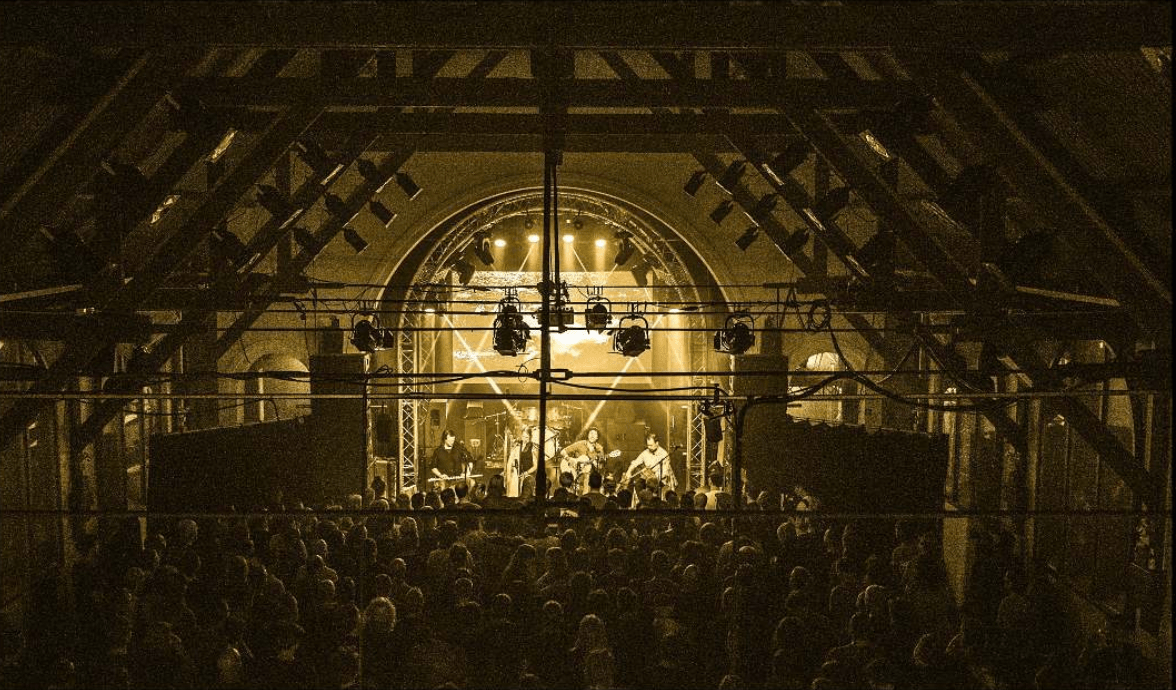
Sangre de Muerdago revolves around front-person Pablo Ursusson, and the band has had shifting line-ups over the years.  Each song has such a crafted feel, such quiet love and shifting instrumentation, that it has to be the collective voice of the entire band  Sangre de Muerdago, which translates to “Blood of Mistletoe,” is also known for its international appeal, traveling worldwide and collaborating with other artists.  This creates a range of venues, from black metal festivals to seated opera halls, and their appeal has gone so far that they are internationally recognized as champions of folk music.  Many of their collaborations have become legendary, such as with Tacoma, Washington neofolk band Novemthree, and their genre defining sound has made them the most dependable features of the neofolk scene since their 2007 debut demo.

Their most recent album Noite, released on April 26th of this year, is in full form, calling to a dream of your “true self.” Singing is sparse when there(so is any percussion), and they choose to avoid English in most cases to buck the trend of European neofolk bands appealing to English speaking audiences.  Part of this focus on Galician language is a form of cultural resistance to the Franco fascist dictatorship, which limited the language and narrowed its availability.

Screen Shot 2019-04-28 at 10.34.46 PM
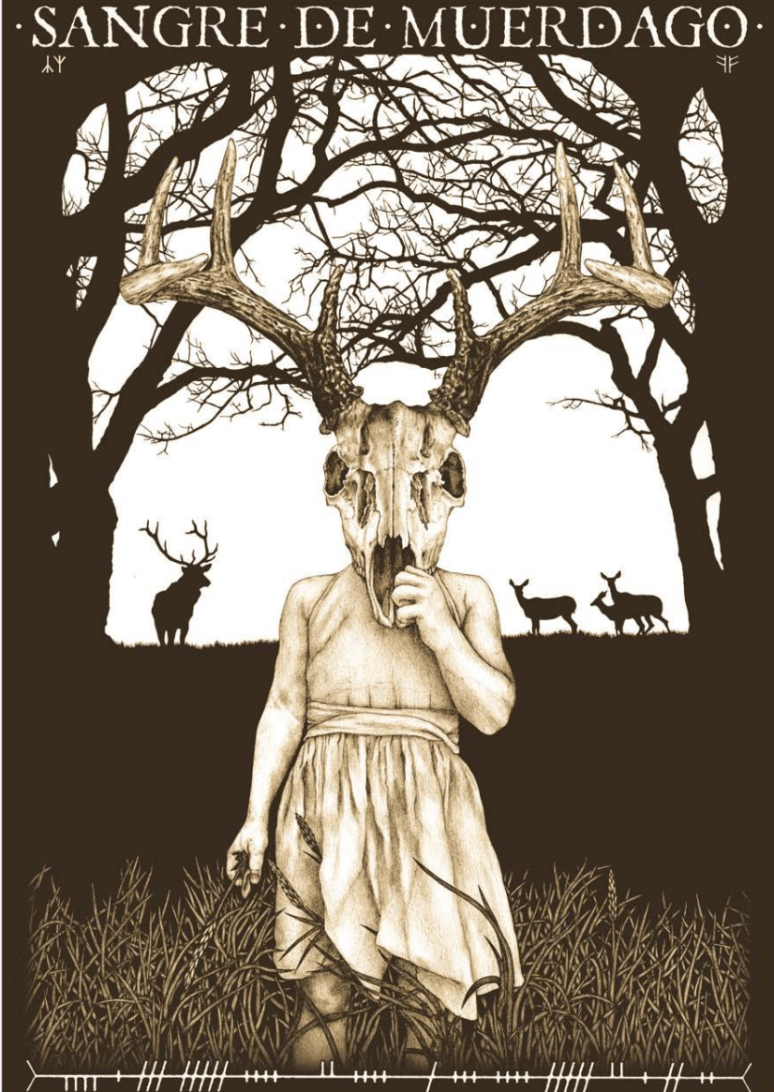
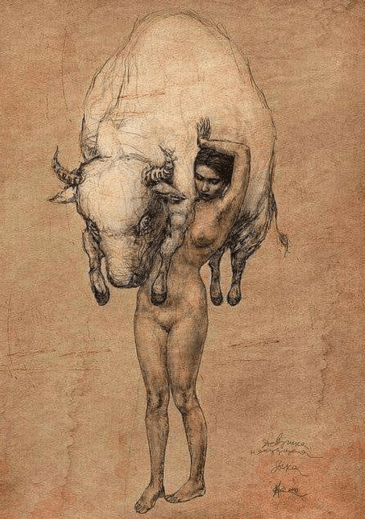
A painting that the band posted online with a message of support for women fighting oppression.

My reason to speak and sing in Galician is that to sing this music that I write from the depths of my heart, this is the deepest way I can find to feel it is singing Galician. I don’t think I would feel the same way about the songs if I were to sing them in English, or Spanish, for example…The language was very damaged during the dictatorship. Brutally damaged. All the teachers from Galicia were sent to other parts of Spain to teach in Spanish and Castellano. And then they would bring teachers from the south and other parts of the country to teach the Galician kids in Castellano. And all the smaller languages spoken in other areas like Basque, Catalan, or Galician, suffered a lot.

These Galincia poems on love, death, and history draw on that almost lost tradition, and the DIY approach of Sangre de Muerdago is meant to recapture something organic from the community.

The lyrics of Sangre are very melancholic, and they long for something, but they always intend to empower people. It’s not like a desperate cry. We all have sorrow, we all have sadness, but we have to somehow process it, and then make it our fuel. It’s something that keeps my head busy

With this Pablo Urusson acknowledges that Galician music has always been political, a way of using regional autonomy to fight off the forces of the far-right and imperialism.  This is similar to the left-wing elements in Catalonia that have resisted both nationalism and the overarching militarism of the Franco dictatorship.  They are amazingly open in their support of left-wing revolutionary movements, particularly the struggle against patriarchy, 

[F]olk music in Galicia has always been political. Galician folk music became the music of people against the empire and against oppression. For centuries—against the Roman Empire, against the Spanish State, against so many things. So somehow the punks in Galicia are very into folk music.

Galincia’s music didn’t survive without an open revolt, and Sangre de Muerdago is continuing the revival of a tradition that is usually passed between the hands of family members and is alive in the moments when the community finds itself in the relationships it builds;

Lyrically, Sangre de Muerdago is committed to liberation from the mountains of Spain, something they have found in common with other anti-fascist bands like Panopticon and Dawn Ray’d, who they have shared the stage with at places like the Roadburn Festival.  When they take the stage the audience drops to silent attention, and a dark oasis is formed where they can finally be vulnerable.

From Sangre de Muerdago’s Instagram

We are putting a few albums by Sangre de Muerdago below and we have added several tracks to our Antifascist Neofolk Spotify playlist and check out the other Bandcamp tracks here.

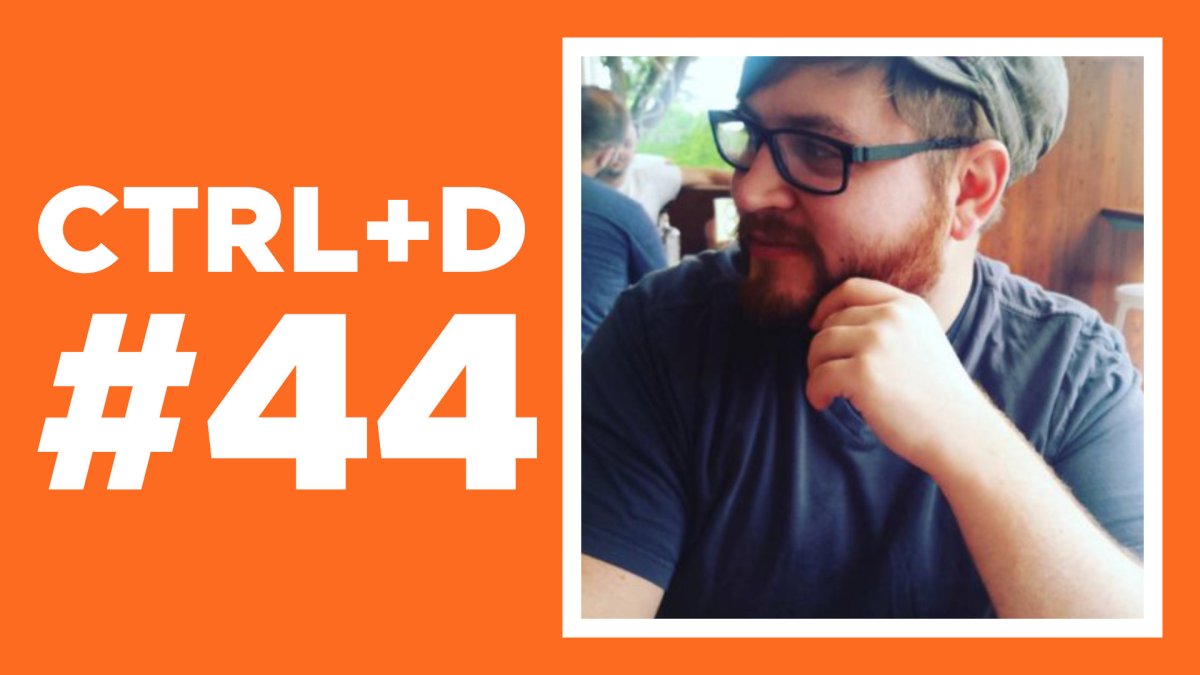
Neofolk Against Fascism (CTRL+D Podcast)

Check out this episode of the CTL + D, which does a lot of episodes regarding technology, gaming, history, and a range of other topics.  They wanted to jump right into the story of neofolk and black metal, and their status as a “contested space.”  This gets to the heart of what A Blaze Ansuz is, building our own space both to create a home for ourselves musically and to effectively combat the “cultural struggle” of the far-right.

A conversation with Shane Burley, author of Fascism Today and founder of antifascist neofolk blog A Blaze Ansuz, about the present day effort of antifascists to break neofolk and black metal’s ties to the far right.

If you want to know more about the initiative, you can visit A Blaze Ansuz, and follow the blog, as well as Shane himself, on Twitter.

Also, don’t forget to give The Antifascist Neofolk Playlist a spin. 🙂

+ TIME (2019-04-12): White Supremacists Have Weaponized an Imaginary Viking Past. It’s Time to Reclaim the Real History

P.S. Apologies for the light audio glitching.


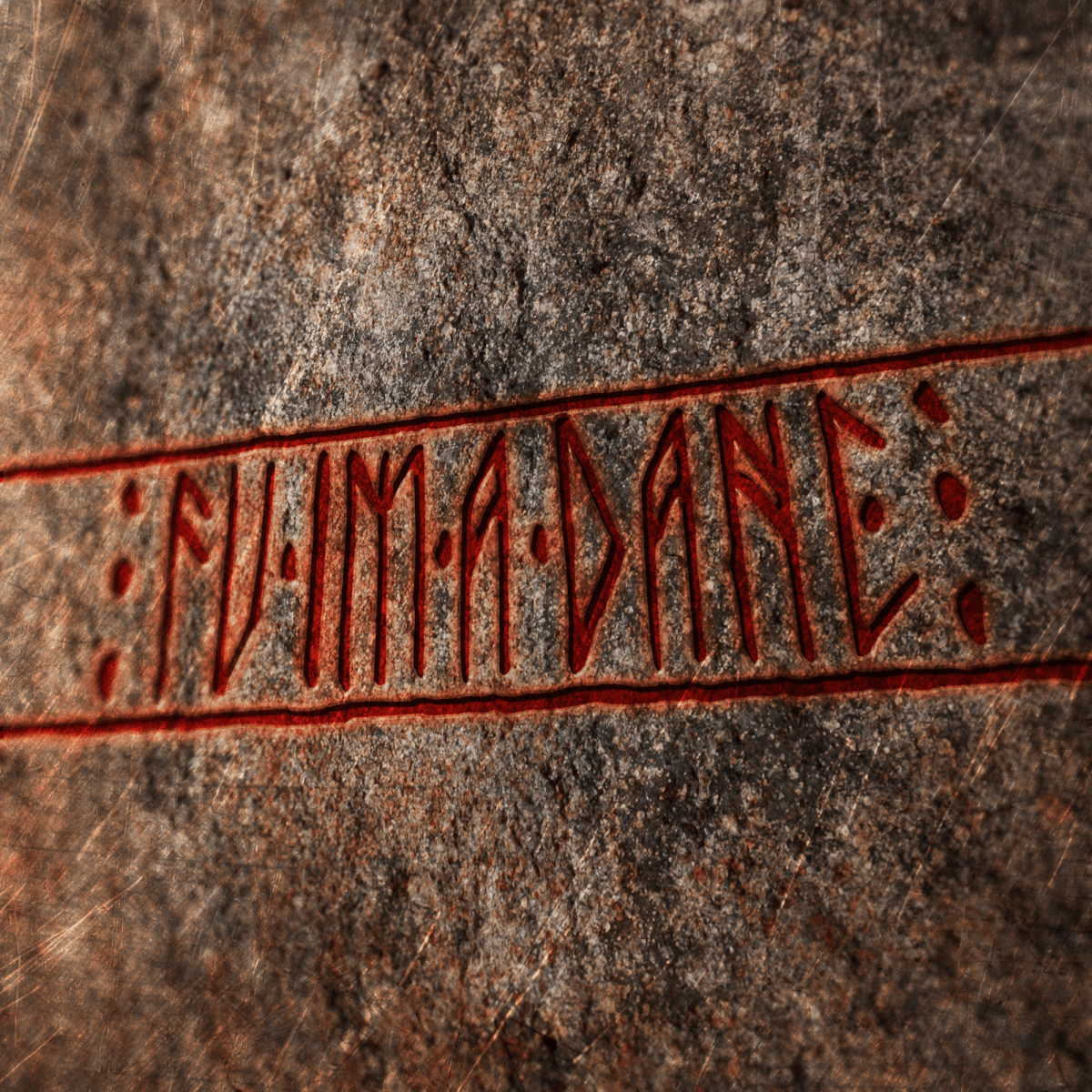
Into the Heathen Past: An Interview With Fuimadane

There is a growing scene often referred to as Nordic Folk, neofolk and neo-medieval music inspired heavily by Heathenry and the Viking history of Nordic culture.  This is a particularly volatile battleground because of the Nazi appropriation of Nordic Paganism, and this is why bands in this genre are often speaking out so openly.  This is particularly important since Nordic Folk rarely moves into contemporary politics, so we need to be able to create a scene where no tolerance for the far-right is made explicit.
When we came to Jon Krasheninnikoff Skarin, the man behind the Nordic Folk project Fuimadane, about doing an interview, he was more than excited.  Rarely is being open as an antifascist something that brings cache is neofolk circles, and he wants that to change.  Even though Fuimadane eschews any politics in the music itself, as an immigrant he knows how essential it is to take a stand.  Fuimadane’s music really comes out of Skarin’s history as an electronic musician and feels like a beautiful and evolving synthesis between a whole range of post-industrial music, from classic folk instrumentation to ambient synth-drone.
How did your band come together?
I started out making music in different genres before creating Fuimadane. Originally creating electronic/techno tracks for the entertainment of my family and friends, I later discovered my love for the medieval/folk/viking age genre. This ultimately lead to the creation of Fuimadane.
Does spirituality play into your project?
I do consider myself a very spiritual person. Ever since my teenage years, I have suffered from several mental illnesses. What I found always helped me through that difficult time in my life was being able to focus or connect to spiritual energy, finding solace in nature. It has become a big part of my life and who I am. So, yes, it really does.
What bands inspired you in doing the work?
My friend Mike Olsen, who you might know as Danheim, has always been a big influence on me, as well as my other brothers from Fimbul RecordsGealdýr, Rúnfell. Other bands that inspire me are Heilung, Corvus Corax and Wardruna. Anything that blends medieval, folk, viking age or ancient music with modern techniques and styles feels very powerful to me.
How did you start to develop your sounds, and how do you define it?
I started my music career as an Electronic music producer because of my love for 90’s Dance / Trance music. It had such an impact on me that I wanted to create a style like it myself, so I taught myself how to create music with the few means I had. It wasn’t until I discovered medieval and folk music for myself that I slowly started to blend genres together in a more serious way, specifically seeking out Instrument- and SFX Libraries that I feel would fit the genre. Neo-medieval music with a Classic-Modern style and “arrangement” is what I would call it now. Not too complex, but drawing influence from both genres.
There seems to be a strong spirit of resistance in the music, not just lyrically but in the way that folk music is made so vibrant.  Do you see this project as inherently tied to politics, or collective liberation?
I try my best not to let political views influence my work, though I acknowledge that any form of art, particularly the one targeting something as previously tainted as the Norse ideology, can never really be separated from politics. At least not in the mindset of those who consume it.
The only conscious involvements of politics I’ve ever displayed on any tracks of Fuimadane are tracks that have historical influences, for example tracks inspired by the times when Danes turned from Heathens to Christian. My latest album ”Kominn vel á sik” for example begins in a church, and from there starts reverting back to something more primal. A musical manifestation of my take on returning back to the old ways. Heathen/Pagan life is certainly part of what inspires me, but I hope my music can be enjoyed regardless of who the audience views is.
There is a huge variety, it moves from frenetic synth inspired tracks to very slow and plotting melancholy sound, do you feel like you are constantly reinventing your sound?
I am always on the hunt for new ways to convey certain feelings and emotions, but finding something that feels right always depends on my own mood. There are certain recurring themes I want to incorporate in each album – a very emotional Track, one that’s very granular, an epic orchestral one – and so on. I try to keep these ”molds” very vague and not recreate the same sound every album, but the outcome will always depend on the mood I’m in as I compose them. At the end of the day, whatever feels right to me will be what I release.
What drives your commitment to antifascism?  Have you experienced a lot of white supremacist attitudes in the pagan and neofolk scene?
Yes, I have been subject to their hate for being who I am – many telling me I am not ”dane enough” because of my Russian ancestry. I don’t tolerate racism or white supremacy around me, in any way or form, I don’t actively try to pick an unsolicited fight with them. I have a simple rule: If I open my doors for you, behave and respect my home and family.
Why do you think it is important to be a publicly antifascist band?  How does antifascism inform your music?
History is a huge influence for me, and it is very important to me to know what or where we came from. My music has focus and inspiration from the Heathen traditions and Pagan style, but I also try to be very inclusive of other ethnicities, hence drawing inspiration from many corners of the world – all over Asia, Russian, Native American and many others. Limiting oneself to just one style is like limiting oneself to one mindset, very conservative. There is a time and place for honoring one’s roots, but if that means compromising another person from honoring theirs, then that’s wrong.
Music is a universal language, and everyone should have the right to feel, experience and enjoy it.
What other social issues play into your music?  There is a strong sense of a need to a return to a cyclical, grounded way of life in communities.
Indeed, I believe that in the past we were much more connected in tight knitted communities. Until the greed of mankind altered faiths and believes for there own benefits. Now its all about money, and we teach our children at an early age already that they need a good job and education to be able to afford a good life. I don’t believe in that. What I believe in is that you are the one forging your own fate. Find what makes you happy, what feels right to you and pursue it. Don’t just live and work to pay the next bill. Enjoy life to the fullest, and have fun doing what you do. I think that’s one of the things I want to express with my music.
What other bands do you recommend for antifascist neofolk fans?
Heilung, Danheim, Corvus Corax, Rùnfell, Gealdýr and Wardruna.
We are putting several Fuimadane tracks below from their previous releases available on Bandcamp, and are also adding three Fuimadane tracks to our Antifascist Neofolk Playlist on Spotify.

Sparrowhawk’s Brief Life Is a Milestone in Antifascist Neofolk

In this intersecting world of hidden genres, projects come and go, sometimes in only a brief instant.  We are trying to unearth some hidden gems in the world of antifascist neofolk and to bring something original, not just major bands that stand against the far-right, but also from a DIY neofolk scene that is under documented.  Sparrowhawk fits this definition perfectly, an ensemble that came together for just two legendary tracks.

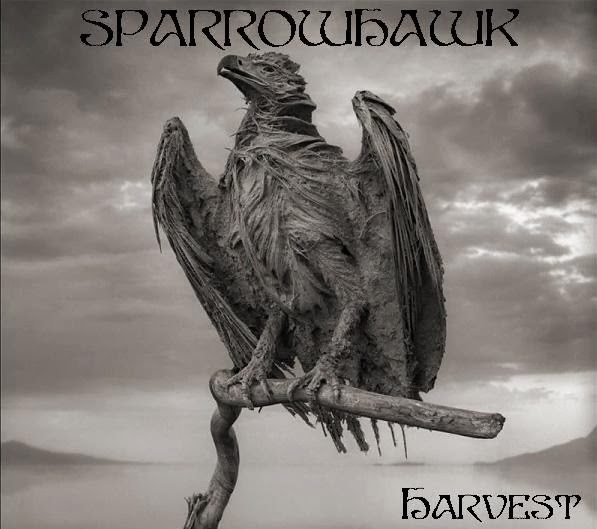
We first discovered Sparrowhawk on the Red and Anarchist Black Metal blog, dissidents from the rest of the music featured.  Their two-song EP Harvest acts both as a demo and a coming out party, but the musicians involved moved on quickly after this 2013 debut and we have yet to hear anything new.  Started by members of Nuwisha and Plantrae, it is a three person collaboration that they say began “in the majestic Siskiyou Wilderness in the autumn of 2013. Rowan WalkingWolf ( Walks-With-the-Wind of Nuwisha), Zacharias AElfston (of Plantrae), and Ursula are pleased to bring you this symphonic soundscape of Cascadian folk.”  The influential (but microscopic) “cascadian” scene brought in other bands we have profiled, like Ionncaish.  vocals entirely, instead treating their instruments

The music starts with the sound of rain and sets its own pace, never rushing, relying on plucking acoustic guitar for its texture, while the violin really drives it forward.  Both tracks, “Siskyou Malaise” and “Starlit Fires, Surrender the Equinox” are both long and slow, but even though the sound is stripped down to acoustic instruments playing off of each other it stays incredibly emotive and completely blots out whatever is around you.

In Sparrowhawk’s brief moment of life they also did a split cassette with Skalunda, which you can still pick up on Bandcamp.  It is this world of small issue splits that still helps neofolk to build up a cult following, something the band planned for from the start.  The passionate complexity of Sparrowhawk’s brief collaboration makes these songs instantly classics in our canon, and they deserve to be pulled from out from the past to give it the recognition it deserves.

We are embedding the EP here, and because it was such a brief project, we were not able to add any Sparrowhawk songs to the Antifascist Neofolk playlist on Spotify.

Sieben Has Created the Anthem of Antifascist Neofolk

In the entrenched world of neofolk, it takes a unique commitment to an individual vision for the solo-project Sieben to have stood against the far-right for this long.  Sieben is the work of musician Matt Howden, who is also behind the independent record label Redroom Records.  Howden has always described Sieben as “one-man rawchestra” with a heavy focus on layering samples into a collage that builds on itself over a songspace.  This is how we can best describe Sieben, as a musical painting that builds on its presence in a cycle of invention that you rarely find in an ensemble built on live performances.

In his new album, the rage-tinged crumbs, gets into his anger over the current state of Britain, primarily racist fake news, massively growing inequality, and the toxic xenophobia of Brexit.  

“Do you want crumbs from the rich man’s table?”

“A hundred men with half the world’s wealth is a sickness.”

The title of the album comes from “Crumbs from the rich man’s table,” and it is this rage about the xenophobia employed by the rich to exploit Britain’s working class that creates both the moral and passionate center of the album.  crumbs develops a looping tension that builds up steam, a feature that is common to Sieben’s entire catalogue, and with the shorter tracks it avoids the potential emotional burnout.  This makes sense for an album on a mission, one that forgoes the fluff so it can get to the heart of the matter.

The lyrics for the track “Liberal Snowflake, “a reference to the common insult of leftists by the Alt Right, make it clear what Howden sees as important.

Thought I’d just lay down some basic ground rules, being that all I’ve done is moan so far…Treat all people fairly. Men and women respected the same. Be kind, decent. No poor. None with less than enough. No shareholder, but all. Let there be rich, that do not flourish on the backs of others, nor nature, nor resource. None with more than one hundred times another. Beyond that, fund a sustainable world; water, food and power for all. Nature respected. The Earth, our home. Breed less, consume less, work less, play more. No war. A million tribes and no tribe, but all. No religion but our better nature. Defunct practice dropped, the true root embraced: Good thoughts, words, actions. Laws that enshrine these, minds that do not seek to circumvent these. Break the destructive pattern of humanity’s history. Harness our collective drive and will, our life force, our creativity. Sustain and build a world that truly works. Develop ourselves. Explore the stars. As one tribe, our limits are endless.

Brexit plays its own character in crumbs, which Howden clearly sees as a rightist disaster.  In “Sell Your Future” he lays out what the working class has been asked to do with Brexit, to sell out their dreams for petty nationalism

Leave guns and morals by the door. Here’s a heart, a spleen, a Brexit-ear in which to scream ‘sell your future’. Roll up, roll up, for cut-price stock. Govern-less, and out to hock.

Sieben’s motivation strays as far as possible from that of the obsessive and destructive nationalism of bands like Allerseelen and Spiritual Front, and instead rallies on a sort of left populism against racism and the ruling class, making it a universally left alternative to much of the scene.  He avoids a lot of the neofolk cliches (anyone want a Nordic sigil on the cover of a dark gray album?), which has allowed him to constantly reinvent his sound, moving from something more in line with the diffuse melodies of Fire + Ice (a Nazi band if there ever was one) to a sound that interweaves everything from shoegaze to darkwave.

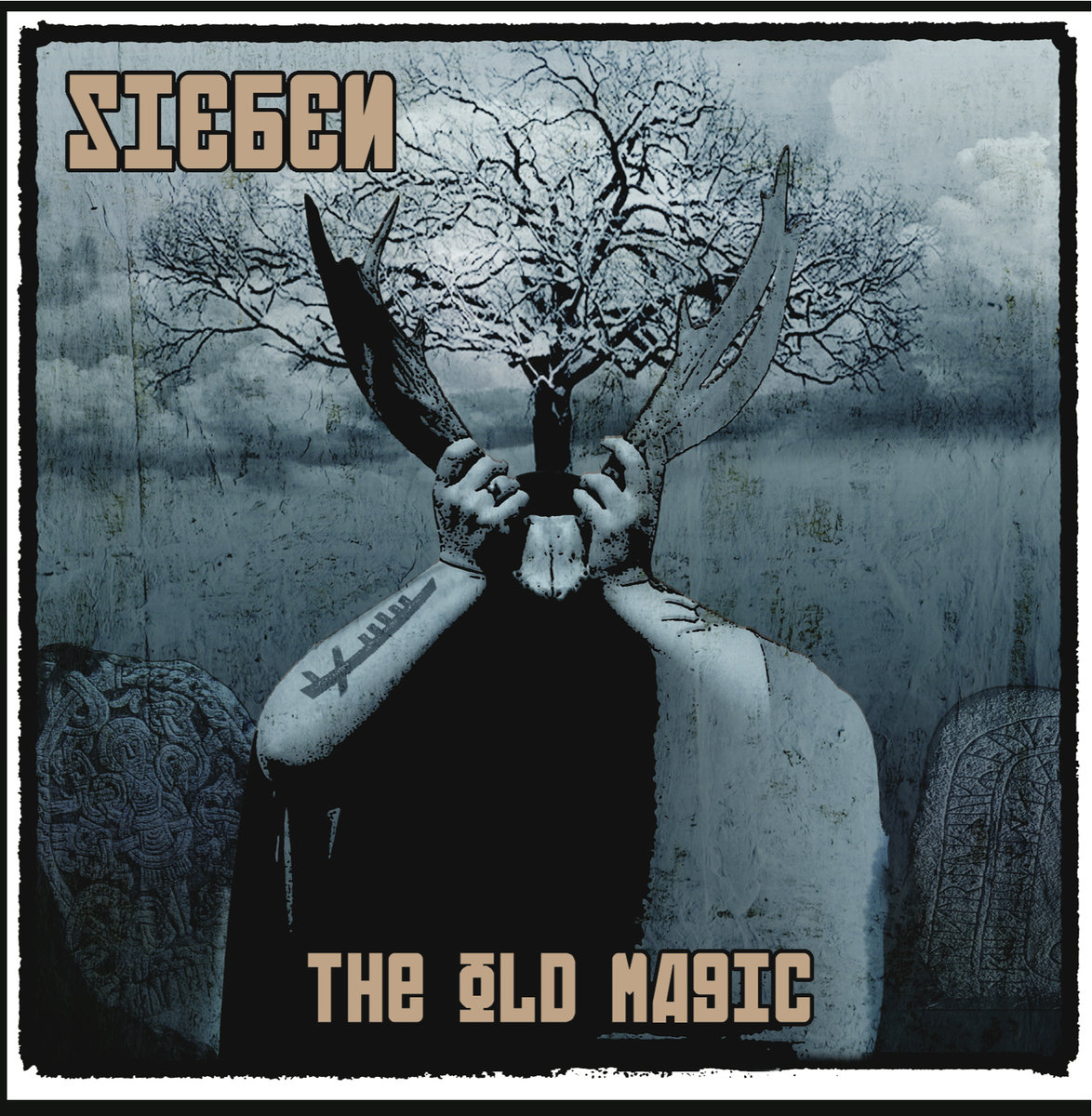
The entire breadth of Sieben’s work is impressive, with more than a dozen albums going back almost twenty years.  We are particularly fans of The Old Magic (2016), which draws on 90s shoegaze and alt rock and mixes it with a true-to-form neofolk, a synthesis that feels sometimes like Smashing Pumpkins trying to play Rome songs.  

Howden has been been quite open about his own politics, particularly in reviling the fetishism of “European culture” so prevalent in the scene.

What Sieben is best known for (at least in our scene) is their public declaration against the far-right in their folk drone anthem “Rite Against the Right” off of their 2007 album Desire Rites.  This song was an intentional provocation to bands like Death in June, who are obsessed with their own pretentious Third Positionism and Strasserite Nazi symbolism.

You sad bands,

you poor Nazi boys,

I hope you get a history book

or lessons in consequences

Licking the dregs of evil-

it’s feeble

You sad bands,

you poor Nazi boys Using symbols to shock

because your music is cock

Using symbols to shock because your music is piss-poor

Desire Rites may be the perfect neofolk classic album, baked deeply in the symbolic melody of ritual, magic performed for headphones and the kind of silent contemplation that is better when shared.

Sieben’s work requires a commitment and journey, and we encourage you to really dive in to what is an underappreciated grandmaster in the world of neofolk.  It could be his perfect commitment to his own vision, both personally and politically, that has kept him out of the mainline neofolk scene dominated by brownshirts.  We are putting several choice selections here, and have include “Rite Against the Right” above, and we have added several additional Sieben tracks to the Antifascist Neofolk playlist on Spotify.  


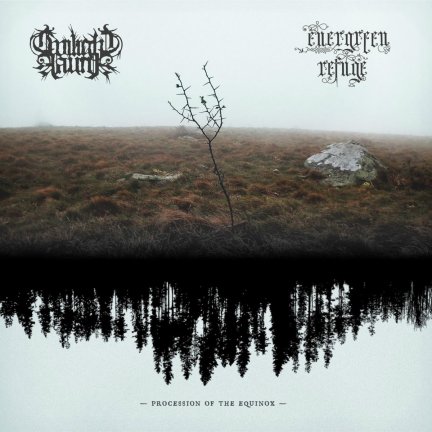
The Quiet Consumes You: An Interview With Evergreen Refuge

There is a world of neofolk music so indebted to subtlety and emotion that it almost sounds as if someone tapped in to the slow hum of the forest.  Within this world there is the trend towards the single-vision solo project, often done with intense introspection and a nod towards its own meditative quality.  The solo project is an often under-rated mode inside of genres, often seen as a “side project,” but it has the ability of really exploring the extremes in its lack of group compromise.

This may be why the project Evergreen Refuge resonated so much with us, because it does not seek to placate its audience.  Instead, the long, nature inspired tracks force the listener on a journey, longer than most, and with a lot of unpredictable mountains to cross.

We interviewed Evergreen Refuge recently about what really drove this incredible musical diversion from the norm, and how their radical animism and antifascist is at the heart of this solo journey.


So can you tell me how this project started?  Is this your first musical project?

Evergreen Refuge was born initially out of a desire to express feelings and thoughts I’ve had while in the wild and as an outlet for spirituality regarding nature. As with all music projects I begin, I also wanted to make music that I wanted to hear. It is not really my first project, though it’s certainly the first “fleshed out” project. My first foray into music was actually in much more of the electronic and ambient music world.


How do you define your music?  It is incredibly varied, sometimes ambient, sometimes uses folk traditional music, sometimes descends into industrial noise.

You know, that’s funny actually. Like you mentioned, Evergreen Refuge albums vary quite a bit in their “genres”. Though there is definitely a base of “black metal” throughout a number of them, I feel very much on the outside of black metal. I feel more, at its core, that Evergreen Refuge is an ambient project that incorporates elements of folk music, black metal, and post-rock.


The first thing that will strike people is the long, paced, songs.  Why have you chosen to do these long orchestral tracks?

The long songs are an attempt to invite the listener to be immersed within the piece. When I listen to music, I oftentimes prefer to sit down and give an album my full attention, when possible. Each album is supposed to offer some introspection or reflection for the listener, just as it does for me as the creator, albeit in a very different way. I also write music in this manner. Evergreen Refuge pieces are conceived as one track that has been created over the course of up to several months.


How do you think your project relates to the larger neofolk scene?

In the beginning I was definitely inspired by a handful of neofolk or dark folk artists, especially the ones that expressed a deeper connection to the natural world. Being somebody who has always identified with the more “pagan”/animistic philosophies, I was initially drawn to neofolk that had these aspects as well. In addition, There are some elements to what I make that could possibly be labeled as “neofolk”. It is a genre I have felt part of but not really, similar to black metal, like I mentioned previously.


I loved the collaboration with Twilight Fauna, can you tell me a bit about how that came together and what the goal was?

Paul has been a dear friend–hell, he’s been family–for years now. We have had a deep connection and have collaborated on a few things, including our project Arête. We kind of decided pretty spontaneously to do that split together. I believe the label that put it out, The Fear and the Void, first reached out to Paul about it. They wanted it to be their first release. Paul had this idea of making pieces kind of based around the changing season and how it connects to us. I had been meditating on the ideas that became the basis of my piece, “Light Seeker, Dawn Bringer”, since the previous yule and decided to channel that into the music. I have had a pretty firm stance on only doing splits with people that are good friends. This is for a number of reasons, but one of those is just that to me a split is kind of intimate. It’s an interesting way to forge a bond between two or more people, which I think was certainly true with that split in particular. 

Do you feel like antifascist and revolutionary politics runs deep in the music, if a little hidden from its outward face?

I am a political person and my art is deeply political too, despite it being instrumental music. Although my music may not express political messages per se, it’s almost always informed by politics in a way. A lot of musicians tend to shy away from revealing their politics or taking a stand these days, and I find this bothersome. I am not necessarily interested in telling people what to think, however I am firmly against oppression and I’d rather be up front about it in a way. I am not interested in having fans who are complacent in the oppression of the ones I hold dearly. These days especially, I think people need to be standing up for what they believe in. I guess if you truly believe in what you say, you ought to actually stand up for it.


Why do you think it is important to be a public antifascist musician?

Art is a breeding ground for politics of all kinds, whether people want to believe that or not. There is a tendency within black metal (and neofolk) circles to talk about being “apolitical” and whatnot, yet it seems more and more nationalists are drawn to black metal and neofolk. I think there’s some correlation here. People don’t seem to realize that the “apolitical” claim draws people with sketchy politics in because they can use it to hide behind. In addition, it’s not “just politics”. Some of the political views I’ve witnessed people having in circles like these have very directly harmful implications to the people I love. So, of course I believe in taking a stand on that. Because I believe it’s a real problem. It’s not role playing. People seem to forget that. And, like I said, neofolk and black metal circles these days are quite volatile politically. I have grown pretty tired of artists not taking a stand. These days, I am more drawn to bands that make a stand and am more likely to listen to a band that is up front about being against oppression. I know I’m not the only one who feels that way.


How does pagan or folk spiritual practice inform the music?

I am very guided by my own spiritual practices, and Evergreen Refuge is part of as well as the result of those practices. My beliefs fall in line more with animism and buddhism, rather than anything traditionally “pagan”, though it does fall under that umbrella in a way. I guess I am not at all interested in any worship of “gods” or anything like that. Each piece I do is the result of my own personal spiritual experiences but I try to leave it open for interpretation, so that others may connect with it in ways that are more along their spiritual path. Like I said, I’m not really interested in telling people what to think, per se. However, each album has a central meditation and I hope people spend time to connect with it in a way that helps them along their own personal journey. The world is so horribly sick finding connection with the earth and each other is incredibly important now more than ever. I hope my music can bring some light into this world.


What’s next for you?

I am always working on something, be it with Evergreen Refuge or the many other projects I have. I will say that I somewhat recently completed the recording of a new full-length. It is quite a bit different, being entirely acoustic and pretty minimalistic. I am extremely proud of it though and it definitely represents a new chapter for Evergreen Refuge. It will be some time before this sees the light, due to the fact that I just released a full-length on the equinox. I also recently completed a piece that I am very excited to share, hopefully by winter. It will be part of a split, I am hoping. But I won’t say much more about it just yet. Despite recently releasing the tenth full-length for this project, it is still very active for now. The future beyond that, as always, is uncertain.

We are putting several tracks from the Evergreen Refuge Bandcamp below, and included their collaboration Twilight Fauna above.  We will be adding tracks from the Evergreen Refuge/Twilight Fauna collaboration to the Antifascist Neofolk Playlist on Spotify!  Please add the playlist anyway, there are great newly added tracks on there and we will be adding more regularly.


Fighting for the Earth to Survive: An Interview With Ionncaish

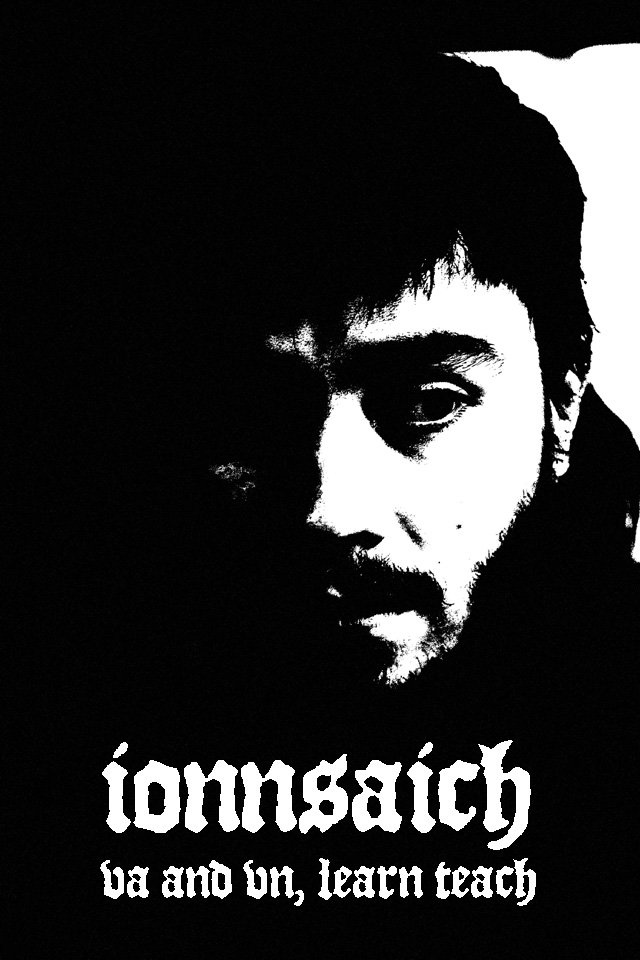
From deep in the cascadian scene, Ionncaish is a fascinating project that exemplifies how neofolk can draw directly from metal and a string of intersecting genres.  Ionncaish is a Scottish word for both “Learn” and “Teach” and it is well centered for a project that is about exploration, both of ourselves and of our connection to a planet that is on the brink.  We caught up with Ionncaish for a quick few questions, and to get into what drives them to do this iconoclastic project.

How did your project come together? Were you in any other bands before, or was this your first time recording?

I had been in a Doom/Folk band called “Black Mould”/”Skaldr” in Ashland, Oregon. When we broke up, I had a lot of material that wasn’t used. So I developed it and got in touch with my friend Ignat Frege and recorded it.


How does Scottish gaelic folk music and traditions inform your work?

My heritage is mainly Scottish. I had a huge fascination in the reclamation of the gaelic language and culture, that was eliminated by the colonizers. The word ionnsaich is Scottish gaelic for “Learn,” and in some contexts, “Teach.” Gaelic music had always got my blood running, kind of how a d-beats makes some people want to mosh.


What bands inspired you in doing the work?  Were you in touch with some of the Cascadian bands, like Nuwisha?

I was heavily influenced by the music coming out of Salem, Oregon and the Burial Grounds at the time. Artists on labels like Eternal Warfare and Woodsmoke would tour through southern Oregon a lot and one of my projects would always end up on the bill.

I had met Rowan once in a squat outside of Portland but was more friends with Icarus Valkyrie, who was featured on some recordings.


There are few bands that really come out with the fusion of soft neofolk and grinding black metal vocals, how did it come to you? How did you start to craft your sound?

I wanted to start a melodic black metal band. I had been messing around with open and drop tunings a lot. At the time I didn’t have the means to buy equipment. So I did without and just played my acoustic guitar.


Do you think the term “blackened neofolk” applies here?

It’s a way to put a label on it.  I think the blackened part has to do with the riffs and vocal style. I think the neofolk part comes from the lyrics and solo guitar playing.


Where does your lyrical inspiration come from?

At the time there were a lot of astrological movements happening that seemed to coincide with what was happening with my reality. That mixed with my childhood of being homeschooled and talking to animals and trees and having the innate sense that there was an actual exchange between me and them.  Then learning about studies that back my childhood experiences.


What drives your commitment to antifascism?  Have you experienced a lot of white supremacist attitudes in the pagan and neofolk scene?

A combination of things. Growing up listening to punk music and having a family that promoted equality. A current desire for equity. Striving to accept my problematic past, to then become a more humble and better person.

I have heard of people in the scene having fucked up ethics but have also seen people not look into the art of artists and define what they don’t understand as fascism. I have been fortunate enough to only make real life contact with fellow anarchist artists.


Why do you think it is important to be a publicly antifascist band?  How does antifascism inform your music?

It immediately draws a line. Art, being subjective, can be taken by people and repurposed to fit their narrative if you aren’t completely transparent. It tells people as an artist, I’m trying to create space and will stand up against shitheads. It’s a good way to be.
It doesn’t directly come out in the lyrics for Ionnsaich, but anti-authoritarian/anti-agroforestry are sentiments are there.

What other social issues play into your music?  There is a strong sense of a need to a return to a cyclical, grounded way of life in communities.

Will we heed” was a lament towards agriforestry and a question of whether we’ll fight for nature and all forms of sentient life.

But mostly, music is an outlet for my emotional process. It can be considered narcissistic or imposing of myself onto others, who have their own suffering, but I aim for it to be a bond of empathy and understanding between the audience and I about these larger problems that can feel overwhelming.


What’s coming next for you?

As I write this, my new band Exulansis is recording our first full length album. Half the album is acoustic while the other is Blackened Doom. We’re playing Lithia Cascadia in Washington on June 21st-23rd with a lot of amazing artists!

I’m also releasing a 7″ single for solo folk/indie album, followed by the album release on cassette on my label “Wretched Relics”.

Wretched Relics is also working on more releases.


What other bands do you recommend for antifascist neofolk fans?

I feel that a lot of artists are calling themselves as “experimental folk” these days, to distance themselves from the neofolk stigma.
But some of my favorites include:

The Sounds of the Wild: An Interview With Nøkken + The Grim

There is an aura around the American neofolk band Nøkken + The Grim.  The cry of thunder, the animal shuffle through the trees, the underlying soundtrack of the forest.  Nøkken + The Grim is an open attempt to capture that, to rewild ourselves and to expand our view of community to the animals and the earth.  This spirit of resistance is alive in their animism, and it is what makes Nøkken + The Grim such an incredibly evocative ensemble, emotive in every quiet moment.

We interviewed Justin Gortva Scheibel, who acted as a spokesperson for the band, about exactly what drives his project, what the music means to him, and why we have to be public antifascists today.


How did your band come together?

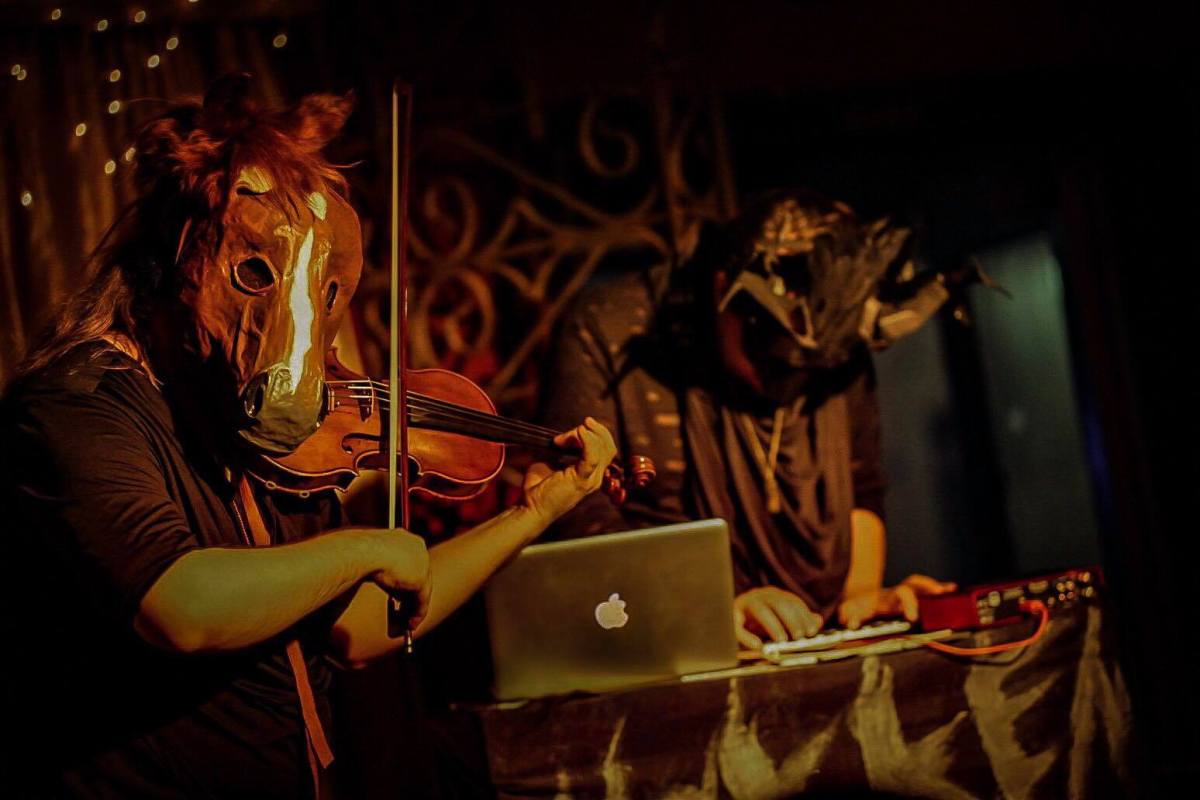
The original seed for this was planted back in 2015. The band started as a solo project called Nøkken. I performed in a cheap, plastic horse mask, something like a scavenger using humanity’s discard. Stephen and I have been in a relationship since 2011, and I’ve known Karli for as long. We all lived together, working as musicians, so it made sense for us to start performing. There was a narrative forming on two levels. I was already performing as a nature spirit, and it was as if that had attracted other spirits out of the woodwork. So, we expanded the idea, and they became “The Grim,” other enraged nature spirits who have rallied against the desecration of nature and their homes. Each month brought about subtle growth, new conflicts, new possibilities, but, like watching a plant grow, there is no single “event” where it formed. It organically evolved into what it is now.


How does paganism and animism provide inspiration for the music?  Do you think the music itself is a ritual space?

Something that is often unexplored in music is the primality of expressions prior the violence that language and words inflict upon the world, cutting and dividing things into categories. People often want lyrics. They want things to “make sense.” They demand it of the world. But I want wild cries of animals led by instinct from one note to another, where human conventions of music and meaning no longer matter. It is why we focus on improvisation, on being animals speaking through music. Animism recognizes an interconnectedness of all things, and the presence of other-than-human spirits in everything. We see this in our music, and we join with the ways in which each animate being produces music as a form of primal communication. The Earth Mother moves in cycles, large and small, from the replication of cells to massive shifts in climate and tectonic movements. Right now, humanity is messing with cycles of life and causing global extinctions. It is an interruption of rhythm, as much as a musician who slips and misses a beat, except with dire consequences for all life. Our music is a miniature of all this rhythm, both the cycles and the cataclysmic destruction of these cycles, where we no longer distinguish our rhythms from the processes of life and death.

From a more personal perspective, I serve the Earth Mother, and I am an extension of the primal spirit of the horse. Modern thought would probably call me an “animal worshipper” with a bit of a sneer. I am ethnically Hungarian and German. My heritage in Magyar táltos tradition (‘shamanism’) and Norse heathenry serve as the folk roots of the characters we play on stage. For me, this music is deeply spiritual. Stephen and Karli, who join me are not pagan, but are an agnostic and a Christian deist respectively. What unifies us is our recognition that human oppression towards each other and the living world cannot be tolerated, that human beings cannot continue to destroy nature.

I think music in general is a powerful ritual space, and not enough people recognize the responsibility that musicians have. Music is a vehicle of attention, synchrony and transformation, a place where many different wills coincide. With all that intention collected in a single space, magic flows through our sensuous bodies and can be channeled, for better or for worse. I perform all my concerts in a trance state in which the illusions of being human have disappeared. I feel like there is no break between the stage and the audience. We become coils of ritualized rhythm.


What bands inspired you in doing the work?

It’s a strange mixture of things. I love the alienated beauty of Buckethead’s guitar playing. He originally inspired me to put on a mask. The integrity of Moddi and Tanya Tagaq are also sources of inspiration. The Hungarian composer Béla Bartók has been a huge influence in our thought and harmonies. He was one of the first ethnomusicologists documenting folk music traditions, but he also wrote his own strange contemporary versions of folk music. Bartók was an anti-fascist who sacrificed his music career in Hungary in protest. He eventually fled to the United States. Over the years, we’ve been influenced a lot by bands like Tengger Cavalry, Ulver, Garmarna and Heilung. Karli is huge into Neue Deutsche Härte, folk metal, basically anything from Scandinavia and Germany. Stephen, as a composer, also brings a ton of influences from film music, EDM, jazz and ambient into our sound. He and I work together to create the electronic soundscapes that permeate our music. Probably our most out-there influence is John Cage.


There is a beautifully quiet quality to your music, both haunting and curious.  How did you start to develop the uniqueness of your sound?  How do you define it?

We started out performing music that fit more into neoclassical styles, as classically trained musicians. We did improvisation and performed works by minimalist and modern composers, and then we thought, “fuck it, we could do whatever the hell we want with music.” I suppose I would call our music “uncivilized,” or perhaps, “undomesticated” music, “wild,” “bestial”. There is no guarantee that we will ever sound the same from one moment to another.

“Primal” is probably my favorite word to describe what we do, if there is to be a word. It is instinctual music, to create music in terms of our senses and emotions, our animal being. We lose the idea that there is ever a wrong or right note—just different notes in sensuous immediacy. Conventional music adheres to a pattern it justifies to itself, so it forms into a genre, a style, a normative imposition on what music “should be.” Musical conventions very easily slip into oppressive institutions. You see this all the time with people talking about how they hate this music or that music. Primal music may form patterns (just as the growth of nature forms chaotic patterns, sometimes tremendously complex), but they are not dictated by forethought, imposition, the tyranny of order, only chance and instinct, necessity and intuition. We are aware of many “musical rules” but simply do not care. Human conventions pretend to themselves they are not profoundly instinctual, irrational and accidental. So perhaps, primal music is music without this pretense. It has gone feral.

Our song “Blue Ritual” is a great example. Everything about it is “wrong,” strange meters, harmonies, off-kilter patterns of 7, live outdoor recordings mixed with studio electronics. It is like a weed that decides to grow in one’s perfectly manicured lawn, Mother Nature’s green middle finger to the need for control and order. I like weeds. I am happy to be a weed.


Why have you included actual sounds from nature, like rumbling thunderstorms, in the music?

We put thunderstorms in “Vox Terrae” to evoke nature in sublime way and to give the music connectedness with the living world. “Vox Terrae” means “Voice of the Earth,” the Earth as a singer. It’s this recognition that sound and nature have their own agency; I would say intention. There are many agents beyond the mere human, other species, animals, plants, microbes. Also, whole natural phenomena are recognized as part of this animate, living ecosystem. Human beings tend to try to differentiate between “music” and “sound” and operate under a pretense that “sound” occurs without agency, while “music” is this supposedly willed (exclusively human) thing. It’s all part of this colonialist objectification of the world. But all animals are producing music, the songs of birds, the rhythms of horses’ bodies. Moreover, everything that happens is rhythm. So-called ‘chance’ sounds, natural phenomena, are as much music as anything human beings produce. I see the world of sound as a world filled to the brim with agency, spirits, actors, where nature speaks and sings in all moments of resonance. Sound is itself a living environment, one in which a multitude of agencies are acting. For me, it is not strange at all to see a storm as a musician, a person, collaborating to produce music. Or moreso, we are invited by the Earth as collaborators, lent this moment of time to be alive.


There is a huge variety, it moves from frenetic synth inspired tracks to very slow and plotting melancholy sound, do you feel like you are constantly reinventing your sound?

Personally, I would prefer to just to exist without having to have “a sound.” That is, I would like, in music, to follow every instinctual urge I have, whether that is violent, sensitive, sexual, explosive, playful. To the person listening, I think it probably sounds like we are constantly reinventing our sound, but to me, we are shapeshifters by nature. If I need to be violent in a song, then that is what happens. If I need to whisper, or yell, or seduce…our bodies produce the music. The concept of having a static sound is exactly what institutions impose upon our animal bodies, and those categories only serve to reinforce hierarchies in world.


What drives your commitment to antifascism?  Have you experienced a lot of white supremacist attitudes in the pagan and neofolk scene?

I would say that I have run into explicit white supremacists rather infrequently. The real fear lies in the undercurrents of racism and authoritarianism in ‘ordinary’ people whom supremacists are trying to win over. I feel that both the Pagan and neofolk scenes are very anti-fascist already and that the situation is not as bleak. All the Heathen and Pagan communities I partake in online and offline are working ceaselessly against supremacists. There is a recognition in much of the Pagan and Heathen communities that our own cultures and beliefs were colonized by Christian theo-political violence and oppression (and continue to be demonized to this day), and this unites us with the struggles of all other oppressed minorities. But there is fear across the Pagan communities to even talk about what we are doing. We are still afraid of being persecuted by mainstream religions as “devil worshippers.”

Within me, there is a deeper, personal anger at the fact that the Nazis appropriated our spiritual symbols and concepts. It was festering rot, feasting on the corpse of indigenous European traditions, appropriating our symbols and our heritage for their purpose of hate. It wasn’t enough that my cultural heritage was decimated by religious persecution throughout European history, especially my spirituality, which was thoroughly destroyed by Christianity. Our symbols then became corrupted and mutilated by honorless Nazi thugs who worshipped nothing but their own pettiness, driving them to hatred.

My love for all difference and my fury against injustice runs deeper than words or reason. Spiritually, I seek liberation of the natural world and other-than-human life, and I extend that to the struggles of all different human peoples. You could say it is in my blood to be anti-fascist, to be a freedom fighter. My family escaped from Hungary as refugees and came to the United States seeking asylum. Members of my family fought in the Hungarian underground resistance. My existence could never have been if they resist oppression and leave their homeland.


Why do you think it is important to be a publicly antifascist band?  How does antifascism inform your music?

I think people are getting complacent with hate. Silence is the real problem. Artists must be willing to stand up and show others that they are not alone. I also think that some music groups wait too long to disclose their stances on important subjects like this for fear that it will limit their audience. I don’t know about them, but we don’t want fascists and white supremacists in our audience. They can fuck right off.

Anti-fascism informs our music in loving and seeing beauty in difference and in the necessity to do what we can as artists against hatred. We see our music as undermining the colonization of the world—singing against the destruction of wildlands, the erasure of indigenous beliefs and peoples, against voracious and spiritually empty consumerism and authoritarianism.


What kind struggles drive your work?  There is a strong sense of a need to a return to a cyclical, grounded way of life in communities.

I agree. To add to that, our music expresses this need to recognize the entire world of other-than-human life as part of that community. A few concepts that are important to us are the idea of “re-wilding,” David Abram’s notion of “becoming animal” and what the ecofeminist philosopher Donna Haraway calls “kin-making” and “companion species.” I see modern society as having this ill ideology of trying to leave behind nature and animal being, of trying to transcend themselves, of trying to domesticate and dominate everything, warring with their own natures, consuming the world to feed industry and Ego eating itself. Humans fail to even recognize that other animals have forms of intelligence and cognition that exceed their own, something that is fortunately being corrected by the scientific field of cognitive ethology. Traditions and spiritualities that celebrate being kin with the world, with animal life—of being part of an ecosystem instead of holding dominion over it—end up as victims of modernization. This is especially true for indigenous peoples who are deprived of the natural cycles and resources needed to sustain their life-ways. I see our music as embracing and conjuring our own animality to rejoin with our other-than-human animal brothers and sisters, to relearn how to live alongside the more-than-human world instead of enslaving and destroying it.


What’s coming next for you?

We currently have two major projects in the works. We just finished shooting for a short film/music video for our song “Vox Terrae,” and we mastered a live performance of the track to release as a single alongside the video. We are also working on writing and recording our next album. (Well, really it is two albums to be released side-by-side. The concept behind them is kind of insane. Can’t say more than that, yet.)


What other bands do you recommend for antifascist neofolk fans?

Ulvesang, Hanggai, Tengger Cavalry, Garmarna, Heilung, Wardruna, Soriah, Tanya Tagaq, Paleowolf, Forndom, Jambinai, Bohemian Betyars. Julius Eastman is an unsung hero whose entire life’s work as a composer was dedicated to fighting racism and homophobia.  He was a queer black performer, and today his work should probably come with a trigger warning because his song titles often included the racial slurs that were being thrown at him during his life.  Part of it was he wanted the classical music community to look their own racism in the face every time his music was performed.

Moddi has been a longtime favorite of the whole band, a folk singer from Norway who melds haunting melodies with political activism. His album “Unsongs” is a must for anti-fascist artists and activists. The album is entirely made of songs banned by oppressive regimes. There are also documentaries about each song and its historic context on YouTube.

Below we are putting tracks from the latest album, Trickster God, as well as the most recent album before that, Treason to Our Nature.  We have also added tracks from Treason to Our Nature to the Antifascist Neofolk playlist on Spotify.