As the antifascist neofolk community continues to grow, we are seeing an intersecting web of artists and projects form, the hallmark of artistic subculture. With this we have been chasing new projects from what are now old friends. That is true of the neofolk project I Sing to Barbelo, the new endeavor from Abigail Maven Goren who we have interviewed before for their bands Poppet and Lodge of Research. Goren dove more fully into the world of neofolk for I Sing to Barbelo, and developed a hauntingly beautiful collage with her first album Cathartic Rebirth, which meditates on the subjective experiences of gender and the totality of love.
We talked with Goren about what experiences drove this album, how present the idea of love is in the work, and how this amazing step forward plays into the larger world of revolutionary neofolk.
How did this project first come together?
I Sing to Barbelo was thought of in the summer of 2020, when I fell back in love with neofolk as a genre. I really wanted to create more in that style, especially neofolk that captures progressve themes. Around the same time I was grappling with the COVID pandemic, and moved to Western Washington from NYC for a change of scenery after college. During all of this I was dealing with a lot of gender dysphoria and confusion with my identity. I Sing to Barbelo was made to reconcile the queer side of myself with the side of myself that loves extreme and uncompromising music. A cover of the at-the-time recent Dorian Electra song “Give Great Thanks” (about BDSM as a metaphor for social inequities) was the first track I worked on knowing it was for a neofolk project, right before I moved to Tacoma.
How does gender experiences influence this project?
I don’t think any trans person truly experiences transness in the same way, although there are often similarities. A major part of my experience was reconciling the me who loves bizarre metal, occultism, asceticism and gothic imagery with the me who is a bisexual trans woman. Back in 2016, I became incredibly hyperfixated on the concept of asceticism and being a monk. When I realized that I wasn’t male in 2019, I realized that these dreams of wanting to do and consume everything I had to give up. Ironically I had to renunciate being a monk. This is the meaning of “so too must I give up being a monk as I continue on the road to gnosis.” Barbelo, the “Triple Androgynous Name” and an explicitly gender non-conforming female principle in gnosticism was a major figure embodying this sort of grand contradiction. Building a deeply mystical and mythical transness instead of assimilating into the LGBTQ community was important for me.
How does the concept of romance play into this album? What is the love in the work?
The love is in two parts:love for one’s self and embracing yourself as a total person, as well as love and support between trans people. 2020 was a good year to no one, and I was not the same. The ways of getting myself through this pandemic often focused on me connecting with other trans people online and sharing, agreeing, and disagreeing with our experiences. Compassion is a virtue we all need to learn, not only for others going through struggles of identity, faith, and gender; but also for ourselves, even if we think we’re doing fine. How do you understand the concept of romanticism in your music?
Romanticism was a major selling point for getting into neofolk – In I Sing To Barbelo, I’m trying to create a deeply loving, emotional and romantic aesthetic, continued in projects such as Jouissance. It is not only a 19th century aesthetic and cultural movement, but at the time was an important gathering place for anarchists. Percy Blythe Shelly and his poem “The Masque of Anarchy” shows how this imagery can be used for liberation rather than continuing hegemonic oppression. I see a lot of aspects of wild and free Romanticism in the art of Osamu Tezuka, whose art I loved as a child. Anime iconography is an important part of the trans milleu online, and I think Tezuka’s art helps bridge the gap.
Talk a bit about your production process, what does it look like? How does it work on the technical side? How do you plan on doing live performances?
The acoustic sections (and some martial segments) were made from me sampling acoustic guitar loops on Logic Pro X. Every sound you hear besides my heavily reverbed vocals were created on Logic without any external instruments. All of the vocals were done in one shot, as well as the performance of synths and strings, giving it a raw and unpolished flavor. I can’t play acoustic guitar well at all, so as such I decided to sample and loop presets and reinterpret them in a way that is uniquely me. Likewise all of the covers were done in one take. If I did live performances I would rely heavily on loops of guitar riffs while I play synth lines and sing.
How does this stray from your earlier work?
I’d like to think that I Sing To Barbelo is an important marker in my development as a musician. My early dungeon synth as Poppet was made without a knowledge of dungeon synth (or even black metal) as genres. With this project I am trying to come in as a music enthusiast, not only for neofolk and martial industrial, but also hyperpop, which I was listening to a lot of at the time.
How did you select the covers you did? What themes were significant to you?
During the summer of 2020, I got heavily back into the experimental maximalist pop of 100 Gecs and Dorian Electra. It felt almost utopian in the time of a vast and deadly global pandemic, as well as it having a very tight-knit community who loved and held experimental, genre-blending music in high regard. While I have seen a lot of lo-fi indie folk covers of these songs, it was hard to find covers and reinterpretations in genres that truly mattered to me, so I decided to take my own irreverent spin.
How did the shared experience of 2020 affect your process?
As referenced before, no one had a good time in 2020, and even though it was an incredibly significant year for almost every aspect of me, it’s important to recognize that even though we may be going through intensely deep and personal struggles, we are not alone, we have each others backs. In the word of Martin Prince from the Simpsons “Individually, we are small twigs, but together, we form a mighty faggot.” If queer people work together against oppression, we are unstoppable.
What track is going to be in the new Left Folk compilation? How did you select it?
“Our True Love is Revolutionary,” which is a love song made for my girlfriend Jenny. This spoken word track is focused around the sheer power of trans relationships, If we learn to love each other and ourselves, we shall prevail. A trans lesbian relationship, at least in my experience holds no dynamic you see in a traditional straight relationships, rather it is rhizomatic, as opposed to being arborescent .It’s always fun to do stuff for people you love, especially in your own unique way.
What do you think the impact of building this explicitly antifascist neofolk community has been?
I have been much more involved in the antifascist dungeon synth community, but these circles have major overlap. I hope eventually we can see a project prolific enough it can properly replace harmful yet admittedly stirring works. As of now antifascist neofolk seems to be more rooted in dark and nordic aesthetics rather than the strange lysergic industrial of Current 93 I so love. Neofolk, like any genre, can be used to express any emotion and through any lens. We shouldn’t let nazis have a genre so rich in imagery and emotion.
What’s coming next?
I have some dark, atmospheric tracks with Poppet I am working on putting out, but my computers are in a state of disrepair, and as such it may take a while for the new Barbelo. Expect something soon for certain though! Creating unique music is my life.
When one thinks of devotional music there are specific images that come to mind. For me the full immersion Baptism scene from O Brother Where Art Thou comes to mind instantly – the music beckoning the listener to join the prayer. Finnish artist Joonatan Aaltonen has a different vision, as he looks inside himself and to the world of nature towards the future. There is a sacredness to his work superseding creed and tradition and engaging with cosmopolitan influences. A multifaceted artist, his evolving discography from Aura Shining Green to Kiiltomatolyhty at present captures the changes in outlook from youth to adult, a longing to communicate universal themes, and evolution from the personal introspection of singer-songwriter to a multidisciplinary performance engaging the audience.
———————————————————————————————————————————-
When did you start playing music and how did you decide to become a musician?
I believe my first influence in the world of music was my elder brother, who educated me in the world of good music at the ripe age of 5 or so. I remember listening to some of the more ambient sections of early Pink Floyd albums on c-cassettes, rewinding back to the parts with interesting synthesizer parts and effects, completely transfixed by the hypnotic quality. My uncle is also a well-known and loved musician in Finland, and I remember that in my early days I was intrigued by this, too, that one can actually make a living by playing music, although my own story seems to be quite a different one. I also remember the old songs I heard in my youth. Due to family reasons, I spent a lot of time in Yorkshire when growing up, and I believe it was during those extended stays that I became completely infatuated with some of the songs my mother played to me – I believe there was a lot of war-time music, light and easy listening, jazz, Shirley Collins singing rural ballads etcetera. Leonard Cohen came soon after, and he was probably the biggest influence on the songs I would write decades later.
These would not immediately make me pick up an instrument, but later would have a lasting impact. The instrument, however, was picked up for me by my parents, I started learning piano at the age of 6, I believe – and stuck with it for many years. I think it was around age 9 or 10, so that would be around the fall of the Soviet Union, after listening to music obsessively for some years already, when I started to discover interesting music on my own – Commodore Amiga tracker music, and I remember loving the “80s sound” – 80s movie soundtracks, Tangerine Dream soundtracks, Pet Shop Boys etc, anything with big reverbs and pompous production. It was also around this time I realized that I enjoyed playing the guitar more…so out went the piano.
At around age 15, I was listening and collecting mostly “darker music” – at this time the second wave of black metal had hit Finland, and of course I loved that stuff back then. However, that was a brief dalliance, which soon was replaced by love of krautrock and 60s and 70s music, and a lot of goth and post-punk bands too, which were easily available by using the brilliant library system in Finland (remember, I was mainly brought up in a culturally limiting rural environment in the north of Finland). Around this time, I also played in some local bands which shall remain unnamed. I went through a really intense Goa Trance phase at the same time, and spent more time having fun than sulking around. I am a total hippy at heart, and always will be.
Personally, I consider that my path as a “musician” started when I was 17. Through my library explorations and early internet, I had discovered music such as The Incredible String Band, Clive Palmer, Hamza El Din, John Dowland, Bill Fay, Pekka Streng, Haikara, Wigwam, Cluster, Amon Düül II, Ash Ra Tempel, The Wicker Man OST, Exuma, William Lawes, Red House Painters, Donovan, Vashti Bunyan, Nick Drake, Sandy Denny, Pearls Before Swine, The Zombies, Love, Popol Vuh, Klaus Schulze, Harold Budd, The Moody Blues, Gene Clark, Townes Van Zandt, The Green Pajamas, Trees, Fairport Convention, Mahavishnu Orchestra, John Renbourn, Roy Harper, John Martyn, Bert Jansch, The Pentangle, and so many more… At around this time I started writing some songs, which I still have on tapes somewhere.
It was not until 2002, when I had the first tape & cd-r releases of Aura Shining Green ready – these have probably been lost to time, since there were only tens of copies handed out to the audience wherever I played a set. I was deep in the lo-fi rabbit hole by that time, and was mostly interested in creating these impromptu session recordings, some of which are documented on the “East of the Sun & West of the Moon” 2cd compilation released by Anima Arctica years later.
During 2003-2008 I was working on my master’s thesis in the university in Finland and Scotland, and I had no time to actually work on recorded music, other than live sessions and busking. During these years I was mostly interested in ethnic music of different regions – and playing live. It was around 2005 I think when the “free folk” scene in Finland happened – I wasn’t living in Finland at the time, I was in Glasgow, studying philosophy for my degree. Later on, I can really appreciate Paavoharju’s “Yhä Hämärää” – but did not listen to it back then. I also met some like-minded musicians during these years, some of which I still consider friends. I was never active in any “scene” or genre, it’s just not who I am.
I was traveling a lot between 2007-2010, and during an extended stay in India – and when eventually settling down in Portugal, I wrote most of the material which turned up on the first 3 proper albums of songs I made under my own name – although rather unpolished, the songs were carefully written. It was also during these years that we played the first “proper shows” with Mossycoat (who was also my life partner during most of the early years). I think it was around this time I realized that I might be able to call myself a “musician” – yet I feel a bit uneasy with the label even nowadays. I never had the ambition to become one, but some people think that I am one. Personally, I’m still on the fence.
And in terms of exposure as a musician, I think the audience for my own projects has always been smaller than for example, Oulu Space Jam Collective – the krautrock cosmic-improv band I’m a founding member of – I actually prefer to just have my own music as a sort of “hobby” which I am funding through participating in society in more concrete ways. Not sure if I ever wanted to be a musician, rather an artist in the wider sense of the word. I love painting, poetry, photography, film, theatre and dance, perhaps more than music.
You currently record as a member Kiiltomatolyhty, but I first became aware of your music through the Aura Shining Green project which concluded in 2018. How did these projects come to be?
Aura Shining Green probably started as a loose collective of sorts in 2002, recording half-improvised songs with a circle of friends who had similar interests. Most of the early recordings of ASG were never intended as “albums”, but just something which can be handed out to the audience. I consider “Mushroom Heart” to be the first proper album I made, and that came out in 2008 (it was ready by 2006, but we had some label issues) and even that is heavily improvised on spot, as is the rest of the ASG catalogue. Although there have been many people involved in ASG, the writing has primarily been my work – and slowly the writing became more and more personal, shifting from the naive imagery of the early years into this extremely personal project. I think I was mostly influenced by Christina Rossetti’s poetry, Leonard Cohen’s first four albums, Red House Painters, and The Green Pajamas’ Jeff Kelly’s solo albums by then, but, to be honest, ASG has always been influenced more by everyday encounters than anything else. I have no interest in making music which has been done before.
By 2013, I had moved to Amsterdam & was working on “The Tower & The Hanged Man” while my personal life was gradually unraveling due to various reasons – and this was to be reflected in the music. The collections of songs which are also available in Bandcamp from years 2013-2016 document the unraveling. The biggest shift in my musical output probably after I met my future wife in Amsterdam, spring of 2014. I was living in a commune of artists, and had over time developed a taste in contemporary dance and performance art.
Matilda, whom I later married, is an academy-trained dancer and choreographer, and through her influence I realized that the audience-artist relationship I had been searching for can probably not be found in the “music scene” format alone. To be brutally honest, I have never liked the image building and cheap mystical qualities of bands and the scene in general – it was probably cool when you’re 14, but not so later. In the end it all boils down to the audience-artist relationship.
The live recordings as Aura Shining Green after 2014 were combined with performance art & contemporary dance, and I don’t think I’ve ever enjoyed making music more than during those sets. I moved back to Finland and decided to pull the plug on Aura Shining Green for good after two carefully constructed albums, sung mostly in Finnish. At the same time, a Russian label put out “The Green Man & The White Witch” (which is probably the reason why the music of ASG has been thought to be “Neofolk”, which it is not, and never has been). The Green Man was based around a long poem, “Refuge in the Triple Gem”, which I wrote when I became a student in Buddhism under a Tibetan teacher a couple of years back, and rest of the songs were old texts recited around a campfire long time ago. I think that album is undercooked and was supposed to be a mere addendum to the more fleshed-out The White Witch, but the label turned the order around. The White Witch was a drill for the two final albums, and a good album in its own right too, I think.
Suomenlahden Aarteet & Kuumusiikkia (and the accompanying EP, Keväänsäde) are the final works as ASG, and to me, they represent all the romantic and spiritual qualities which were present in the music during all the formative and later years.
The path that I had been on with ASG had led to the formation of Kiiltomatolyhty. The name translates as “a glow-worm lantern”, and for me it represents a guiding beacon of light in Maya, the darkness of pretense and deceit. The project started with 4 album-length recitations collated from my dream journals, which were not intended for any sort of release, just personal trinkets. At the same time, I had gone completely synthesizer-mad – I have slowly built a mostly-analogue synth arsenal which I have been using in my artistic work as a sound worker and in contemporary dance.
The first release as Kiiltomatolyhty is Kalastajakuningas (The Fisher King) which we performed live at an animal rights conference. The first “album” is Kultasarvi (Gold-antler).
So, what is the difference between ASG and Kiiltomatolyhty? ASG was a project which was mostly concerned in delving deep into the personal, while Kiiltomatolyhty exists as a polar opposite: the journey into the universal. Also, Kiiltomatolyhty will probably never perform live in a purely musical context. ASG was probably also the playful and youthful romantic-idealist project, and Kiiltomatolyhty is the more thoughtful. I’m 40 now, so I really can’t be fucking about anymore. The time is running out!
You have an album of covers from busking in Amsterdam and clearly have been influenced by a variety of songwriters. Are there any that you feel particularly influenced your work?
Yes, definitely. I need to check who I covered there…yeah, there’s a Cohen song there, his 4 first albums are definitely an inspiration for much of the later work as ASG. And it seems I also covered Tom Rapp of Pearls Before Swine – one of my all-time favourite groups. There’s also a Jeff Kelly tune there, he’s one of my big influences – a criminally underrated artist. To me, he is bigger than all of the Beatles combined. There’s also “Jerusalem” by Simon Finn, a song which I hold very dear. That first Finn album has a magical quality – I really love how rough it is yet filled with vision and fire. There’s some bluesy stuff there too, I think around that time I was really into Lightning Hopkins.
But most of all, I think Townes Van Zandt’s ghost hovers over that era…as I mentioned earlier, I was in a downward spiral sound-tracked by Townes’ songs. I am unable to listen to those recordings nowadays, except A Secret History, which is a great album – I wish some label would put that out. Thinking back now, those years in The Netherlands seem like a youthful golden dream. It didn’t seem like it at the time.
Another big influence has always been Pekka Streng, a Finnish artist who died young – shortly after releasing one of my favourite albums, “Kesämaa”. I’ve never had the guts to try to touch any of his songs. I need to add that I have always loved the 60s-70s Finnish bands, progressive rock and folk mostly – not namedropping that bunch here – but if anyone wants to go digging around, it is a treasure trove. Try Wigwam’s “Being” for starters, or Haikara’s first album. The first two Hector albums, “Nostalgia” and “Herra Mirandos” have always been a huge influence. He is kind of the Finnish Donovan.
I first encountered Aura Shining Green on an acid folk sampler, but on Bandcamp the one tag that is consistent for your breadth of work is devotional. How would you describe your music? Is there a spiritualism that informs your work?
Yes, definitely. I think it is impossible to separate what we are from the art which we create, so there’s always parts of you seeping into the work even though you do not intend the work to be spiritual per se. However, I have no intention of creating art which requires a spiritual outlook from the listener – and my personal spirituality is not of the religious kind, as I don’t follow any specific creed.
When describing my music, I need to draw a line between ASG and Kiiltomatolyhty, as the initial spark for creating music for the two projects is fundamentally different. ASG was highly personal music which was distilled from my diary entries and life experiences, sometimes veiled behind clever use of images and language – but in the end it was very down-to-earth and reality-based. So, I would perhaps describe ASG as highly personal songwriting-based project. A reality show of sorts, haha.
Kiiltomatolyhty on the other hand operates on a highly symbolic level, and is much more composition-based music, which has a meditative quality. The lyrics are more evocative and universal – the lines on Kultasarvi touch animal rights, ecological and eschatological themes, space travel, and animistic, almost Shinto-like reincarnation and regeneration as a part of the cycle of life.
The composition process for both projects relies heavily on meditative improvisation and “first take is the best take”-philosophy. The process for me is a 50% improvisatory thing. I might have an idea what the track should sound like, but then as I’m adding elements, the goal tends to shift away from the original idea. I might have an idea imprinted in my mind, and throughout the creation process I’m just picking up the pieces and “channelings” in order to come up with the finished song. During my years working as ASG, I never had the gear or the room to actually polish the recordings in any way, so they are very barebones and lo-fi in parts – but that was the intention all along, to keep things spontaneous. Kiiltomatolyhty is a much more curated and controlled affair, but there’s way less songwriting involved. It is more evocative and spacious, with less focus on the songs. This kind of approach makes it even more important for me as an artist to just add elements which manifest spontaneously.
So…excuse me for rambling…what I tried to describe is the fact that the creation process is in a way informed by a “spiritual” approach – the spontaneous channeling of music has a quality to it which can be experienced as something resembling spiritual practises, such as meditation, where initially you let the ideas flow – if they need to, in order to clear the mind. Only now you are recording the ideas on tape, and afterwards you deem whether the idea was good enough to form the basis of a song.
To me, devotional music is the purest form of music – I have an unending passion for field recordings of communal devotional music and such, and as an artist I can respect the power one can tap into by just opening yourself up for improvisation and acting as a conduit for all your material which exists in your head, yet to be recorded.
There bits in some of your English songs that feel like echoes of traditional ballads, but you’re also not afraid to add synthetic and natural sounds or delve into the electronic. What role does folk tradition, Finnish or other, play in your songwriting and what inspired you to incorporate these diverse elements?
Musically speaking, I think I have always been intrigued by traditional ballads – and as I stated earlier, the English ballad form is probably one of my earliest musical influences. I can also appreciate the cultural aspect of Finnish traditional song. I have Roma blood, and at some point, I was really into Romani music, but have no idea about the traditions. However, I don’t consider the music of ASG or Kiiltomatolyhty to be “folk” in any sense – it is music composed and performed mostly by people who have little connection to any tradition. Myself, I’m a thoroughly urban IT professional from a non-working-class background with an university degree, born with a silver spoon in my mouth – never had to even endure manual labour – completely out of touch with any kind of authentic folk tradition. Also, I don’t really have any interest in reviving any traditions – or to claim to be a representative of one. I tend to prefer the future, not the past. The disconnect from any sort of tradition is a natural process for someone with a background like my own – I have no interest of trying to reclaim something which was not there in the first place.
Hence, I find it interesting to mix up a lot of the elements I love in the world of music – the electronic and the acoustic, the compositional and lyrical, the traditional and the avant-garde, the melodic and droning, the popular and the experimental.
With Kiiltomatolyhty, the intent to incorporate the more droning, experimental elements was there in the beginning. I have learned from working within the performative arts scene that the subdued and non-defining elements usually are the elements which are more easy to work with, for they do not define the mood so strongly – yet they can “tie” an album or an performance together more effectively. There was a time when I could listen to or play a show with only guitar + vocals, but gradually I fell out of love with such a straightforward approach. I don’t mean I disown the music I did in the past, but I really can’t see myself playing a “singer-songwriter” show in the near future.
Kiiltomatolyhty also performed live in support of the Finnish Animal Rights Party (EOP), how did this come to be?
I have been an animal rights advocate/activist since the 90s, and a proponent of a vegan way of life from an early age. We were invited to perform at the event because when representing the Kiiltomatolyhty project, I have been openly discussing and promoting these values in public – and also promoted the new political party which we certainly need in this country. We are one of the last countries to allow the exploitation of animals in the fur trade, and a country where the meat-industry corporations have a firm grip on public propaganda channels. The public image of Finnish factory farming has been effectively whitewashed to appeal to the masses as more “ethical” than factory farming abroad. This is the greatest lie, which has been echoed for decades, and people are still buying it.
As an art project, Kiiltomatolyhty is unapologetically in opposition of the murder and exploitation of sentient beings and will not stay silent about this stance. Matilda, who is also a member of Kiiltomatolyhty, now serves as the vice-chairperson of EOP. Since then, I have also composed background music for the party’s campaign video.
How does antifascism inform you politically and as a musician?
I think it is absurd that in the modern world one needs to specify that they are antifascist – fascism reared its ugly head not so long ago, and where did it lead to? It is a failed ideology. A thing of the past – and if you feel the need to dig it up from its grave, something has gone wrong at some point – not with the world, but with you. If there is anything good in it, it is poisoned by the inherent rot at the heart of it. I think we should learn from the past and discard the things which did not work. I don’t want to go about declaring that I am an antifascist, but the sad state of affairs leads to situations where I actually have to do that – and that is really fucked up. I don’t want to use my music as a vessel to state this – however, I am unable to separate the music from my person, so the stance is there in music, stealthily.
Politically, I think that animal rights and antifascism go hand in hand. Add equal rights and intersectional feminism on top of that, and zoooom, you have just become enlightened, a real thinking human being. From there on, you are able to concentrate on the ultimate goal – to end speciesism for good, and usher in an eco-conscious golden age of rationalism, re-vitalized ambition and purpose.
rpt
Kiiltomatolyhty just released an album, Kultasarvi, in November. Would you like to say something about the album and what’s coming up next for you?
Kultasarvi the idea and Kultasarvi the album had a very different sorts of genesis. The idea was to record the album at Viitala, our cabin in the woods of southern Finland – where I also wrote the lyrics for the album. However, it was originally coined as a sparse, acoustic album, but I just wasn’t happy with the recordings. There are hours and hours of the acoustic versions of the songs stashed away on tapes somewhere. Once I started adding in more and more of the electronics, and Iina joined the project (on this album I was mostly working alone before that), the proper end result was starting to materialize. I also didn’t want the first release as Kiiltomatolyhty to sound like ASG, so I had to be careful about that.
Personally, I think it is my favourite album, and since I was so harsh with the cutting of the final tracks, there is absolutely no filler on the album. I don’t think it has any songs which pop out of the context, but as a whole it is the best I’ve done so far. Of course, compared to Suomenlahden Aarteet, which has some of the best songs I have written, the competition is unfair.
The album itself is a sort of prayer or meditation on the preciousness of the ecosphere, the life of sentient beings, guided by our totem animal, the badger, and the hundreds of birds who sing in the orchard of Viitala. It is a spiritual album, completely devoid of any sort of religion, a scientific-pantheist devotional album for the new age.
Kultasarvi was ready in early spring 2020. Then COVID-19 hit. It was supposed to come out on vinyl this year, but the plans fell through. It is currently available from kiiltomatolyhty.bandcamp.com, and from the UK label Reverb Worship as a limited physical edition. I am now slowly working on Valonkajo (“a faint shimmer of light”, hard to translate…) exploring and expanding the sound of Kultasarvi further.
COVID-19 has pretty much decimated my creative output – and as an artist I am “out of work” right now. I am able to work on my own music, but I have been paralyzed creatively of late, since I draw a lot of inspiration from being out there. And I can’t really be out there. Also, my work with synthesizers in performance arts is on hold, as is the work with the krautrock collective. Let’s hope 2021 will be slightly better.
Are there any metal, folk, or other bands you could recommend to Antifascist Neofolk fans and fans of your work?
At the moment I’m thoroughly in love with Alice Coltrane and Pharoah Sanders, but I could also recommend something like Ali Farka Toure’s “Niafunké”, Harold Budd’s “Avalon Sutra”, Georges Moustaki, Mark Fry’s “Dreaming with Alice”, Perry Leopold’s “Christian Lucifer”, Fela Kuti, Fall of Efrafa’s trilogy of albums (Owsla, Elil, Inle), Luzmila Carpio’s “The Song of the Earth and Stars”, anything by Popol Vuh, Pearls Before Swine, United Bible Studies, David Colohan’s solo work, Bob Theil’s first LP, Clive Palmer’s COB (Moyshe McStiff & The Tartan Lancers of the Sacred Heart + Spirit of Love), Hamza El Din, Jackson C. Frank, Pekka Streng, Renaissance’s “Scheherazade and Other Stories”, first four Red House Painters albums, Jeff Kelly’s “Coffee in Nepal” and “Portugal”, Hildegard von Bingen, Yndi Halda’s “Enjoy Eternal Bliss”, Marja Mattlar, Townes van Zandt, John Dowland, Vashti Bunyan’s first album, William Lawes, Henry Purcell’s “Music for a While”, Roxy Music’s “Avalon”, and of course The Incredible String Band, Coil’s lunar phase albums, Bill Fay, and Gene Clark’s “No Other”.
In just a matter of months really, Ashera has become one of the defining bands of a new wave of explicitly antifascist neofolk. It is hard to call this a genre since what binds it together is largely not based in the actual sound of music, it is more in a type of negative space. If neofolk has so often been ceded to the far-right, assumed to be a romantic nationalist artform created by and for racists, the very existence of an antifascist neofolk that rejects that world had the effect of being a novelty. Ashera was one of the bands that helped move the concept from a curiosity to a new operative principle. We are now entering an era where hundreds of bands are taking on this mantle, bringing in a massively diverse wave of neofolk, black metal, and intersecting types of music all brought into a kind of (dis)harmony by its disallowal for fascist politics.
Instead, Ashera’s romanticism can be said to be grounded in a type of anticapitalism. Deborah and Justin Norton-Kerston, the two members of Ashera, are both organizers, grounded in the world of labor strikes and eviction defense, so this energy pervades everything they have produced, which has been a lot.
In a lot of ways their new album Rob the Rich shows that neofolk was really just a starting point as they push their way into everything from psych and prog rock to Appalachian hill folk. Genres have a utility, they give us starting points and can spark creativity by allowing a common musical language, but they can also create boundaries that are best when broken. The new 10-song release is a wonderful extension past the limits of antifascist neofolk, which has the effect of both expanding what we could expect from the band and the genre itself. One of the featured tracks, “The Battle of Portland,” is a seamless mix of the noise of the protest confrontations that converged on Portland in the summer of 2020 and the fluid, synthesis driven sound that was the foundation of their first EP, Antifascist Lullabies. Other tracks, such as “All Cops Are Bastards,” feels more like the acoustic “singer-songwriter” melodies that mark the soundtrack for summer hippie festivals and jam-band revivals. Antifascist neofolk is starting to stake its claim not just on a particular lyrical or ideological frame, but also its own distinct relationship with folk music and how it wants to create a 21st century synthesis. Rob the Rich is a vital part of that process.
We interviewed the band about this new release and are happy to embed it here for the first time so that those who have made A Blaze Ansuz something special are able to hear it first. We have also added several tracks to the Antifascist Neofolk Playlist on Spotify, which we will continue to update to allow it to remain an ever-growing space for building the space. Ashera has never shied away from a “contested space,” to be open about who they are in a genre that was not immediately welcoming. That principle-first approach helps to drive the space open for all of us, and we need more bands that will follow Ashera’s example.
What was your thinking going into this new album? How did it evolve from your earlier work?
In terms of thematic concepts, Rob the Rich shares a focus on antifascism with our first EP. The idea here though was to explore some aspects of fascism such as white supremacy, privilege and patriarchy more closely, whereas the Antifascist Lullabies EP was kind of more just revolt and burn it down. I mean that stuff is still there in Rob the Rich too, but that ‘fight the war’ aspect takes a little bit more of a backseat on this album to exploring different aspects of fascism, how they are used, how they affect society, and how we can fight back against them aside from, and in addition to, going out and punching Nazis.
You seem to be branching out past the narrow focus on neofolk. How do you think about genre in the project, and do you feel held back by it?
I don’t think I’ve ever really thought about it as being held back by genre. I love neofolk music and our roots as music collaborators goes back to the first band we were in together, The Cloverfields, which was a pagan neofolk band that played the pagan festival circuit in Southern California. But it has always been hard for me to stick to any particular genre, and I went into writing Rob the Rich with the idea that I wasn’t trying to force it to be a strictly neofolk album. So I just went with it when other stuff like blues, shoegaze, psychedelic, and classical influences started weaving their way in.
There are still some strong elements of neofolk throughout the album that are meant to help keep it in the family, so to speak. The vocals have a lot of reverb on them, for example, and the whole album has a dark folk kind of atmosphere. “Eat Your Landlord” is a good example of a song on the album that has a lot more of a traditional neofolk sound than some of the other tracks. So I guess if I think about it in those terms. I do feel like genre is a bit confining in terms of the art of creating music, at least that’s true for my creative process and direction. It may be helpful for other people and their creative process and that is totally fair and valid too.
How does the year (2020) play a role in the album? It seems like it is a major character in the story.
This album wouldn’t be the same if it hadn’t been composed and recorded in 2020. I started composing the album in late April 2020. Breonna Taylor had been murdered by police in Kentucky the month before, and it was only a few weeks later that police in Minneapolis killed George Floyd, the Black Lives Matter movement erupted again, and the Portland uprising began. All of that played a big role in the album as we explored themes like white supremacy, institutional racism and police brutality, the revolt against capitalism, the growth of anarchism and socialism, and the disturbing spread of neo-fascism. Musically, a lot of the harmonic dissonance in the album is designed to convey the tension and anxiety that I think we’ve all felt this year as a result of the pandemic and all of the socio-political stress around the protests and the election season. Walk us through your production process.
How do you write music and what does recording look like?
A song usually starts as an idea for lyrics, whether it’s a line of verse or just a general theme. Then I’ll sit down with an acoustic guitar and start toying around melodies. Every once in a while a composition will start musically with some sort of hook that I have running through my head.
The title track on Rob the Rich is a good example of that where I had the idea for the guitar hook before the lyrics. Most often though, some of the lyrics come first, and then I sit around humming a line of lyrics while noodling around on the guitar trying to find the right melody and chord progression for the ideas and feelings I want the lyrics and the song to convey.
Once a song is written, the recording process always starts with the ritual of laying down a kick drum beat that I use as a metronome when recording the other instruments. That happens even if the song isn’t going to have any percussion in it. From there I’ll build the song by recording the rhythm section: acoustic guitar, bass, maybe piano. After that I record at least a scratch vocal track of the lyrics and basic vocal melody, and then I build other instruments like lead guitar, banjo, mandolin or baglamas on top of that. If there is any percussion other than the kick drum it usually gets created toward the end, and then once all of that is there we record vocals over it.
Recording vocals always starts with getting a good take for the main melody vocal. Then we play around with different ideas for harmony vocals. We generally record quite a few different harmonies for each song and then decide what we like and want to use later on during mixing. For this album we had a good friend and old bass player of ours at Unit-42 do the mix. So that process was a lot of fun sending tracks back and forth, talking about the songs and shaping them together. And there is a lot of clean up that takes place during the mixing process too. They come back and say hey I want more of this, or you should re-record that, or you know you can do it better. I really enjoy the collaborative aspect of creating music.
How does anticapitalism inform your creative mission? An anticapitalist vision has always been central to Ashera’s music and the kind of culture that we’re trying to foster through the music. It’s the soil that project germinates in. Anticapitalism was certainly a theme of our first EP, and on this new album songs like “Eat Your Landlord” and Rob the Rich are steeped in everyday folk resistance to the forces of capitalism. Even other songs like “Consequences,” “Betray Whiteness,” or “All Cops Are Bastards” explore things like patriarchy, white supremacy, and police violence that are all used, shaped, and in some cases even created by capitalism as tools of oppression that serve to maintain the status quo and ensure its continuance. So in a lot of ways anticapitalism has a strong influence on our creative mission.
Check out the full album here, and their music video for “All Cops Are Bastards” above.
Peace Through Decay’s debut album “Grey Skies Loom” is like a punch in the gut, a stirring and intense piece of auditory propaganda. It has notes of post punk and industrial alongside folk elements and musically could be described as martial industrial and dark apocalyptic folk. With themes of both nihilistic pessimism and hope, PTD stands firm that we won’t “experience peace until the descent into decay, both in physical death and socially and politically, a descent into anarchy…. the overthrowing of tyrants…” namely by taking a stand against fascism. This is militant folk at its most confrontational. Naturally, we wanted to talk to Adam Norvell about PTD, the state of politics, and the possibilities of apocalypse…
Jay Nada: First, can we get a little background on your band? Is this a solo endeavor or do you have collaborators? When did this band begin, and what drove you towards making music?
Adam Norvell: Peace Through Decay came into proper existence this year, although, it technically has been around since 2014 under a different name. I say “proper existence” because its previous incarnation was me experimenting and still learning (and it’s all quite unlistenable!). Names are important to me and I had to pick something that truly resonated with me. I chose Peace Through Decay because I spent a large part of this last year (When I was living back home in Illinois) traveling the countryside in search of abandoned houses and properties and photographing them. Being inside these places conjures so much emotion in me and its peaceful in its absence but can sometimes be terrifying and cruel, but altogether beautiful. My name for this project reflects that, becoming one with nature. Even if twisted and bent out of shape, it’s inevitable and moving.
This is a solo endeavor at the moment but I’m always open to collaborations and adding members if I met people who were interested in joining me. As for what drove me towards making music, in general, I’ve always been artistically inclined and have been drawing since a very young age so the next step for me was music and I started with learning to play the bass when I was fourteen. Then I moved to acoustic guitar and so on until now where I can play most instruments that require plucking, strumming or hitting. I moved towards making neofolk because it has been one of my favorite genres since I was 16 and when I hear something I love, I always want to try creating something in a similar vein but under my lens. I started with making deathrock (and still do make it), but I quickly found I needed to start different projects under different names because trying to fit all the musical ideas and sounds I had under one name just seemed like an awful choice to me and as such, eventually made Feline Decay which turned into Peace Through Decay. I wanted to make this project sound clearly like neofolk but also bring in influences of post-punk, deathrock, goth and anarcho-punk while having a more raw sound with a clear message.
JN: The lyrics evoke a sense of hopelessness and impending collapse of society… can you elaborate on this theme and how does it play into your message?
AN: The lyrics definitely are meant to invoke that, that impending sense of apocalypse, apocalyptic folk as it were. I think thematically it is a mirror of my mind viewing the world as I am witnessing it and my thoughts that correspond with it. There’s many emotions I feel because at one moment I long for this collapse as a catharsis for our dying planet, something we’ve tried to mold and break to our fitting that is going to come back and bury us but I also hope (naively so, perhaps) that we will actually have a mind of realization as people and come together to throw off our chains put on us by capitalism and the affluent rulers who are driving us further and further apart from each other, from our happiness and also nature. I tend to switch back and forth between hope and despair and it depends on the day, really. Nihilism plays a big influence on my music although rather than it stating “nothing matters, so do what you wish” I like the idea of “nothing matters so create more good”. I also want to be clear and say I do not mourn the collapse like other bands in the scene do because I think the whole concept of “the West” is ignorant and it is built on the back of imperialism and privilege. How can the fall of something that divides us be bad?
JN: Your current release is a cacophony of folk, martial and experimental sound. You use a variety of textures and layers. Do you plan (hypothetically of course, in a fantasy world where Covid-19 is no longer a factor) to bring your music to a live setting? If so, how do you hope to do this, and what would be your ideal concert?
AN: I would love to play live one day and have given this a bit of thought but am unsure of how I would proceed since I’ve always focused more on the recording and production aspect of music since I first started writing. Ideally, I’d like at least one other person with me on stage but the dilemma is finding someone who is interested in the genre and would want to join me on stage. I’ve often thought of just using noisescapes and samples while I batter the Tom and yell at people, but I’ve not committed to that idea just yet! We will see, but one day, I’d very much like to. I will add that in lieu of live performances, I am very active in writing and have started recording this first album and also have a split with Autumn Brigade in the works as well.
JN: What is your creative process? Does the music come first, or the lyrics?
AN: My creative process is not something that is concrete but it is different for each of my projects. With Oeace Through Decay I have years of lyrics written down and more still come, but I typically write the music seperate and eventually find what works together the best. There are exceptions to this however as I wrote “Fall Down”, “Bitter Sunlight” and “Arrow In Heart” on the spot with both lyrics and guitar. I find the songs that write themselves to be my favorite because they feel so natural, though, it is a rare occasion that I find that happens.
JN: Do you have any particular influences, or even recommendations, to paint a broader picture of your music? If you were to recommend a piece of art or literature for your listeners to get a better grasp of your music, what would that be?
AN: A great majority of my influence comes from bands like Cult of Youth, Lakes, Rome, Et Nihil/Luftwaffe, Ordo Rosarius Equilibrio and early Death In June. I’m a fan of the sound of toms so martial drumming really hits that spot with me as does deathrock and post-punk and learning more and more about production. I have a great appreciation for good sounding production, especially big sounds like on Flowers From Exile, but also love raw and lofi sounding stuff and sampling. So basically I’m trying to mold all of that together in my own head and on the first release, I kept it simple I think and stayed more in line with the neofolk/martial sound, with acoustic guitars and noise escapes with distorted backgrounds and martial drumming, and I’ll probably keep that for the first album, but I’d like to eventually expand my sound and bring more elements in if I can. Some more not so obvious influences on my work in this project are No Sir I Won’t and Seeming, two projects I admire for their music and their lyrical content and themes. I’m a bit of a music nerd. I must also add the huge influence people close to me have had on me, while not on the sound itself but the making of it, those being my love and fiancè who supports every creative endeavor I seek to complete, my best friend Chase Brockunier who makes his own music here, my sweet artist and dear friend Karl McKnaught who makes very stylized and wonderful art on his Instagram here and lastly my very good and dear friend Matthew Randall who runs Juice Of Mango records and makes great Noise in Crustgirls. They all are the reason I’ve been making so much art and music lately, so I had to include them.
If i were to recommend art or literature to help convey my sound, I’d recommend reading the poetry of Oliver Sheppard as it’s very apocalyptic and downright gothic and both books of his prose are excellent, though I think one is out of print now. If I were to recommend art, I’d recommend any pictures of burning police buildings and looking at physical guillotines (I could recommend a lot of art but I don’t think anything matches my music more than those mentioned).
JN: Can you elaborate on reconciling having projects like Death In June as an influence while not supporting their work or message?
AN: Having started out enjoying their music and then having that realization that they aren’t doing this just as shock tactics, I wanted to be clear in what sort of vein of influence has worked it’s way into my sound. Not outright copying but I wanted to offer something similar to their sound without the guilt of supporting fascism like I eventually felt. I don’t listen to DIJ anymore but I wanted to be honest and show that it’s okay to have started there and realized what you were supporting so that other people might not feel that guilt. I also think it would be great if Douglas or someone saw like “Oh I influenced… wait a minute… antifascists?!”
JN: So, on that notion… A vast majority of the music in this genre purports an apolitical and counter-ideological stance, what do you think of this and why do you think this is? Do you have any particular political tendency, and if so, how does it play a role in your work?
AN: I think it’s honestly ignorant, this whole “apolitical” excuse bands put out as an excuse to make their musics message interesting. It’s no secret that there are fascist leanings in the scene, whether the bands want to admit it or not. I believe in “say what you mean and mean what you say”. I understand keeping a mystery to art, I studied it, but I believe in that with visual art. With music you are communicating something, yes visually, but verbally and musically as well. If you’re going to be provocative, then you must be forward about it, like Throbbing Gristle was. They complain about concerts getting shut down but skirt the issue in their explanations. Just be forward. I don’t know, it’s gotten on my nerves. In the beginning, I had no idea of any connotations because I had dial-up (I lived and grew up in the sticks) and would buy CDs based on little bits I’d hear of it online.
As time went on, I dismissed it because “Well, I’m not fascist and doesn’t make me want to be, so it doesn’t matter” and now I’ve realized that kind of imagery makes an impression on the wrong people, whether it means to or not, so any excuse that doesn’t dismiss it is problematic, especially in these times. One need only to look at the comment sections of their music videos to see the kind of people it attracts. I wanted to be clear from the get go: I’m anti-fascist, anti-racist and anarchist. On my best days, I lean towards socialist ideals like most people my age do but unlike them I don’t think the system is fixable so I lean more towards Collective Anarchism. People cannot be trusted when they are put above you and insanity is repeating the same thing expecting a different outcome. It’s like we forget why we revolt. Basically, I just want people to take care of each other because we have the means to, but it won’t happen, not yet anyway. I’ve always felt I was an outsider and I knew by bringing this message to neofolk, I would be one even more so, but I must say that I was ecstatic to learn about a growing scene with anti-fascist views and messages.
JN: Are you familiar with other openly left wing/antifascist neofolk artists, and if so, do you have any recommendations or favorites?
AN: I am familiar with a few of them and have recently been enjoying Autumn Brigade, Anxiety Of Abraham, Woundresser, April Of Her Prime, Lust Syndicate and DEAES the most, though I still know there are others I have yet to hear and enjoy. I will add that Ordo Rosarius Equilibrio would be a great choice as well, being that Tomas has openly stated they are against racism and fascism, which is always nice to see. I know there are other bigger bands I’m forgetting but that’s what came to my mind immediately.
JN: We are almost at the end of our interview. So, in the spirit of speaking of the end… What is your vision of the future? Not only for this incarnation of the neofolk scene, but the general state of affairs, and do you think music like this has a stake in the culture of tomorrow?
AN: That’s a tough one. I think no matter what, we all have a dark road ahead for the future and that eventually, there will be a light and we will either find that in our destruction and death, or together as people. I guess no matter which way you look at it, we will pass and so will our time and civilization. I take a sort of comfort in accepting that. Take every opportunity to live in the current moment, especially if it’s a happy one. As for this neofolk scene, it’s probably too early to say, but it seems to be growing and I hope it continues on this trajectory. I’d love to see festivals and more collaborations in this scene and it will wax and wane, but I think it’s made it’s place and will always be here now. I definitely believe this music has a stake in the culture of tomorrow and I think that’s been made clear by people who decided to take the step to create music that is antifascist and this style. It’s there for people to take part in both now and for the coming future and this spirit is something that I don’t think will go away.
JN: Thank you for your honest and thoughtful answers. Any last words you want to say to whoever is reading this right this second?
AN: “The future will be borderless, and red and queer and bold, for I was born to make my kind extinct” – S. Alexander Reed
You can check out Peace Through Decay’s album “Grey Skies Loom” below from Bandcamp. They are not on Spotify yet, but still remember to subscribe to the Antifascist Neofolk Playlist on Spotify for other great projects.
Wound Dresser is a new antifascist neofolk project that has released their first introductory track in advance of their upcoming album. They are coming together as an explicitly antifascist band from the start, helping to build a new antifascist culture of neofolk. We spoke with them about the project and are presenting their first track, and will follow up with them when the full album is released.
How did Wound Dresser come together?
Min Naing: I was booked to play a Halloween-themed show with my Dungeon Synth project, Vaelastrasz, and I ended up being booked with four acoustic acts so I stuck out like a sore thumb. One of the acts approached me dressed up as Morticia Addams and vehemently complimented my Chelsea Wolfe patch. Anytime I tried to talk to him about Chelsea Wolfe he kept on interrupting me by going “You have no idea!” as if he was the only Chelsea Wolfe fan in existence. That was my first interaction with Aliss Getz and I was immediately drawn by his songs.
Sometime later around early December, I decided to hit him up if he was ever interested in writing music together. We had gotten to know each other quite well at that point as it turned out that we had quite compatible music taste so I thought, why not? He was a fan of what I did, checked out my stuff after our show together, and also thought that we had the potential to mesh our styles and influences together to form a band. So here we are.
Who was your biggest inspiration?
Min Naing: After listening to Nature & Organisation’s Beauty Reaps the Blood of Solitude, I immediately wanted to make a folk project. My guitar skills are below average, to say the least, so I wasn’t going to accomplish something like this by myself. I wasn’t going to match Michael Cashmore’s beautiful compositions or the otherworldly lyrics of David Tibet, but it was a nice place to start on where I wanted to base myself. The big named acts of Neofolk were ones that I was really inspired by, like a lot of artists, but I was more focused on the lyrical contents of love and hopelessness rather than dousing myself with WWII-fetishism and romanticism that gives the genre a quite polarizing view to some people.
What is the lyrical inspiration for your new track, “Run With the Wind?”
Min Naing: When I wrote the song back in December my mind was fluttering with the ideas of escapism. I have lived in the Washington DC area for all of my life and being surrounded by metropolitan, suburban areas have taken a toll on my mental state. I want to be free, be one with this planet when all is said and done and that means leaving an area where infrastructure, construction, and traffic runs rampant. To “Run With the Wind” is to leave the hellscape of the modern world and to let mother nature guide you on her path.
How do you define your sound? This has a very classically neofolk vibe.
Aliss Getz: Min may have more to add, but I’ve always heard a certain beautiful yet dark sound to our music. It’s also unlike music I have heard in my lifetime. It’s fluid. I don’t know if this is good or bad, I believe time will tell us that, but I stand behind it. “Run With the Wind” is one of the softer songs on the album. It’s raw, as every song has been thus far, but it does present itself in a less provoking way than some of the songs on the upcoming album are.
Min Naing: In a way, I feel like I’m trying to get that sort of vibe with some of these songs. Around the time of recording and writing this I had been listening to a lot of Of the Wand & The Moon and Backworld, especially the latter with Anthems From the Pleasure Park. Having songs like “The Devil’s Plaything” and “Leaves of Autumn” stuck in my head made me use them as palettes for the basic idea and structure of what I want to do with these songs. So at the end of the day, I feel like this album will definitely have that sort of classic Neofolk vibe, but with our own little twist to it.
What’s your biggest inspiration when songwriting?
Aliss Getz: Mother Earth, and all the life that lives about her.
What’s coming next?
Aliss Getz: Wound Dresser has an album on the way called “Wails of the Widow.” Min sings lead on this song and a few others yet unheard , I sing lead on a few not yet heard as well. This album, and our project, has been very much a mesh of certain aspects of our artistries, so I foresee us continuing to explore and grow with this project. I think it will continue to carry a certain dark beauty like a lily in the middle of a patch of dark woods, as both Min and I are in tune with our darkness, and beauty.
***
Below is the first track released by Wound Dresser and their entire album is being recorded now and should be released soon. As always, remember to follow the Antifascist Neofolk Playlist on Spotify.
Alsarath is one of the most exciting projects that we have covered since starting A Blaze Ansuz, and is an organic expression of the artistic vision that was behind the creation of our project. From Margaret Killjoy, also known from the antifascist black metal projects Nomadic War Machine and Feminazgul, and her co-conspirator Jack, Alsarath is an antifascist neofolk project built from the romantic space of resistance and passion. Their debut EP Come to Daggers brings together a new vision for neofolk that is sparked from a revolutionary space rather than the reaction of nationalism, and is helping to carve out this new antifascist neofolk scene by capturing the genre for our own version of romanticism and folk culture.
I interviewed Jack and Margaret about how Alsarath came together, how their creative process works, and why are open about their antifascism.
How did Alsarath come together? What were the ideas the preceded it?
Jack: The origin story for Alsarath is sort of convoluted: Margaret and I had been scheming about creative projects since basically the minute we met, and we’d started playing around making sort of dark pop music. At the same time, I was writing songs in a doom band in Montreal, which would’ve been my first band, and that band was asked to jump on a bill last-minute with Divide and Dissolve, who I love– but we had broken up the day before. Margaret was staying with me at the time, and she’d written some pretty folkish songs that didn’t fit with the pop project we’d started, and we’d been talking about how it would be cool to start a neofolk project that was explicitly antifascist. So, rather than turn the promoter down, I asked Margaret if she thought we could throw a set together with the stuff she’d been writing, and she said yes, so we started Alsarath and wrote a set in the next ten days so we could play the show.
What does the name mean?
Margaret: I wrote a story a couple years back called “The Free Orcs of Cascadia” about people who start calling themselves orcs and living in abandoned towns during the slow apocalypse of climate change. In that story, one of the holy nights for the community is Alsarath. It’s the last phase of the moon before the new moon, the last little sliver. The new moon is a good time to set new intentions and bring new energy into your life. Alsarath, then, is for letting go. Alsarath is a time of introspection and rejection. It’s a day when you think about all that has not been working for you, that you’d like to be rid of. Either on an individual, relationship, or community level.
This was not Margaret’s first project, how did Feminazgul and Nomadic War Machine inform this new project?
Margaret: Well, Jack will tell you that pretty much whatever genre I write in, I use the same chord progressions and melodies, and they’re not wrong. I like working in a lot of different mediums and genres, because they all inform each other. There are some musical ideas that I can’t get at right in certain forms, so I might abandon a dark pop song and turn it into a metal song, or a neofolk song, or vice versa. But Alsarath is also its own beast entirely because… in most of my projects, I’m the primary songwriter or composer or whatever. Alsarath is one of the first opportunities I’ve had to really collaborate and come up with things more organically, and in some ways more magically.
Jack: I probably wouldn’t have told you that!
How did you integrate folk music traditions into the music? What ancestral traditions inspired you?
Jack: If anything, the lineages that I draw on are medieval European music (particularly English folk songs), and American folk music. I don’t have connections to my own heritage (Ukrainian and Polish) but I have always loved folk music and especially folklore. “Into the Arms of the Moist Mother Earth” started as a cover of The Cutty Wren and then just became… something else. We’re both very much inspired by folklore, but neither of us has particularly strong ties to ancestral heritage, so we draw mostly on universal themes or on mythology we create ourselves.
Take us through the recording. How does the process work? What instruments are you using?
Jack: We write songs collaboratively– usually Margaret will come up with a fragment of a melody or a lyric, and then we’ll spin it out into a song together. Alsarath was initially meant to be Margaret on harp and me on flute, but she didn’t have her harp with her when we started writing songs, so she used piano instead. I was still pining for my doom band and wanted to be able to do something weirder and heavier than just flute would allow, so I added guitar pedals. I like that we can play an acoustic, fairly traditional set, or we can make it noisier, depending on what we want or where we are.
Margaret: I’ve never written songs in quite this way before, and I enjoy it. I know it’s cliche but there’s something organic to our process, and some of what comes out develops subconsciously between us, even lyrics. Yet when things start subconscious, we then spend a decent bit of time talking over the themes, over what we’re trying to say. Over whether the mood of the music or the content of the lyrics fits with our intentions, and then we refine from there.
What is your lyrical inspiration? What is the artistic core of the writing?
Jack: Some of our lyrics are things that Margaret dreamt, others are drawn from folktales, and others are abstractions of things we’ve been preoccupied with– some of the lyrics in Eyes of a Heron, for example, are based on the last words of dead anarchists. In some cases, the songs themselves are spells and the lyrics are meant to invoke something in or for us. We’re telling stories, or we’re singing something into being.
Margaret: I work a lot with my dreams, pretty consciously—no pun intended—at this point. Dreams kind of produce the raw stuff of what I want to create, but the trick is then working them into usable shape, and I’ve been learning a lot about that through this project and through Jack’s influence.
How does your experience as a fantasy writer inform that?
Margaret: It used to bug the piss out of me that I was no good at lyrics. I make my living as a fucking writer, I should be able to write lyrics. Yet for years and years I failed time and time again to write lyrics that were really compelling to me—fortunately, very few of those songs saw the light of day. Turns out though, writing lyrics is just actually its own medium and skill in one doesn’t immediately translate to skill in the other, so I actually had to work at it. I’m still working at it. (As a side note, you know what’s fucked up? John Darnell, the guy from Mountain Goats, also writes really solid fiction. It’s not fair to anyone else that he’s good at both.) Okay that said, just because I have to learn new technical limitations with a new medium doesn’t mean I don’t get a lot out of having written so much fiction. I do. I get themes and ideas that I’ve developed through story (like Alsarath itself) and it’s magical to get to play with them in a different medium.
Why is antifascism so central to your musical space?
Margaret: On a surface level, antifascism doesn’t have a lot to do with what we write about. Like we don’t (yet) sing about drowning nazis in the black ocean and we don’t (yet) sing about those who have fallen, knife in hand, willing to tear apart those who seek their destruction. Well, okay we touch on it a little bit. The politics of our music I think is overt but not as overt as say, if we were a punk band or something maybe. When we sing about the beauty of decay and rot, it’s not meant to be a counter to fascism, but it is anyway. Because (and Jack can explain this concept better than me) the beauty of decay is something that fights against stasis, against forcing the same status quo to always be the status quo. But we call ourselves antifascist very explicitly, and often describe our music as “antifascist neofolk and noise” because the neofolk scene has some… problems. And it seems to me that someone listening to our music should not have to fucking wrack their brain trying to figure out what side of shit we’re on. In fact, knowing what side we’re on probably offers crucial context to better understand what we’re doing. It, ideally, makes the spells more effective.
Jack: The short answer is that it’s central to our musical space because it’s central to both of our lives. I mean, we know that this is a scene that has made a lot of space for fascism. We knew it was necessary to state that explicitly in order for this project to exist. But beyond that, antifascism is like, the bare fucking minimum. It shouldn’t even need to be said, but it does. We know what we stand in opposition to. I am constantly annoyed that I feel like I have to investigate every band I listen to, especially in particular genres but really across the board, to see what their politics are, and I’m constantly annoyed by the “for the riffs” argument– that a band’s politics don’t or shouldn’t matter if their music is good. I don’t want to engage with the artistic products of people who would see me or the people I’m in solidarity with destroyed. Neither of us is interested in being apolitical. Our politics inform everything we do, so of course they inform our lyrics, even if there’s layers of abstraction there. I don’t think we need to be singing explicitly about hating nazis, but I do think it’s important to make it clear that we hate them. We also aren’t throwing “antifascist” around casually– it is not just an adjective that describes our band, and it is not the summation of what we believe.
What role do antifascist neofolk artists have in fighting back against the far-right?
Jack: If you’re gonna exist in this genre and you aren’t a nazi or a sympathizer, you have to say so. That’s the world we live in. You say it so that the far-right doesn’t get to claim this thing for their own. I firmly believe that if you have a platform and you aren’t using it to stand for something, you’re wasting it. There’s a definite sense that “neofolk” just means far-right, but there’s nothing inherently far-right about it– the very idea of folk is one that despises authority, that ought to reject totalitarianism and dictatorial power, but those things have managed to ride in on the coattails of nationalism. There’s something so incredibly intellectually lazy and lacking in nuance and boring about conflating “steeped in or celebratory of a folk tradition” with “the folk from whom this tradition comes are better than all other folk.”
Margaret: It took me a long time to really appreciate the role that art has in revolution, even though I’ve been interested in both, and their intersection, for a long time. Like Jack has pointed out, antifascism isn’t a flavor we’re adding to our music, it’s the background we come from as activists. And I think it’s easy to kind of overstate the importance of the arts, but it’s also easy to lose sight of why they’re important too. Art, perhaps especially music, and perhaps especially folk the way Jack is talking about it, creates culture. The subcultures we participate in sustain us through the fight, but there’s also the larger, overarching culture and there’s a war, an intentional war, being waged by the Right to influence that culture towards values that lead to oppression. It behooves us to fight fascism on every front, including but certainly not limited to the cultural front.
Why do you think the left needs romantic music of its own? Why don’t we abandon romanticism?
Margaret: Because I’m a fucking romantic. It’s obnoxious. I cry all the time and… okay hear me out… when the riders of Rohan crest the hill to see the beseiged city of Gondor. The city that abandoned them in their own hour of need. They scream “death, death, death” and “a red day, a blood day” and they fucking ride off to what they assume is their doom and I fucking cry every time I see it. Because some shit deserves to be romanticized. When something is necessary, like solidarity, let it be beautiful too. Fuck living life ironically, let’s be earnest. Etc. etc.
Jack: There’s this thing where we only talk about “romanticizing” in the negative sense of idealizing something, making it out to be better than it is, but if we’re talking about romanticism as in an artistic movement that recognizes intense emotion as an authentic source of experience– in that case, you can frankly pry my intense emotions from my cold dead hands. The left needs songs that can stir up passion, can pull things up out of the depths of cultural memory or shared experience, can talk about terror and horror and awe– we need them more than the right does. We need to believe in a better world and fight for it with everything we have. Yes, we should be wary of individualism, and yes, we should be able to apply reason– but you can’t tell me you want to live in a world without passion, without awe, without the sublime. I certainly don’t want to.
What other bands do you recommend for antifascist neofolk fans?
Jack: I’m likelier to be listening to music that falls outside of neofolk, like Vile Creature or Ragana, but I always recommend Sangre de Muerdago, and Hawthonn is just a staggeringly good project that is deeply magical in a way we aspire to be.
Margaret: Is it cheeky to just say every version of Irish folk songs and Bella Ciao you can get your hands on? Because that’s what I do. And yeah I learned about Sangre de Muerdago through this magazine and sure love it.
Jack: oh, and Unwoman, who does such an amazing job of playing music outside the usual anarchist styles.
What’s coming next for Alsarath?
Margaret: Well hopefully they’ll open the border and we’ll write a full length. Jack is Montreal, and I’m stuck here in North Carolina.
Jack: Yeah, hopefully someday we’ll be able to be in the same space again! And then we can write more music. We were planning to tour this summer and then everything got cancelled forever– but it’s definitely something we want to do as soon as we can. We’d like to make a music video, too.
Two of our most championed musicians, Aerial Ruin and Panopticon, have released a preview of a brand new nine-track split on Bandcamp just in time for Yule. This is acoustic-leaning hill music, complete with the regional folk charm both are known for (This may be Panopticon at their most neofolk).
Check out the two tracks that are available to now (one from each) and pre-order the rest of the album, to be released on January 31st, 2020.
The Portland based neofolk duo Ashera evolved very consciously out of the explicitly antifascist neofolk trend that has been perc0lating (and we have been encouraging). There is an intentionality to this, to refuse nationalism a place in romantic post-punk and to allow for a romantic revolutionary music of our own. We interviewed them earlier when they released their first singles “1,000 Dead Fascists” and “Capitalism Must Burn,” but then dug in even deeper with them on this latest release. There are a lot of questions about how this thing known as antifasicst neofolk is going to develop, and they are trying to stand in front and draw a line between the complacency of the scene’s past.
Why is antifascism front and center in your music? Why is it not good enough to just be a non-fascist band?
We made a conscious decision to place antifascism at the center of our music because antifascism is where we are in life, it’s the social experience that we’re having and with which we’re engaging. It’s the story that we want to tell, the picture we want to paint, the song we want to sing. Antifascism is the values and legacy that we want to leave for our kids and for their children.
This moment that our society and our world is currently in is too important and too historic for us to be fence sitters and appeasers. The situation that has developed within the neofolk music scene is a microcosm of that. Fascists have taken over the scene. If the rest of us don’t speak up and act out to counter that—if we aren’t explicitly antifascist—then we are enabling fascism and conceding important ground in the struggle.
When the fascist creep is on the march and we can all see it gaining ground, then you are either explicitly anti-fascist or else at the very best you are actively choosing to enable the existence and the spread of fascism within this music scene and within our society. At some point someone must draw a line in the sand. That was done with the creation of antifascist neofolk.
What do you think radicals are missing by not engaging in art, spirituality, and romanticism?
As people who are skeptical of institutions of wealth, power, and religious doctrine, and as labor and social justice organizers in our communities we can understand the overwhelming sense of realism, mechanism, and historical materialism—the angst and anxiety of immediate economic necessity, social, and philosophical upheaval in which we can so easily get bogged down. But there is so much about the human experience that we miss out on when don’t take time to dream, when we don’t make room not just to appreciate but to engage with and actively cultivate art, spirituality, and romanticism in our lives and in our society.
We are both skeptical people, and Justin is an atheist. But when we see and hear our favorite music performed live, when we dance with hundreds or thousands of other people who are feeling the same ecstatic emotions created through a shared, live, interactive, tactile-audiovisual experience, we get a rush of adrenaline and emotion that is hard to describe as anything other than a spiritual experience. It’s an experience that fuels our own creative urges, our own music, our own will to dream.
On a personal level, we think radicals miss out on valuable experiences and lessons in this life when we don’t engage with art, poetry, and music. We miss out on feelings of insight and ecstasy when we don’t engage with and cultivate non-dogmatic spiritual experiences that aren’t rooted in hierarchical and patriarchal belief systems. We miss out on important moments with ourselves when we don’t take the time to lay in the grass, stare at the clouds, and dream.
On a societal level, when we don’t allow ourselves the room to play and have fun, to write stories, to romanticize and mythologize our histories and our lived experience—when we don’t create our own fables to tell our children with moral lessons in equity, anti-colonialism and anti-racism, in the ethics of radical cooperation, mutual aid, and antifascism, when we fail to engage in dreams of a better world and to create real or imagined utopias with beautifully diverse, just, and equitable communities—then the left and our movements are bound to lose. Then we are devoid of a very large and important part of the human experience, and we can be sure that the forces of fascism and other forms of reactionary authoritarianism will fill the void with songs and mythologies of national superiority, racial supremacy, and making America great again in the service of imperialism, wealth, and power.
How do folk traditions play into your music? Do they inform your politics in any way as well?
The whole bardic tradition and its modern singer-songwriter form has always inspired us. We love songs that aim to tell stories. Music is storytelling through melodic, harmonic, rhythmic sound. Music is poetry and auditory art that prompts us to feel, that explores the human condition and the whole range of possible emotions that we navigate in our late-stage capitalist society. Music is the expression of our dreams, our aspirations, our history. Music is the sharing of stories among people and across space and time, from one generation to the next. In that sense music is both folk tradition, and at the same time it is an expression and vital vehicle for the transmission of folk tradition.
As people who love storytelling, we both have a long fascination with folklore and mythology, from comic book superheroes to tales of ancient goddesses and gods. The cowboy consumerism and militantly blind patriotism of white-U.S. culture can be more than a bit vapid. So we binge watch TV shows about people with superpowers and we delve into ancient stories about magick and faery folk to try and connect with our past, with something larger than ourselves that is fantastic and inspiring. For both of us our first bands, and in some sense our lives as music artists began with pagan neofolk music that was rooted in a particular mythology, folklore, and spiritual tradition that we were both a part of, and which is where we actually first met. Through this new and modern incarnation of a presumably ancient spirituality, we hoped to find something in neopaganism that would help us connect with not just our cultural ancestry, but with the pagan ancestral roots shared in common by all cultures around the world, as well as provide us with a spiritual framework that—we hoped as pre-capitalist and pre-Christian—wouldn’t be as racist and patriarchal in nature as the religious tradition and culture we grew up with.
This tradition of covens that we were part of teaches that there are five magickal arts: agriculture, natural medicine, astrology, dancing, and music. So those of us who were musicians would get together and play folk music with guitars, flutes, mandolins, banjos, dulcimers, and bodhráns. We would provide music at seasonal rituals and other celebrations, and eventually we formed a band on the side called Cloverfields that played at pagan festivals around Southern California and spawned other future bands that we were both a part of.
But in addition to music and storytelling, another important folk tradition that we learned in part through neopaganism, a tradition that is important to our music and very much informs our politics is the folk tradition of resistance. Communities of rural and working class people have always been at the heart of resistance against institutionalized wealth, power, inequity, and hierarchy. That tradition of folk resistance goes back thousands of years and beyond to the slave revolts of antiquity, to resistance by common, rural, and indigenous folk around the world against forced conversion to Christianity, and more. In communities that practice neopaganism, at least here in the U.S., there is a strong sense of shared resistance against the patriarchal Christian juggernaut that upended our ancestors’ old way of life, that replaced and destroyed so much of our cultural heritage, an institution that has so deeply shaped and distorted the modern world we live in today. We practice the folk tradition of resistance to fascism, racism, patriarchy, hierarchy, and authoritarianism in our churches and our spirituality, in our schools and in our sports stadiums, in our places of work and our governments, in our streets and through the folk tradition of telling stories with music.
Neofolk is heavily infiltrated by fascists, what can we do to change that dynamic and remove them for good?
We don’t know if we can remove fascists from neofolk anymore than we can remove them from society in general without becoming one of the things we most despise as antifascists, genocidal authoritarians. But what we can do is resist them, shut them out, make them irrelevant in the neofolk music scene. We can send them crawling back into their holes.
To do that we need to cultivate an “everyday antifascist” value and attitude within the neofolk scene. That means we need more neofolk bands and artists to make statements that are explicitly antifascist if not in the content of their music and art, then at least in its other aspects. Refuse to perform with them. Refuse to book them. Refuse to record with them. Refuse to give them your money and your time. We can take this genre back by boxing out bands and artists who use romanticism and the mythologizing of our past to fuel white supremacy, immigrant hysteria, and fascism.
But if we do want to have any hope of truly defeating fascism, then we can’t just be against fascism as a reactionary default. We need to purposefully carve out space to be romantic, empathetic, passionate and emotional in the expression of our everyday antifascism. We need to find and create our own cultural mythologies rooted in the values of antifascism. We need to have bold visions and share our dreams with each other by writing antifascist poetry, singing antifascist songs, and telling stories of utopias built in the empty pockets of violent empires. We’re beginning to create it here in Portland with a strong antifascist presence at protests and the cultivation of everyday antifascism in our organizing spaces throughout the city, with the amazing antifascist displays, banners, flags, group chants and renditions of “Bella Ciao” at Timbers soccer games. We are beginning to create that here with music too, with the cultivation of Pacific Northwest antifascist neofolk. We can take back neofolk and make this scene a space that is as much explicitly antifascist as it is romantic, artistic, passionate, and visionary.
We have added Ashera tracks to the Antifascist Neofolk Playlist on Spotify, and are embedding their new album from Bandcamp below.
The soul of antifascist neofolk came from bands who already were connected to the genre, but had a different starting point. For the people of the country, who were resisting encroaching empire or, later, fascist dictatorship, folk music was a type of cultural struggle that helped to remember who they were in the face of total erasure. In Galicia, the regional language and cultural practices, the strength of women and the diversity they respected, was crushed as Francisco Franco’s nationalist regime banned the language and expressions of tradition.
This is what has driven Galician neofolk giants Sangre de Muérdago to focus these folk traditions, handed down by families in their homes and pubs, alive in modern concert halls. A mix of romantic folk revival, traditionalist instrumentation, and a musical drive from the punk and metal world, Sangre de Muérdago has become one of the most defining crossover bands of the neofolk scene and have bucked the perception of the genre as solely owned by the far-right. Instead their anarchist inspired music has pushed back on bigotry and oppression, that was the role of the music from the start.
We interviewed Pablo C. Ursusso, who plays classical guitar and writes much of the music, about how they came together, what role Galician music has in fighting fascist oppression, and why they are taking a stand.
How did Sangre de Muérdago first come together?
Hard to describe, the winds brought us together, and then they separated us again, and then the long journey began… Sangre de Muérdago is an attempt to capture the essence of the wild spirits and translate them into our language through music, and I think this idea is what in first place brought us together.
The sound is firmly based in the Galician folk tradition, why do you focus on reviving Galician music? Did this come from your own family traditions?
The sound is based in Galician tradition but also in many other fields. I think we are more focused on reviving the spirit I mentioned before, but we definitely have a compromise with Galician music and folklore.
I’ve grown up in a relatively undeveloped area and I still absorbed many old ways that were, and in some areas still are, alive.
What role did Galician music and culture play in resisting Franco?
The role it played during the war and the dictatorship was mostly to be in exile, hidden in the villages and the taverns, where people sang and played percussion with spoons and gardening tools.
Franco prohibited Galician language, and he was a Galician himself (only geographically speaking), so it is not only that it was forbidden to sing in Galician, but even to speak it.
Galician teachers were sent to the south of Spain, while southern teachers were sent to Galicia, in order to prevent the children to even learn the proper grammer, because at home, the Galician language was alive, but the blow that the language and culture suffered back then still has effects today.
Where do you find lyrical inspiration, and how does the writing process happen in the band?
I try to dig it up from my own most of the time, but of course I get a lot of collateral inspiration by countless sources. I don’t think I can name a specific tangible something from where I find most of my inspiration.
The writing process is on me, and often we do arrangements together. The process happens usually by surprise, but you know as Picasso said, “inspiration always catches me at work.” With this I mean that I play my instruments a lot, and when not, I sing to myself and my dog very much too, so I think that sentence applies very much to the creative process, and inspiration catches you often with the brush or the instrument or whatever is your tool, in hand.
You play in a huge range of venues, from opera hall to metal venues, why have you chosen to have such a diverse community?
That is something not chosen at all, it just happened and it is something I’m very glad about. A beautiful diversity of people in front of the stage feels very good.
I don’t really know, but after all, we are people that come from many little corners of the musical and cultural world, and some of us have been active for a long time.
I myself grew up with a lot of folk around me and at the same time deep into the anarcho/punk/diy community of music and counterculture, which in the 90s offered some of the most eclectic and interesting music that a scene had to offer, from metal to rock to experimental music. Georg comes from a more metal background, and Erik from a lot of rock and psychedelia, for example, just to mention some of us… and after all, we play folk music!
How do you see the band relating to the struggle for liberation and autonomy?
I sing with all my heart for liberation and autonomy. And at a personal level, the band exists as a product of the struggle for liberation and autonomy.
Do you think it is important for bands to create an inclusive space and stand against bigotry?
Yes. Very much. Bands and everyone in general.
What’s coming next? What tours, albums, collaborations or anything should people be looking out for?
Next is a good winter solstice ritual of magic and music.
We are as well working on our songs for our next album, which will be recorded in February 2020, then on tour through Europe in March, and hopefully for that time we will have in our hands our next release which is a Split Lp with Monarch. We have also some single shows popping up here and there… stay tuned.
***
We feature Sangre de Muerdago heavily on the Antifascist Neofolk Playlist on Spotify, and will continue to add more tracks as they are released. Below are several albums from their Bandcamp, and stay tuned as we spotlight upcoming releases, tours, and collaborations!
Part of breaking out of the singular narratives that have been available around neofolk has been expanding what the genre can be, the branches it reaches out and touches a whole range of traditional music. Part of this is a turn towards neo-classical and chamber music, reviving these orchestral sounds, integrating a nature-focused romanticism, and combining it with the same post-industrial feel that gives neofolk its dark edge.
Forêt Endormie came to us via Falls of Rauros, and shows the interesting crossover that black metal has. Jordan Guerette, who founded Forêt Endormie in 2016, was a classically trained guitar singer and did what neofolk does so effortlessly: bring the traditional music aesthetic into a modern pop cultural modality.
We interviewed Jordan about the ideas underlying Forêt Endormie as a chamber music neofolk project, how the instrumentation and songwriting works, what it means to revive a style so often thought as antiquated, and what it means to have a revolutionary antifascist approach in such a seemingly uncommon space.
How did Forêt Endormie first come together? What was the founding ideas behind it?
Forêt Endormie first came together in late 2016. I was working toward a graduate degree in composition, and I put together a group to perform the “String and Hammer Quintet” suite at my final recital as a student. The initial lineup of Forêt Endormie consisted of these very same folks. Since 2010 or so, I had been toying with the idea of forming a group that could perform both in concert halls and venues that are intended for “bands.” Soundwise, I wanted the group to draw heavily from various “classical” traditions as well as neofolk and various American folk-inspired guitar styles. I am very interested in the music that emerges where “folk” and “classical” traditions come together.
What instruments are involved? How do you write your songs?
On both of our releases so far, 2017’s Étire dans le ciel vide and this year’s Split with Quercus Alba, the instrumentation is essentially the same. Most of the pieces are written for piano, violin, cello, vibraphone, electric guitar, and voices, and some of the pieces include unpitched percussion. Recently we have replaced cello with double bass, and I am loving the results. I think the extended range really complements the other instruments in the ensemble.
I write all of the music in my home studio, using notation software, a keyboard, and/or a guitar. I am primarily a guitarist, and though I often use guitar as an orchestral color, I am also really interested in using the instrument in an idiomatic way. When I am putting together pieces or sections of pieces that are anchored by a fingerpicking pattern, for example, I will write that on guitar first rather than in the notation program. The style that I’m drawing from tends to determine how I begin writing.
The music is really confrontational, it refuses to stick to a pace. What kind of emotions are you trying to convey here?
Confrontational is an interesting word to describe our music, I think I like it! Generally, I tend to ruminate on some of the contradictions that most of us encounter in this modern world – comfort and anxiety, freedom and rigidness, godlessness and spirituality. The average person in the United States is more physically comfortable than ever and it seems to me that this somehow leads to even more anxiety and depression.
I’ve written a lot of music that often has musicians working through musical ideas more or less on their own, with only fleeting moments of playing in unison or harmony with another part. This can maybe be heard as both hyper-organized and a bit wild and free – more contradictions to ponder.
We’re currently working on our second full-length and I’ve found myself really trying to conjure a sense of place with music and words. These places tend to be hostile to humans – dusty, neglected farmlands; gathering storm clouds; the open ocean with the sun blazing down. Maybe listeners will find themselves transported to these places as well, or maybe not.
Obviously this is a chamber project, which might feel antiquated to people. Why did you decide to look to an older ensemble style?
I grew up playing in rock bands, so to me, having a more varied tonal palette to work from still feels novel. Many people do associate strings and piano with bygone eras. I’ve definitely tried to use this sense of another time and place to my advantage. The new music we’ve been working on has synthesizers and will incorporate more effects and layering. I’m curious to know if folks will continue to have the impression of looking backward in time when they hear our next album.
Where is your inspiration coming from? Who are you listening to as you are writing this?
The project was begun out of love for composers Claude Debussy, Erik Satie, and Olivier Messiaen as well as classically-influenced bands A Silver Mount Zion, Clogs, and Amber Asylum. I also was digging into Leoš Janáček’s string quartets, Rebecca Clarke’s
Piano Trio and Sonata for Viola and Piano and Maurice Ravel’s Piano Trio in A Minor.
My favorite composer is Joanna Newsom, and I continue to return to her music regularly for inspiration and guidance. We actually have been covering her 2006 song “Only Skin” at some of our shows, which has been really fun! Transcribing the arrangement for that was a total marathon and I learned a great deal from it.
For the new batch of music I’ve been working on, I’ve been listening to Toby Driver’s last two solo albums, James Blackshaw’s Love is the Plan, the Plan is Death, Fiona Apple’s The Idler Wheel…., Preterite’s From the Wells, Menace Ruine’s Venus Armata, N Nao’s À Jamais pour toujours, and Austin Wintory’s score for Banner Saga. I also always return to various Blut Aus Nord, Tenhi, Jason Molina, Mount Eerie, and Six Organs of Admittance records.
How do you define your music? Is there a community of musicians you feel centered in here?
Recently a local publication described us as Franco-gothic chamber-pop, which I actually really appreciate, though I’m confused by the “pop” qualifier. I have tried to come up with a snappy genre tag for our music: chamber folk? neoclassical folk? It’s tough for me to figure out what people are hearing.
I will say that my community has always been the metal community, the corner of which I occupy continues to be incredibly supportive and open-minded. Though Forêt Endormie has branched out and plays shows for other audiences at non-metal venues, the overwhelming majority of album sales and support has been from folks that I believe would identify as part of the metal community. Underground metal has proven to be special and unique in its support and close-knitted nature. Being a part of it and the friends it has introduced me to is perhaps the greatest gift that playing music has given me.
What are you singing about mostly?
I’ll focus on the Split with Quercus Alba here because it’s the It’s the first release with originallyrics in French, and it’s sung exclusively in French, which I intend to be the norm for future releases. I am interested in the tension between comfort and anxiety, the rigid organization of human society, and acknowledging the uncaring truth of the natural world. Societal contradictions and what we give up for comfort are subjects that are endlessly interesting to me. “Entouré” and “Une étincelle que je veux avaler” helped me process feelings of anxiety and isolation, while “Cette Lanterne” is about how throughout history, we have invented gods to bury those feelings. Lyrics for me are tougher to write than music, but I’m gradually becoming more comfortable with putting my thoughts out into the world.
The music feels operatic, almost like theater. Is there a staged, storytelling component to it? What are live shows like?
I’m glad that the music can bring images to mind, as I do intend to conjure visuals with what I write. Thus far, live shows have been relatively straightforward performances. We play from sheet music and I suppose it feels a bit like watching a more traditional chamber group in that way.
I’m absolutely open to working with artists from other disciplines and would especially love to have Forêt Endormie collaborate on new theater works. Music is perhaps the most abstract of all art forms and I really appreciate when it is used well to enhance film, theater, and video games. Hopefully that opportunity will present itself at some point for us, that would be great fun!
Why is antifascism important in these music scenes?
There is a serious lack of diversity in the voices that we hear from in black metal, neofolk, and related styles. This seems to be improving as time goes on, though simultaneously the far-right is getting louder and appears in the mainstream much more frequently than it seemed to 10 years ago. Given this increased visibility of right-wing fascism in the US and across the world, it is crucial that our humble music scene at the very least ensures that our community a hate-free place that embraces all folks regardless of where they were born or their genetic makeup. We also need to make sure that those who buy into far-right ideology know that they are not welcome and that they can fuck off.
Do you draw on any older folk traditions or spiritualities?
I can’t really say that I consciously draw on older folk traditions. I am interested in many styles of folk music, and I think that certain groups – the work of Ivar Bjørnson & Einar Selvik comes to mind – do an amazing job of working with traditional folk styles and making folk music accessible to modern audiences. There are many music traditions that I love and am interested in – Gamelan being an example – but I don’t consciously pull them into my music for fear of treating the music too shallowly. Maybe I will feel differently in the future. As far as newer folk styles, I have been spending some time learning some of John Fahey’s music.
I am godless, so for me, spirituality comes in feeling connected while marveling at the cosmos or art, or in having a good conversation.
Have you experienced any far-right influence in the music scene?
I have been lucky enough in my tiny corner of music-making to experience almost no direct far-right influence. In my world, it seems to be a thing that exists only on the Internet. I’m grateful for this, as the far-right is having very real consequences for other folks in all sorts of communities across the globe.
What bands do you recommend for antifascist neofolk fans?
We’re finishing our second full-length with Colin Marston in the next few months, and hopefully following the release we’ll play some dates outside of our beautiful hometown to promote the record. Aside from that, I’m going to keep writing and playing music with these wonderful friends as long as I can.
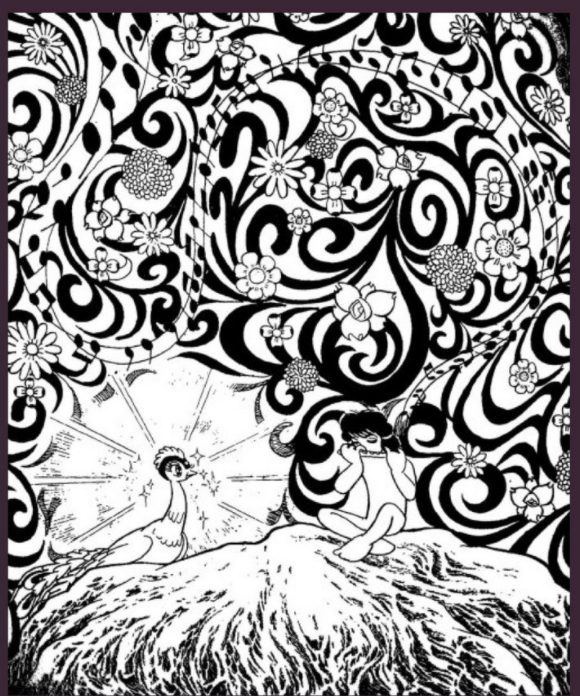
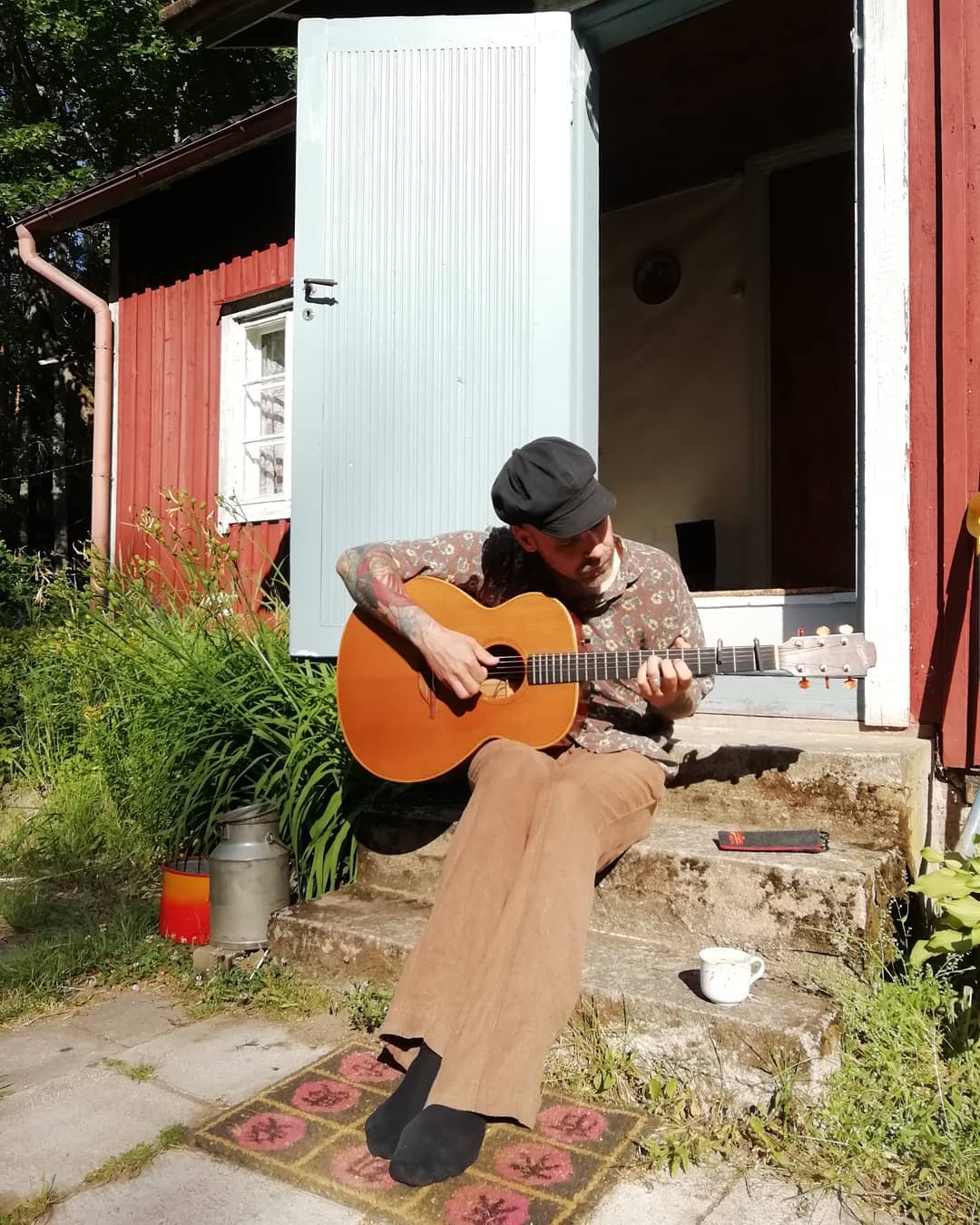
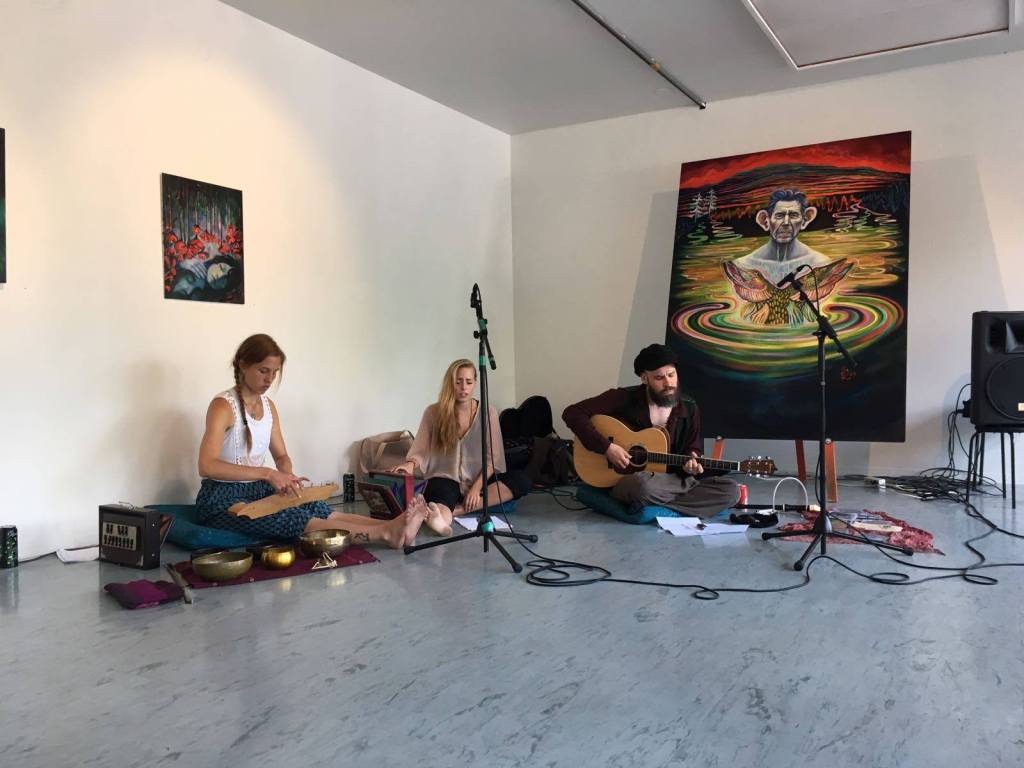
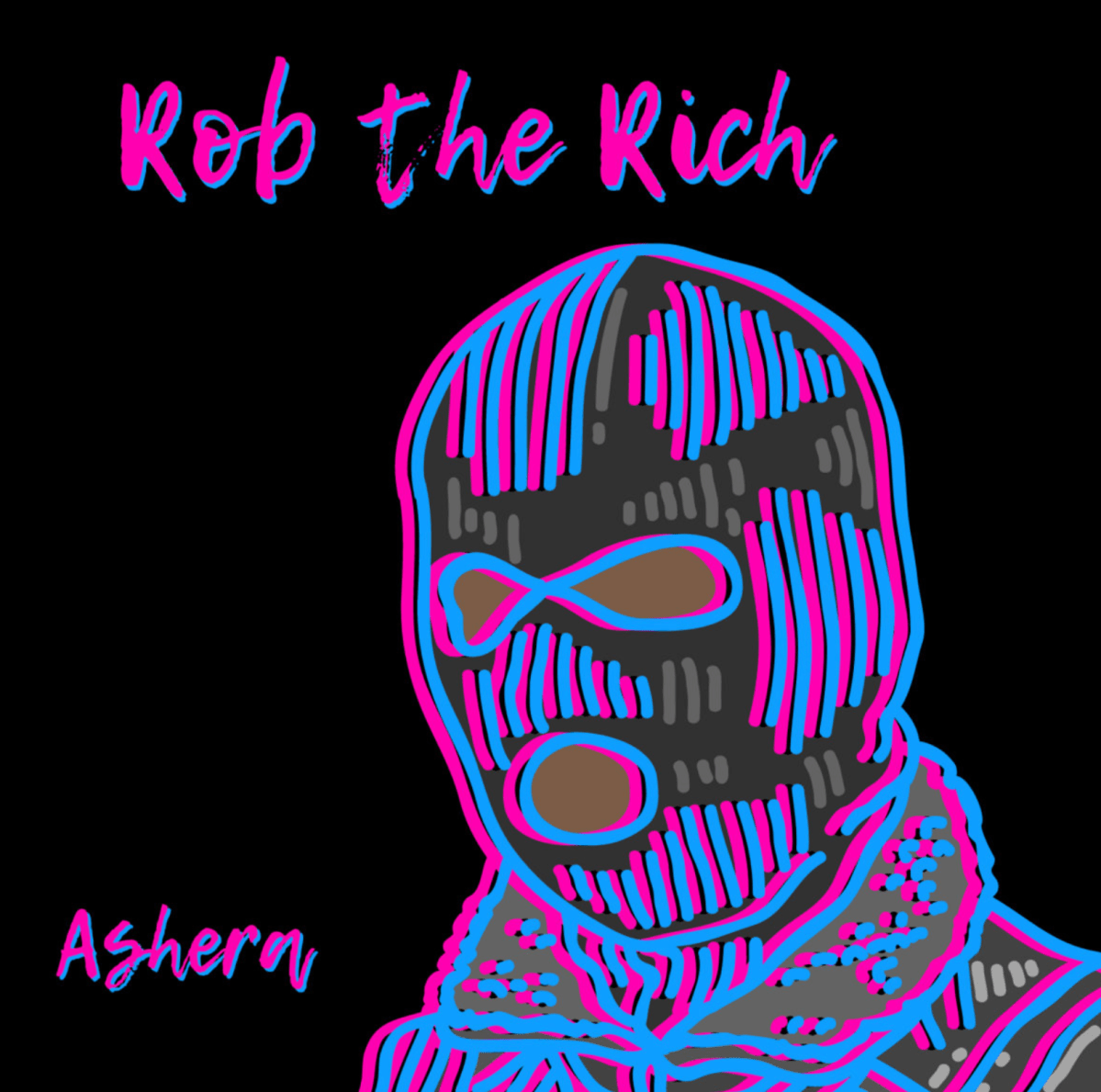


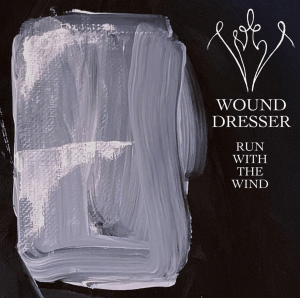
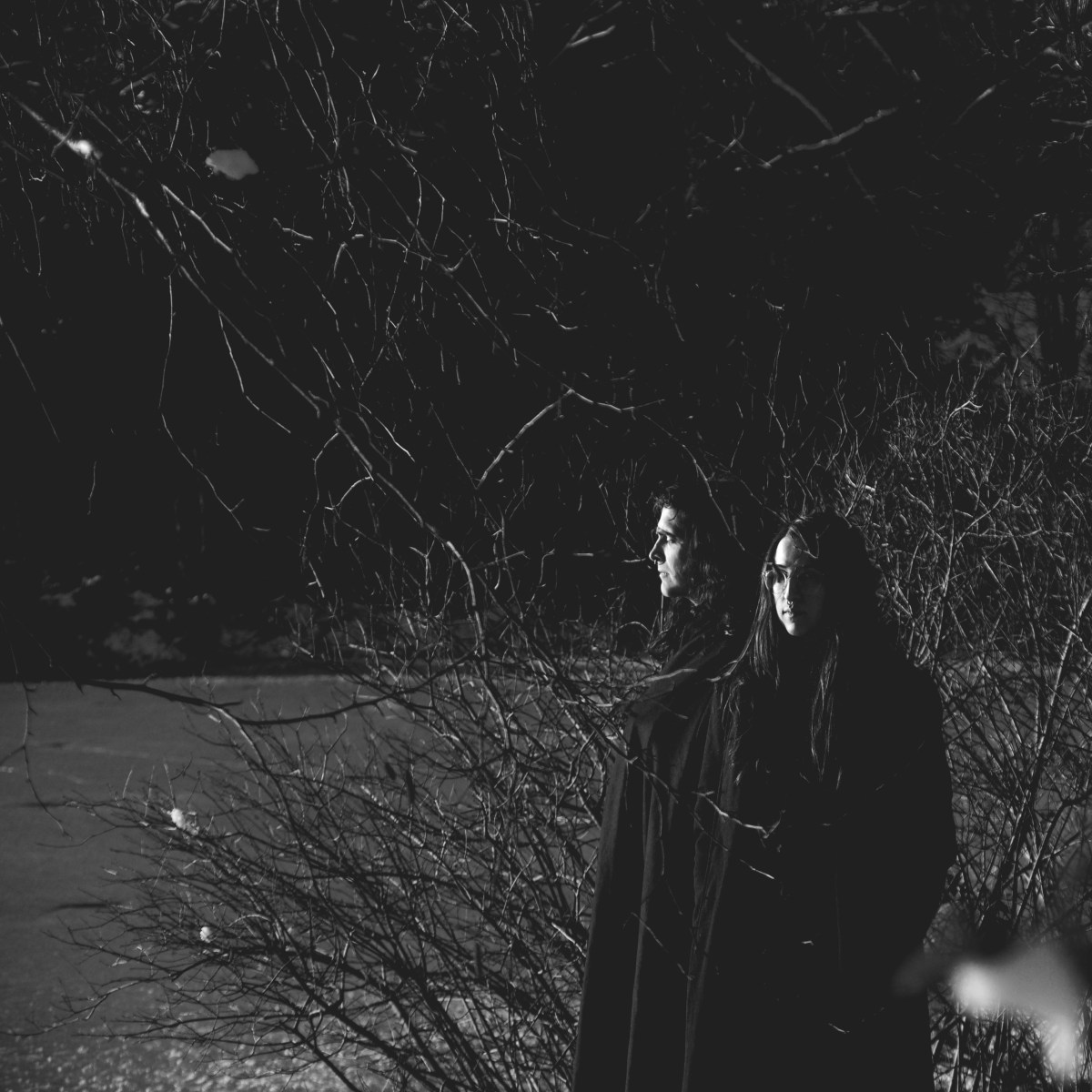
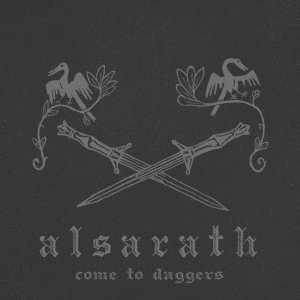
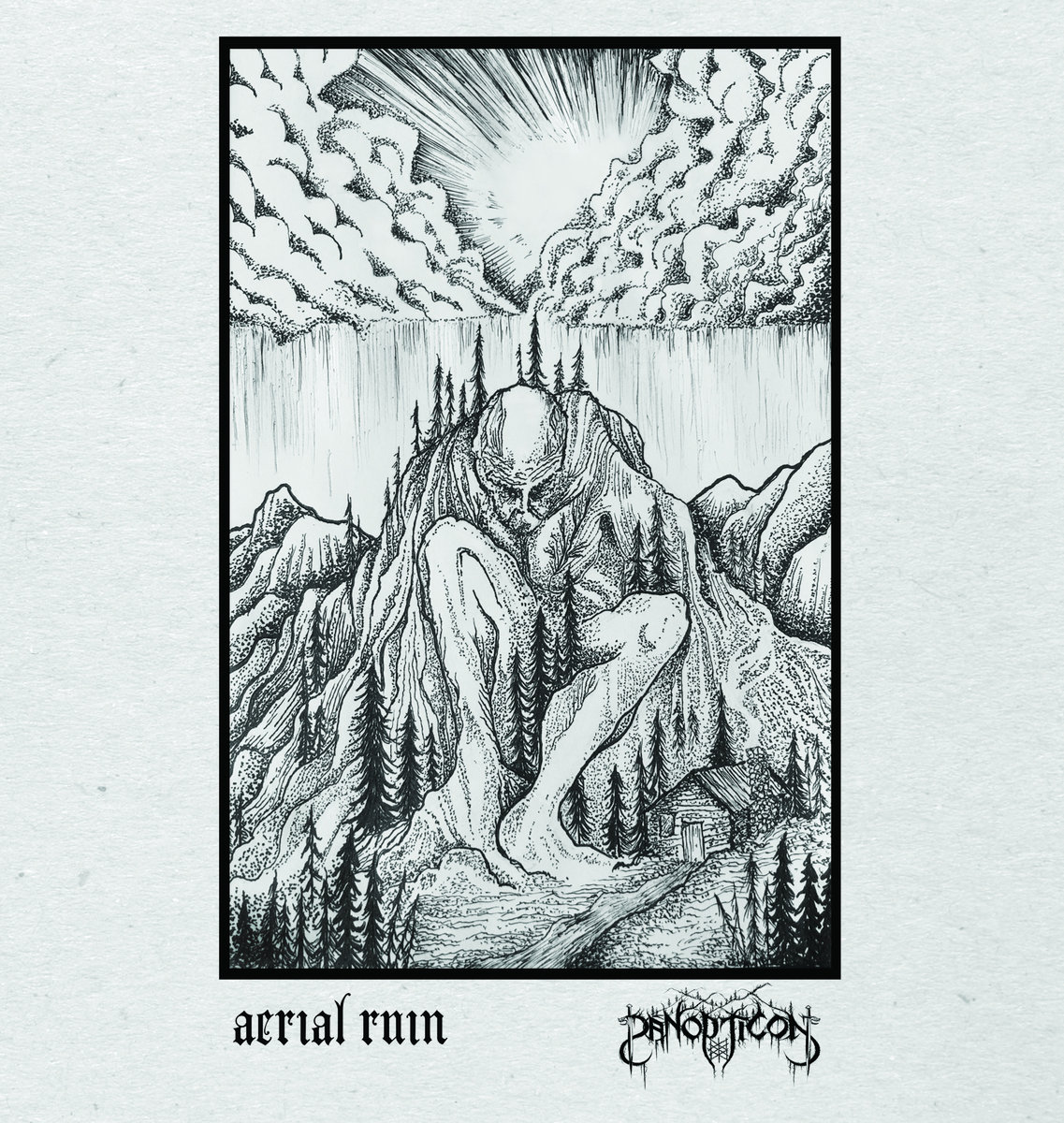
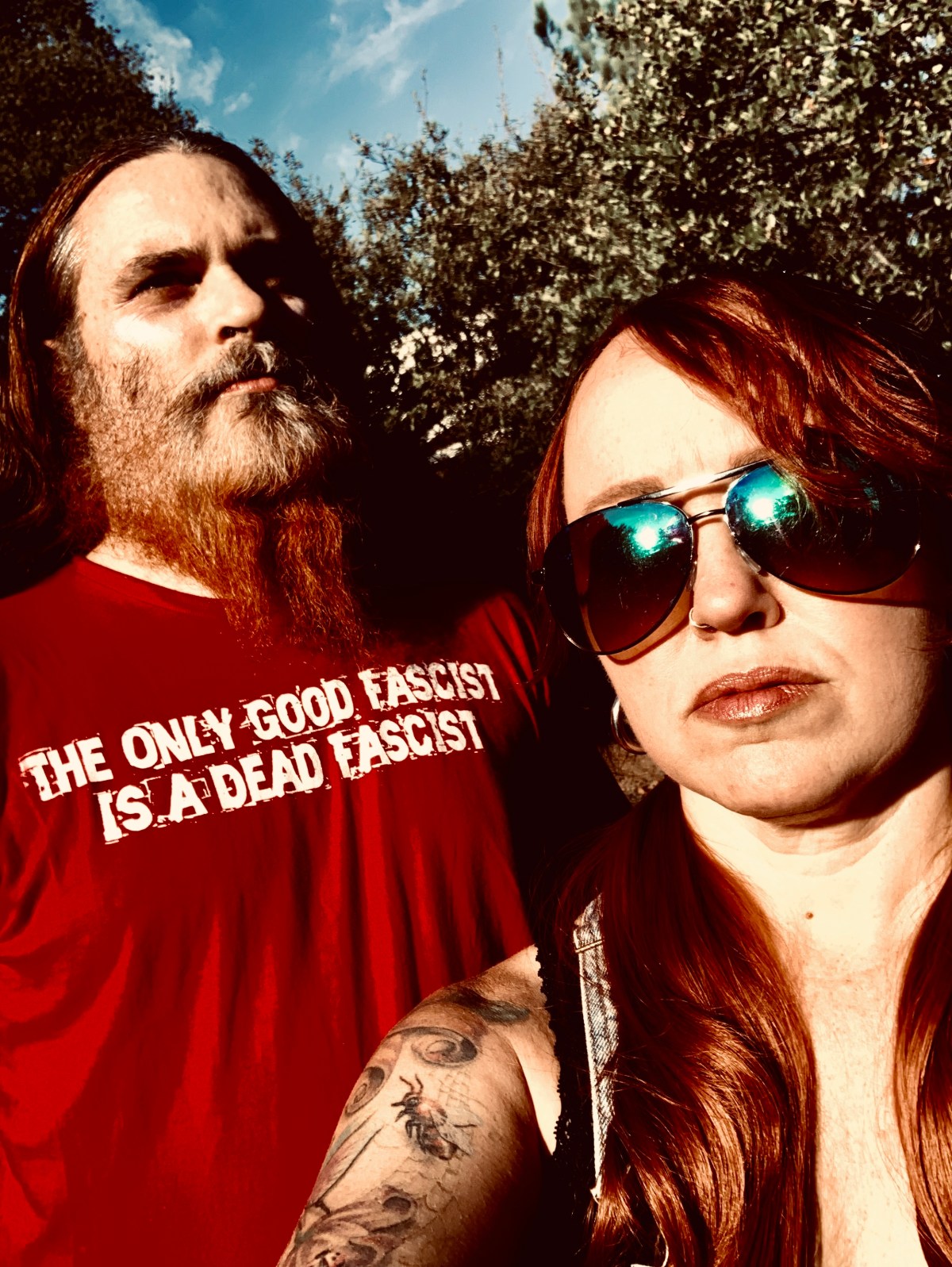
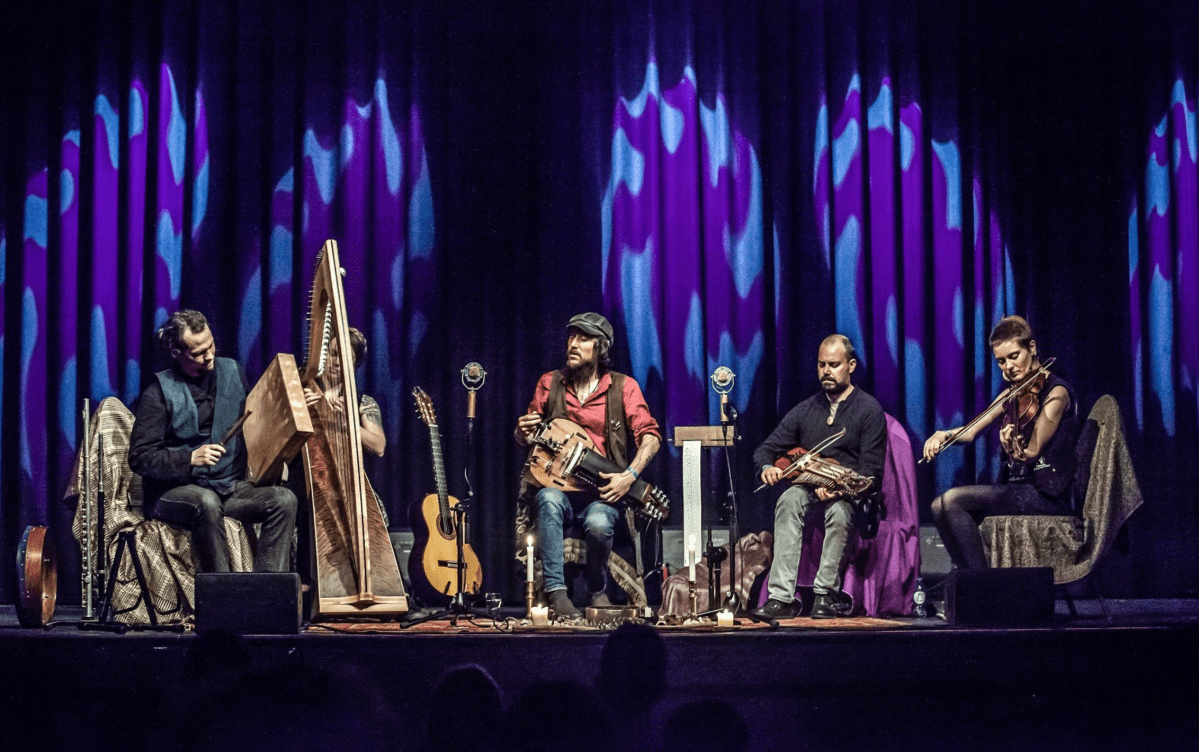


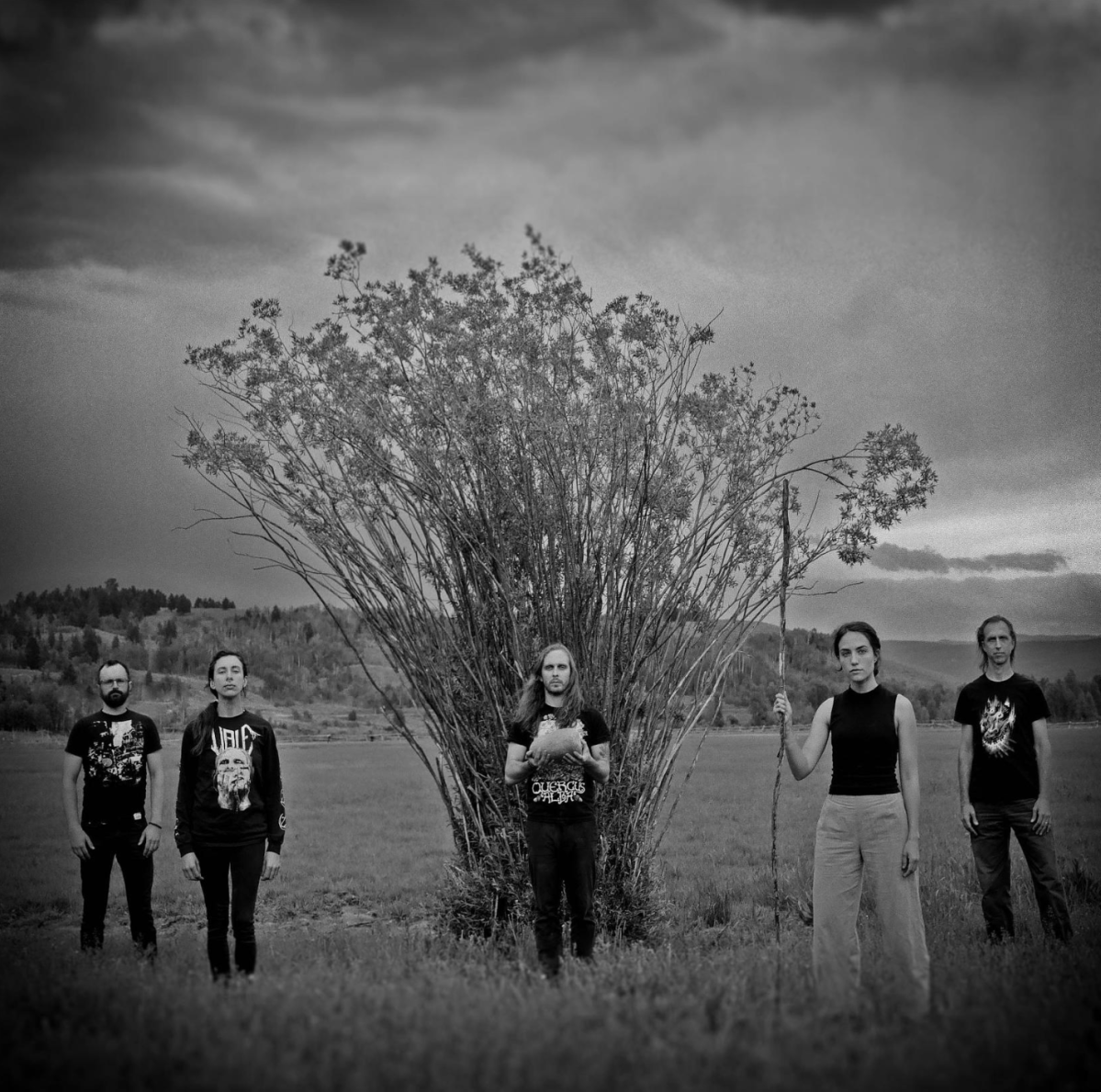
 A Blaze Ansuz: Antifascist Neofolk