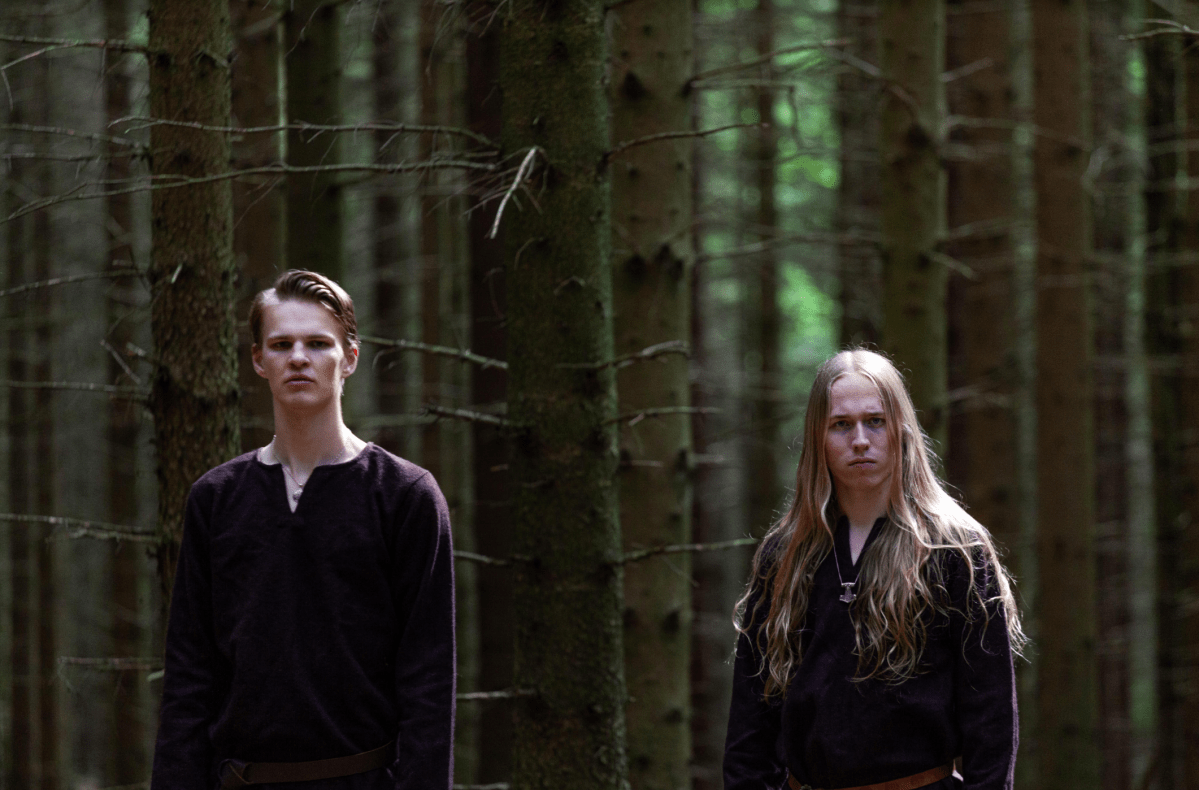
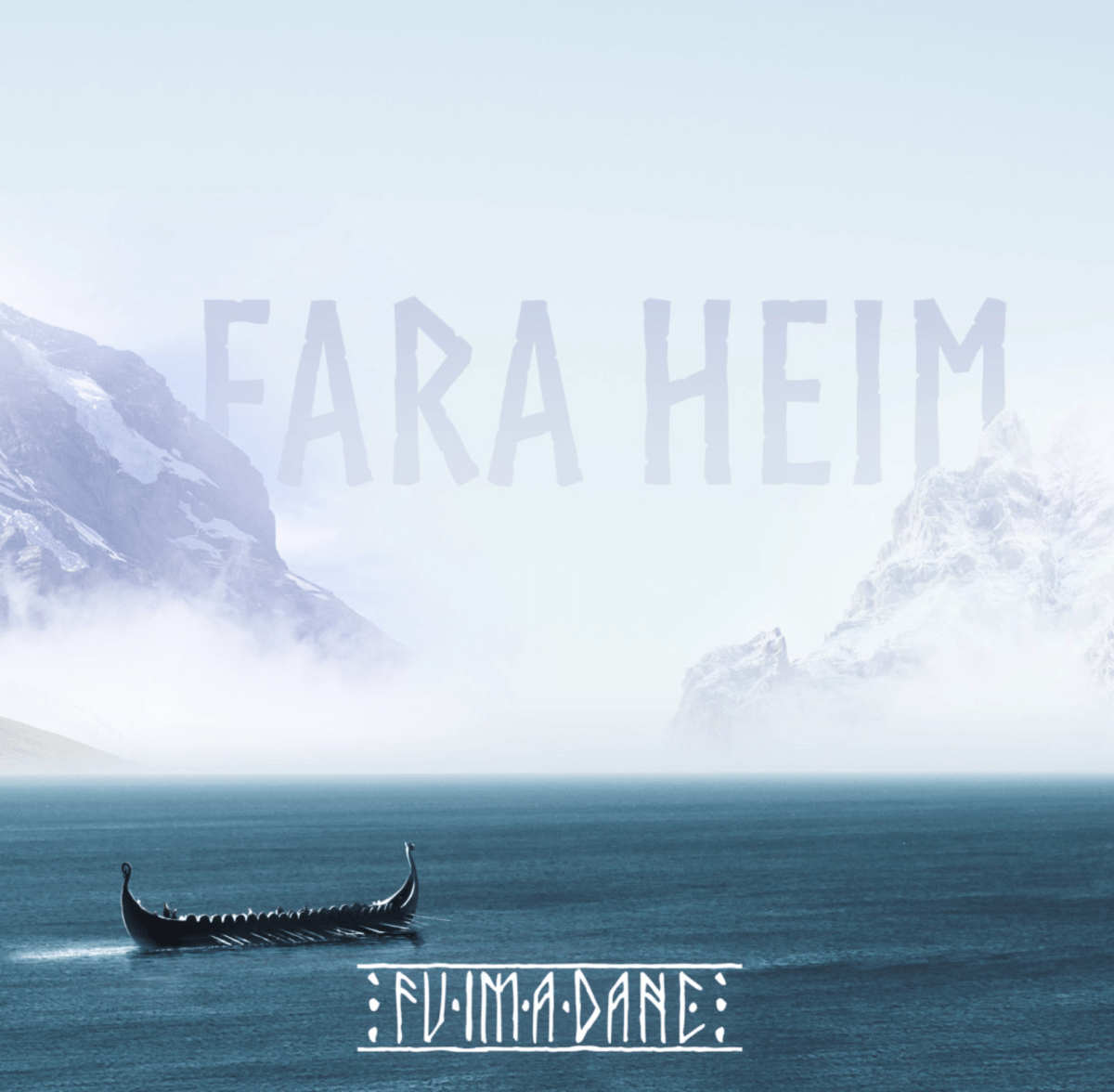
NEW RELEASE: Fuimadane Releases Perfect New Track ‘Fara Heim’ for Yule

Nordic and pagan folk artist Fuimadane has become one of our favorites over the years through their eclectic mix of traditionalist sounds tied together with synthesized ambience. The Nordic spiritual sound acts as the foundation for a cascade of instruments and orchestral voices, one that feels just as epic as it is nostalgic.

This perfectly describes their new track Fara Heim, available now on Bandcamp. We are previewing the new track below, and make sure to check out the interview we did with Fuimadane this year. We also want to note the incredible album art that was done by Kessi. We also have added Fuimadane tracks to our Antifascist Neofolk Playlist on Spotify.


Asking the Cards: An Interview With Awen

Screen Shot 2019-12-21 at 9.56.27 AM.png

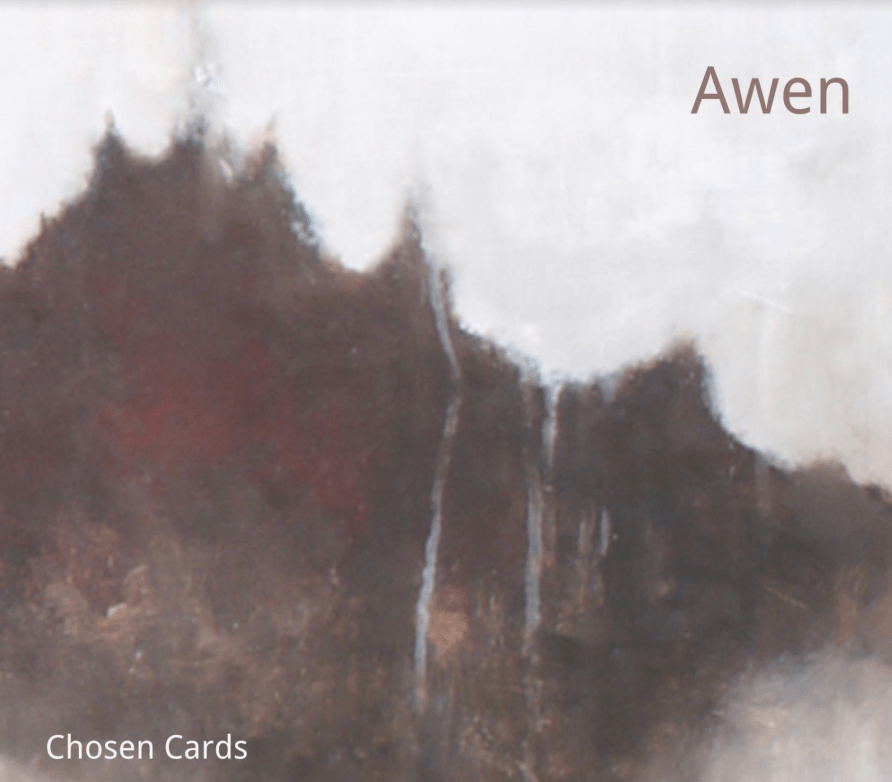
The Belgian neofolk project Awen is the perfect culmination of their history mixing the traditional with popular folk into one of the most challenging ensembles of the decade. Their latest album Chosen Cards is built around the Tarot, each song representing a card in the deck and a guided path of possibilities. The word “Awen” itself means inspiration in Welsh and Breton, what inspires the bards and those who string words and sounds. There couldn’t be a more perfect word for what they are building.

Bart Deruyter from Awen actually reached out to us directly to share the dismal experience he had recently seeing neofolk being associated with fascism. “I explicitly want to ‘out’ we’re anti-fascist,” he said, mentioning that his vision of the new album ran completely at odds with these kind of ideologies. “I have played in a regular folk band in the past (+/- 15 years ago) and yes, then too some folk communities were associated with extremism. I always hated the implicit association and I see it is the case again!”

We interviewed Bart Deruyter about Awen, how it came together, what the concepts behind the new album are, and how traditionalism and paganism inform their development.

How did Awen come together? Were you all in bands before this?

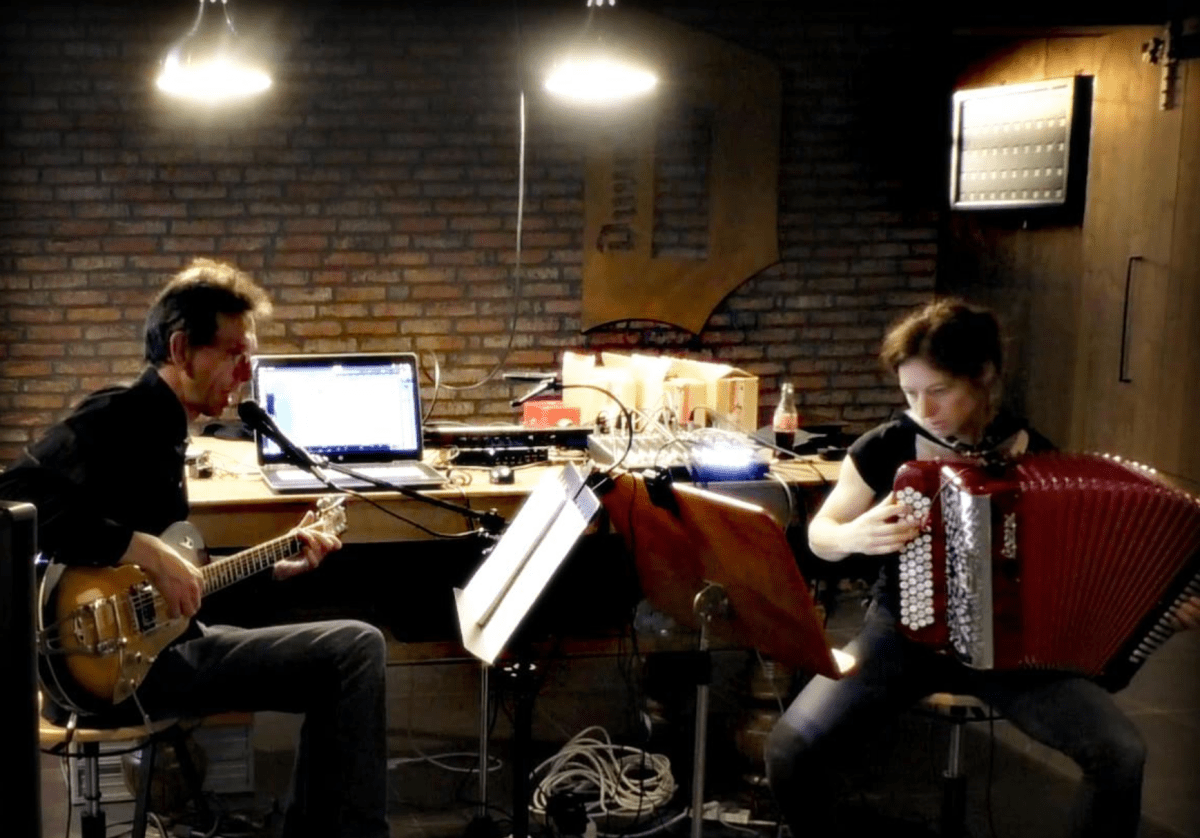
It was in a time when I had changed jobs, when me and my girlfriend had moved away and when I just had quit previous bands, ‘Pia Fraus’ (electro/noise/industrial/experimental), ‘Onder Invloed’ (‘roughly translated as ‘under the influence, playing folk’) and ‘Tana’(piano/vocals). Lieselot, as one of my best friends and of my girlfriend, had been visiting the rehearsals and shows of Pia Fraus and also the shows of Onder Invloed. We already had been discussing the possibility of having her joining Pia Fraus with her accordion, but when I quit and the band subsequently split, it didn’t happen of course. 

But we kept in touch. After some talking about how hard it was to start something new, getting to know people and keeping friendships alive over longer distances, we then asked ourselves why we wouldn’t make music together. We decided we better would. Awen was born.

How do you describe your sound? Have you ever avoided using the neofolk label because of the right-wing connotations?

It is pretty hard to describe our sound. Given my past in music it has become a mix of a lot of influences. I’ve got a partly classical education, so there’s a lot of classical, even orchestral sound. But then again I have played bass and guitar in a folk band, so the sound became influenced by it too, and in the use of electronics and samples you can hear Pia Fraus reaching out. Some say the end result is much like film music.

A colleague of mine described it wonderfully. Awen is a house with many, many rooms.

When we finished our album ‘Chosen Cards’ we started thinking ‘What genre of music do we actually make?’ We had no clue. Then a friend of mine pointed us in the directon of Neofolk/Dark Folk/New Folk. We actually googled it and discovered there’s indeed this genre. We also discovered it can sound completely different across the globe. Even today I have no real idea on what it is that keeps it together as a genre. But when you hear it, you kind of know it is Neofolk. 

So imagine my surprise when I read about the association between neofolk and fascism. No, I don’t want us to be associated with fascism in any way. It is against the very nature of the music. The music itself is multicultural so how can it ever be fascist? Since we didn’t know about the ‘right-wing connotation’ in the first place, there was no reason to avoid the label. Even knowing it I don’t see why I should avoid it, it’s about describing a type of music, not politics.

What does it mean to be an antifascist band for you?

It is very simple: not being a fascist band. I’ll go even further, we are not an antifascist band because we should not be. We are not an activist band, we’re making music, not politics. To be clear, we don’t consider ourselves to be ‘anti’ anything in the first place. All we do is make music. We simply don’t want to be associated with fascism in any way.

Let’s be honest, there should not even be a channel like this to show one is ‘not fascist’ in the first place.

How do folk traditions play into your music? How about myths, legends, and pagan spirituality? What traditions do you pull from?

There are quite some folk elements. It is undeniable that the accordion is associated with the sound of folk music. But this is not by choice. Lieselot wanted to have a different way of playing her instrument, not the ‘traditional’ way in which it is being used. I think we succeeded at that, but the sound itself is enough for many, to make the link with folk. 

I use a lot of unusual rhythms and sometimes even mix musical meters within the same song, which is used a lot in traditional folk music. I’ve used samples of a friend playing the djembe, which brings us to folk music yet again. I think most of the folk traditions have slipped in unconsciously because I have been playing in a traditional folk band for about five years. It’s simply in the way I play.

An important tradition we have used, are the Tarot Cards. The topic of our album, are ‘chosen cards’. We’ve chosen twelve cards from the Tarot deck and interpreted them in our own way. We have lined up these cards so they could form a story. It’s up to the listener to make their own interpretation of it, to invent their own story. To start with, we used a story I have been writing for a long time, but writing it is on a pause for a few years because I’m too busy with music. That story is influenced by Wiccan and Pagan spirituality in several ways, ranging from the five elements , the elements of nature to symbolism and numerology. Again, it is not our intention to direct the listener to this story, but to their own. It was only a means for us to find an order.

How can using traditions from the past help liberate us now?

For me there are in essence two ways to deal with traditions. One is to follow them and the other is to rebel against them. But of course there is the gray zone, where you can mix and match between rebelling and following elements of a tradition. You follow what you like and rebel against what you dislike. 

But basically we all are someone’s children and we’ve been growing up with certain traditions, we can only build upon what we know and enrich it with what we learn from others. Knowing and understanding other traditions helps us to know and understand our own traditions better and it helps us criticize our own traditions too. In short, only by knowing other traditions you can evaluate your own traditions and try to get to the best possible result for yourself. 

You could then say it is not the original tradition anymore. That is true of course, but I’ve always been told, and I agree with it: when something does not evolve anymore, it is dead. 

I think with our music and lyrics we have accomplished an evolution for our own. We have used and mixed classical, folk, current techniques and traditions and created something which ‘liberates’ us from them by using them. Fascism locks in a fundamental set of traditions and doesn’t allow change. There is ‘neo’ in neofolk, which more then hints to ‘new’, or ‘renew’ which is a strong indication of ‘evolving’, ‘changing’, the opposite of fascist thinking.

How does songwriting work? Is it collaborative?

Yes, it is collaborative. It is true that I do most of the technical stuff, the technical ‘music-writing’ and ‘theory-thinking’ to make it fit, this certainly was my task when expanding from only ‘guitar and accordion’ to the use of samples and virtual instruments, but the basic songwriting is collaborative, because we write the lyrics together by discussing the topics very intensively and by listening and commenting on what we play. I can suggest a chord, then she agrees or disagrees to use it, or to abandon the idea. Then follows the way it is played, the voicing, the rhythm etc. it is all done collaboratively. 

What can bands do to push back on fascists in the scene?

Well, when I played in ‘Onder Invloed’ we once performed in the region near Brussels, where the discussion about using ‘Dutch’ or ‘French’ often becomes explosive. The village is officially Flemish, so all official documentation, schools, streets are Dutch, but the majority speaks French. Being from Flanders we were associated with the Dutch speaking side, while we were not taking any side. We played music from Flanders, Wallonia, France, Sweden, Iran, England, Ireland, Scotland, etc… in an empty hall. Sure, we were not a ‘famous’ band, but nobody showed up, afraid of possible conflict. Which is a shame of course, sharing cultures is the best way to learn from each other.

So, what we can do as bands? We can only play music. 

What’s coming next for you?

Our album is ready, we have done a few performances, now we would like to do more, many more. We have grown as a duo, in our music, we now need to grow as a live band. The only way to do that is by doing shows. We want to play! We want to lay our cards for our public and let them tell what’s coming next 🙂 .

What bands would you recommend for antifascist neofolk fans?

As I described earlier we were not aware we were making neofolk in the first place, so we don’t really know much about other ‘neofolk’ bands apart from what we researched to figure out what we do. We would love to find our way in the scene, so I’ll return you the same question, what bands would fit with us? Maybe us ‘matching’ bands could help each other by being each others ‘supporting acts’ on shows or Neofolk festivals etc. 

Secondly we were not aware there actually is something as ‘fascist neofolk’, it only showed up while researching the term ‘neofolk’, so we cannot (yet) recommend ‘antifascist’ bands. Fascist or antifascist never showed up on our radar since we even didn’t ever expect it to exist in the first place. 

We are adding Awen’s new album Chosen Cards below from their Bandcamp. They are not on Spotify yet, but we have added a number of new tracks to our Antifascist Neofolk Playlist on Spotify so make sure to follow it!

facebookbanner

Appalachian Hill Stories: An Interview With Twilight Fauna

So many of the bands we have been touching base with through A Blaze Ansuz has been on the intersections of neofolk with a huge range of genres, drawing lines of traditional music through metal, industrial, chamber, music, ambient. Twilight Fauna was this perfect synthesis, drawing on the same redneck Appalachian twang that we know from Panopticon and bringing in traditional folk from the mountain as a starting point. And Paul Ravenwood, the original solo artist behind Twilight Fauna (it’s now a two-piece), has a story that is told through his music, generations of his family coming from that same mountain. And this is the fundamental core of the folk music, traditions handed down in rural areas as ways of knowing your own history, the type of storytelling that is more emotive than prose.

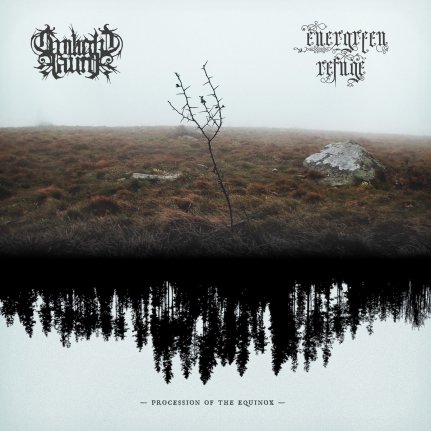
We first came in contact with Twilight Fauna in his collaboration with Evergreen Refuge, two artists I could not have conceived of in duet until I heard it. I was able to interview Paul Ravenwood about his decade working on the Twilight Fauna project, how the mountains speak through his work, the shifting role of tradition in his unique synthesis, and why we have to make our music scene a bulwark against fascism.

How did Twilight Fauna come together?

I started the band as a solo project almost 10 years ago as an outlet to some things I was going through. Josh Thieler of Slaves B.C. came on board as a full time drummer around 3 years ago, and we’ve been a 2 person operation since then.

How do you consider yourself musically? How do you define it?

That’s a tough one to answer. I think above else I just see myself as a songwriter. Folk music and metal is just how that comes out because those are the genres I’ve always gravitated toward. Twilight Fauna is definitely a mixture of all my interests. Folk, black metal, post rock, it’s all in there. I like that it’s so hard to point to one specific influence or genre and say we’re that. The interplay between all of our influences is really what creates our sound. There’s layers. I would never want to be in a strict genre band that follows all the rules because then you just end up being a copy of someone else. It’s kind of fun sometimes to hear metal people be into it until the banjos kick in and then get really confused. Or traditional folk people jamming out until the screaming parts kick in and then aren’t sure what to make of it. I definitely think there’s a section of people that get both and who appreciate what I’m doing. I’m extremely grateful for those people because they throw enough support my way that I can continue the journey.

What is your songwriting process like? What instruments do you use?

I usually start out on guitar or banjo depending on the song. In terms of songwriting process, it’s changed over time but after 10 years I have a pretty consistent process I like to follow. I’ll sketch out the bare bones version of the song and practice that for awhile. After a few months of practice, I’ll record rhythm tracks as a starting point. Then we’ll start building from there. At some point Josh will come in and do drums and usually vocals happen at the end. It’s a long process because I handle just about all the production as well. It’s usually a continuous cycle of record a bit, then mix, record more, then mix more for a couple of years until it gets to where we want it.


How did the collaboration with Evergreen Refuge come together?

Dylan and I have been friends for a long time. I’m not even sure how we met, I guess we just found each other when our music started taking off around the same time. So it’s something we’ve always talked about along with our friend Chase of Deafest. We ended up recording a couple records together as Arete, and Dylan and I put out a split record. At this point, the folks I’m comfortable working with are people I’ve known for years. Dylan and Chase really are brothers.

How does the story of Appalachia play into your work? Do you draw on the folk traditions of the area?

I’ve always thought the best music is something that connects you to a time and place. Growing up in the mountains here, you can’t help but be influenced by it. I wouldn’t be the person I am today without those experiences so I draw from the folk traditions because they’re such a huge part of who I am. My family has been in the mountains here for 160 years. These traditions are my traditions.

There’s also a huge history of activism here. We’ve been at the front lines of the labor movement going back to when they first started mining for coal all the way up to the teacher’s strikes that have been going on in West Virginia and the tree sits currently happening to stop the natural gas pipelines. People here have always had to stand up and fight for themselves. You can’t help but be moved by that. It’s inspiring to see people fight for their communities and their homes.


There seems to be a crossover between bluegrass, metal, and neofolk here. How does each tradition inform your music?

I’m pretty well rooted in bluegrass and metal traditions. Neofolk is something I came to really late. And to be honest, I still have a hard time understanding the more industrial style of neofolk. I’ve always just sort of looked at it like I’m taking traditional instruments and playing them in nontraditional ways. After all, why pick up a banjo and just try to play note for note like Earl Scruggs? If folks wanted that, they could just put on a Flatt and Scruggs record.

So I’ve always wanted to push the boundaries to see what kinds of sounds I can get with folk instruments used within a more varied soundscape. So in a way I started calling some of my stuff neofolk out of necessity because around here if you say you play folk music people usually assume it’s straight bluegrass. That being said, I definitely feel a kinship with some of the neofolk bands out of the Pacific Northwest. Those folks are more focused on the nature and that’s something I relate to on a deep level.

Why are you an antifascist musician? Why is it not enough to just be non-fascist?

More than a musician, I think first and foremost I’m an antifascist human being. We live in a time where a segment of our population would take away the rights of a lot of other people for merely existing. They’d also completely destroy the mountains and our entire ecosystem in the name of economic progress. To remain silent would be complicit in allowing that to happen. So I guess I never really started by thinking I’m going to use my music to push a political message. I’ve never sat down and tried to write a political song. But I’m not going to be quiet when I see injustice. I’m going to do my best to stand up for people because we’re all in this together. Whether it’s in the music work or my local community, if I see something I’m going to speak my mind about it.

That being said, I’m not always comfortable with some of the tactics that have been used in the past. Opening a can of mace into a crowd at a show causes a lot of collateral damage and doesn’t seem to be a productive way of changing minds. I’ve seen plenty of metal shows where people bring their kids or just people who happen to be there without knowing the context of the bands. I’d rather not see people trying to stop racists stoop to their level. It’s sort of like how America as a country tends to view war, that if you just bomb enough people we’ll win. But it turns out, that just creates more enemies. So I would rather see the focus on nonviolence. It’s like how every so often, the alt-right will show up in a city dressed up for a fight and antifa folks will show up and they’ll beat each other up. I’m sure in that moment, it feels great to beat the shit out of a racist. But at the same time, that guy is going to go home and tell everyone he knows “look what happened. I was attacked by antifa” and a bunch of other bullshit. And all that will do is reinforce in all those people’s minds that the left is violent. I 100% agree with the message, but I’d like to see more creative ways of curbing racism than standing on main street hitting each other with homemade weapons. No one ever got hit with a bat and went home and decided to stop being a racist. We have to be better than that.

Have you experienced any far-right influence in the music scene?

I have. I’ve definitely been at shows where nazis have showed up. I live in an extremely conservative part of the world where those elements exist in force. In certain situations you just have to be sure you’re doing everything you can to keep the folks around you safe. And online, it’s easy to see certain bands pander to the far right to get support from that portion of metal fans. It’s definitely a thing that exists, but I like to think the tide is turning on that kind of thing. I think people are much more cognizant of that than they were 10 years ago. Maybe I’m being too optimistic.

What’s coming up for you?

We just submitted our next record to the pressing plant so we’re shooting for a summer 2020 release. I’ve been working on that for the last couple years so I’m glad to finally see a point where it will come out.

What bands would you recommend for antifascist neofolk fans?

As far as folk, anything on Little Somebody Records. Arrowwood and Novemthree especially. Sangre de Muerdago is another good one. As far as metal, Evergreen Refuge, Deafest, Slaves B.C., Cloud’s Collide, Redbait, and Dawn Ray’d. That’s just touching the surface. There’s so much good music coming out these days. It’s hard to keep up.

We have added a number of Twilight Fauna tracks to the Antifascist Neofolk Playlist on Spotify, and check out some of their Bandcamp albums below.


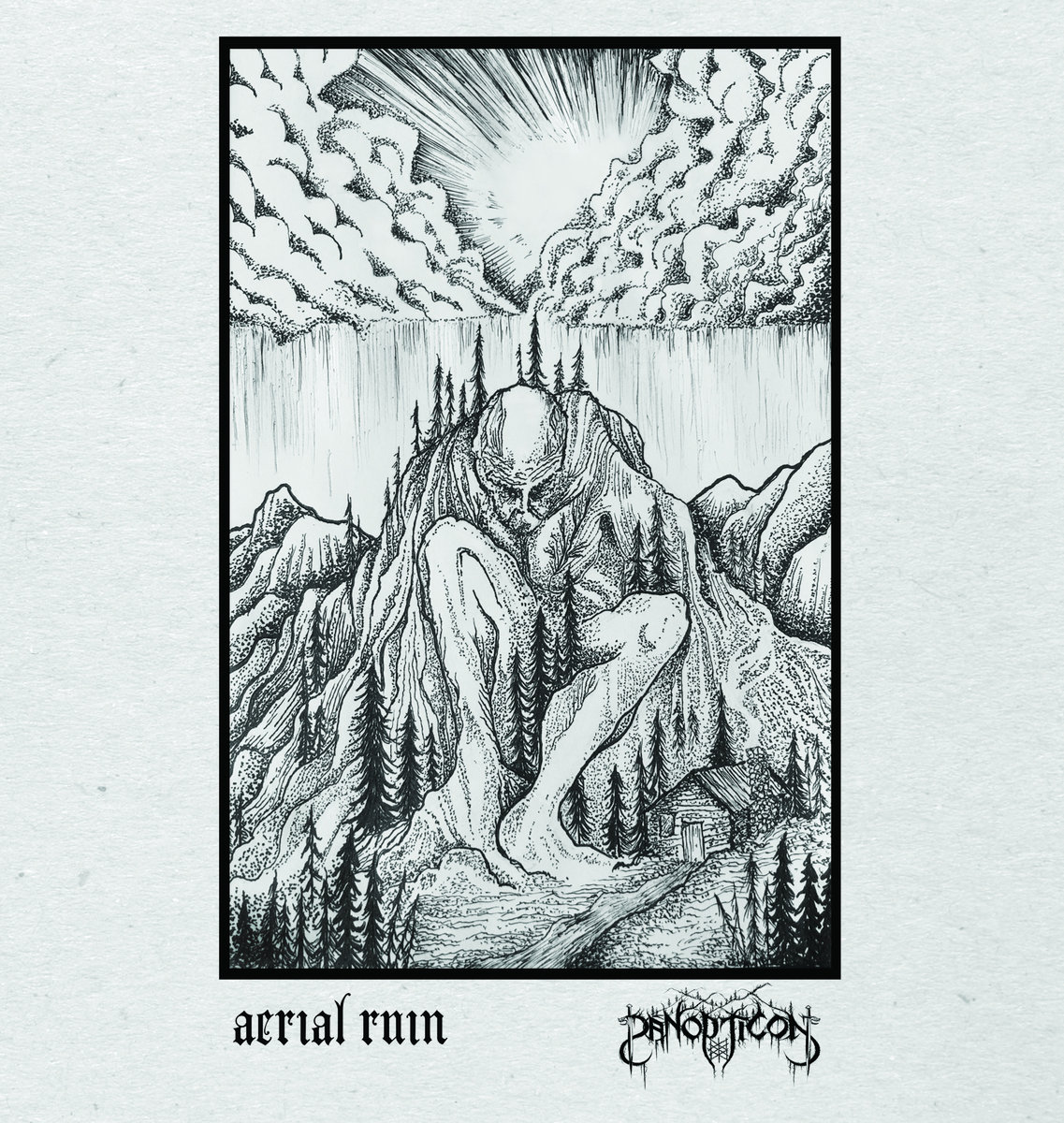
New Split Album Preview from Aerial Ruin and Panopticon Released for Holidays

Two of our most championed musicians, Aerial Ruin and Panopticon, have released a preview of a brand new nine-track split on Bandcamp just in time for Yule. This is acoustic-leaning hill music, complete with the regional folk charm both are known for (This may be Panopticon at their most neofolk).

Check out the two tracks that are available to now (one from each) and pre-order the rest of the album, to be released on January 31st, 2020.

Track Listing

Aerial Ruin

    1. Sanguine of ail
    2. Lesser the blade
    3. The sea is now steam in mist of a scream
    4. Asempryean
    5. Epilogue Centari

Panopticon

  1. No Lines Away
  2. North Dakota (Chris Knight cover)
  3. Cold Cold World (Blaze Foley cover)
  4. The Pit

Ashera’s New EP “Antifascist Lullabies” is a Declaration of War

The Portland based neofolk duo Ashera evolved very consciously out of the explicitly antifascist neofolk trend that has been perc0lating (and we have been encouraging). There is an intentionality to this, to refuse nationalism a place in romantic post-punk and to allow for a romantic revolutionary music of our own. We interviewed them earlier when they released their first singles “1,000 Dead Fascists” and “Capitalism Must Burn,” but then dug in even deeper with them on this latest release. There are a lot of questions about how this thing known as antifasicst neofolk is going to develop, and they are trying to stand in front and draw a line between the complacency of the scene’s past.


Why is antifascism front and center in your music? Why is it not good enough to just be a non-fascist band?

We made a conscious decision to place antifascism at the center of our music because antifascism is where we are in life, it’s the social experience that we’re having and with which we’re engaging. It’s the story that we want to tell, the picture we want to paint, the song we want to sing. Antifascism is the values and legacy that we want to leave for our kids and for their children.

This moment that our society and our world is currently in is too important and too historic for us to be fence sitters and appeasers. The situation that has developed within the neofolk music scene is a microcosm of that. Fascists have taken over the scene. If the rest of us don’t speak up and act out to counter that—if we aren’t explicitly antifascist—then we are enabling fascism and conceding important ground in the struggle.

When the fascist creep is on the march and we can all see it gaining ground, then you are either explicitly anti-fascist or else at the very best you are actively choosing to enable the existence and the spread of fascism within this music scene and within our society. At some point someone must draw a line in the sand. That was done with the creation of antifascist neofolk.


What do you think radicals are missing by not engaging in art, spirituality, and romanticism?

As people who are skeptical of institutions of wealth, power, and religious doctrine, and as labor and social justice organizers in our communities we can understand the overwhelming sense of realism, mechanism, and historical materialism—the angst and anxiety of immediate economic necessity, social, and philosophical upheaval in which we can so easily get bogged down. But there is so much about the human experience that we miss out on when don’t take time to dream, when we don’t make room not just to appreciate but to engage with and actively cultivate art, spirituality, and romanticism in our lives and in our society.

We are both skeptical people, and Justin is an atheist. But when we see and hear our favorite music performed live, when we dance with hundreds or thousands of other people who are feeling the same ecstatic emotions created through a shared, live, interactive, tactile-audiovisual experience, we get a rush of adrenaline and emotion that is hard to describe as anything other than a spiritual experience. It’s an experience that fuels our own creative urges, our own music, our own will to dream.

On a personal level, we think radicals miss out on valuable experiences and lessons in this life when we don’t engage with art, poetry, and music. We miss out on feelings of insight and ecstasy when we don’t engage with and cultivate non-dogmatic spiritual experiences that aren’t rooted in hierarchical and patriarchal belief systems. We miss out on important moments with ourselves when we don’t take the time to lay in the grass, stare at the clouds, and dream.

On a societal level, when we don’t allow ourselves the room to play and have fun, to write stories, to romanticize and mythologize our histories and our lived experience—when we don’t create our own fables to tell our children with moral lessons in equity, anti-colonialism and anti-racism, in the ethics of radical cooperation, mutual aid, and antifascism, when we fail to engage in dreams of a better world and to create real or imagined utopias with beautifully diverse, just, and equitable communities—then the left and our movements are bound to lose. Then we are devoid of a very large and important part of the human experience, and we can be sure that the forces of fascism and other forms of reactionary authoritarianism will fill the void with songs and mythologies of national superiority, racial supremacy, and making America great again in the service of imperialism, wealth, and power.


How do folk traditions play into your music? Do they inform your politics in any way as well?

The whole bardic tradition and its modern singer-songwriter form has always inspired us. We love songs that aim to tell stories. Music is storytelling through melodic, harmonic, rhythmic sound. Music is poetry and auditory art that prompts us to feel, that explores the human condition and the whole range of possible emotions that we navigate in our late-stage capitalist society. Music is the expression of our dreams, our aspirations, our history. Music is the sharing of stories among people and across space and time, from one generation to the next. In that sense music is both folk tradition, and at the same time it is an expression and vital vehicle for the transmission of folk tradition.

As people who love storytelling, we both have a long fascination with folklore and mythology, from comic book superheroes to tales of ancient goddesses and gods. The cowboy consumerism and militantly blind patriotism of white-U.S. culture can be more than a bit vapid. So we binge watch TV shows about people with superpowers and we delve into ancient stories about magick and faery folk to try and connect with our past, with something larger than ourselves that is fantastic and inspiring. For both of us our first bands, and in some sense our lives as music artists began with pagan neofolk music that was rooted in a particular mythology, folklore, and spiritual tradition that we were both a part of, and which is where we actually first met. Through this new and modern incarnation of a presumably ancient spirituality, we hoped to find something in neopaganism that would help us connect with not just our cultural ancestry, but with the pagan ancestral roots shared in common by all cultures around the world, as well as provide us with a spiritual framework that—we hoped as pre-capitalist and pre-Christian—wouldn’t be as racist and patriarchal in nature as the religious tradition and culture we grew up with.

This tradition of covens that we were part of teaches that there are five magickal arts: agriculture, natural medicine, astrology, dancing, and music. So those of us who were musicians would get together and play folk music with guitars, flutes, mandolins, banjos, dulcimers, and bodhráns. We would provide music at seasonal rituals and other celebrations, and eventually we formed a band on the side called  Cloverfields that played at pagan festivals around Southern California and spawned other future bands that we were both a part of.

But in addition to music and storytelling, another important folk tradition that we learned in part through neopaganism, a tradition that is important to our music and very much informs our politics is the folk tradition of resistance. Communities of rural and working class people have always been at the heart of resistance against institutionalized wealth, power, inequity, and hierarchy. That tradition of folk resistance goes back thousands of years and beyond to the slave revolts of antiquity, to resistance by common, rural, and indigenous folk around the world against forced conversion to Christianity, and more. In communities that practice neopaganism, at least here in the U.S., there is a strong sense of shared resistance against the patriarchal Christian juggernaut that upended our ancestors’ old way of life, that replaced and destroyed so much of our cultural heritage, an institution that has so deeply shaped and distorted the modern world we live in today. We practice the folk tradition of resistance to fascism, racism, patriarchy, hierarchy, and authoritarianism in our churches and our spirituality, in our schools and in our sports stadiums, in our places of work and our governments, in our streets and through the folk tradition of telling stories with music.


Neofolk is heavily infiltrated by fascists, what can we do to change that dynamic and remove them for good?

We don’t know if we can remove fascists from neofolk anymore than we can remove them from society in general without becoming one of the things we most despise as antifascists, genocidal authoritarians. But what we can do is resist them, shut them out, make them irrelevant in the neofolk music scene. We can send them crawling back into their holes.

To do that we need to cultivate an “everyday antifascist” value and attitude within the neofolk scene. That means we need more neofolk bands and artists to make statements that are explicitly antifascist if not in the content of their music and art, then at least in its other aspects. Refuse to perform with them. Refuse to book them. Refuse to record with them. Refuse to give them your money and your time. We can take this genre back by boxing out bands and artists who use romanticism and the mythologizing of our past to fuel white supremacy, immigrant hysteria, and fascism.

But if we do want to have any hope of truly defeating fascism, then we can’t just be against fascism as a reactionary default. We need to purposefully carve out space to be romantic, empathetic, passionate and emotional in the expression of our everyday antifascism. We need to find and create our own cultural mythologies rooted in the values of antifascism. We need to have bold visions and share our dreams with each other by writing antifascist poetry, singing antifascist songs, and telling stories of utopias built in the empty pockets of violent empires. We’re beginning to create it here in Portland with a strong antifascist presence at protests and the cultivation of everyday antifascism in our organizing spaces throughout the city, with the amazing antifascist displays, banners, flags, group chants and renditions of “Bella Ciao” at Timbers soccer games. We are beginning to create that here with music too, with the cultivation of Pacific Northwest antifascist neofolk. We can take back neofolk and make this scene a space that is as much explicitly antifascist as it is romantic, artistic, passionate, and visionary.


We have added Ashera tracks to the Antifascist Neofolk Playlist on Spotify, and are embedding their new album from Bandcamp below.

Members:

Justin Norton-Kertson – guitar, banjo, bass, midi/synth
Deborah Norton-Kertson – vocals
Reeve Bushman – guitar, drum machine, vocals
Ashera makes multi-genre music with a focus on neofolk, dark folk, and radical antifascist culture and politics. They are from Portland, Oregon,   
Album Links
Social Media Links

From Galicia With Love: An Interview With Sangre de Muérdago

The soul of antifascist neofolk came from bands who already were connected to the genre, but had a different starting point. For the people of the country, who were resisting encroaching empire or, later, fascist dictatorship, folk music was a type of cultural struggle that helped to remember who they were in the face of total erasure. In Galicia, the regional language and cultural practices, the strength of women and the diversity they respected, was crushed as Francisco Franco’s nationalist regime banned the language and expressions of tradition.

This is what has driven Galician neofolk giants Sangre de Muérdago to focus these folk traditions, handed down by families in their homes and pubs, alive in modern concert halls. A mix of romantic folk revival, traditionalist instrumentation, and a musical drive from the punk and metal world, Sangre de Muérdago has become one of the most defining crossover bands of the neofolk scene and have bucked the perception of the genre as solely owned by the far-right. Instead their anarchist inspired music has pushed back on bigotry and oppression, that was the role of the music from the start.

We interviewed Pablo C. Ursusso, who plays classical guitar and writes much of the music, about how they came together, what role Galician music has in fighting fascist oppression, and why they are taking a stand.

How did Sangre de Muérdago first come together?

Hard to describe, the winds brought us together, and then they separated us again, and then the long journey began… Sangre de Muérdago is an attempt to capture the essence of the wild spirits and translate them into our language through music, and I think this idea is what in first place brought us together.

The sound is firmly based in the Galician folk tradition, why do you focus on reviving Galician music?  Did this come from your own family traditions?

The sound is based in Galician tradition but also in many other fields. I think we are more focused on reviving the spirit I mentioned before, but we definitely have a compromise with Galician music and folklore.

I’ve grown up in a relatively undeveloped area and I still absorbed many old ways that were, and in some areas still are, alive.

What role did Galician music and culture play in resisting Franco?

The role it played during the war and the dictatorship was mostly to be in exile, hidden in the villages and the taverns, where people sang and played percussion with spoons and gardening tools.
Franco prohibited Galician language, and he was a Galician himself (only geographically speaking), so it is not only that it was forbidden to sing in Galician, but even to speak it.

Galician teachers were sent to the south of Spain, while southern teachers were sent to Galicia, in order to prevent the children to even learn the proper grammer, because at home, the Galician language was alive, but the blow that the language and culture suffered back then still has effects today.

Where do you find lyrical inspiration, and how does the writing process happen in the band?

I try to dig it up from my own most of the time, but of course I get a lot of collateral inspiration by countless sources. I don’t think I can name a specific tangible something from where I find most of my inspiration.

The writing process is on me, and often we do arrangements together. The process happens usually by surprise, but you know as Picasso said, “inspiration always catches me at work.” With this I mean that I play my instruments a lot, and when not, I sing to myself and my dog very much too, so I think that sentence applies very much to the creative process, and inspiration catches you often with the brush or the instrument or whatever is your tool, in hand.

You play in a huge range of venues, from opera hall to metal venues, why have you chosen to have such a diverse community?

That is something not chosen at all, it just happened and it is something I’m very glad about. A beautiful diversity of people in front of the stage feels very good.

I don’t really know, but after all, we are people that come from many little corners of the musical and cultural world, and some of us have been active for a long time.

I myself grew up with a lot of folk around me and at the same time deep into the anarcho/punk/diy community of music and counterculture, which in the 90s offered some of the most eclectic and interesting music that a scene had to offer, from metal to rock to experimental music. Georg comes from a more metal background, and Erik from a lot of rock and psychedelia, for example, just to mention some of us… and after all, we play folk music!

How do you see the band relating to the struggle for liberation and autonomy?  

I sing with all my heart for liberation and autonomy. And at a personal level, the band exists as a product of the struggle for liberation and autonomy.

Do you think it is important for bands to create an inclusive space and stand against bigotry?

Yes. Very much. Bands and everyone in general.

What’s coming next?  What tours, albums, collaborations or anything should people be looking out for?

Next is a good winter solstice ritual of magic and music.

We are as well working on our songs for our next album, which will be recorded in February 2020, then on tour through Europe in March, and hopefully for that time we will have in our hands our next release which is a Split Lp with Monarch. We have also some single shows popping up here and there… stay tuned.

***

We feature Sangre de Muerdago heavily on the Antifascist Neofolk Playlist on Spotify, and will continue to add more tracks as they are released. Below are several albums from their Bandcamp, and stay tuned as we spotlight upcoming releases, tours, and collaborations!


Nordic Folk Against Fascism: An Interview With Hindarfjäll

The world of Nordic folk, a subgenre of neofolk focusing on traditionalist Viking era music, has become one of the most involved and ecclectic styles in the folk revival. Part of the attraction has come from the romantic focus on Viking culture, usually ahistorical both on the left and the right. Many of these bands have found inspiration in Nordic pagan spirituality and traditions such as crafts and arts, but have had to fight to defend this culture from open white nationalists who use a “folkish” interpretation of heathenry to promote fascist tribalism.

Hindarfjäll is one of these Nordic folk bands, inspired by a huge wave of musicians out of neofolk and black metal that are drawing on these communal sounds. They have made themselves clear from the start, that they will provide no quarter to Nazis attempting to appropriate these traditions.

We interviewed Nils A. Edström from Hindarfjäll about how the project came together, why we have to stand against white nationalism, and how tradition plays into their songwriting.

How did Hindarfjäll come together? 

I started Hindarfjäll with a close friend of mine, Elias Pettifor, back in 2015. We shared the same passion for nature, music and Norse mythology. As we’re both musicians we decided to try to make something together based on our interests. We only did one song together though, and that song is called ”Så Som Träden Viskar Hans Namn” which was the first song we uploaded as soon as we created Hindarfjäll’s Facebook page. Not long after that we got contacted by a festival called the Asgardian, arranged by Asatru UK, and we were asked to come and play. At that time Hindarfjäll was still a project, so we basically needed more people. I studied music in high school so it wasn’t hard to find musicians.

When we started to rehearse the songs, things started to get quite complicated. Elias didn’t show up and it was almost like he disappeared for some time. Eventually I decided to go anyway and find a substitute.

When we came home from England Hindarfjäll suddenly felt more like a band rather than a project.

I started to write new Hindarfjäll material with help from my best friend Samuel Tibell and all of a sudden the two of us became the core of Hindarfjäll. Today I see Hindarfjäll both as a project and a band. Samuel and I create the music and we get help from the others when we enter the studio or play live.

Were you inspired by other Nordic folk bands, like Wardruna?

I’m inspired by a lot of different bands and genres. It all started when I was 13 years old and listened to a track called ”Stenristarna” by Anders Hagberg. Not long after that I discovered Wardruna and other Nordic folk bands. The band that’s influenced Hindarfjäll the most is a band called Månegarm. It’s actually a folk/black metal band from Norrtälje, Sweden. They have a lot of acoustic songs and if you listen to that you can really hear that it sounds quite similar to our music.

How does Nordic paganism and spirituality play into your music?

Nordic paganism and spirituality is basically the core of our music. Without it we wouldn’t be able to create that atmosphere we make today, and that’s basically why I wanted to do this kind of music from the start. The music definitely has its roots in nature and spirituality. I won’t say that every song we make has to have something to do with Nordic paganism though, but every song is touching deep thoughts and questions.

Are folk traditions important when creating your music? Do you feel bonded to the traditions and cycles of the past?

I feel bonded to nature and all the different traditions that are connected to nature. We definitely get inspiration from old traditions and the old ways of thinking.

What do you think of white nationalists trying to appropriate heathen music and symbols? What should we do about Nazis trying to come into this music scene?

I don’t think we can or should do anything else than just show the world what heathenism is REALLY about. I believe in freedom of speech so I think it’s better to show people that Scandinavian traditions and music doesn’t have anything to do with hatred and racism. We need to be seen and heard!

Do you think it is important to stand up against fascism in the neofolk scene?

Absolutely. It’s a real shame that we even have to explain that heathenry and Nordic symbols doesn’t have anything to do with fascism. But I think it’s really important to do that especially in these days.

How does songwriting take place? Is it collaborative? 

It varies, I wrote all the songs by myself until ”Sunnas Strålar” and ”Dolda Krafter”. That’s where Samuel came in the picture and we started to write together. You can hear that those songs are a bit different from the other songs.

What instruments do you use?

We use guitars, flutes, skin drums and mouth harp.

Who would you recommend fans of yours to listen to?

Byrdi, FehReid, Runahild and Songleikr.

What’s coming next? Any tours, new releases, or side projects?

The debut album is in the making. We’re just waiting for our drums to be finished, then we’re ready to go.


***

There is only one Hindarfjäll track available on Spotify and has been added to our Antifascist Neofolk Playlist on Spotify. Check out some more of their albums from Bandcamp below.


A Story Echoed Through Time: An Interview With Forêt Endormie

Part of breaking out of the singular narratives that have been available around neofolk has been expanding what the genre can be, the branches it reaches out and touches a whole range of traditional music. Part of this is a turn towards neo-classical and chamber music, reviving these orchestral sounds, integrating a nature-focused romanticism, and combining it with the same post-industrial feel that gives neofolk its dark edge. 

Forêt Endormie came to us via Falls of Rauros, and shows the interesting crossover that black metal has. Jordan Guerette, who founded Forêt Endormie in 2016, was a classically trained guitar singer and did what neofolk does so effortlessly: bring the traditional music aesthetic into a modern pop cultural modality. 

We interviewed Jordan about the ideas underlying Forêt Endormie as a chamber music neofolk project, how the instrumentation and songwriting works, what it means to revive a style so often thought as antiquated, and what it means to have a revolutionary antifascist approach in such a seemingly uncommon space.

How did Forêt Endormie first come together? What was the founding ideas behind it?

Forêt Endormie first came together in late 2016. I was working toward a graduate degree in composition, and I put together a group to perform the “String and Hammer Quintet” suite at my final recital as a student. The initial lineup of Forêt Endormie consisted of these very same folks. Since 2010 or so, I had been toying with the idea of forming a group that could perform both in concert halls and venues that are intended for “bands.” Soundwise, I wanted the group to draw heavily from various “classical” traditions as well as neofolk and various American folk-inspired guitar styles. I am very interested in the music that emerges where “folk” and “classical” traditions come together.

What instruments are involved? How do you write your songs?

On both of our releases so far, 2017’s Étire dans le ciel vide and this year’s Split with Quercus Alba, the instrumentation is essentially the same. Most of the pieces are written for piano, violin, cello, vibraphone, electric guitar, and voices, and some of the pieces include unpitched percussion. Recently we have replaced cello with double bass, and I am loving the results. I think the extended range really complements the other instruments in the ensemble.

I write all of the music in my home studio, using notation software, a keyboard, and/or a guitar. I am primarily a guitarist, and though I often use guitar as an orchestral color, I am also really interested in using the instrument in an idiomatic way. When I am putting together pieces or sections of pieces that are anchored by a fingerpicking pattern, for example, I will write that on guitar first rather than in the notation program. The style that I’m drawing from tends to determine how I begin writing.

The music is really confrontational, it refuses to stick to a pace. What kind of emotions are you trying to convey here?

Confrontational is an interesting word to describe our music, I think I like it! Generally, I tend to ruminate on some of the contradictions that most of us encounter in this modern world – comfort and anxiety, freedom and rigidness, godlessness and spirituality. The average person in the United States is more physically comfortable than ever and it seems to me that this somehow leads to even more anxiety and depression.

I’ve written a lot of music that often has musicians working through musical ideas more or less on their own, with only fleeting moments of playing in unison or harmony with another part. This can maybe be heard as both hyper-organized and a bit wild and free – more contradictions to ponder.

We’re currently working on our second full-length and I’ve found myself really trying to conjure a sense of place with music and words. These places tend to be hostile to humans – dusty, neglected farmlands; gathering storm clouds; the open ocean with the sun blazing down. Maybe listeners will find themselves transported to these places as well, or maybe not.

Obviously this is a chamber project, which might feel antiquated to people. Why did you decide to look to an older ensemble style? 

I grew up playing in rock bands, so to me, having a more varied tonal palette to work from still feels novel. Many people do associate strings and piano with bygone eras. I’ve definitely tried to use this sense of another time and place to my advantage. The new music we’ve been working on has synthesizers and will incorporate more effects and layering. I’m curious to know if folks will continue to have the impression of looking backward in time when they hear our next album.

Where is your inspiration coming from? Who are you listening to as you are writing this?

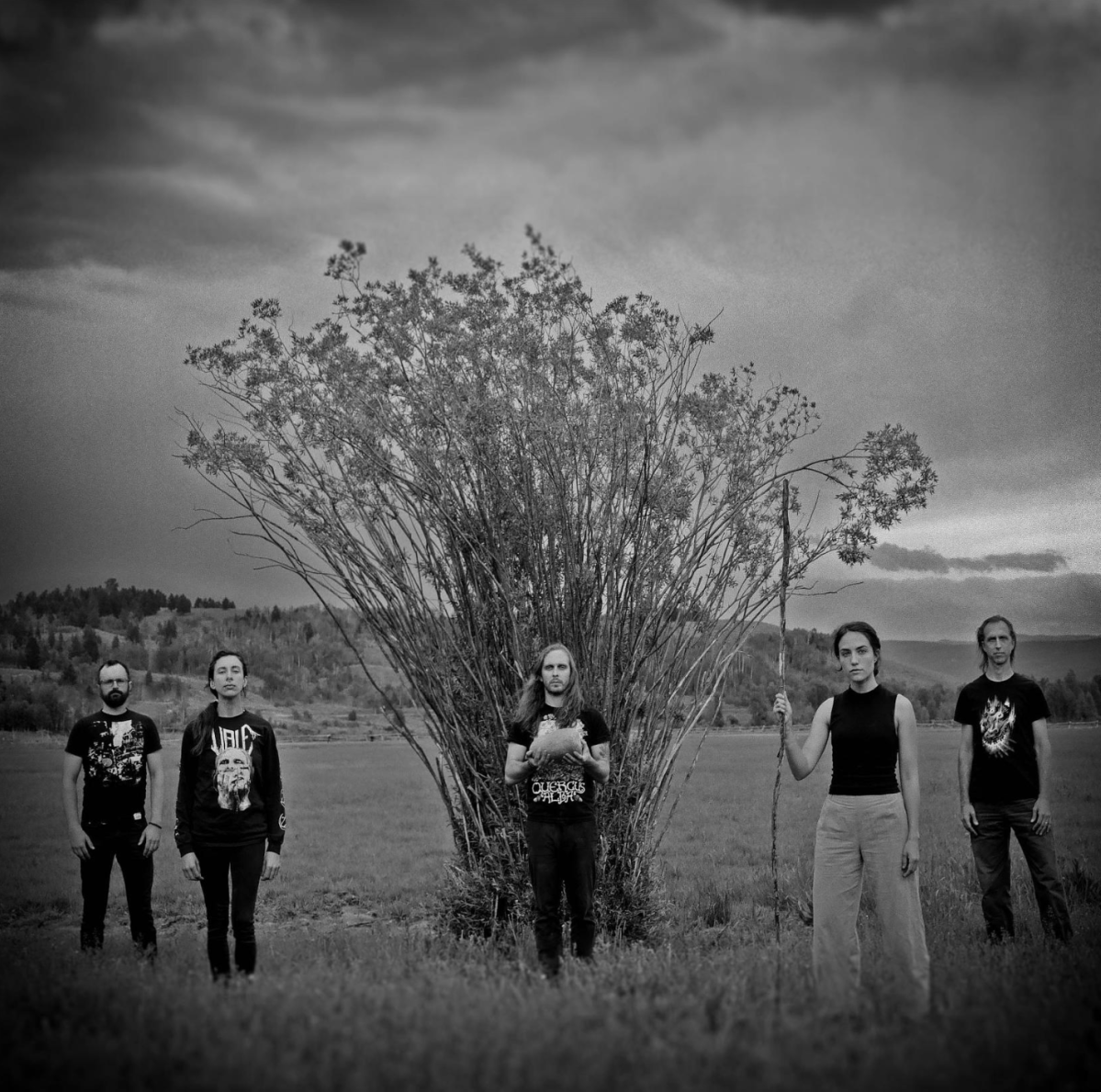
The project was begun out of love for composers Claude Debussy, Erik Satie, and Olivier Messiaen as well as classically-influenced bands A Silver Mount Zion, Clogs, and Amber Asylum. I also was digging into Leoš Janáček’s string quartets, Rebecca Clarke’s

Piano Trio and Sonata for Viola and Piano and Maurice Ravel’s Piano Trio in A Minor.

My favorite composer is Joanna Newsom, and I continue to return to her music regularly for inspiration and guidance. We actually have been covering her 2006 song “Only Skin” at some of our shows, which has been really fun! Transcribing the arrangement for that was a total marathon and I learned a great deal from it.

For the new batch of music I’ve been working on, I’ve been listening to Toby Driver’s last two solo albums, James Blackshaw’s Love is the Plan, the Plan is Death, Fiona Apple’s The Idler Wheel…., Preterite’s From the Wells, Menace Ruine’s Venus Armata, N Nao’s À Jamais pour toujours, and Austin Wintory’s score for Banner Saga. I also always return to various Blut Aus Nord, Tenhi, Jason Molina, Mount Eerie, and Six Organs of Admittance records.

How do you define your music? Is there a community of musicians you feel centered in here?

Recently a local publication described us as Franco-gothic chamber-pop, which I actually really appreciate, though I’m confused by the “pop” qualifier. I have tried to come up with a snappy genre tag for our music: chamber folk? neoclassical folk? It’s tough for me to figure out what people are hearing.

I will say that my community has always been the metal community, the corner of which I occupy continues to be incredibly supportive and open-minded. Though Forêt Endormie has branched out and plays shows for other audiences at non-metal venues, the overwhelming majority of album sales and support has been from folks that I believe would identify as part of the metal community. Underground metal has proven to be special and unique in its support and close-knitted nature. Being a part of it and the friends it has introduced me to is perhaps the greatest gift that playing music has given me.

What are you singing about mostly?

I’ll focus on the Split with Quercus Alba here because it’s the It’s the first release with original lyrics in French, and it’s sung exclusively in French, which I intend to be the norm for future releases. I am interested in the tension between comfort and anxiety, the rigid organization of human society, and acknowledging the uncaring truth of the natural world. Societal contradictions and what we give up for comfort are subjects that are endlessly interesting to me. “Entouré” and “Une étincelle que je veux avaler” helped me process feelings of anxiety and isolation, while “Cette Lanterne” is about how throughout history, we have invented gods to bury those feelings. Lyrics for me are tougher to write than music, but I’m gradually becoming more comfortable with putting my thoughts out into the world.

The music feels operatic, almost like theater. Is there a staged, storytelling component to it? What are live shows like?

I’m glad that the music can bring images to mind, as I do intend to conjure visuals with what I write. Thus far, live shows have been relatively straightforward performances. We play from sheet music and I suppose it feels a bit like watching a more traditional chamber group in that way.

I’m absolutely open to working with artists from other disciplines and would especially love to have Forêt Endormie collaborate on new theater works. Music is perhaps the most abstract of all art forms and I really appreciate when it is used well to enhance film, theater, and video games. Hopefully that opportunity will present itself at some point for us, that would be great fun!

Why is antifascism important in these music scenes?

There is a serious lack of diversity in the voices that we hear from in black metal, neofolk, and related styles. This seems to be improving as time goes on, though simultaneously the far-right is getting louder and appears in the mainstream much more frequently than it seemed to 10 years ago. Given this increased visibility of right-wing fascism in the US and across the world, it is crucial that our humble music scene at the very least ensures that our community a hate-free place that embraces all folks regardless of where they were born or their genetic makeup. We also need to make sure that those who buy into far-right ideology know that they are not welcome and that they can fuck off.

Do you draw on any older folk traditions or spiritualities?

I can’t really say that I consciously draw on older folk traditions. I am interested in many styles of folk music, and I think that certain groups – the work of Ivar Bjørnson & Einar Selvik comes to mind – do an amazing job of working with traditional folk styles and making folk music accessible to modern audiences. There are many music traditions that I love and am interested in – Gamelan being an example – but I don’t consciously pull them into my music for fear of treating the music too shallowly. Maybe I will feel differently in the future. As far as newer folk styles, I have been spending some time learning some of John Fahey’s music.

I am godless, so for me, spirituality comes in feeling connected while marveling at the cosmos or art, or in having a good conversation.

Have you experienced any far-right influence in the music scene?

I have been lucky enough in my tiny corner of music-making to experience almost no direct far-right influence. In my world, it seems to be a thing that exists only on the Internet. I’m grateful for this, as the far-right is having very real consequences for other folks in all sorts of communities across the globe.

What bands do you recommend for antifascist neofolk fans?

You’ve already interviewed so many wonderful artists. I’d like to recommend a few that I love, though some of them are not neofolk at all: Preterite, Menace Ruine, Nighttime, N Nao, Circuit des Yeux, Quercus Alba, and Falcon’s Eye.

What is coming next for you?

We’re finishing our second full-length with Colin Marston in the next few months, and hopefully following the release we’ll play some dates outside of our beautiful hometown to promote the record. Aside from that, I’m going to keep writing and playing music with these wonderful friends as long as I can.

***

We have added Forêt Endormie to the Antifascist Neofolk Playlist on Spotify and have two of of their tracks from Bandcamp below.
Cinder Well Begins West Coast Tour

Cinder Well’s music is a beautiful, dreamlike synthesis of dark folk, Americana, Southern Gothic, and neofolk, all drawn together by a profound introspection and commitment to justice. She is playing multiple dates up and down the West Coast over October, including several appearances with other antifascist neofolk musicians such as Anna Vo in Portland.

Check out these dates below and come out to one of the shows!

  • 10.12 Sugarloaf Center Williams, OR
  • 10.13 Black Butte Center for Railroad Culture Weed, CA
  • 10.14 Gospel Flats Farm Bolinas, CA
  • 10.15 House Concert Santa Cruz, CA
  • 10.18 Breakfast Culture Club Santa Barbara, CA
  • 10.19 The Sanctuary Oakland, CA
  • 10.20 Coopers Nevada City, CA
  • 10.21 Blackbird Chico, CA
  • 10.24 High Water Mark Portland, OR
  • 10.25 Carleton House Olympia, WA
  • 10.26 Quilcene Theater Port Townsend, WA

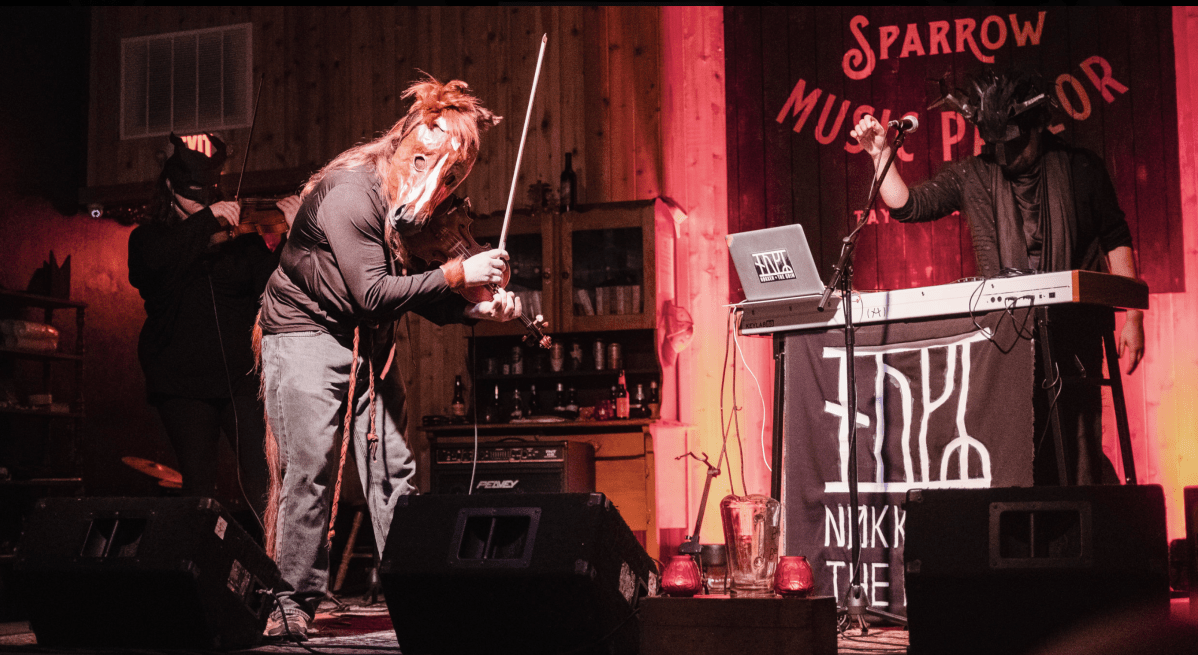
First Look: Nøkken + The Grim Release New Album: Bestiengesang

Alternating between haunting atonal soundscapes and quiet orchestral rhythm, Nøkken + The Grim has been one of primary bands since we started the website. Horse worship, pagan animism, ecofraternalism, screeching strings, all wound together in a lyricless mess that is unlike anything else you will fine in the antifascist neofolk circuit.

Their new album, Bestiengesang, is half invocations of spiritual animals and half live performance, always underskirted with a quiet and slow intensity. These eight tracks feel much more like painting or performance art than one-off songs, and its best to just jump in and hope for immersion. It’s dark and frightening, just what we expected.

Check out the new album below, the whole thing is available on the Nøkken + The Grim Bandcamp. They have yet to put the new tracks on Spotify so we have not added them to the Antifascist Neofolk Playlist on Spotify, but we have added tracks from the album Treason to Our Nature and will add the new songs when they are available.